ITA
Questa cache fa parte dell’itinerario Geotrail: “Gemme del Baldo” ideato e realizzato dagli studenti del Liceo STEAM International di Rovereto in collaborazione con l'APT Rovereto e Vallagarina per valorizzare i luoghi del Monte Baldo e permettere alle persone che li visitano di ammirare le bellezze naturalistiche della zona.
MA IL MONTE BALDO È DAVVERO UN VULCANO?
In tutte le leggende c’è un fondo di verità! Per quanto riguarda quella del Monte Baldo esiste una spiegazione sul perché sia nata.
Dal 1600 una convinzione popolare sostiene che il Baldo sia un vulcano, oggi spento e inattivo. Questa credenza nasce dal fatto che alcuni studiosi e giornalisti attribuivano a tutte le vicende naturali avvenute attorno al lago un’ipotetica origine vulcanica. Ciò che convinse maggiormente la gente furono proprio i movimenti sismici intervenuti, ma anche la presenza di rocce magmatiche sul suolo. Nel corso del XIX e del XX secolo, grazie ad una più approfondita conoscenza scientifica, si è potuto appurare che la maggior parte delle rocce del massiccio sono di tipo sedimentario-marino.
LA VERITA’ SCIENTIFICA SULL’ORIGINE DEL MONTE BALDO
Lo scenario del Monte Baldo offre una grande varietà di rocce, fondamentalmente di due tipologie: il primo gruppo è costituito dalle rocce sedimentarie formate dall'accumulo di sedimenti di varie origini che si compattano e cementano a causa della pressione dei sedimenti sovrastanti.
Le rocce sedimentarie presenti sul Monte Baldo sono rocce carbonatiche in gran parte frutto della precipitazione di calcite direttamente dal mare e della deposizione in ambiente marino, a volte con grande abbondanza di fossili e organismi biocostruttori. Tre sono i tipi di rocce carbonatiche prevalenti presenti lungo il percorso: il Rosso Ammonitico Veronese , la Maiolica e l’ Oolite di San Vigilio . Inoltre possiamo trovare affioramenti ricchi di Selce di colori diversi come rosso, grigio, verde: il colore è determinato dalla composizione chimica dei minerali presenti oltre alla silice. Queste rocce si trovano su tutto il percorso ma principalmente lungo il Passo del Cerbiolo. La particolarità del Passo è che vi si possono trovare affioramenti con Selce Verde che è particolarmente rara.
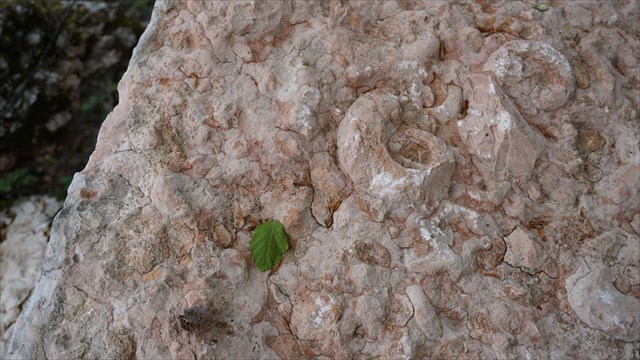
La presenza delle rocce magmatiche sul Baldo è minima rispetto al volume delle rocce totali di cui è costituito. L’ambiente in cui si sono formate la maggior parte delle rocce del Baldo è marino e la formazione del rilievo è frutto del sollevamento di queste rocce sotto la spinta dei movimenti tettonici, non dell'accumulo di rocce magmatiche a causa di ripetute eruzioni vulcaniche del passato. Le rocce magmatiche sono semplicemente la testimonianza che durante l'era Terziaria ci sono stati degli eventi di fuoriuscita di magma in condizioni sottomarine. Possiamo quindi concludere che il Monte Baldo non è un vulcano.
ENG
This cache is part of the Geotrail itinerary: "Gems of Baldo" conceived and created by the students of the STEAM International High School of Rovereto and Touristic Office of Rovereto and Vallagarina to enhance the places of Monte Baldo and allow the people who visit them to admire the natural beauty of the area.
IS MOUNT BALDO REALLY A VULCANO?
In all the legends there is truth, as for the legend of Mt.Baldo. From 1600 a popular belief claims that Baldo is a volcano, now extinct and inactive. This belief comes from the fact that some scholars and journalists attributed to all the natural events that occurred around the lake a hypothetical volcanic origin. What most convinced people were the seismic movements that took place, but also the presence of magmatic rocks on the ground. Obviously during the twentieth century, thanks to a more in-depth scientific knowledge, it was found that most of the rocks of the massif are sedimentary-marine.
THE SCIENTIFIC TRUTH OF THE ORIGIN OF MONTE BALDO
The scenario of Monte Baldo offers a great variety of rocks, basically of two types: the sedimentary rocks formed by the accumulation of sediments of various origins which compact and cement due to the pressure of the overlying sediments. the sedimentary rocks present on the Mt. Baldo are carbonate rocks which are burn from the precipitation of calcite directly from the sea and from the deposition in the marine environment, sometimes with great abundance of fossils and bioconstructing organisms.
There are three types of prevailing sedimentary rocks along the route: the Reddish Ammonite Veronese, Majolica and the San Vigilio Oolite. Furthermore we can find flint outcrops of different colors such as red, gray, green: the color changes according to the chemical composition of the minerals present besides silica. These rocks are found all along the route but mainly along the Cerbiolo Pass. The peculiarity of the Pass is that you can find, in addition to flints of various colors, also the green flint which is particularly rare.
In conclusion what you must have learnt is firstly that magmatics rocks on the Mt.Baldo are much less than the volume of the total rocks. Secondly the major rocks are from a sea environment and the formation of the relief, which is the result of the lifting of the rooks under the pressure of tectonic movements and it doesn’t depend on the accumulation of magmatic rocks due to repeated volcanic eruptions of the past. the magmatic rocks are simply the witnessing that during the Tertiary period there have been events of magma leakage in submarine conditions.
DEU
Dieser Cache ist Teil der Geotrail-Route: "Gems of Baldo" , entworfen und erstellt von den Schülern der STEAM International High School in Rovereto und Touristic Office auf Rovereto und Vallagarina, um die Orte des Monte Baldo aufzuwerten und den Besuchern die Möglichkeit zu geben, die natürliche Schönheit der Gegend zu bewundern.
ABER DER MONTE BALDO IST WIRKLICH EIN VOLCANO?
Alle Legende haben einen wahren Kern! Was den Monte Baldo betrifft, so ist dies eine Erklärung dafür, warum er geboren wurde. Seit 1600 und nach allgemeiner Überzeugung ist Baldo ein erloschener und inaktiver Vulkan. Dieser Glaube beruht auf der Tatsache, dass einige Gelehrte und Journalisten einen hypothetischen vulkanischen Ursprung allen natürlichen Ereignissen zuschrieben, die rund um den See stattfanden.
Was mich am meisten überzeugt hat, ist meine persönliche Meinung. Während des neunzehnten Jahrhunderts waren die meisten Gesteine des Massivs dank genauerer wissenschaftlicher Erkenntnisse vom Typ Sediment-Marine.
DIE WISSENSCHAFTLICHE WAHRHEIT ÜBER DEN URSPRUNG VON MONTE BALDO
Das Szenario des Monte Baldo bietet eine große Vielfalt von Gesteinen, vor allem aus zwei Arten: die erste Gruppe besteht aus Sedimentgesteinen, die durch die Ansammlung von Sedimenten unterschiedlicher Herkunft gebildet werden, die sich aufgrund des Drucks der darüber liegenden Sedimente verdichten und zementieren. Die auf dem Monte Baldo vorkommenden Sedimentgesteine sind Karbonatgesteine, die größtenteils durch die Ausfällung von Kalzit direkt aus dem Meer und durch Ablagerungen in der Meeresumwelt entstanden sind, manchmal mit einem hohen Anteil an Fossilien und biokonstruierenden Organismen. Entlang des Weges gibt es drei Arten von Karbonatgesteinen: den Rosso Ammonitico Veronese, die Maiolica und den Oolite di San Vigilio.
Darüber hinaus können wir feuersteinreiche Aufschlüsse in verschiedenen Farben wie Rot, Grau und Grün finden: die Farbe wird durch die chemische Zusammensetzung der Mineralien bestimmt, die neben Kieselsäure vorhanden sind. Diese Felsen befinden sich entlang des gesamten Weges, hauptsächlich jedoch entlang des Cerbiolo-Passes. Die Besonderheit des Passes ist, dass Sie bei Selce Verde Aufschlüsse finden, die besonders selten sind.
Das Vorkommen magmatischer Gesteine auf dem Baldo ist im Vergleich zum Gesamtvolumen der Gesteine, aus denen es besteht, minimal. Die Umgebung, in der die meisten Baldo – Gesteine gebildet werden, ist marin und die Bildung des Reliefs ist das Ergebnis des Abhebens dieser Gesteine unter dem Druck tektonischer Bewegungen, nicht der Ansammlung magmatischer Gesteine aufgrund wiederholter Vulkanausbrüche des Vergangenheit. Magmatische Gesteine sind einfach das Zeugnis dafür, dass im Tertiär unter U-Boot-Bedingungen Magma ausgetreten ist. Wirkönnen daher den Schluss ziehen, dass der Monte Baldo kein Vulkan ist.