I’m a bit of a foodie myself and there are loads of nice restaurants to visit in Waterford city and its environs. There are also several famous foods that have originated in Waterford and are exclusive to the area. This virtual cache celebrates those foods with a little description of each one below. Most of foods were developed only streets away from where you stand. Alas, a lot of the original premises are gone.
The Blaa:
The tradition of the Waterford Blaa dates to the late 17th Century, when a group of Huguenots arrived in the city. At that time, Waterford was a powerful trading city for goods like leather, wheat, flour, butter and other agricultural produce from the area. A Huguenot bakery producing bread to feed the families and children of the group was set up in Waterford city in 1702. It’s thought the round bread rolls we now know as Blaa, were first made from leftover pieces of bread dough which couldn’t be used for making loaves. Modern Waterford bakers now believe the name ‘Blaa’ was corrupted from the Huguenot words ‘Blaad’, an old French word for flour, or ‘Blanc’, French for white, which referred to the white appearance of these rolls which are dusted with flour.
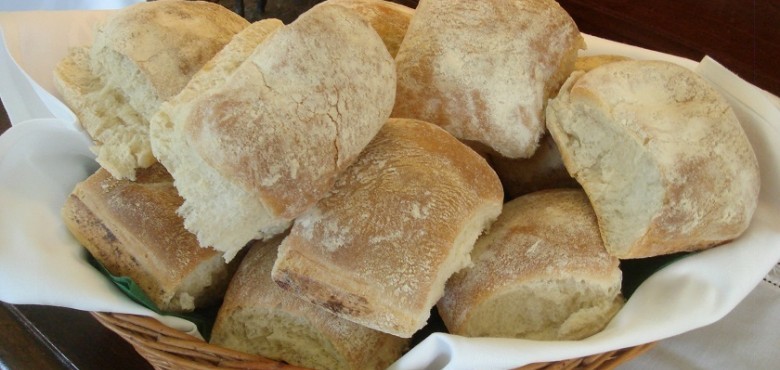 The Blaa, Recently Given Protected Status (PGI)
_________________________________________________________________
The Rasher:
The Rasher (a piece of bacon to be cooked quickly or rashed) was reportedly invented in 1820 by Henry Denny, a Waterford butcher who patented several bacon curing techniques still used to this day. The original Denny premises stood along Penrose Lane and fronted along O’Connell St, then known as Queen St. Until the early 19th century, pork was cured by soaking large chunks of the meat in barrels of brine for weeks. Shelf life was poor, as often as the inside of the chunks did not cure properly, and meat rotted from the inside out. Henry Denny and his youngest son Edward Denny introduced several new innovations - he used long flat pieces of meat instead of chunks; and they dispensed with brine in favour of a dry or ‘hard’ cure, sandwiching the meat in layers of dry salt. This produced well cured bacon with a good shelf life and revolutionised Ireland's meat industry. Irish bacon and hams were soon exported to Britain, Paris, the Americas and India..
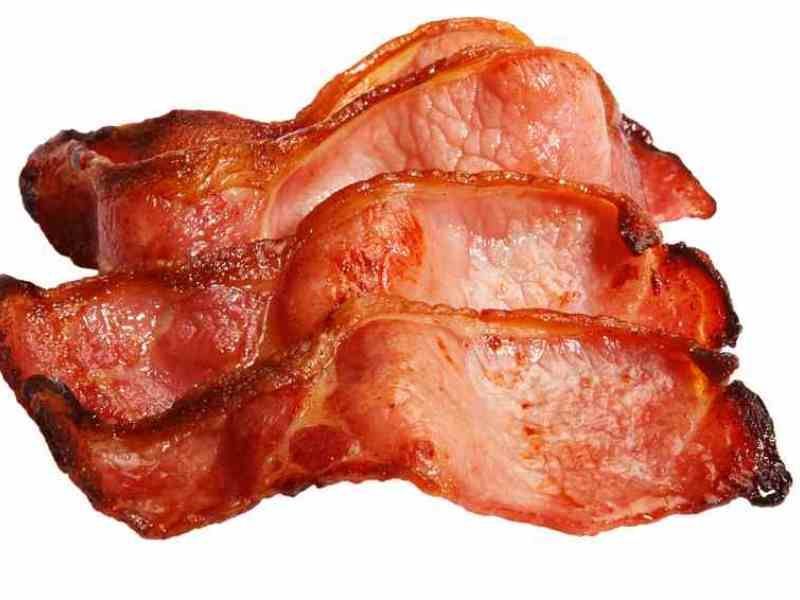
Rashers
_________________________________________________________________
Jacobs Cream Cracker:
One of Waterford’s most famous exports, the cream cracker, was created in the city during the nineteenth century by biscuit makers W&R Jacob. The company’s founders were Quaker brothers, William and Robert, the sons of Isaac and Anne Jacob. Isaac and Anne married in 1824 and lived on O’Connell street, while Isaac ran a bakery on Bridge Street. During the nineteenth century in Waterford, there was a huge demand to provide food for ships which created an opportunity for Isaac to produce biscuits, as they had become a staple food for sailors on long voyages. Isaac had become involved in early biscuit making, which had risen from the need to have food that would last long periods of time between ports, resulting in the creation of the cream cracker we know today.
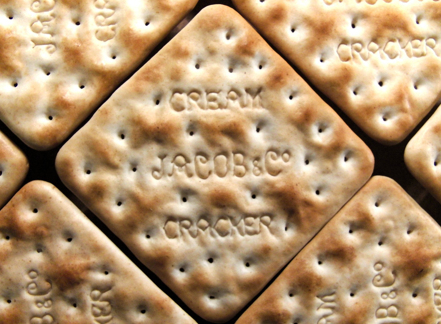
The Jacob's Cream Cracker
_________________________________________________________________
Denny Gold Medal Sausages:
The aforementioned Waterford firm of Henry Denny and Sons was one of Ireland’s first multi-national companies and by the early twentieth century was a household brand name, even meriting a mention in James Joyce’s masterpiece, Ulysses. By the 1890s bacon curing became the main industry in Waterford with about 850 employees in four companies: Matterson’s, Richardson’s, Barne’s and Denny’s. The industry also supported a chemical manure factory at Gracedieu and over 150 pig buyers in Ballybricken. The city’s most successful bacon-curing establishment was undoubtedly Henry Denny & Sons. From the outset Henry Denny specialised in the lucrative pig meat export industry which was directed at a growing English market. By 1860 Waterford dominated this trade and accounted for approximately 66% of Irish bacon exported to London. This success was due to the new and innovative methods of bacon curing developed by Henry Denny. The firm marketed their bacon under the ‘Star’ brand in Britain and concentrated in getting their products into the emerging chain stores such as Lipton’s and Home and Colonial. Throughout this period Denny’s continued to prosper. In 1898 they bought out the rival company Richardson’s in Morgan Street and Denny’s were to remain on this site until the Waterford factory closed in 1972. During the Great War Henry Denny and Sons supplied the British and Commonwealth armed forces with 820 million pounds of bacon to the value of £50 million, making the company one of the leading food producers in the world. In the Second World War Denny’s again supplied the allied armies with food and also in the post-war period secured contracts to supply the American forces stationed in Europe. Expansion continued in the inter-war years and in 1933 Denny’s won a gold medal for their sausages at the International Food Fair in Manchester – the Denny’s Gold Medal Sausage was born. The medal was presented to George Goodfellow, the manager of the Waterford factory and this iconic symbol of Waterford’s industrial and social history is now on display in the Bishop’s Palace.
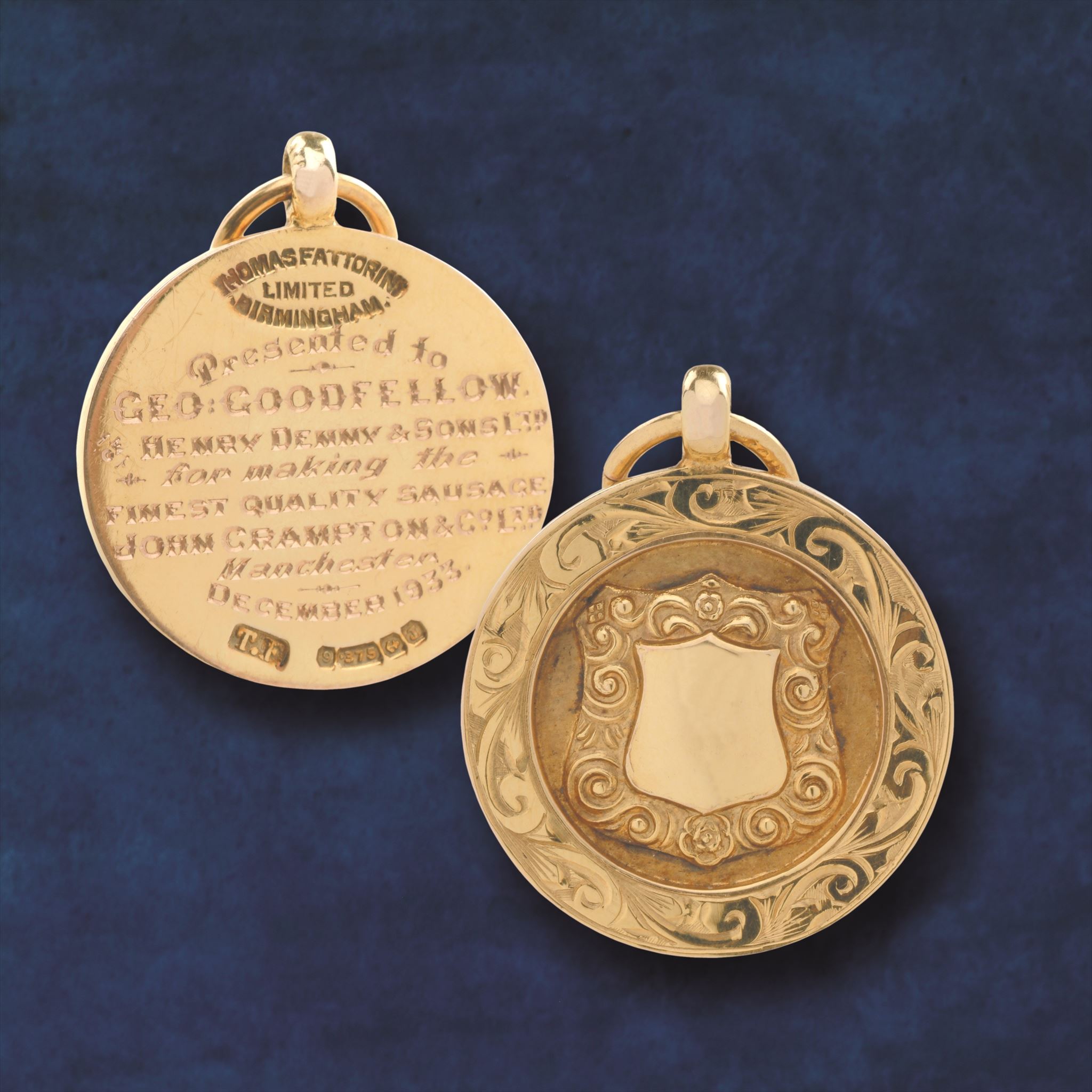
The Gold Medal of Gold Medal Sausages
_________________________________________________________________
Downes No 9 Whiskey:
Situated on Thomas St at the edge of Waterford City centre is Henry Downes, one of the most beloved Pubs in the Déise. It is also my favourite and 'local'. Known locally as ‘Downses,’ the business was first established in 1797 and has been in the same family ever since. But it wasn’t always a pub. In fact, it started out life as a spirit merchant. “They would have imported barrel-loads of sherries and ports, re-bottled it, labeled it up and distributed it around the local area,” explains owner John de Bromhead, who is the sixth generation to be involved in the business. It was only in the 1960s that the owners decided to transform it into a bar. There have been refurbishments over that time, of course, but the main pub has remained largely untouched. The low lighting, carpets and vintage telephones remain intact. Having started out as a spirit merchant, Downes’ remains one of the few pubs in Ireland to bottle its own whiskey. The Number Nine is a local institution and the bar still serves it to customers for €4.30 a glass.
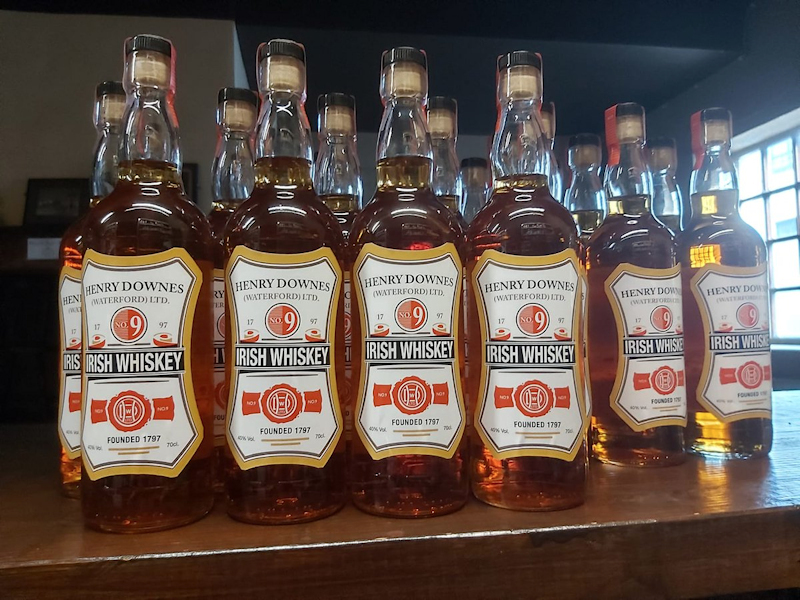
Downes No 9.
_________________________________________________________________
Worthy Mentionables:
There are a number of other known brands and foodstuffs well worth a mention but time and space don't alow me to go into great detail. Briefly - Comeragh Mountain Lamb, Cheeses both Knockalara and Knockanore, Dungarvan Brewing Company and Legacy Cider, Flahavans Porridge Oats, Metalman Brewing and Coffee House Lane coffee. Please feel free to contact me if I have left any out!
Logging Requirements:
Once at the coordinates assume a position with the Bull Post in the background and take a photo of yourself, your GPS or a geocaching related item. At the moment (Sept 2022) the area is undergoning a makeover. Any partial picture or near by picture will be fine. Please attach the photo to your log. If logging for a group please mention the names of your fellow cachers in the log. Note - Do not send me the photo, upload it with your log. Logs not containing the required photo may be deleted.
Virtual Rewards 2.0 - 2019/2020 This Virtual Cache is part of a limited release of Virtuals created between June 4, 2019 and June 4, 2020. Only 4,000 cache owners were given the opportunity to hide a Virtual Cache. Learn more about Virtual Rewards 2.0 on the Geocaching Blog.