This cache is number 26 in a series of caches situated next to New Zealand native trees and will help you to identify and admire another tree that you will sometimes come across in your Geocaching travels. It is the second in the series that is not situated in Upper Hutt.
Pohutukawa
Common name: Pohutukawa
Botanical name:Metrosideros excelsa
The pohutukawa is one of the most spectacular trees in the botanical family Myrtaceae (Myrtles). This large family includes other familiar trees such as Eucalyptus from Australia, the guava from tropical America, the clove tree from Indonesia and the manuka from New Zealand (see GC7PKYG, #25 in this cache series).
Pohutukawa was originally confined to coastal areas in the top half of the North Island and along the shores of some lakes in the Rotorua district. A similar, but somewhat smaller, tree is Metrosideros kermadecensis, the Kermadec pohutukawa, which originated in the Kermadec Islands in the South Pacific, around latitude 30° South. Many of these have been planted as street trees in Wellington, whilst M. excelsa has been extensively planted in parks and gardens. Whilst most of this planting has been in the North Island, it has also been successfully grown in coastal areas around Nelson, Banks Peninsula, Dunedin and Jackson Bay in the South Island.
Pohutukawa grows best close to the sea and can form massive spreading trees that overhang the water with huge and very gnarled horizontal branches. Whilst the tree at GZ is reputed to be the largest in Wellington it is by no means the largest in New Zealand, which is a tree known as ‘Te Waha-o-Rerekohu’ in Te Araroa, in the grounds of the local school. This tree is believed to be around 600 years old and, when measured in 1950, had a branch span of more than 37m. The widest I have seen is in Northland on the Karikari Peninsula, which I estimated from a photo I took to be 14m high with a whopping 29m spread, which does have the very gnarled wide-spreading form. There is a cache hidden in the middle of this tree: GC2HQQN – Matai Bay Rocks. Have a look for it if you are ever on holiday in the area: it is well worth the visit.
Leaves
The leaves are in pairs on short stalks, up to 10 cms long and 5 cms wide, elliptical to oblong in shape. They are fairly thick and leathery, dark and glossy on top, lighter and furry underneath.
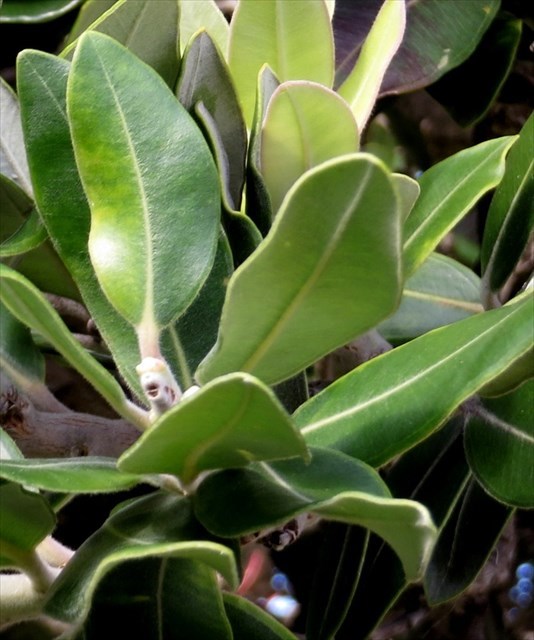
Foliage
Flowers and seeds
The flowers are, by any measure, spectacular. The tree flowers in December and January, resulting in it being given the epithet ‘The New Zealand Christmas Tree’. A good specimen can be completely smothered with the brilliant red flowers (although not all specimens flower equally well). Flowers are in pairs at the tips of the branchlets. The conspicuous part of the flower is formed of numerous red stamens, but if you look at a flower closely you can see it also has small red petals at the base. Birds are attracted to the flowers as they carry a lot of nectar.
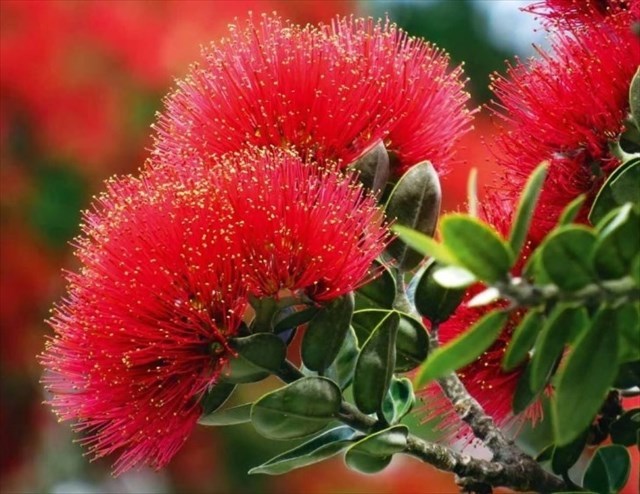
Pohutukawa flowers
After the flowers come seed capsules, which are quite small and, as with the flowers, are found in clusters. They open in the autumn to reveal reddish-brown seeds.
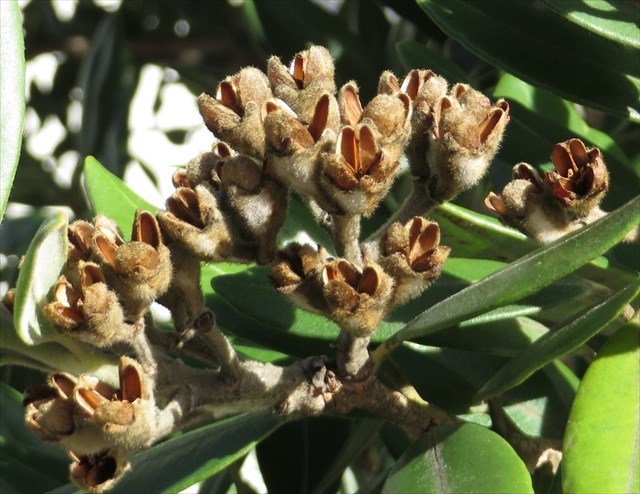
Seed capsules after shedding their seeds
Bark
The bark is thick and stringy and hangs and peels in long narrow flakes on old trees.
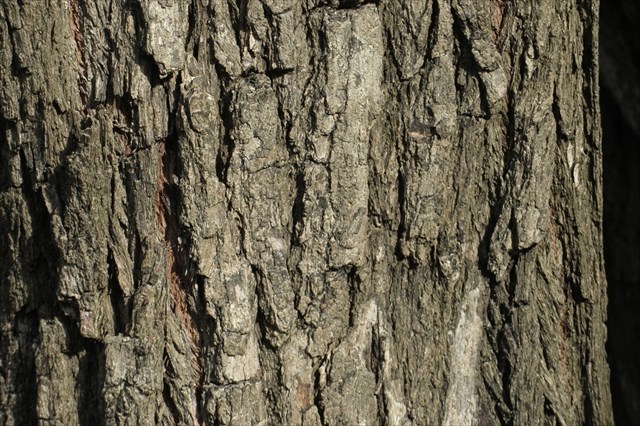
Pohutukawa bark
The tree can sometimes be enveloped by thick mats of aerial roots that can completely hide the bark on the trunk or the lower branches.
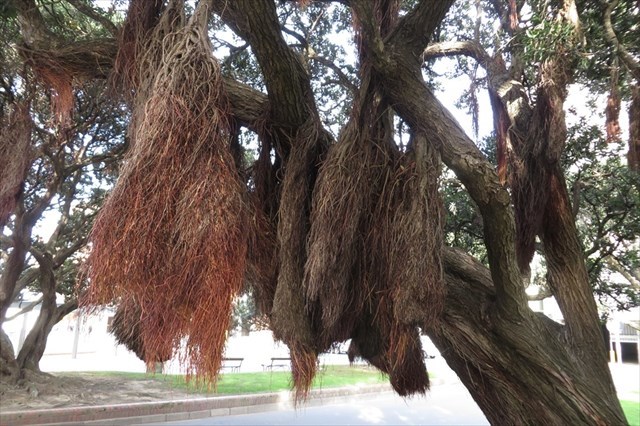
Mats of aerial roots
The pohutukawa at GZ
You can find out more about this particular specimen in The New Zealand Tree Register, as it is reputedly Wellington's largest pohutukawa. It was planted around 1900 and in 1992 was estimated to be 19m high with a spread of 20m.
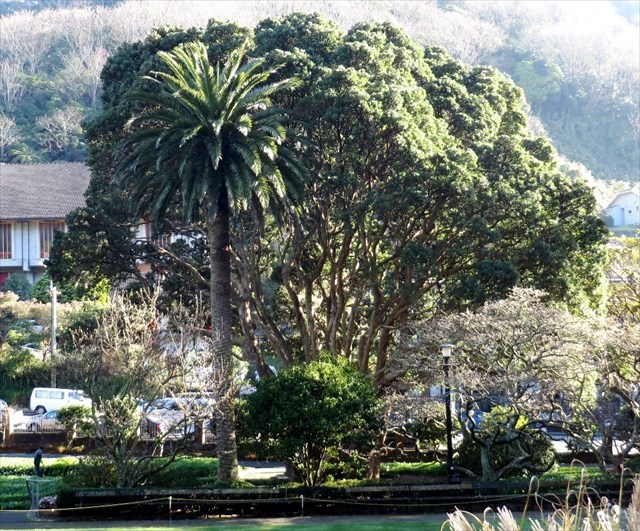
Wellington's Largest Pohutukawa
Logging this Cache
As this is a Virtual Reward cache there is no physical log for you to sign. In order to log your find you must answer the following questions:
- There is a garden seat nestled under the tree next to the main path. Who does this bench commemorate and in what year was he/she born and in what year did he/she die?
- At WP1 there is a plaque on the outside of the right hand gate post (when looking at the entrance from outside the Gardens). What quote is written on the plaque, who is the quote attributed to and in what year?
- When you are standing at WP2 looking at the tree to take your photo, turn to your right. There is a small brick building nearby, nestled under some tall conifers. What is it used for?
- Finally, take a photograph from WP2 that shows the garden flower beds in the foreground and the Pohutukawa in the background.
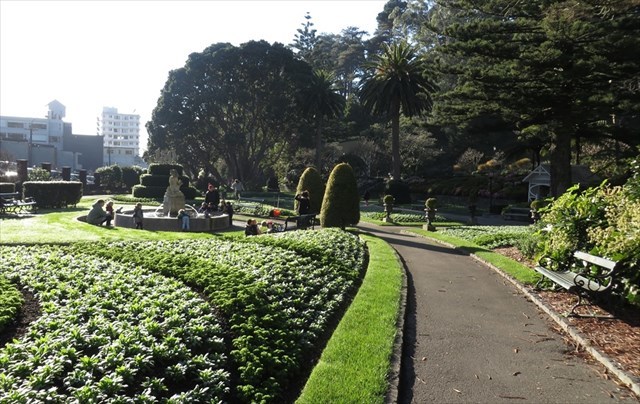
This is the view required for your photo from WP2
Please submit your answers AND PHOTO to me using the Geocaching Message Center (NOT email). You do not need to wait for me to respond and can log your find as soon as you have sent me the answers, but if you haven't fulfilled all the logging requirements your log entry will be deleted. As far as the photo is concerned, apart from proving you visited the location I would like it posted with your log entry so that the cache page contains a photographic record of the changes to this section of the Gardens as the seasons change and to also see how the Gardens change over the years. This is especially for that brief time each summer when this magnificent tree is in flower: the gardeners working under it, when I was checking it out in June 2019, told me it is spectacular then.
Thank you for visiting my Virtual Reward cache.
Virtual Rewards 2.0 - 2019/2020
This Virtual Cache is part of a limited release of Virtuals created between June 4, 2019 and June 4, 2020. Only 4,000 cache owners were given the opportunity to hide a Virtual Cache. Learn more about Virtual Rewards 2.0 on the Geocaching Blog.