NOTE: Please read the requirements before going for the cache. Your log will be deleted if you don't fulfill them.
Bái Đính Temple is a complex of Buddhist temples on Bai Dinh Mountain in Gia Viễn District, Ninh Bình Province, Vietnam. The compound consists of the original old temple and a newly created larger temples. It is considered the largest complex of Buddhist temples in Vietnam and has become a popular site for Buddhist pilgrimages from across Vietnam.
New complex
The New Bai Đính Temple (Bái Đính Tân Tự) encompasses an area of 700 hectares, located on Ba Rau hills, near the Hoang Long River. This is a large complex which includes many structures built over several phases starting in 2003 and finally completed in 2010. The temple's architecture follows traditional lines, consisting of large halls, courtyards and enclosures. The huge scale of Bai Dinh makes it strikingly different from previously built Vietnamese Buddhist pagodas, however. The largest structure, the Tam Thế Hall, rises to 34 m at its roof ridge and measures over 59 m in length. The construction materials include locally quarried stone and timber from Ninh Bình and tiles from Bát Tràng (reinforced concrete was also employed owing to the scale of construction). The temple adheres to traditional Vietnamese design aesthetics with its curve finials and corner eaves soaring outward and upward, resembling a phoenix's tail. Artisanal works from local handicraft villages were selected for the interior, with bronze sculptures from Ý Yên, stone carvings from Ninh Van, wood carpentry from Phú Lộc, and embroidery from Ninh Hải.
Old temple
The original Bai Đính pagoda is located in the foothills some 800 meters from the new temple. Ascending a series of over 300 stone steps, the path passes under an ornamental gate to reach the entrance. The temple itself is located in a series of small caves on the mountainside. Along with Buddhist deities, natural spirits of the mountains are also venerated.
Source: wikipedia
Enough of Wikipedia content 
Together with annpap on our tour through Vietnam we visited this place by coincidence. It was of course marked on the map we got from our hosts (I'm sure many of you will know what map I'm writing about) but it was one of many other places and quite far from Tam Coc where we were staying. The decision to go to Bai Dinh (with a freaking moped!) was made last minute and we really didn't regret it. The place made a huge impression on us (I'd say it's number one in the man-made category in Vietnam) and I decided to leave my precious single virtual cache here to convince you to come as well (or reward you with a nice virtual if you were going there anyway). Geocaching is after all about luring other players to places worth visiting.
Practical information on getting to the complex and moving around it
When you just type Bai Dinh in google maps, it will lead you to the staff entrance which you can't use. Please use the waypoints instead. Although the entry gate (marked as a waypoint to this cache) is big and visible from far away, it's on the other side of the street and in general the area is full of tourists confused as to how to get to the complex.
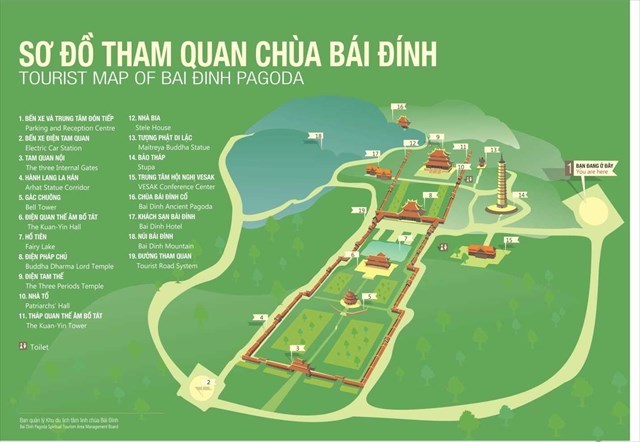
You can go from the parking to the complex by foot. However, because of the distance from the parking to the main gate of the complex (about 1,5km) and not very well marked pedestrian entry I recommend taking the electric bus which will drop you off at the main gate (but of course on the inside). From there you will have to go through the Three Internal Gates gate (no. 3 on the attached map) and head right. From now on you will be lead by the covered corridor (the one with many little Buddha figures in its walls). From time to time a path to the left (or right) will intersect with the corridor. I recommend you take each of them, see what's at the end of it and come back to the corridor to continue the trip. This way you should be able to see the whole complex. After seeing the modern complex, you can also go to the historical Bai Dinh temple (no. 16 on the attached map).
To catch the bus back to the parking, you have to come back to the bus station marked as 2 on the map. Busses from the other stations marked on the plan will not drive you back.
Also, be sure to have all the necessary water and food with you, because there is almost nowhere to buy such inside the complex.
The following map might be useful (click to enlarge):
Taking photos
There are few (2 or 3) places where there is a no camera sign. In reality, if you are quiet and respectful, no one will even say a word if you take a few photos.
Prices
There is no entry fee for entering the complex. However, the following additional fees have to be considered (all prices from the end of 2019):
- Motorbike parking: 15 000 VND
- Electric bus (one way): 30 000 VND
- Entry fee to the Stupa (tower): 50 000 VND
Requirements
To log a find on this virtual you will have to take 6 specific photos of yourself at the site and attach them to the found it log (you can of course take and upload more). If you are not comfortable with being on the photos, they may contain a piece of paper with your GC user name, your personal stamp (with visible and readable nick) or personal woodcoin / pathtag (also with visible and readable nick).
Attach the following photos:
- A picture of you (or the aforementioned personal object) anywhere in the corridor where the little figurines of Buddha are placed in the wall. The figurines should be at least partially visible.
- A picture of you (or the aforementioned personal object) with a golden figure bigger than yourself.
- A picture of you (or the aforementioned personal object) at the top of the Stupa (the tower is located at the posted coordinates of this cache). The picture should show the view from the Stupa and have another tower in the background (it shouldn't be a problem to spot at least one).
UPDATE: Since I have been informed, the Stupa access fees have been increased several times, I will accept photos from under the tower instead. You still have to make sure the photo identifies you being there in some way.
- A picture of you (or the aforementioned personal object) with the big Buddha figure at the top of the hill (no. 13 on the attached map).
- A picture of you (or the aforementioned personal object) with one of the temples (from the outside).
- A picture of you (or the aforementioned personal object) in the corridor with the stone turtles (it's located at the very end of the new complex).
Please see sample photos fulfilling the conditions above:
1:
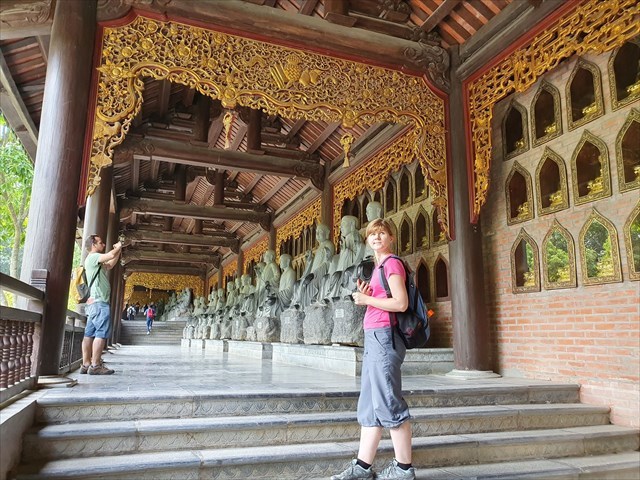
2:
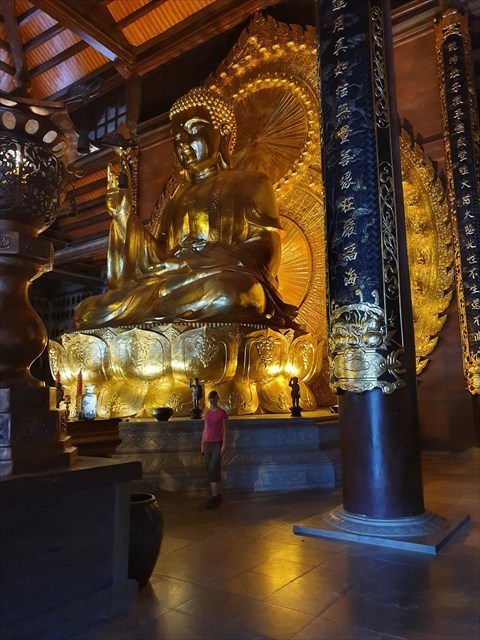
3:
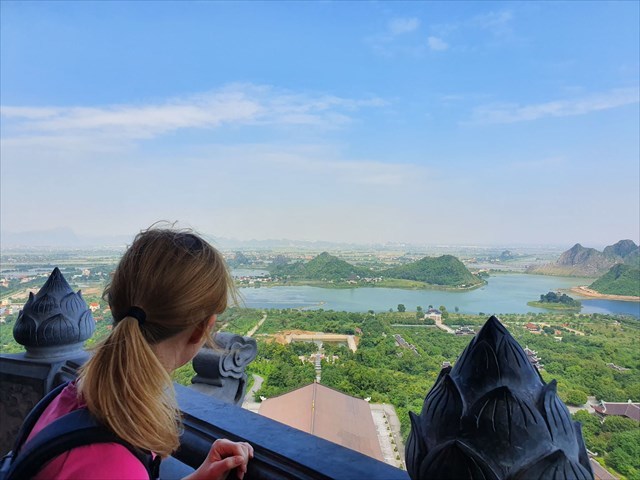
4:
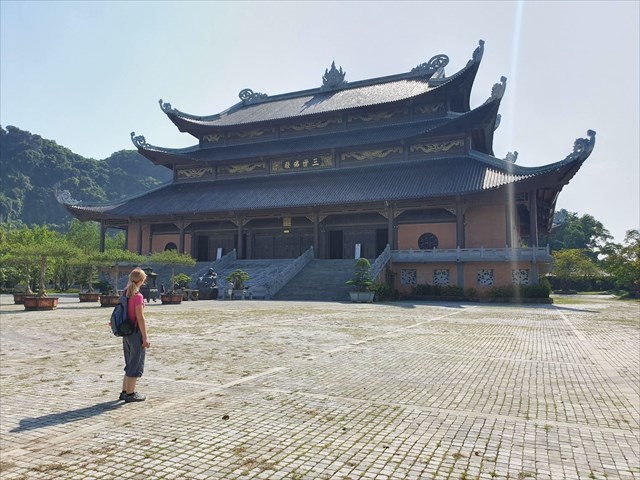
5:
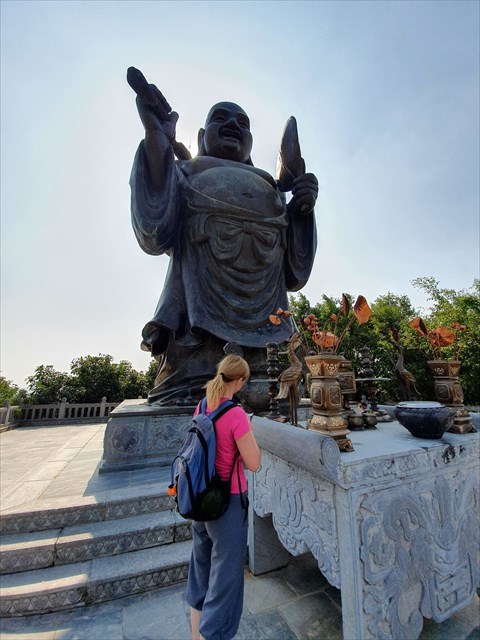
6:
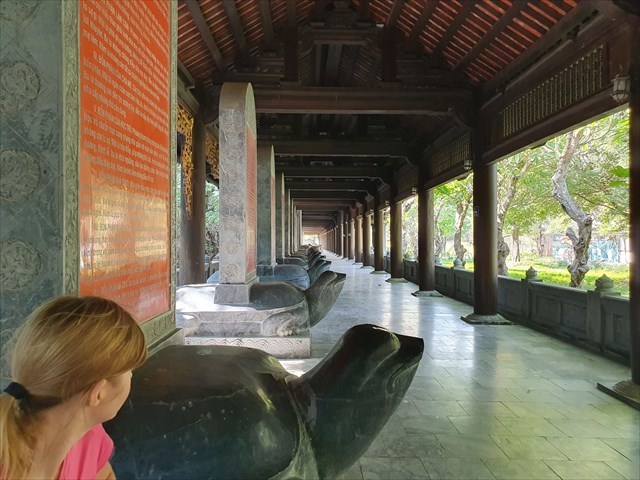
Virtual Rewards 2.0 - 2019/2020
This Virtual Cache is part of a limited release of Virtuals created between June 4, 2019 and June 4, 2020. Only 4,000 cache owners were given the opportunity to hide a Virtual Cache. Learn more about Virtual Rewards 2.0 on the Geocaching Blog.
