NOTICE: This geocache will be archived and removed in early October 2020 to make room for some new geocaches to be published soon.
This cache was launched at the 2019 Native Prairie Plants & Pollinators event GC86474. It is one of the five geocaches placed for that event. The Crosswinds Cache Crew collaborated with the River Raisin Institute to bring an educational event all about native plants and their pollinators. The event was hosted by Master Gardener Crystal Castle..
Warning signs of pollinator loss
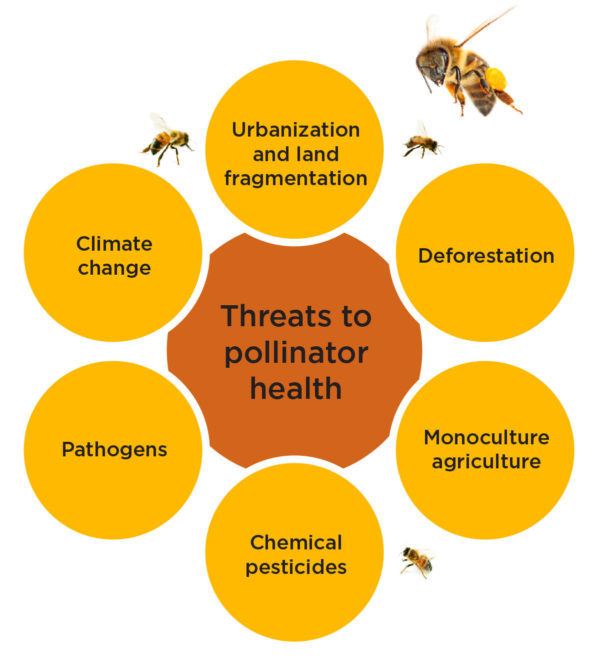
The warning signs of pollinator loss were known nearly two decades ago. Despite the warning, the declines continue, across many species. Honey bees have received the most attention, because beekeepers monitor colony health, but other pollinators are also at risk. Bees and other insect pollinators are beset by the same environmental challenges as other species, including habitat loss, non-native species and diseases; pollution, including pesticides; and climate change. Much pollinator habitat has been lost to agriculture, resource extraction, and urban and suburban development. Although these land uses can provide floral resources and benefit some pollinators, many bees and butterflies are habitat-specific, and the loss of habitat that provides sites for overwintering, foraging for pollen and nectar, or nesting can be detrimental to these species.
Threats to Pollinators:
Non-native Species and Diseases
Plants or animals brought here from other places can decrease the quality of pollinator habitat. When non-native shrubs such as autumn olive and multiflora rose take over open fields, they crowd out the wildflowers needed by certain butterfly and bee species for pollen, nectar, or larval food. For example, Some non-native plants also attract pollinators away from native species that are superior food sources.
Pollution, Including Pesticides
Air pollution is a very real problem for bees and other pollinators that rely on scent trails to find flowers. Light pollution can harm moth pollinators by increasing their susceptibility to predation by bats or birds when they are attracted to artificial lights at night.
Pesticide misuse and drift from aerial spraying are a major threat to insect pollinators. Insecticides applied to seeds can contaminate the pollen grains that are an essential source of food for bees and their young. Pesticides often kill directly, but sub-lethal amounts can also be detrimental to bees and other pollinators by impeding their ability to navigate or forage. The use of herbicides that eradicate important forage plants for bees and other pollinators is an additional problem.
Climate Change
Studies predict that climate change will alter the close relationship between insect pollinators and the plants that depend upon them for reproduction. Flowering plants migrating north or to cooler, higher elevation habitat in response to warming temperatures or other changes may not move in sync with their pollinators. The composition of pollinator communities is expected to change. According to the Xerces Society, anecdotal observations have found that bumble bees adapted to cooler temperatures are in decline, while bumble bees adapted to warmer temperatures are expanding their ranges northward. What effect this will have on local plants is unknown.
The cache:
The cache is a small sized lock and lock hidden along the northern Horse Trail. Please be sure to rehide it well.
Crosswinds Marsh Rules
No fires
No bikes / ATVs / personal watercraft
No swimming or ice fishing
Dogs must be leashed
No alcohol or illegal substances
No camping
Fishing in designated areas only
Collecting of plants & animals prohibited
Park only at N 42 05.744 W 83 26.552
All Geocachers must follow the above rules.
Crosswinds Marsh is open from DAWN to DUSK. Admission is free.
The Crosswinds Cache Crew pledge to develop and maintain quality and interesting geocaches in the Marsh consistent with Geocaching and Wayne County Parks rules and permit process. For more information on the Cache Crew and our endeavors, please visit us on the web at http://www.crosswindscaching.com and on social media.


This cache has been placed with the permissions of Wayne County Parks. Permit POL19-3 has been submitted and is on file at the park office.