Earthcaches have no "box" to find. Rather, with this earthcache, you discover something about the geology of The Forest Theater. For more information, see earthcache.org.
Battle Park is open 24/7, but DO NOT visit this earthcache during performances or other events that are being held in The Forest Theater.
There is no identified parking for The Forest Theater. Please use UNC visitor lots or metered parking on Country Club Road during the week.
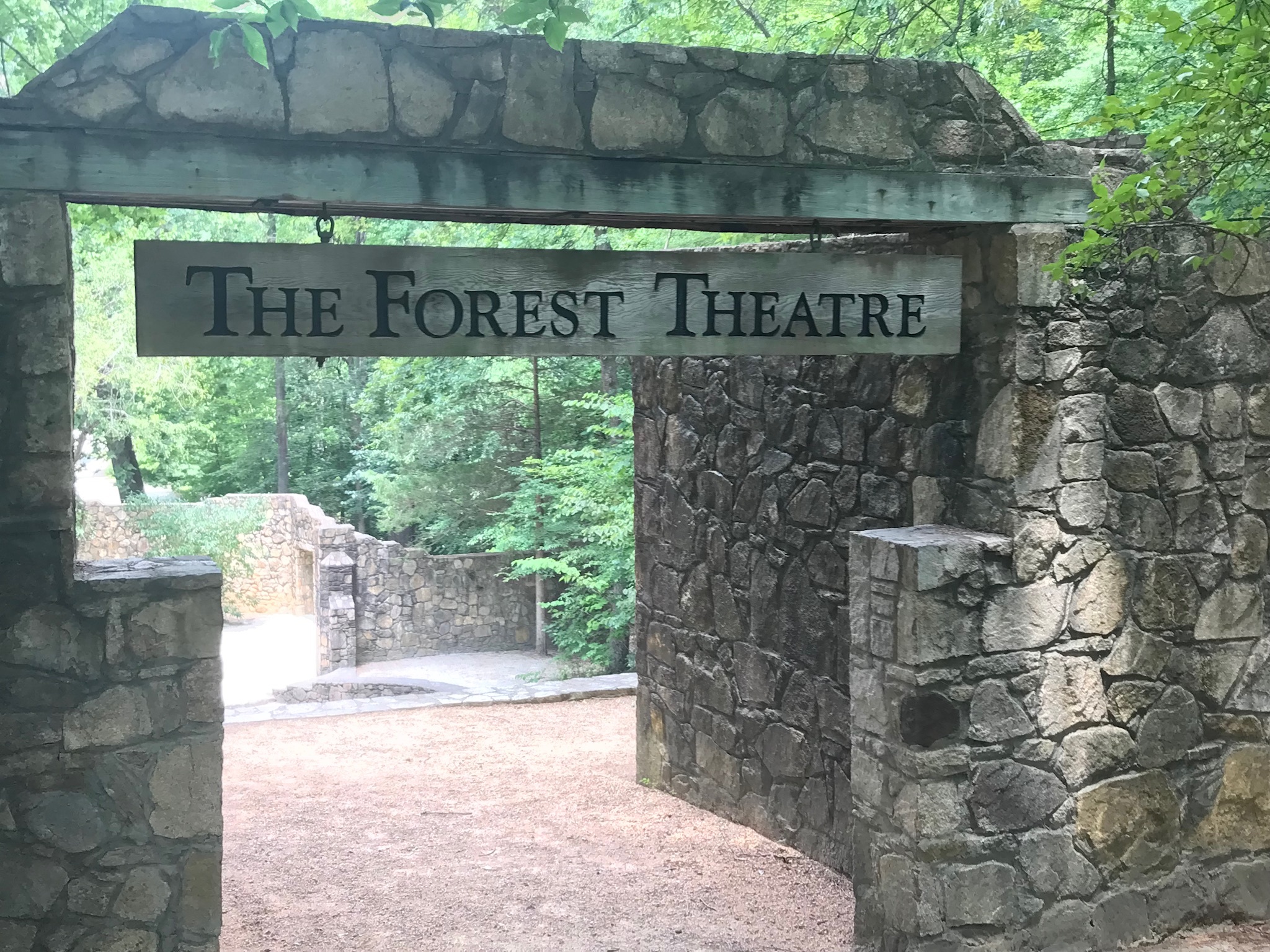
Welcome to The Forest Theater at UNC. This beautiful outdoor theater staged its first drama in 1916 to celebrate the 300th anniversary of William Shakespeare's death. William C. Coker, botany professor and founder of the Coker Arboretum, chose this particular location. A few years later, Professor Frederick Koch, founder of the Carolina Playmakers, developed the location into a permanent theater. Forest Theatre was rebuilt with Work Projects Administration funds in 1940 and was further improved in 1948.
The plaque at the theater reads, "This open air palace of light and sound, haunt of birds and breezes and human voices, home of natural beauty, poetry and drama, set upon the warm earth, in enduring stone, to commemorate an ardent genius who inspired and fostered the American folk play and, like another Johnny Appleseed, sowed the creative seeds of communal authorship throughout the American continent."
The "enduring stone" that the Forest Theater was constructed of is local Chatham granite -- with one notable exception. At the top of the house near the posted coordinates, there is one stone that is noticeably different. "This rock was thought to be ballast from one of Sir Walter Raleigh’s ships that landed on Roanoke Island back in the 1500s."
This ballast stone is not the local Chatham granite, a hard igneous rock, but is limestone. It is similar to rocks that can be found around Portsmouth, England, a port city on the south coast from where the New World settlers often set sail. Limestone is a softer stone than the surrounding granite rocks that were quarried from adjacent Battle Park.
Limestone is a carbonate sedimentary rock that is often composed of the skeletal fragments of marine organisms such as coral, foraminifera, and mollusks.
Logging Tasks: (Required)
Please send your answers via geocaching message center (preferred) or email.
- Find the stone at the back of the theater that is noticeably different that all the rest. Please do not damage this stone. How is it different than the rocks that surround it? Does it differ in Color? Shape? Size? Texture?
- Do you see any fossils in the rock? If so, what does it look like? What do you think it might have been?
- Please post a picture in your found it log of you, your GPS, your group, an appendage, your geo-pet in The Forest Theater-- just something to show you were at The Forest Theater.
Sources
The Forest Theatre was built in 1916 and unfortunately, is not easily accessible for people with mobility issues.