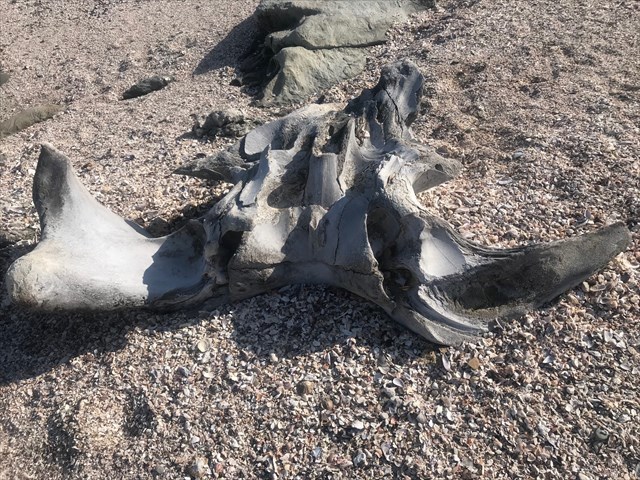
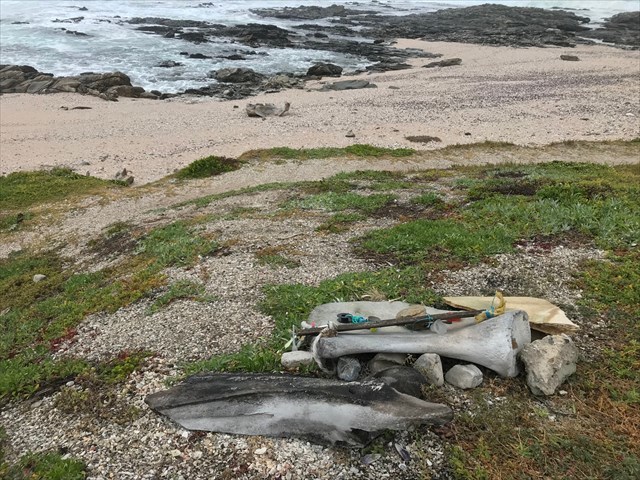
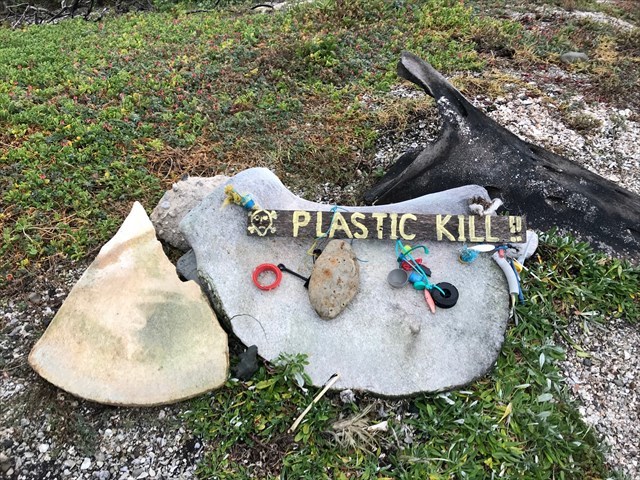
This is a lovely walk along the Sacramento trail.Park at the canon at the end of the road.
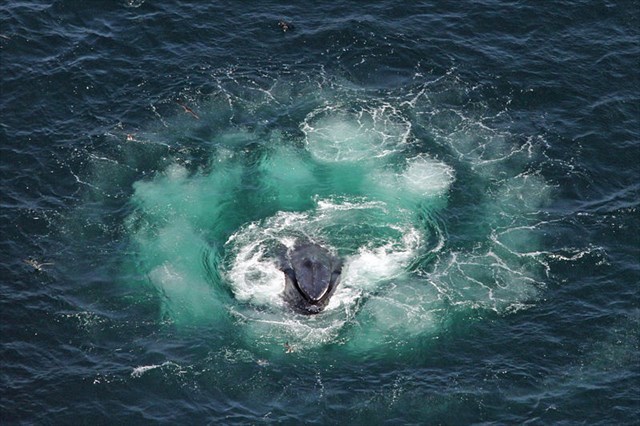
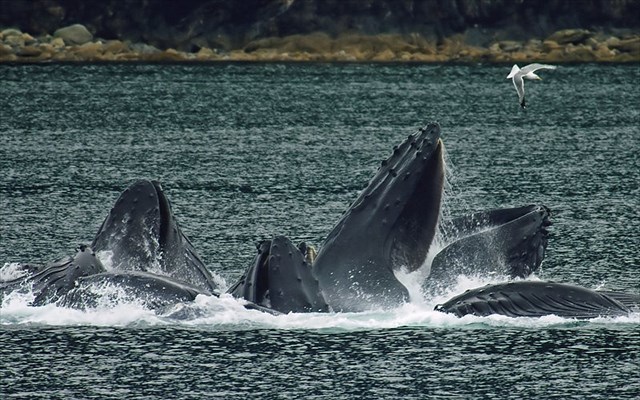
Found in oceans and seas around the world, humpback whales typically migrate up to 25,000 km (16,000 mi) each year. They feed in polar waters, and migrate to tropical or subtropical waters to breed and give birth, fasting and living off their fat reserves. Their diet consists mostly of krill and small fish. Humpbacks have a diverse repertoire of feeding methods, including the bubble net technique.
Like other large whales, the humpback was a target for the whaling industry. Once hunted to the brink of extinction, its population fell by an estimated 90% before a 1966 moratorium. While stocks have partially recovered to some 80,000 animals worldwide, entanglement in fishing gear, collisions with ships and noise pollution continue to affect the species.
Between July and December of every year, the Eastern Cape coastline is frequented by and Humpback Whales. These animals glide past the shore; breaching, lobtailing and spy-hopping as onlookers appreciate their antics from the beach.
South African whale-watching territory runs from Doringbaai, far up the CapeWest Coast, around the Cape Peninsula and as far up the East coast of Africa.
.In September 2017 in Rarotonga, the Cook Islands, two adult humpback whales were observed protecting snorkeler and whale biologist Nan Hauser from a 4.5 m (15 ft) tiger shark, with one whale pushing the woman away from the shark while the other used its tail to block the shark's advances. This may be the first recorded incidence of humpback whales acting protectively over a human.
Anatomy of the Humpback Whale.
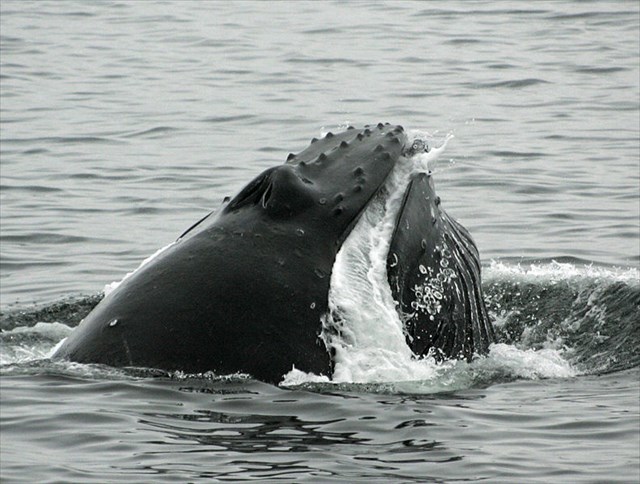
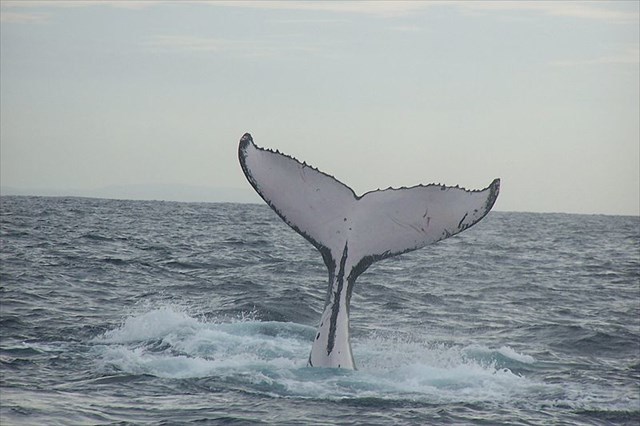
Humpbacks can easily be identified by their stocky body, obvious hump, black dorsal coloring and elongated pectoral fins. The head and lower jaw are covered with knobs called tubercles, which are hair follicles and are characteristic of the species. The fluked tail, which typically rises above the surface when diving, has wavy trailing edges.
Humpbacks have 270 to 400 darkly colored baleen plates on each side of their mouths.[15] The plates measure from 18 in (46 cm) in the front to about 3 ft (0.91 m) in the back, behind the hinge.
Ventral grooves run from the lower jaw to the umbilicus, about halfway along the underside of the body. These grooves are less numerous (usually 14–22) than in other rorquals, but are fairly wide.
Size
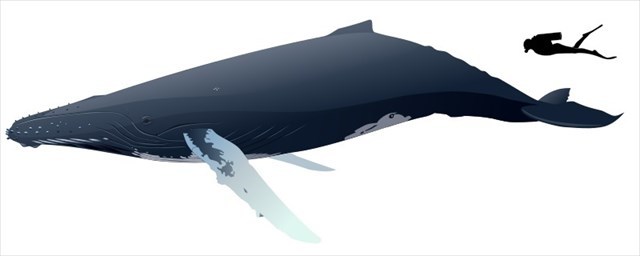
Fully grown males average 13–14 m (43–46 ft). Females are slightly larger at 15–16 m (49–52 ft); one large recorded specimen was 19 m (62 ft) long and had pectoral fins measuring 6 m (20 ft) each. The largest humpback on record, according to whaling records, was a female killed in the Caribbean; she was 27 m (89 ft) long with a weight of 90 metric tons, although the reliability of these extremely atypical data is impossible to confirm.
The largest measured by the scientists of the Discovery Committee were a female 14.9 m (49 ft) and a male 14.75 m (48.5 ft), although this was out of a sample size of only 63 whales. Body mass typically is in the range of 25–30 metric tons, with large specimens weighing over 40 metric tons.
Newborn calves are roughly the length of their mother's head. At birth, calves measure 6 m (20 ft) at 1.8 tons. They nurse for about six months, then mix nursing and independent feeding for possibly six months more. Humpback milk is 50% fat and pink in color. Females reach sexual maturity at age five, achieving full adult size a little later. Males reach sexual maturity around seven years of age.
Whaling.
Humpback whales were hunted as early as the 18th century. By the 19th century, many nations were hunting the animal heavily in the Atlantic Ocean and to a lesser extent in the Indian and Pacific Oceans. The late-19th-century introduction of the explosive harpoon allowed whalers to accelerate their take.
This, along with hunting in the Antarctic Ocean beginning in 1904, sharply reduced whale populations. During the 20th century, over 200,000 humpbacks were taken, reducing the global population by over 90%. North Atlantic populations dropped to as low as 700 individuals.
To prevent extinction, IWC banned commercial humpback whaling in 1966. By then, the global population had been reduced to around 5,000. The ban has remained in force since 1966.
Prior to commercial whaling, populations could have reached 125,000. North Pacific kills alone are estimated at 28,000. The Soviet Union deliberately under-recorded its catches; the Soviets reported catching 2,820 between 1947 and 1972, but the true number was over 48,000.
In Japan, humpback, minkes, sperm and many other smaller Odontoceti, including critically endangered species such as North Pacific right, western gray and northern fin, have been targets of illegal captures. The hunts use harpoons for dolphin hunts or intentionally drive whales into nets, reporting them as cases of entanglement.
Humpback meat can be found in markets. In one case, humpbacks of unknown quantities were illegally hunted in the Exclusive Economic Zones of anti-whaling nations such as off Mexico and South Africa.
Humpback Whale Skeleton
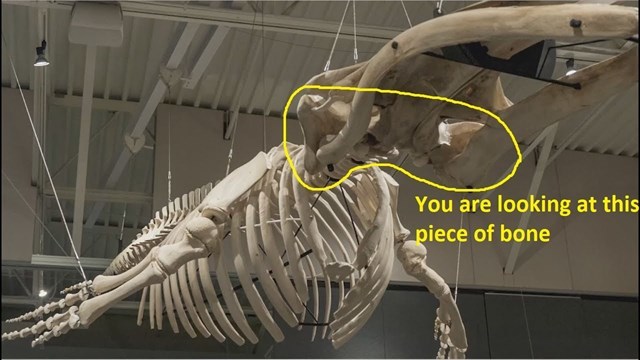
Whale Bone washed up on the beach