La Avenida de La Marina es uno de los mayores conjuntos acristalado del mundo.
In the Avenida de La Marina we can find one of the largest glazed sites in the world.
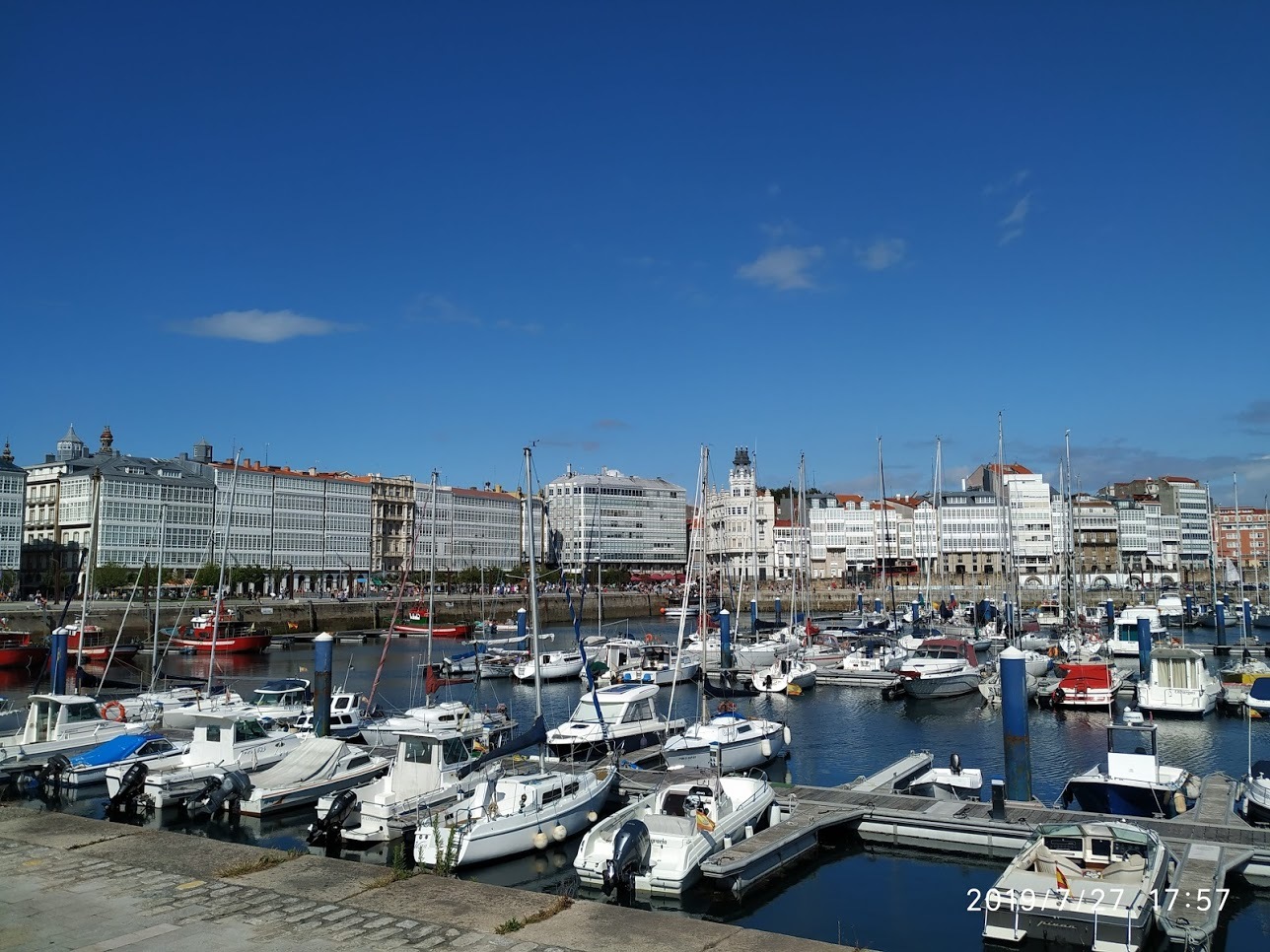
El arquitecto Juan de Ciórraga diseñó en la segunda mitad del siglo XIX el modelo de soportal que imita un paseo cubierto a orillas del mar, que entonces llegaba a la parte trasera de las edificaciones. Los muros de las puertas todavía conservan las argollas metálicas de amarre de navíos. Estos portales solían tener la anchura de un remo, tamaño óptimo para cobijar los barcos los días de temporal.
Antiguas viviendas de pescadores, las galerías formaban una cámara térmica que protegía la fachada de la lluvia y permitía relacionar visualmente el interior con el exterior, posibilitaba la ventilación, captaba el calor en invierno y refrescaba las habitaciones en verano. El conjunto se edificó en dos fases al derribarse las antiguas murallas. La primera en 1870 y 1876 y la segunda en 1879 y 1884. La fachada principal asoma a la Plaza de María Pita y calle Riego de Agua, Con el tiempo este conjunto de galerías traseras, prohibidas en el primer piso por la ordenanza municipal de 1854, se ha convertido en la imagen simbólica de la capital. Algunas tienen más de 25 metros de galería continua, otras están ornamentadas con vidrios polícromos.
Esta escenografía acristalada de las galerías proporciona al visitante un espejo que recoge los reflejos de la luz del día desde el amanecer hasta la caída de la tarde, lo que le ha otorgado a A Coruña el nombre de Ciudad de Cristal.
The architect Juan de Ciórraga designed this in an arcade style during the second half of the XIX century. It imitates a covered walkway by the sea that originally used to extend to the back of the buildings. The door fronts still preserve the metal lashing rings for the boats. These doors used to be the width of an oar, optimum size to house boats during stormy days.
The galleries are former fishermen's houses and made up a thermal chamber that protected the facade from rain and allowed the interior to be visually related to the exterior, it allowed for ventilation, collected heat in winter and kept rooms cool in summer.
The site was built in two phases once the original walls were knocked down. The first in 1870 and 1876 and the second in 1879 and 1884. The main façade looks out onto María Pita Square and calle Riego de Agua. With time this collection of galleries that were prohibited in the first floors by city ordinance has become the symbolic image of the capital. Some have more than 25 metres of continuous gallery, some are decorated with poly chromed glass. Among their illustrious inhabitants we can cite the Condesa de Fenosa.
This glazed gallery scenery offers visitors a mirror that collects daylight reflections from sunrise 'til night fall, something that has given A Coruña the name Glass City.