🇪🇸
La Cruz del Campo
El templete o humilladero de la Cruz del Campo fue erigido a las afueras de la ciudad, en la inmensidad de los campos y fértiles tierras que rodeaban a Sevilla y su función era de recibimiento o despedida de los visitantes en una de las entradas a la ciudad.
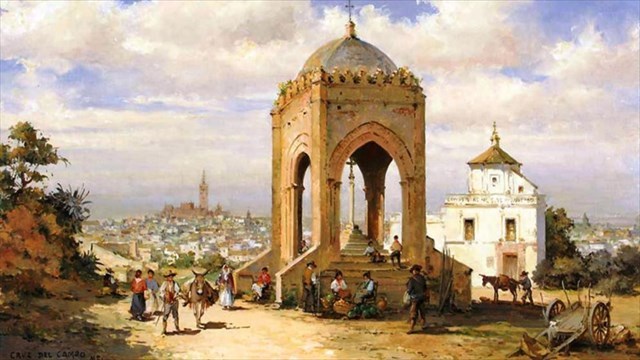
Se trata de una construcción de tipo gótico-mudéjar realizada en ladrillo, de planta cuadrada y abierta en sus cuatro lados, que se levanta sobre una plataforma de algo más de metro y medio de altura, con gradas en los costados Sur, Este y Oeste, y podio inclinado en el lado Norte. Exteriormente se rodea de una verja de hierro, añadido posteriormente, de barrotes coronados por puntas de lanza y cilindros en los ángulos rematados por piñas.
Dentro del templete cinco escalones de ladrillo suben hasta la plataforma donde está la cruz, plana de tipo latino, que se apoya sobre una columna de mármol sin basa y con capitel compuesto.
Su fecha de construcción es dudosa siendo datado por unos el año 1380, cuando lo edificaron los hermanos de la cofradía o hermandad de los negritos llamada Nuestra Señora de los Ángeles (existente desde el siglo XIV y fundada por el arzobispo Gonzalo de Mena y Roelas) situando en su interior una modesta cruz de madera.
Según otras fue en 1482, siendo responsable de tal hecho el corregidor de Sevilla Diego de Merlo (según indica en la cúpula del Templete) pero también se elucubra que el corregidor realizó solo una reforma que sustituiría la cruz de madera por una de piedra y la cubriría con el templete mudéjar. La fecha de restauración definitiva parece que fue el año 1521.
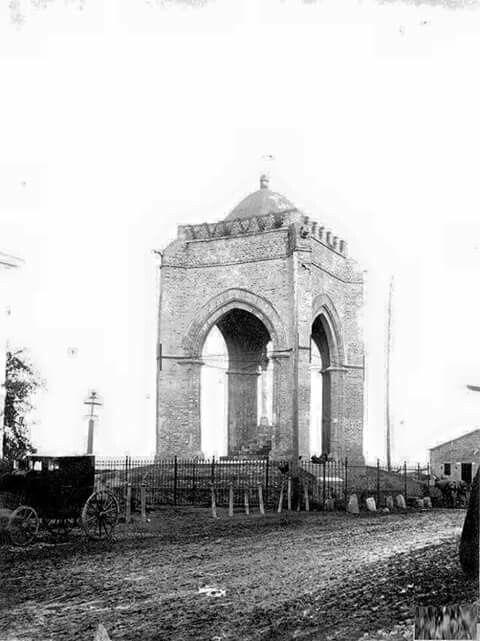
La actual cruz de mármol se atribuye a Juan Bautista Vázquez el Viejo, tallada con las imágenes de Cristo y María en el año 1571.
A partir del año 1630, el templete toma una especial relevancia al constituirse en la última estación del famoso Vía Crucis a la Cruz del Campo que comenzaba en la casa de Pilatos.
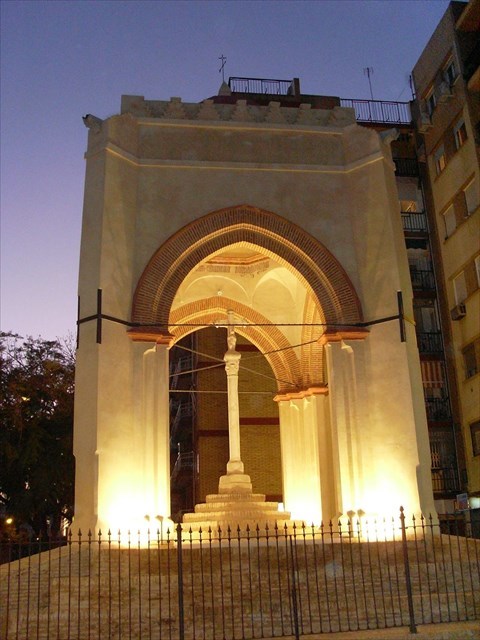
A Principios del siglo XX el edificio se convirtió en la imagen comercial de una importante fábrica de cervezas, intervenido económicamente en diferentes reformas y restauraciones del edificio.
El humilladero de la Cruz del Campo de Sevilla está declarado Bien de Interés Cultural con tipología de Monumento, según queda publicado en el Boletín Oficial del Estado de fecha 12 de septiembre de 1964.

🇬🇧
The Cross of the Field
The temple or humiliadero of the Cross of the Field was erected on the outskirts of the city, in the immensity of the fields and fertile lands that surrounded Seville and its function was of reception or farewell of the visitors in one of the entrances to the city.
It is a construction of Gothic-Mudejar type made of brick, square and open plan on its four sides, which stands on a platform a little over a meter and a half high, with bleachers on the South, East and West sides , and he could lean on the north side. Externally it is surrounded by an iron fence, added later, of bars crowned by spearheads and cylinders at the angles topped by pineapples.
Inside the temple, five brick steps go up to the platform where the Latin flat cross is, which rests on a marble column without a base and with a composite capital.
Its construction date is doubtful being dated to the year 1380, when it was built by the brothers of the brotherhood or brotherhood of the negritos called Our Lady of the Angels (existing since the fourteenth century and founded by the archbishop Gonzalo de Mena y Roelas) placing a modest wooden cross inside
According to others it was in 1482, being responsible for this fact the corregidor of Seville Diego de Merlo (as indicated in the dome of the Templete) but it is also elucidated that the corregidor made only a reform that would replace the wooden cross with a stone cross and the would cover with the Mudejar temple. The final restoration date seems to have been the year 1521.
The current marble cross is attributed to Juan Bautista Vázquez el Viejo, carved with the images of Christ and Mary in 1571.
From the year 1630, the temple takes on a special relevance as it became the last station of the famous Via Crucis at the Cruz del Campo that began at the house of Pilate.
At the beginning of the 20th century, the building became the commercial image of an important brewery, economically involved in different reforms and restorations of the building.
The humiliadero of the Cross of the Field of Seville is declared of Cultural Interest with type of Monument, as it is published in the Official State Gazette dated September 12, 1964.