If you take a walk through Historic Sandwich Towne, you will see many old and historic buildings and evidence that this area was occupied by humans for many centuries, however if you look down at your feet as you walk along Sandwich Street, you will see evidence of life from many millions of years ago in the slate and stone tiles that line the main street.
What is a Fossil?
Fossils are the physical evidence of former life from a time prior to recorded human history. These are prehistoric evidence that includes the fossilized remains of living organisms including impressions and moulds of their physical form and in many cases marks or traces created in sediment by their activities.
How do fossils form?
Fossilization is the process by which a plant or animal becomes a fossil. This process is extremely rare and only a small fraction of the plants and animals that have lived in the past 600 million years are preserved as fossils. This may be surprising, considering the millions of fossils that have been collected over the years, and the many billions still in the rocks. Those plants and animals that do become fossils generally undergo, with some exceptions, several key steps.
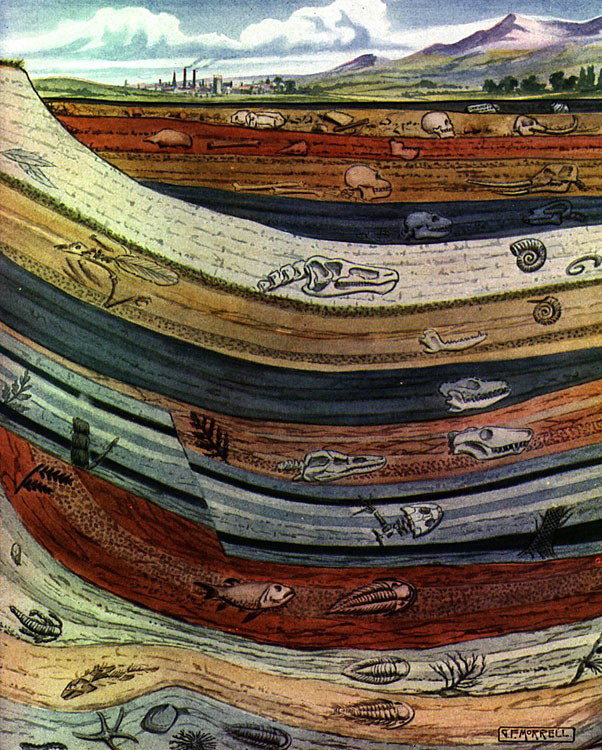
Process of fossilization
- First, the soft tissue that exists during life decays leaving behind only the "hard parts" (bone, shell, teeth).
- Hard parts may be transported and broken. This causes the fossilized remains to be incomplete representations of the living animal. It is much more common to find a fragment of shell or bone than it is to find a complete skeleton.
- Hard tissues become buried and altered. In most cases this involves destroying the original material from which the hard parts were made as minerals are slowly dissolved and replaced by new ones. Sometimes a hard part is dissolved without being replaced by new material, leaving behind only an impression or mold of the original animal. If this mold is filled with sediment that is later cemented into rock it will make a cast of the original animal.
There are two main types of fossils: body fossils and trace fossils.
Body Fossils
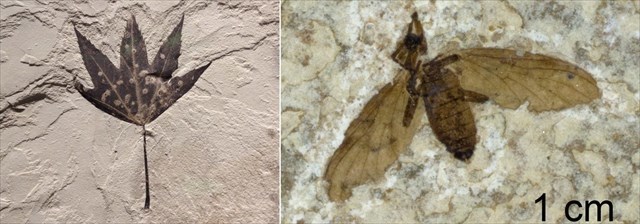
- Body fossils include any part of the actual animal or plant. Things like bones, teeth, shells, and leaves are considered body fossils.
Trace Fossils, or Ichnofossil
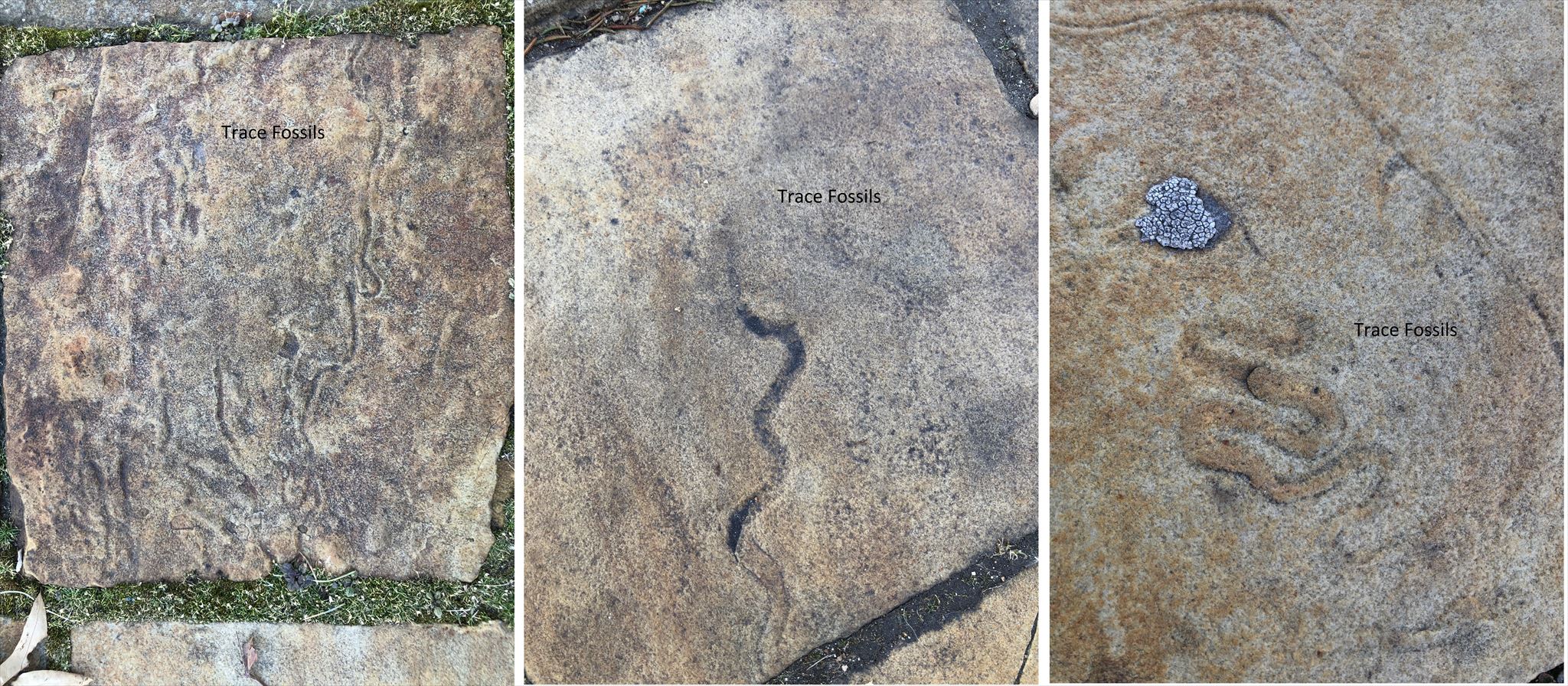
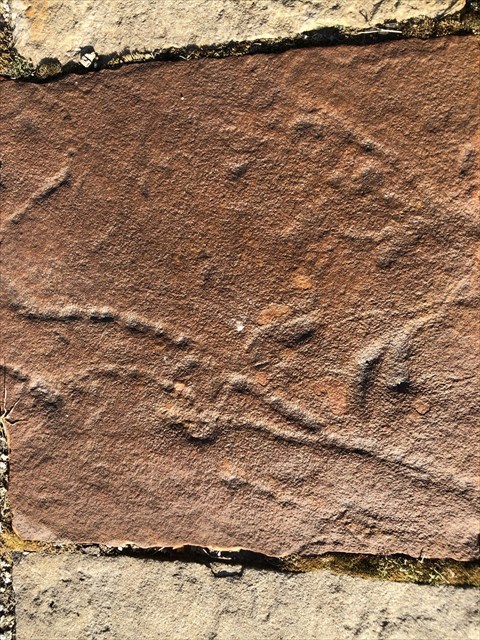
- give us proof of animal life from the past. Trace fossils include things like foot prints, burrows, and fossilized poop.
-
-
The example above shows Burrows made in sand or mud, that later filled with sand or sediment and hardened.
-
Trace fossils provide paleontologists with evidence of the activities of ancient animals - something body fossils simply can't do. Trace fossils are formed in place and can therefore tell us about the ancient environment in which the animal lived.
One single animal can make thousands and thousands of traces in its lifetime, but it will only leave behind one body when it dies. Because of this, trace fossils are much more common than body fossils.
Trace fossils are moments of time that have been captured forever in the rock record. They are a celebration of life.
Some examples:
- Track: an impression made by a single foot
- Trackway: a number of tracks made during a single trip
- Trail: an impression made by an animal without legs
- Burrows: a hole or holes an animal dug into loose sediment (like mud)
- Borings: a hole or holes an animal dug into a hard substrate (like wood or rock)
- Eggs and Nests: shells that at one time would have contained babies and the nests that the babies would have been kept in
- Coprolites: poop that has become fossilized. The world’s largest collection of coprolites can be seen at the South Florida Museum in Bradenton. Dubbed the “poozeum,” the amazing collection boasts 1277 coprolites, found across eight countries and 15 states
|
|
-
Logging Requirements
To Log this Earthcache
Please send me your answers within 4 days of posting your found log. If there is more than one cacher in your party, include the names in your group. Only one person needs to send me the group answers. No spoiler photo's please. Found logs posted without proof you visited the site will be deleted.
Questions
1. Take a look at the tiles on the ground at your feet. You will see odd shaped patterns in some tiles that are evidence of trace fossils and body fossils. From the information on the cache page, find an example of a trace fossil and estimate the width and length of the fossil? Describe what the fossil looks like. For example, do you see any examples of a track, trackway, or trail?
2. Do you believe the tiles came from the same fossil bed or different fossil beds? Hint: Do the majority of fossils appear to be similar in size or vastly different!
3. Do you see any body fossils, for example the remains of shells, stems or coral?
4. Please add an original photo of you at the cache location in front of the old Sandwich Post Office or at the second waypoint in front of Mackenzie Hall. You do not have to show your face in the photo. An photo of a thumbs up, your GPS or phone will be sufficient. Feel free to add photos of any fossils or tracks you find.
References:
1. http://geology.isu.edu/Alamo/fossils/process_fossilization.php
2. http://www.virtualmuseum.ca/sgc-cms/expositions-exhibitions/fossiles-fossils/english/sections/whatare.html

| I have earned GSA's highest level: |
 |