This EarthCache is meant to be accesible to all, and is in a location that is wheelchair, pram and foot friendly. It takes you to a corner of the Liverpool Museum. There is no need to enter the museum to undertake the EarthCache, and it is in a public location. This EarthCache is meant to be a simple one which introduces you to this subject, and there is no need to worry about any critiscism about your answers, after all the activity is meant to be enjoyable. We are not here to do a thesis for a degree in geology.
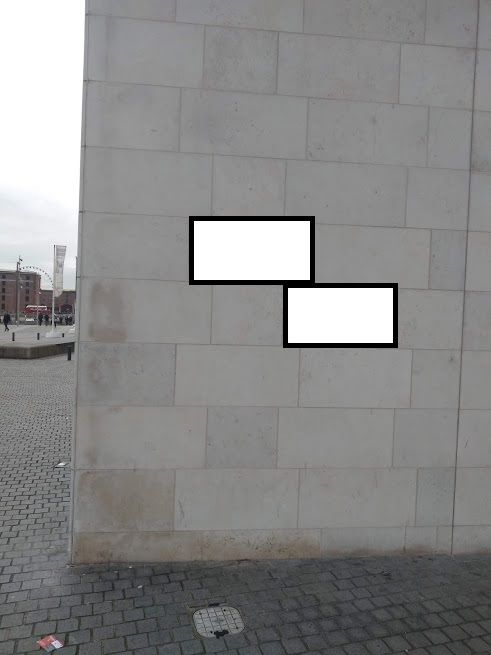
THE LOCATION.
The museum is clad in limestone, which is a sedimentary rock.
Sedimentary rocks are types of rock that are formed by the deposition and subsequent cementation of that material at the earth's surface and within bodies of water. Sedimentation is the collective name for processes that cause mineral and/or organic particles to settle in place. The particles that form a sedimentary rock by accumulating are called sediment. Before being deposited, the sediment was formed by weathering and erosion from the source area, and then transported to the place of deposition by water, wind, ice, mass movement or glaciers. Sedimentation may also occur as minerals precipitate from water solution or shells of aquatic creatures settle out of suspension.
Limestone is a sedimentary rock composed largely of the minerals calcite and aragonite, which are different crystal forms of calcium carbonate. Most limestone is composed of skeletal fragments of marine organisms such as coral, crinoids and molluscs.
STYLOLITES
We are here to learn about stylolites. If you look at the blocks which are indicated in the above photograph, you will notice some an irregular line crossing them both, these are stylolites.
Stylolites form after lithification of sediments, which is a diagenetic process. Lithification is the process of sediment forming stone, this happens due to pressure, and during this process, fluid contained in the sediment is gradually expelled. A diagenetic process, is when physical and chemical changes in sediment occur. Pressure during the lithification process can cause stylolites to form.
Types of Stylolites
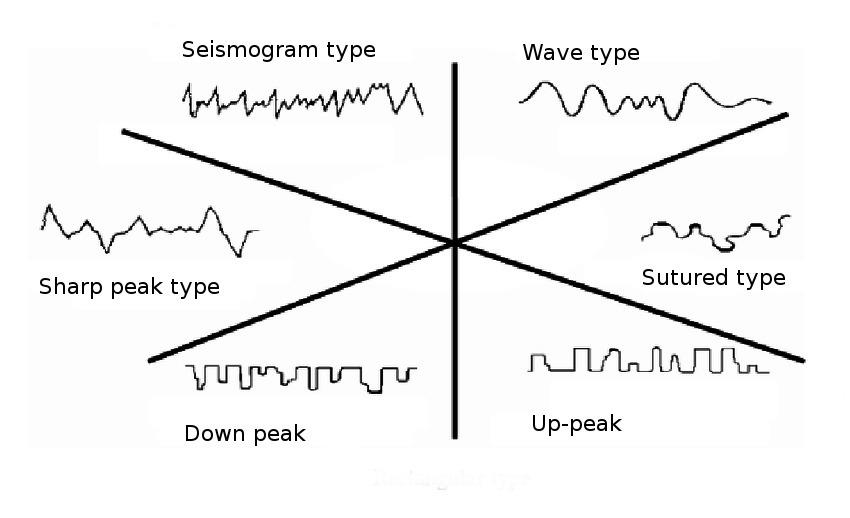
This being an EarthCache, in order to log it, I ask that you answer some questions. Please send them to me, and do not include them in your log. You can send them to me by using the message facility or email, both of which can be found by looking at my profile.
1. Using the above information please tell me what type of stylolite you can find in the two specified blocks.
2. Please describe the stylolites in terms of shape, length , diameter, and direction that they travel through the block.
3. How many sylolites can you see in each block?