Welcome to the second in the series. This one is concerning the union assault on Fort Alabama (Star Fort ...yes it was called Fort Alabama at the time of the battle.) You can visit it just down the road and also do the cache there.
James Martinus Schoonmaker, Sr.
Insert Picture
James Martinus Schoonmaker, Sr. (June 30, 1842 – October 11, 1927), was a German American Colonel in the Union Army in the American Civil War and a vice-president of the Pittsburgh and Lake Erie Railroad.
He was born in Peebles Twp. (subsequently Pittsburgh) on June 30, 1842, to James Schoonmaker and Mary Clark Stockton. James was a student at the Western University of Pennsylvania when the American Civil War began and enlisted in a local company of recruits which was assigned to the 1st Maryland Cavalry, rising to the rank of lieutenant. During the next thirteen months, he proved himself repeatedly in battle and command of his troops.
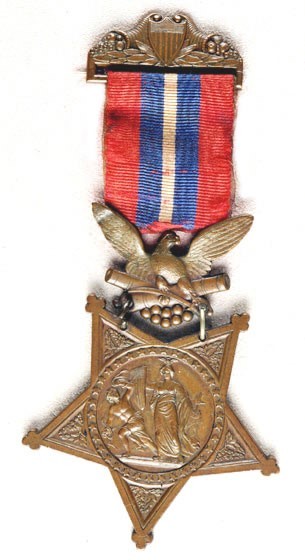
In August 1862, Schoonmaker was authorized by Secretary of War Edwin Stanton to raise the 14th Pennsylvania Cavalry Regiment and was promoted to the rank of colonel. His unit was sent to the Valley Theater in the East. During one of the Valley campaigns, he and his unit were ordered to shell the town of Lexington VA in June of 1864. He refused...saying the innocent civilians would suffer. Instead, he directed cannon fire on the Virginia Military Institute, the Confederate military college to preserve innocent life. Ordered to burn the school, Schoonmaker refused this request as well as he considered it "unnecessary and unwarranted." For his refusal to do so, he lost his command. Although VMI was burned later that day, Schoonmaker's commander later apologized for his hasty judgment and restored Schoonmaker's command. (Interesting fact but his Medal of Honor was donated to VMI by his family.)
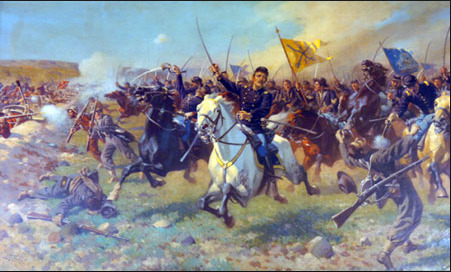
During the height of the battle in the late afternoon, Colonel James M. Schoonmaker now commanding a full brigade detected weakness to the left of the Confederate lines where an earthen fort anchored the enemy on the highest ground that protected Confederate escape routes. Seizing the initiative as George Armstrong Custer and other young Cavalry commanders had done throughout the previous year, Schoonmaker ordered his troops to prepare to launch an attack that had never been attempted during the war. Under a hail of gunfire, musketry and deadly canister, the entire brigade consisting of Schoonmakers 14th Pennsylvania, the 8th Ohio, and the 22nd Pennsylvania began an assault on the earthen compound known as Fort Alabama or "Star Fort". (located in the woods to the right leaving Winchester along Fairmont Ave. to where the road becomes Rt. 522 N)
Schoonmaker later wrote that he told his friend, Captain Ashbell Duncan, “Duncan, we must take those guns or get out of range, they are knocking holes in us as big as barn doors”. Duncan would be killed in the charge. After a failed first assault on the enemy’s front, Schoonmaker, commanding the First Brigade, First Cavalry Division of the Army of the Shenandoah moved against the fort's left as it appeared to be weakening.
Schoonmaker on his white charger at the lead and almost certainly raising this very sword above his head, he led the first charge ever attempted over such a fort with his entire brigade. With their blades glistening in the sun and colors running across the entire front of their line, Schoonmaker's brigade of Averell's division repeatedly attacked the fortified Confederate Infantry armed with 8 big guns and soldiers lying in outlying rifle trenches who lied in wait and were supported by Munford's Cavalry. On the final charge, Schoonmaker led his troopers over the walls, overrunning the works where the CS infantry began to break.
Thus, began the largest Cavalry Charge of the Civil War as Schoonmaker was joined by 3 other brigades totaling over 8,000 mounted troopers.
The Medal of Honor (pictured below) which was given on May 19, 1899, by General Philip Sheridan stated: "During the Battle of Star Fort, Virginia, at a critical period, Col. Schoonmaker gallantly led a cavalry charge against the left of the enemies line of battle, drove the enemy out of his works, and captured many prisoners." Schoonmaker was discharged by special order on July 31, 1865
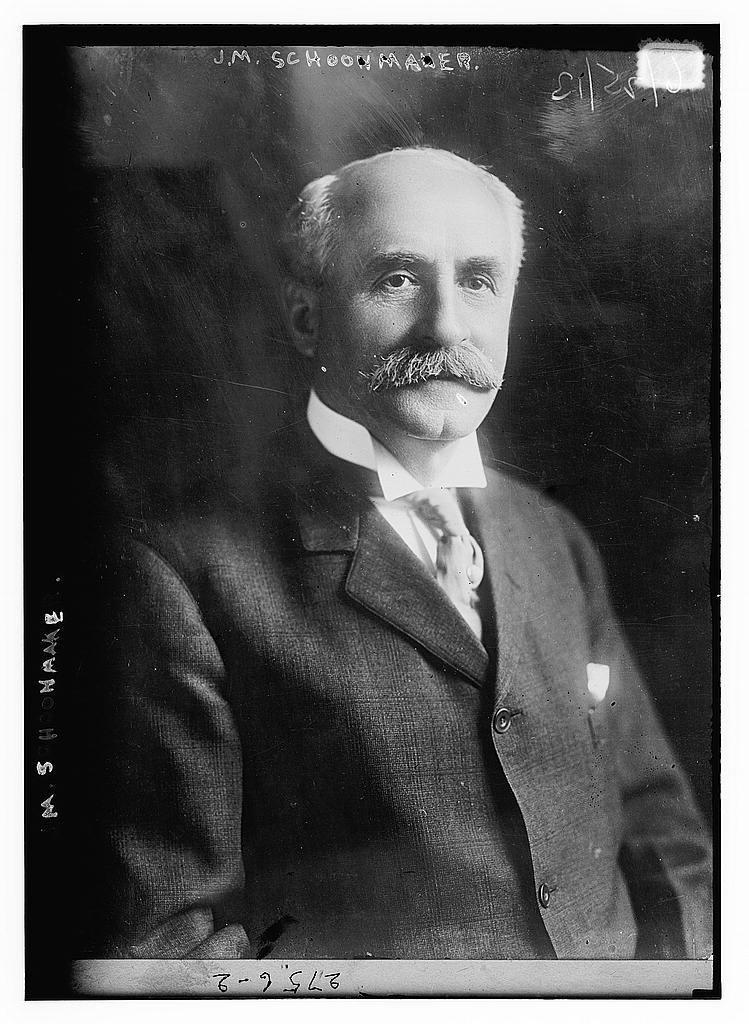
After the war, he made a fortune in coke around Pittsburgh and was on the board of directors at Mellon Bank. He married Alice Brown and Rebekah Cook and had three children: Gretchen Schoonmaker, William Schoonmaker, and James Martinus Schoonmaker, Jr. He died on October 11, 1927, in Pittsburgh.
He is buried in Homewood Cemetery in Pittsburgh.
Afterward, a bulk cargo carrier ship was launched on the great lakes in 1911 and named after him. For awhile the ship was the queen of Lakes (largest ship plying the lakes). She was later turned into a museum ship at the National Museum of the Great Lakes at the Toledo Maritime Center.

