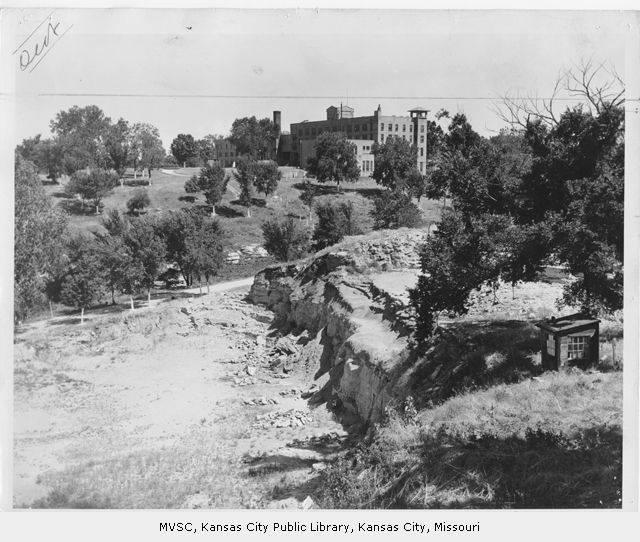
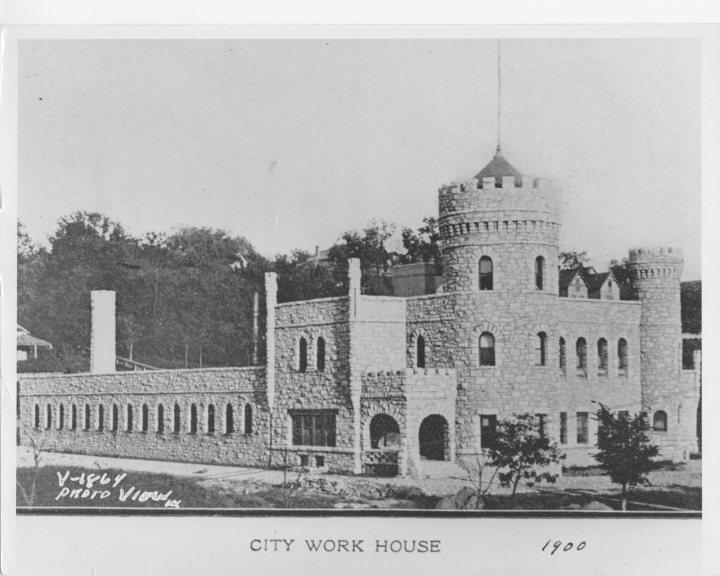
In 1908 the Kansas City Board of Pardons and Paroles had a new idea. The existing workhouses in Kansas City were overcrowded and not producing the rehabilitation desired (pictured below is the work house at 20th and Vine). The three people on the board, William Volker, Jacob Billikopf, and Kate E. Pierson, listened to Kansas City attorney Frank P. Walsh as he proposed a farm to which to send low-level criminals. The inmates were to be called simply “men,” not prisoners or inmates. They were allowed to wear regular clothes. The guards, aka foremen, were not armed. Instead, the resident men were required to work on a farm, in a quarry, on construction projects, or other labor-centered activities. They would learn new skills or improve existing ones, and learn good habits. No alcohol, cigarettes, or other drugs were allowed on the premises.
The City bought 132 acres near Leeds, MO, and the subsequent work farm, which opened in 1909, would be called Leeds Farm. Volker spent his own money on hiring the first superintendent. At first, men were the only residents at Leeds. Women were still confined to the City Workhouse in crowded, unpleasant conditions. But Volker helped them out personally as well.
He bought about 30 sewing machines for the women with his own money and then hired a professional to teach the women to sew clothing that the men would then get to wear. The women laundered the men’s clothes as well. Board member Billikopf said of the Farm’s first year in operation, “‘The effect is wonderful. The men take a new interest in things. As an experiment in character building, the farm has certainly been a success.’” (The Kansas City Times Vol. 73 No. 155 06/30/1910 p. 1) By 1911, Leeds Farm had a large dormitory for the men (they had earlier been living in a large farmhouse). Work would progress nicely on a tuberculosis hospital that would open on Christmas Day, 1915.
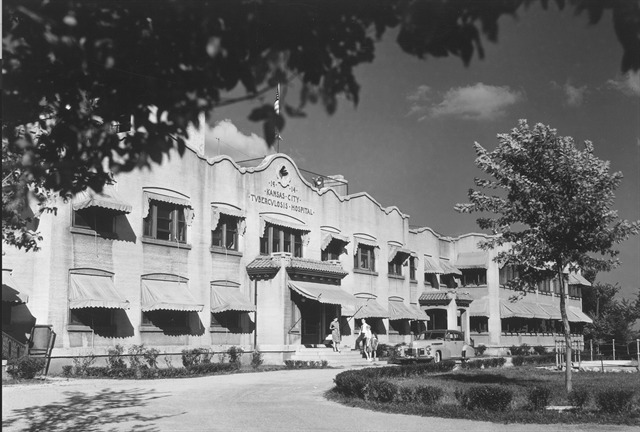
The City also created cemeteries (potters fields) for victims of tuberculosis, prisoners, and the poor who could not pay for their own burial sites. The cemeteries were active from 1907 to 1965. The oldest cemetery, east of I-435, was closed in 1934. The second cemetery, located west of I435, accepted burials from 1934-1964 and was racially segregated (see additional waypoints).
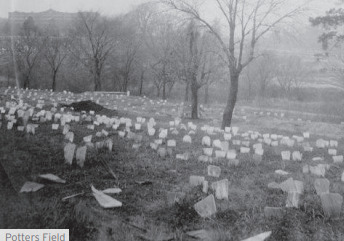
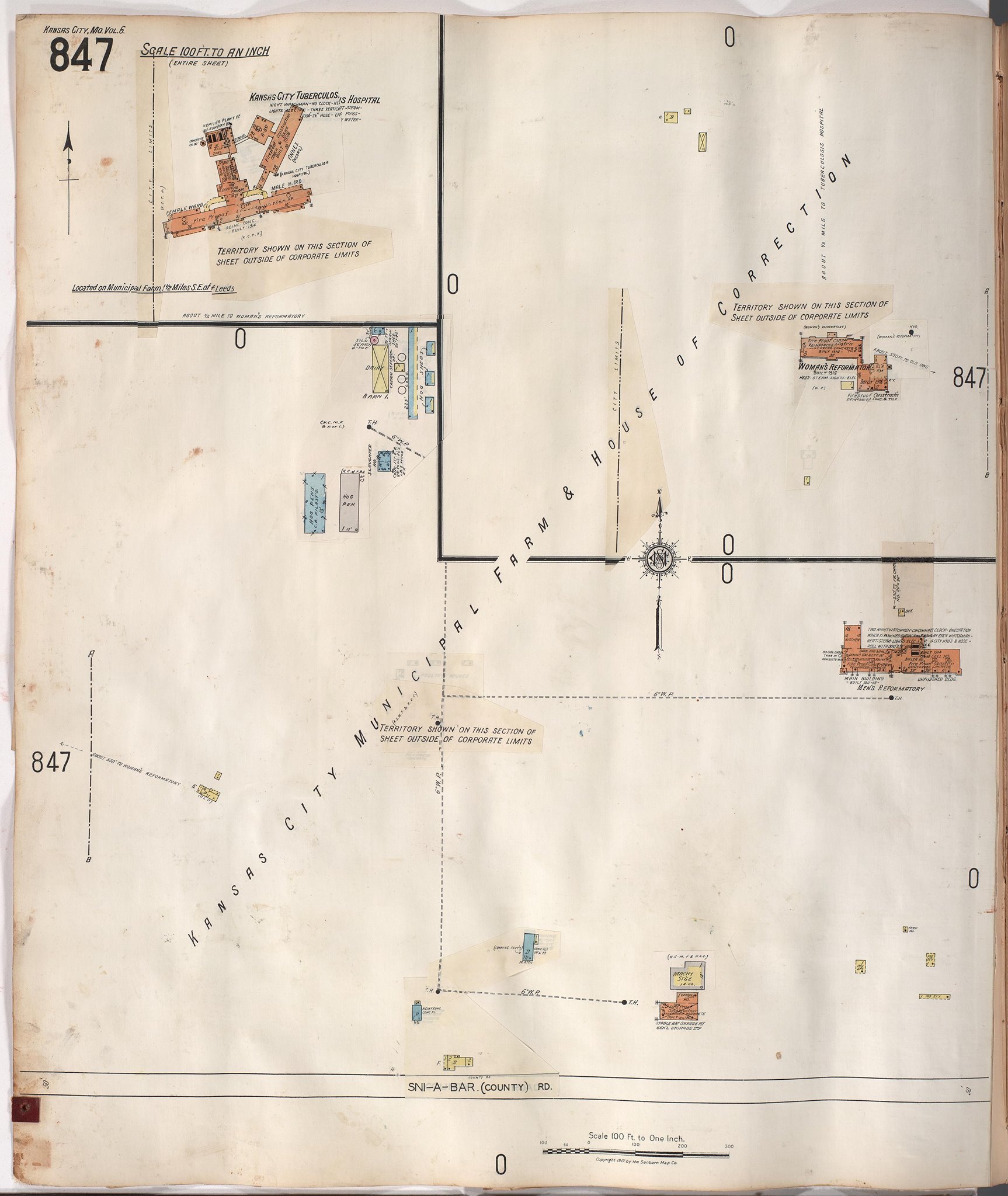
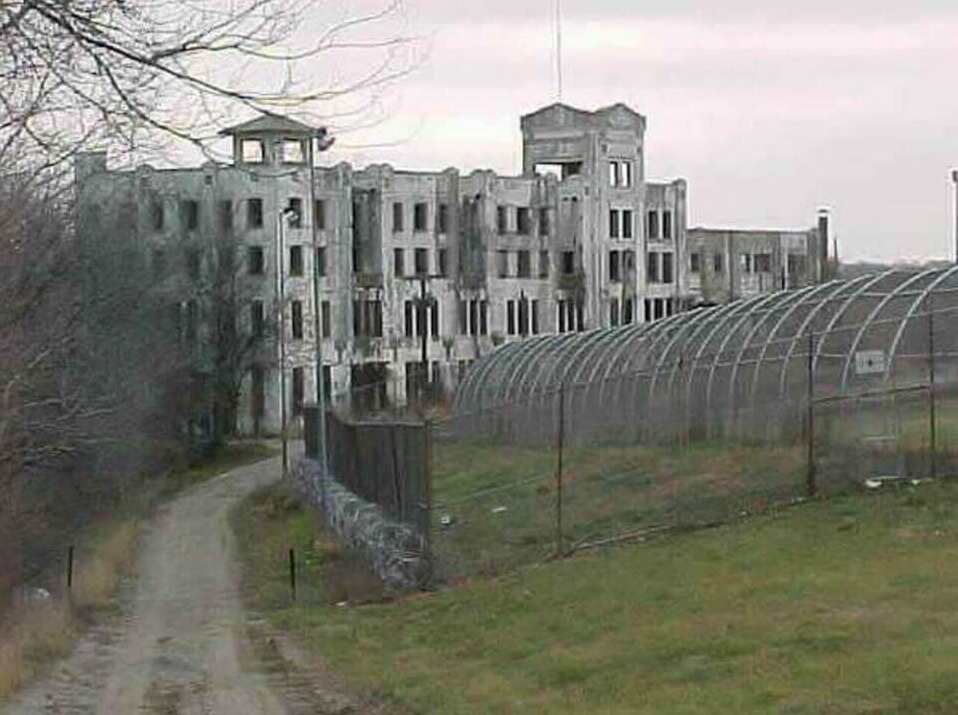
Over the years the complex expanded to include not only the men’s prison dormitory (completed in June 1911), but also a women’s reformatory (built 1917); the Leeds Tuberculosis Sanitarium (built in 1911-1915, pictured above); a farm; a dairy barn (completed ~1917); a quarry; an administrative building (built 1911-1915) that housed a shoe shop, a bakery, tailor shop, janitor department, commissary, and kitchen; two large cemeteries , and more. By the time it closed as a work farm in the 1970s, the site had grown to 441 acres.
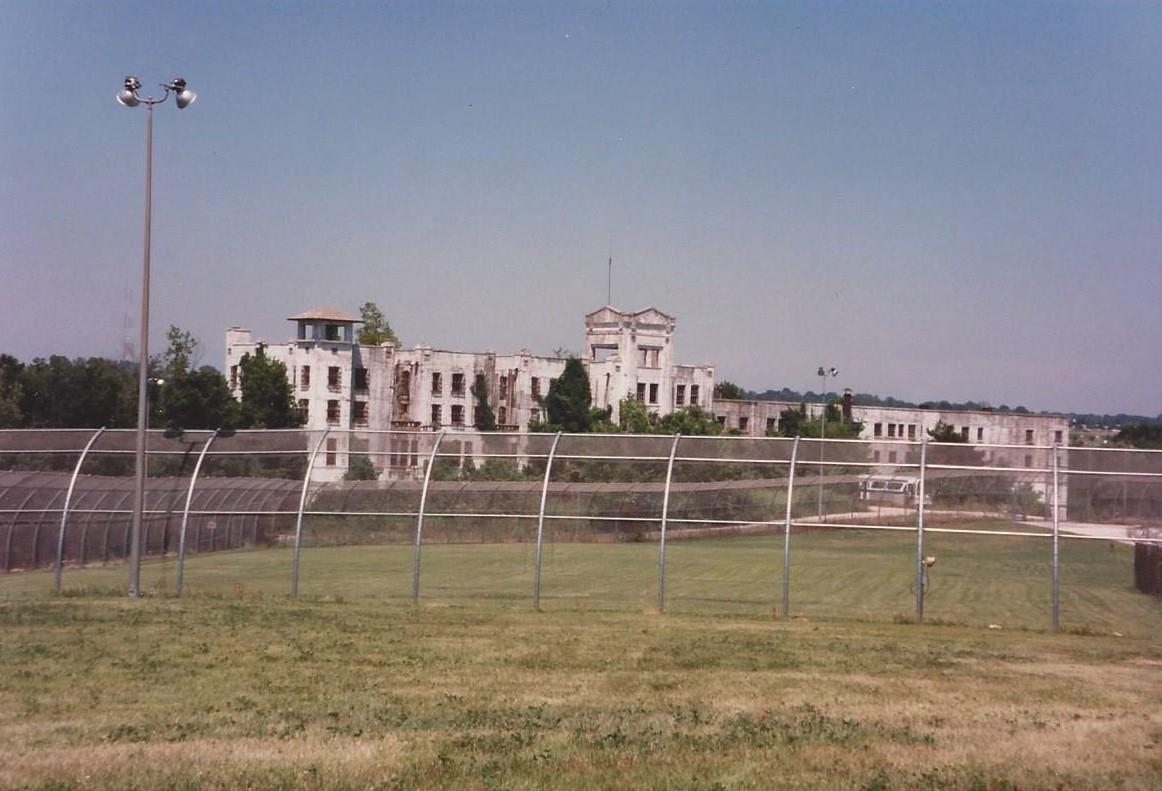
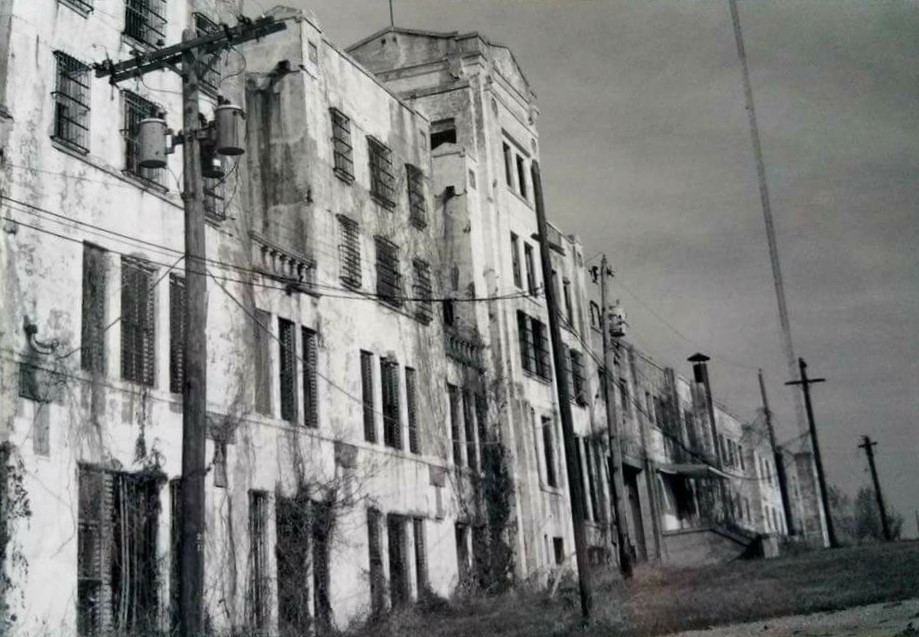
A new facility to be called the Municipal Correctional Institute (pictured above) was built on the property from 1968-1971. It was dedicated on February 28, 1971. The new building complex would house both men and women and served as a minimum-security facility for minor offenders. It included dormitories, a hospital (with dentist), dining room, kitchen, commissary, activity room, classroom, barbershop, and library. The administration building was named the Provyn Building after Cyril Provyn, a 22-year veteran superintendent of the Municipal Farm.
In the early 21st Century, all the facilities on the property closed. Many buildings were razed and the land was returned to farmland and public community gardens. The cemeteries are largely unmarked and efforts are underway to get them recognized.