Pumita
[ESP]
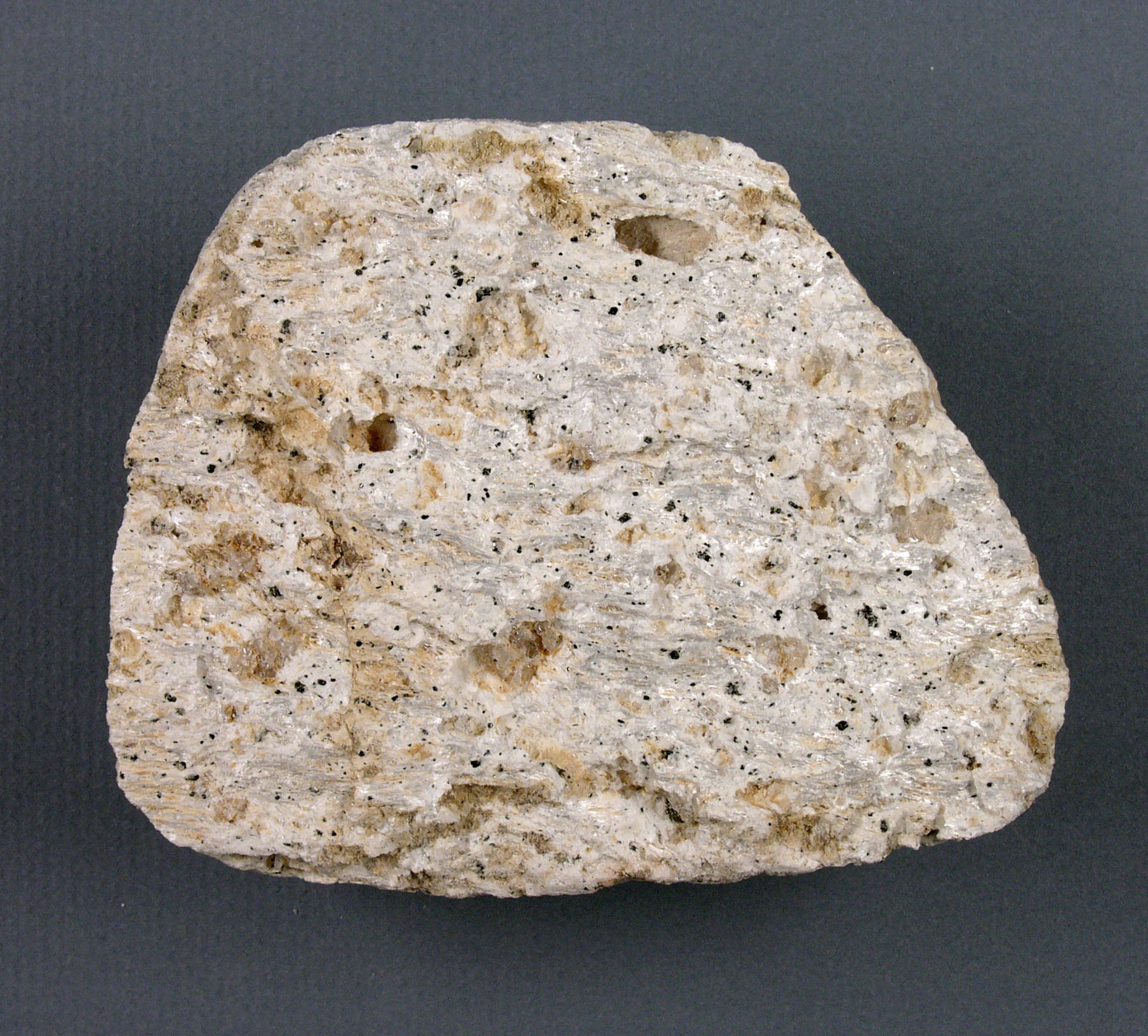
La pumita (también llamada piedra pómez, jal o liparita) es una roca ígnea volcánica vítrea, con baja densidad y muy porosa, de color blanco o gris. Cuando se refiere a la piedra pómez en lo que respecta a sus posibles aplicaciones industriales, también puede ser conocida como puzolana. En su formación, la lava proyectada al aire sufre una gran descompresión. Como consecuencia de la misma se produce una desgasificación quedando espacios vacíos separados por delgadas paredes de vidrio volcánico.
Las lluvias de piedra pómez son comunes en las erupciones de tipo vesubiano, donde llegan a sepultar grandes extensiones de terreno e incluso pueden romper tejados al acumularse en gran número sobre ellos.
Aquí en Tenerife, el Teide y el borde del cráter de las Cañadas son el resultado de mucha actividad volcánica. Por lo tanto, no sorprende que pueda encontrar todo tipo de rocas volcánicas aquí. Montaña Blanca al lado del Teide recibió su nombre debido al color claro de la piedra pómez con la que está cubierta. Cuando Co90 y yo fuimos de excursión al Alto de Guajara, nos alegramos de encontrar un enorme campo de piedra pómez en nuestro camino hacia abajo. Aquí puede aprender mucho sobre este tipo de roca y puede realizar un par de experimentos agradables y fáciles para conocer algunas de las características especiales de la piedra pómez. Necesitarás ca. 200 ml de agua para uno de los experimentos. De todos modos, debe llevar un poco de agua en su caminata.
Para poder iniciar sesión, complete las siguientes tareas.
1. Explique con sus propias palabras cómo se crea la piedra pómez durante la actividad volcánica.
2. Notará que ha llegado al campo de piedra pómez debido al cambio de sonido en su alimentación. ¿Cómo suena caminar sobre piedra pómez?
3. Trabajo en equipo: busque una pequeña piedra pómez (ca. 1x1cm). Uno de ustedes forma una taza con sus manos, el otro la llena con agua y pone la roca en el agua. ¿Lo que pasa? Describe tus observaciones.
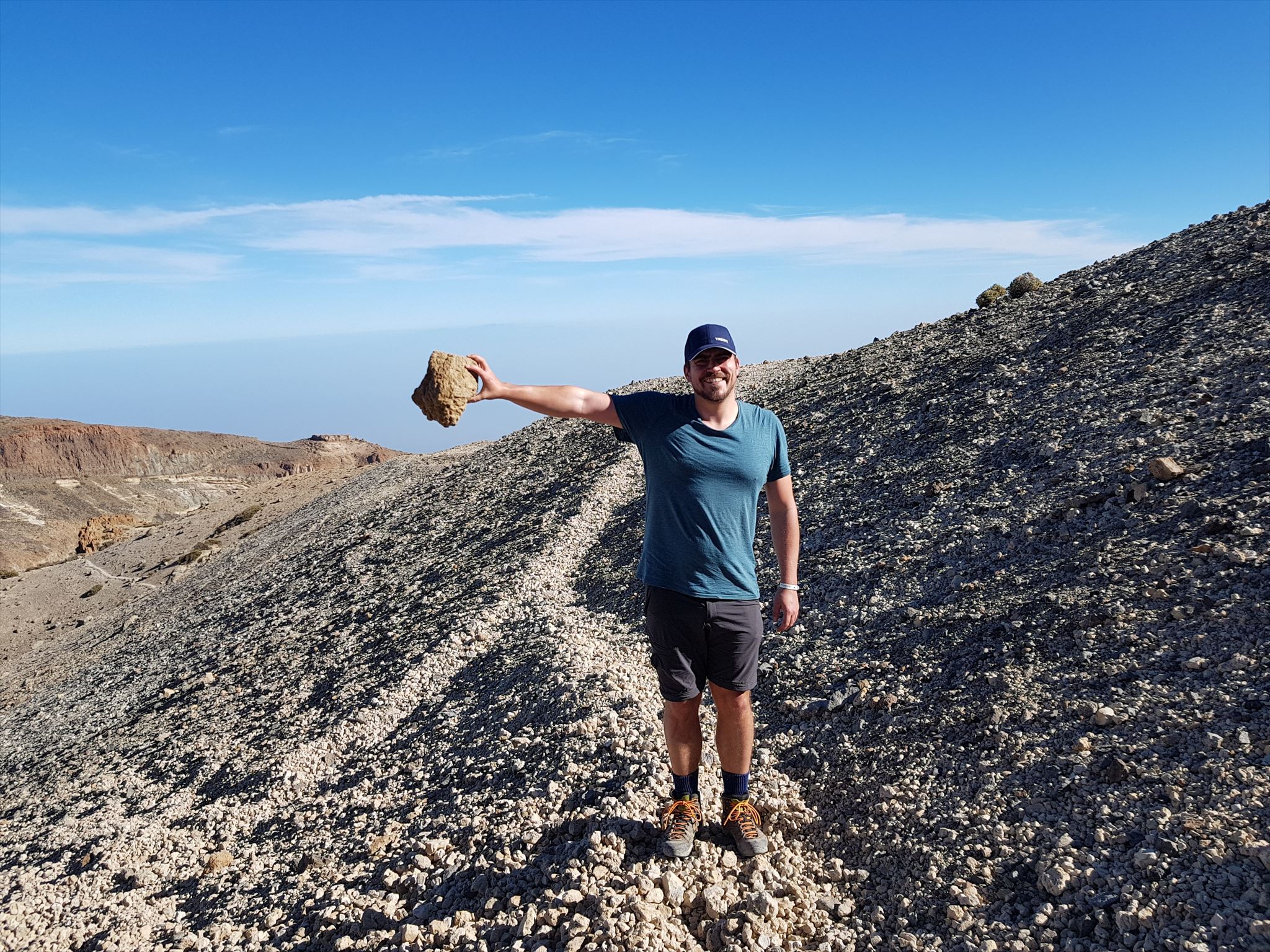
4. Encuentre una piedra pómez más grande (ca. 30x30cm). Calcule el peso de la roca y demuestre lo fuerte que es tomando una foto como la que me muestra. Desde junio de 2019, las fotos han sido un requisito de registro legítimo nuevamente. Si no quieres mostrar tu cara, una imagen de tu brazo con la roca en una mano será suficiente. Los registros sin una imagen serán eliminados.
¡Disfruta de la caminata a la zona cero y la exploración allí!
[DEU] Hallo i bims, 1 Stein vong Geologie her.
Bei diesem Earthcache geht es um Bims oder auch Bimsstein - entschuldigt bitte den Spruch, aber ich konnte es mir nicht nehmen lassen.
Bims oder Bimsstein ist ein poröses glasiges Vulkangestein, dessen Dichte aufgrund der zahlreichen Poren, die einen wesentlichen Teil des Volumens ausmachen, sehr gering ist. Seine Farbe kann stark variieren: Bims aus basaltischer Lava mit großen Blasen ist nahezu schwarz, mit zunehmendem Luftgehalt und abnehmender Blasengröße wird die Farbe heller, so dass auch nahezu weißer Bims möglich ist, sowie sämtliche Zwischentöne (etwa Gelb-Grau). Eventuell die Porengrenzen durchdringend können (auch bunte) Einlagerungen wie vulkanisches Glas und Kristalle vorkommen. Bims entsteht durch gasreiche vulkanische Eruptionen, bei denen zähflüssige Lava durch Wasserdampf und Kohlenstoffdioxid aufgeschäumt wird. Chemisch unterscheidet sich Bims nicht von anderer Lava, er ist jedoch deutlich leichter (hat ungefähr ein Drittel der Dichte) und weist aufgrund der durch vulkanische Gase verursachten Poren oft eine deutlich hellere Farbe auf als Lava gleicher Zusammensetzung. Hier auf Teneriffa zeugen der Teide und der Kraterrand der Cañadas von reichlich vulkanischer Aktivität. So überrascht es nicht, dass man hier quasi alle Formen vulkanischer Gesteine vorfindet. Der Montaña Blanca an der Flanke des Teide erhielt seinen Namen aufgrund der hellen Farbe des Bimssteines, mit dem er bedeckt ist. Auf unserer Wanderung zum Gipfel des Guajara war ich umso erfreuter, auch hier ein großes Bimssteinfeld vorzufinden. Hier lässt sich einiges über diese Gesteinsart lernen und ihr könnt auch zwei einfache Experimente durchführen, welche euch die besonderen Eigenschaften von Bims vor Augen führen sollen. Ihr benötigt ca. 200ml Wasser dafür. Genug zu trinken solltet ihr aber sowieso dabei haben auf eurer Wanderung.
Die Aufgaben, die ihr zum Loggen des EC erfüllen müsst sind die folgenden:
1. Erkläre mit eigenen Worten, unter welchen Umständen Bimsstein entsteht.
2. Dass ihr das Bimssteinfeld erreicht habt, hört ihr unter euren Füßen. Beschreibt das Geräusch.
3. Teamwork: Sucht euch vor Ort einen kleinen Bimsstein (ca. 1x1cm). Einer von euch formt mit den Händen eine Schüssel, der andere füllt diese mit Wasser und legt den Stein hinein. Beschreibt eure Beobachtungen.
4. Sucht euch einen Stein (ca. 30x30cm). Schätzt das Gewicht des Steins und zeigt wie ich auf dem Foto, wie stark ihr seid. Seit Juni 2019 sind Fotos als zusätzliche Logbedingung wieder erlaubt. Wenn euer Gesicht nicht drauf sein soll, dann reicht auch ein Foto eures waagerecht ausgestrecken Armes mit Stein in der Hand. Logs ohne Logfoto werden zeitnah gelöscht.
Viel Spaß beim Wandern und Erkunden! Sendet eure Antworten einfach per Mail oder über das Nachrichten portal. Ihr müsst nicht auf die Logfreigabe warten, aber solltet das Logfoto direkt mit anhängen.
[ENG]
Pumice is a volcanic rock that consists of highly vesicular rough textured volcanic glass, which may or may not contain crystals. It is typically light colored. Pumice is created when super-heated, highly pressurized rock is violently ejected from a volcano. The unusual foamy configuration of pumice happens because of simultaneous rapid cooling and rapid depressurization. The depressurization creates bubbles by lowering the solubility of gases (including water and CO2) that are dissolved in the lava, causing the gases to rapidly exsolve (like the bubbles of CO2 that appear when a carbonated drink is opened). The simultaneous cooling and depressurization freezes the bubbles in a matrix. Eruptions under water are rapidly cooled and the large volume of pumice created can be a shipping hazard for cargo ships.The pores of pumice and pumicite can have sizes from a wide range. Namely, the size of the pores can be as large as parts of micrometre (μm) and more rough pores with sizes up to 2-3 mm. The main difference between pumice and the pumicite is in the size of the grains. More specifically, the material with grain size of 2 mm or larger (up to large blocks) is classified as pumice. On the other hand, the material with size of grains smaller than 2 mm (including the fine dispersed material) is classified as pumicite.
Here on Tenerife, the Teide and the crater rim of the Cañadas are results of a lot of vulcanic activity. Therefore it is hardly suprising that you can find all kinds of vulcanic rocks here. Montaña Blanca by the side of El Teide got his name because of the light colour of the pumice that it is covered with. When Co90 and I hiked to Alto de Guajara, we were happy to find a huge pumice field on our way down. Here you can learn a lot about this type of rock and you can carry out a couple of nice and easy experiments to get to know about some of the special features of pumice. You will need ca. 200 ml of water for one of the experiments. You should take some water with you on your hike anyway.
To be allowed to log, complete the following tasks.
1. Explain with your own words, how pumice is created during vulcanic activity.
2. You will notice that you have arrived at the pumice field because of the change of sound under your feed. What does it sound like to walk on pumice?
3. Teamwork: Search for a small pumice rock (ca. 1x1cm). One of you forms a cup with their hands, the other one fills it with water and puts the rock into the water. What happens? Describe your observations.
4. Find a bigger pumice rock (ca. 30x30cm). Estimate the weight of the rock and prove how strong you are by taking a picture like the one that shows me. Since June 2019, photos have been a legitimate logging requirement again. If you don't want to show your face, a picture of your arm with the rock in one hand will be enough. Logs without a picture will be deleted.
Enjoy the hike to ground zero and the exploration there!
Please send your answers via email or via the message system. You don't have to wait for an answer, but should attach the log picture to your log rightaway.
Log picture example: