To log this earthcache, please don’t stress about answering the questions. Simply send your best attempts in a private message to me, (the cache owner), and then go ahead and log it as found.
You don’t need to wait for my approval. All attempts will be accepted.
Go ahead and have fun learning! 
- [REQUIRED] Please post a photo in your log of yourself or a personal item at the outcrop to prove you visited the site.
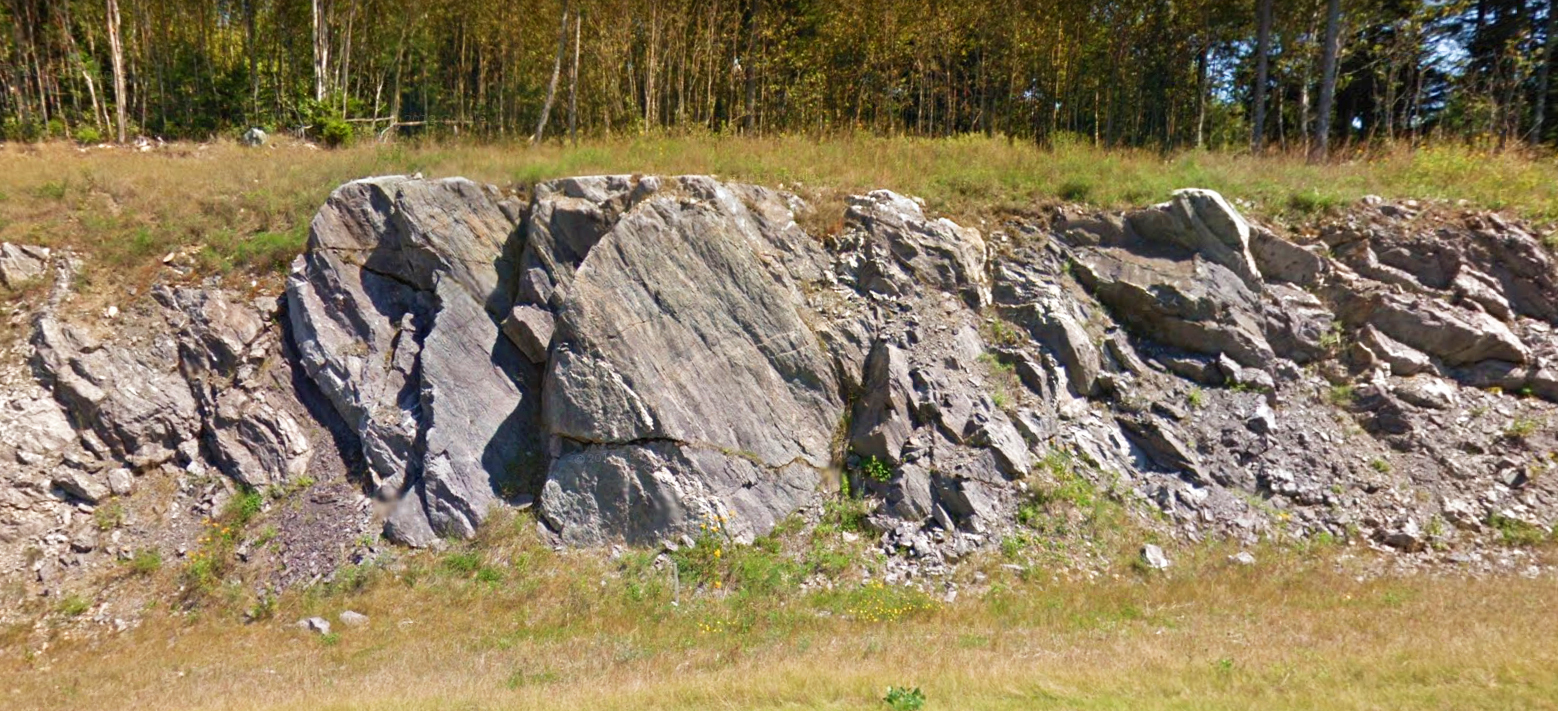
- Can you see any layers visible on the outcrop?
- Part of this outcrop has been caught up in fault movements and crushed into flaky fragments. Describe which part of the outcrop you see evidence of this and what it looks like.
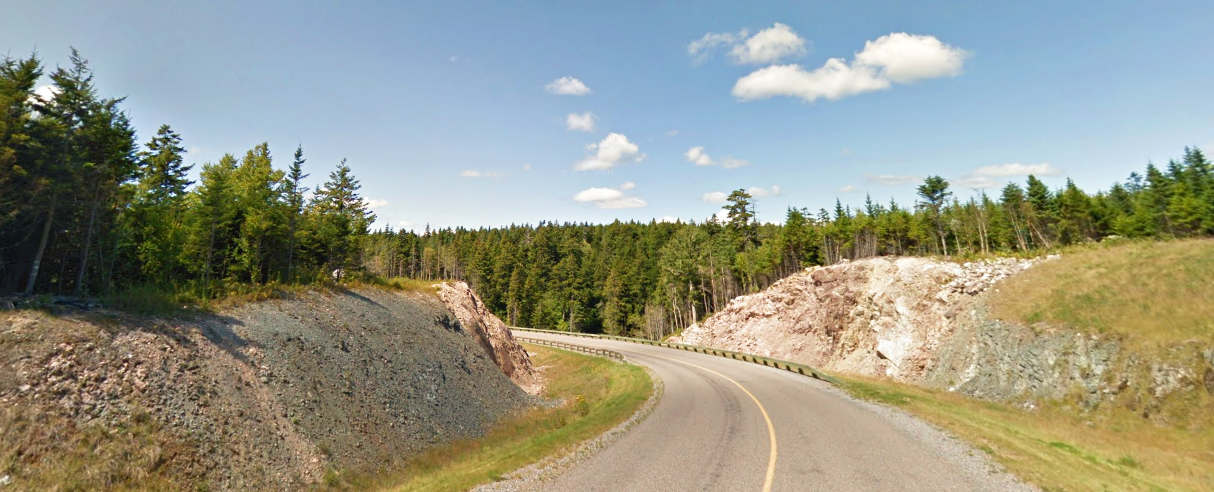
At this point on the Fundy Trail Parkway you will find tilted slabs of Cambrian sedimentary rock. Cambrian rocks have a special biological significance, because they are the earliest to contain diverse fossils of animals. These rocks also include the first appearances of most animal phyla that have fossil records. Cambrian evolution produced such an extraordinary array of new body plans that this event has been referred to as the Cambrian explosion. The beginning of this remarkable adaptive radiation has been used to divide the history of life on Earth into two unequal eons.
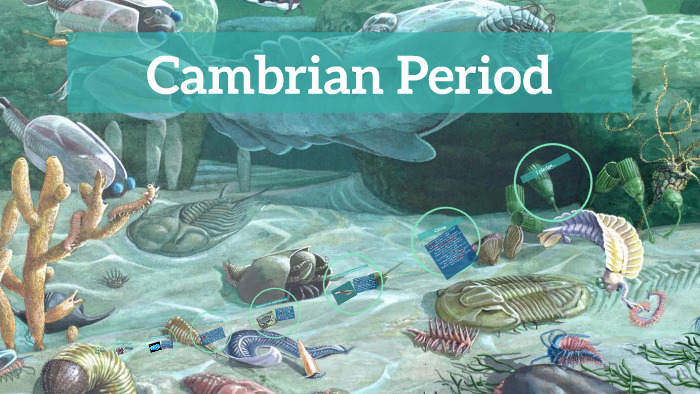
The older eon, spanning approximately four billion years of Precambrian time (and sometimes referred to as the Cryptozoic Eon), began with Earth’s formation some 4.6 billion years ago. The Precambrian also includes the first appearance of life on Earth, which is represented by rocks with mainly bacteria, algae, and similar primitive organisms. The younger, approximately half-billion-year-old Phanerozoic Eon, which began with the Cambrian explosion some 541 million years ago and continues to the present, is characterized by rocks with conspicuous animal fossils.
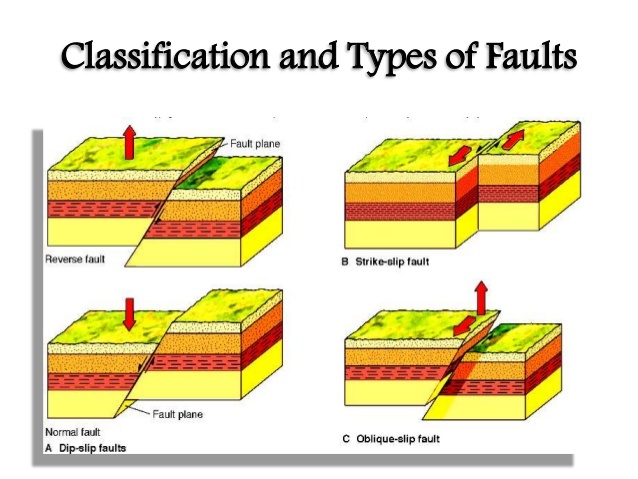
At this outcrop, large scale folds and faults have created a complex series of outcrops. Folds occured when originally flat and planar surfaces are bent or curved as a result of permanent deformation. The folds in the rocks vary in size. The folds occured when originally flat and planar surfaces were bent or curved as a result of permanent deformation. The folds in the rocks vary in size .
From here to Long Beach, the parkway passes in and out of these sedimentary layers. The sedimentary rock contains layering and strong banding in shades of grey. In some locations, the sedimentary rocks have been caught up in fault movements and crushed into zones of flaky fragments. Others have been stained brown, orange or yellow by iron and sulphur fluids in the fault zone.
The sedimentary rocks here are composed of many smaller rocks. They formed on the Earth’s surface through a combined process of erosion, weathering, dissolution, precipitation, and lithification. Through erosion and weathering, the effects of wind and rain, large rocks were slowly broken down into smaller ones. Erosion and weathering transformed the boulders into sediments, and dissolution —chemical weathering provided the raw materials for these sedimentary rocks.
References:
- National Geographic
- Hickman Hild, M., and Barr, S.M. 2020. Geology New Brunswick & Prince Edward Island: Touring through time at 44 scenic sites. Boulder Publications, NL, 265p.