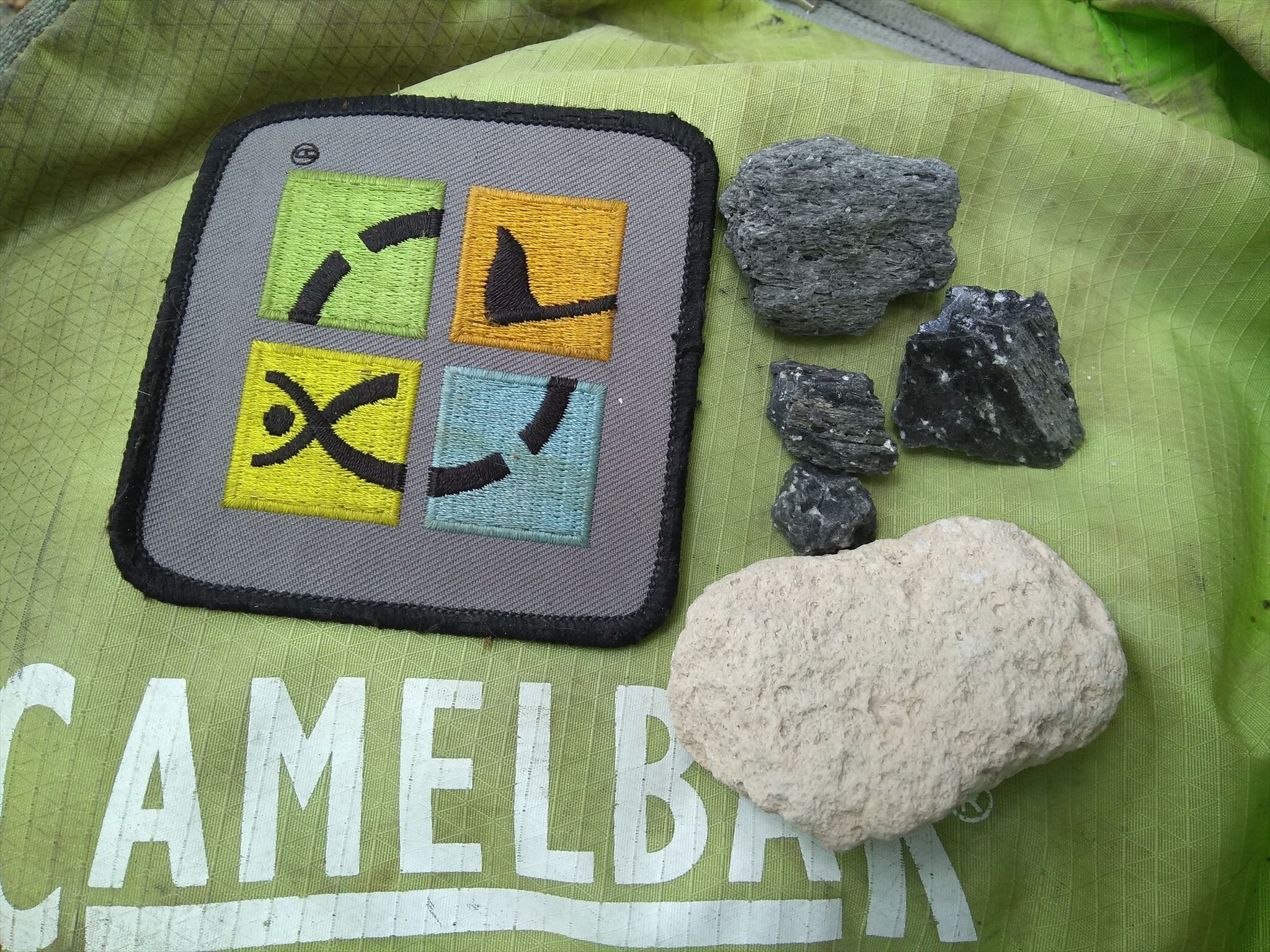
As long as there are a few rocks (pumice and obsidian) left in this container, feel free to take some for your own collection
During the great quarantine clean of 2020, I discovered my rock collection, assembled over years of studying geology in college and just picking up cool rocks along the way. Having way more rocks than we knew what to do with, we thought it would be fun to share them with fellow geocachers in a new series along the Merrimack River: the rock collection! These 15 caches are hidden in a linear fashion along a portion of the Bay Circuit Trail which can be walked or biked, across AVIS's Deer Jump Reservation (and a couple other reservations as well). The containers vary in size, but each should be an easy find. Each one highlights a different really cool rock. Tradeables may not be left in these caches, though if you collect rocks yourself you can keep a rock from some (but not all) of these caches. Coordinates for a possible trailhead are provided, though there are many places you could begin your hike.
Owens Valley
Though most famous for its involvement in the California Water Wars, fights over water supplies for the city of Los Angeles (which left Owens Valley arid and waterless in 1970 and inspired the 1974 film Chinatown, Owens Valley has a lot of interesting geology as well. Because it is so dry the underlying rock is exposed at the surface and in college I participated in a geology field trip to study volcanic activity in the area. Owens Valley is within the basin and range portion of the United States, and the valley formed as the underlying earth extended and fractured below it. The resulting volcanic activity left behind many volcanic rock deposits including beds of obsidian, tuff, and pumice, all of which can be found in this cache. Obsidian is a glassy black rock, formed when liquid lava cools extremely quickly (right in this photo; though the obsidian in this cache is mixed with tuff and full of impurities); tuff is a lighter rock formed by the solidificaton of volcanic ash as it lands on the earth's surface (also dark colored in this cache, top in photo); and pumice is the lightest of all and forms when frothy lava solidifes rapidly trapping air bubbles inside (bottom in the photo). Yes, pumice floats!