Welcome to Prairie Park Rain Garden!
In 2012, Pittsfield Township set out to promote sustainable stormwater management and improve the curb appeal of the front yard of the township's Administration Building, where a sizeable depression existed. The low spot retained water runoff and frequently presented as a quasi retention basin. In addition, the drainage of this particular section is comprised of impervious soil, a condition that is common in this region. The rain garden here was constructed to mitigate the low spot. Trees and native plants were placed to help with the aesthetic, water filtration, and carbon sequestration. It is the first of many rain gardens in the township to address water runoff issues as well as beautify the area!
Welcome to Pittsfield Township's Prairie Park. Before you stands a beautiful example of the rain garden project mentioned above. Read on to discover the geology of this rain garden and learn about its construction as well as its important functions.
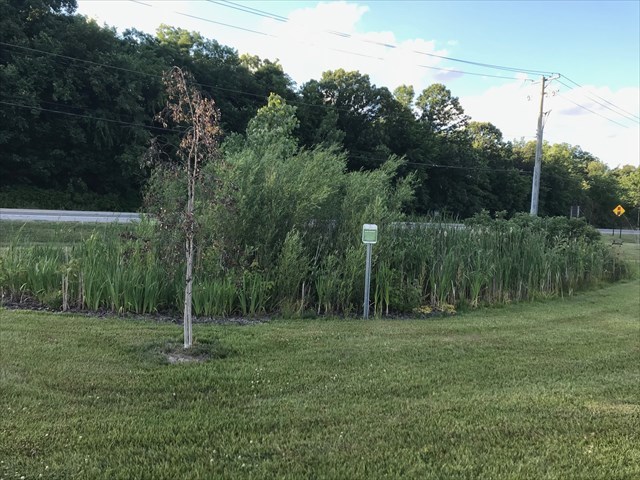
The township rain gardens began as a demonstration project to inspire township residents and business-owners to see the beauty, understand the benefits, and create their own rain gardens. Prior to the establishment of this garden, this sloped area collected rain water runoff from the surrounding impermeable parking lot, building roof, and clay soil. Pollutants such as particles of dirt, fertilizer, chemicals, litter, oil, and bacteria would potentially collect here and then enter storm drains untreated and flow directly to nearby streams and ponds. The United States EPA estimates that pollutants carried by rainwater runoff accounts for 70% of all water pollution. Rain gardens are effective in removing up to 90% of nutrients and chemicals and up to 80% of sediments from the rainwater runoff. Rain gardens allow for 30% more water to soak into the ground compared to an average lawn.
The rain garden makes sense because it reduces the amount of water, both force and volume, that enters into nearby creeks and streams. When rain falls on impermeable surfaces or mowed grass, it flows quickly over the surface, gathering volume and speed as it moves downhill.. As the flow enters a creek or detention area, the force of the water can cause erosion. Rain gardens slow down, capture, and absorb water into the ground, reducing runoff that can overload streams and cause flooding and erosion. This is a hard-working garden!
The rain garden is like a big bowl that catches the rain water and holds it back long enough for water to filter down into the soil, stones, and rocks placed at its creation. This happens with the aid of plant roots because water follows root pathways down into the ground. The deeper the roots, the quicker and deeper the water moves downward. Because turf grass roots are shallow, lawns do a poor job of filtering water. In the design of a rain garden, typically six to twelve inches of soil is removed and altered with tillage, compost and sand, and stones to increase water infiltration.
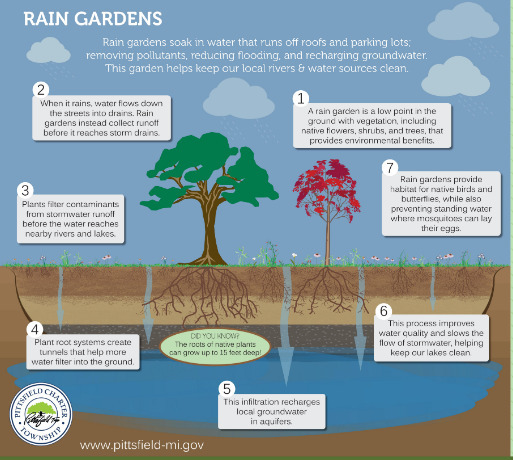
By design, the garden is dry most of the time. The soil, organic material, and stones drain the water quickly, preventing the collection of standing water and then the breeding of mosquitoes. The addition of the native plants attracts birds and butterflies and greatly enhances the landscape. Rain gardens are beautiful!
Since Pittsfield Township installed this first and iconic rain garden, they have expanded on cultivation of rain gardens both at its public and linear parks. The initiation of the 2019 Green Corridors initiative will further enhance installation of rain gardens and other green infrastructure in the community.
Our thanks to Pittsfield Township Parks and Recreation Department for granting permission for this EarthCache placement.
Questions:
1. Look at your surroundings. Why do you think the rain garden was created here?
2. What problems does this rain garden address?
3. Why do the layers of rock and soil filter runoff water better than ordinary mowed lawn?
4. How does the rain garden prevent erosion? Why is that important in this particular location?
5. Mark your visit of the Prairie Park Rain Garden by posting a picture of yourself with the beauty of the landscape in the background.
References:
Pittsfield Township Rain Garden Website
Rain Garden 2012 Prospectus
Ann Arbor Rain Gardens Map
Pittsfield Township Facebook Page