SAMBAR DEER
The sambar (Rusa unicolor) or generally known as rusa in Malaya and payau in East Malaysia is a large deer that is native to Malaysia and it is sadly listed as a vulnerable species on the IUCN Red List since 2008. It is one of the biggest of the deer family. Unfortunately, the population have declined substantially due to severe hunting and exploitation of their habitat.
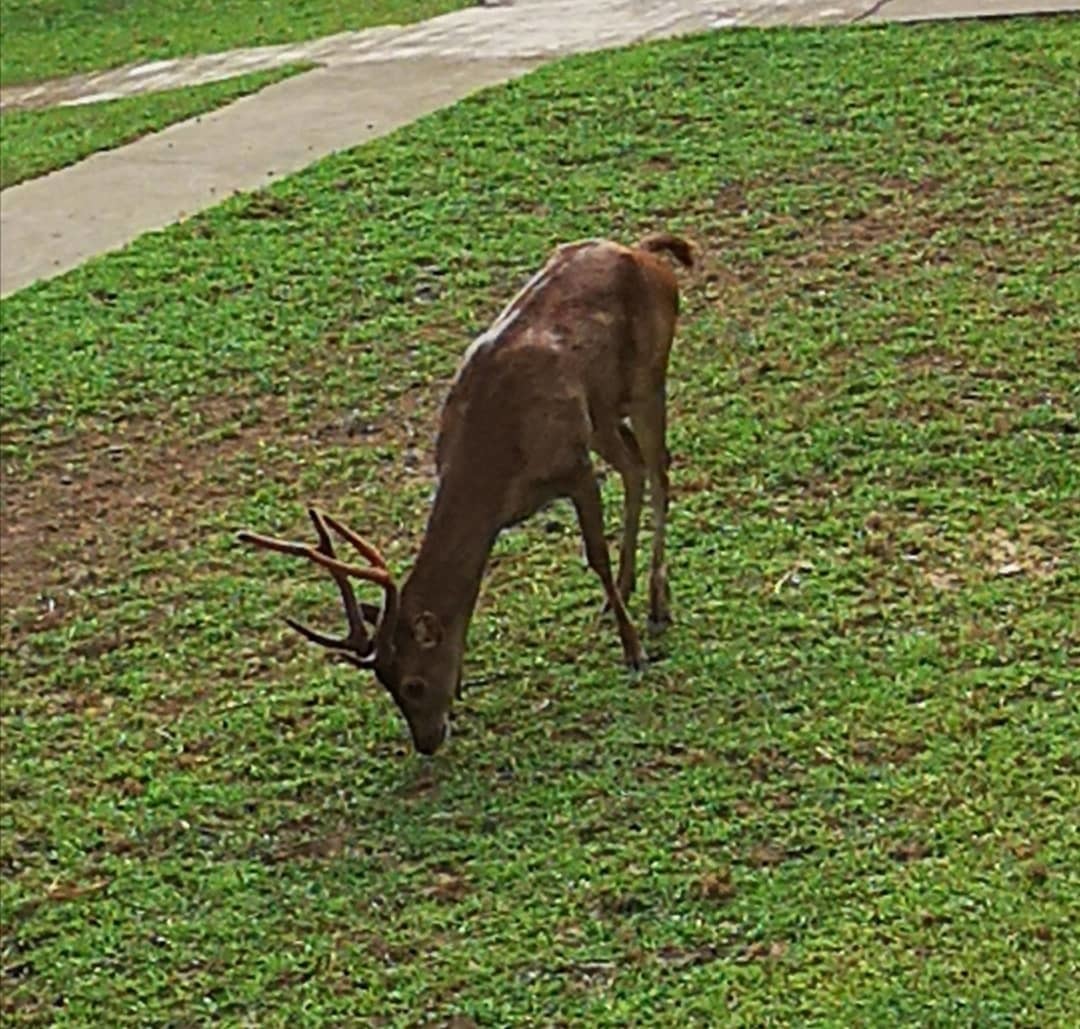
The Rusa or Payau
Sambar deer can attain a height of 102 to 160 cm (40 to 63 in) at the shoulder and may weigh as much as 546 kg (1,204 lb), though more typically 100 to 350 kg (220 to 770 lb). The large, rugged antlers are typically rusine, the brow tines being simple and the beams forked at the tip, so they have only three branches. The antlers are typically up to 110 cm (43 in) long in fully adult individuals and only the males have antlers.
The shaggy coat can be from yellowish brown to dark grey in colour, and while it is usually uniform in colour. Sambar also have a small but dense mane, which tends to be more prominent in males. The tail is relatively long for deer, and is generally black above with a whitish underside.
The sambar deers are nocturnal. The males live alone for much of the year, and the females live in small herds of up to 16 individuals. In some areas, the average herd consists of only three or four individuals, typically consisting of an adult female, her most recent young, and perhaps a subordinate, immature female. They often congregate near water, and are good swimmers. Like most deer, sambar are generally quiet, although all adults can scream or make short, high-pitched sounds when alarmed. However, they more commonly communicate by scent marking.
Sambar deers feed on a wide variety of vegetation, including grasses, foliage, browse, fruit, and water plants, depending on the local habitat. They also consume a great variety of shrubs and trees. They mate and reproduce year-round, sambar calving peaks seasonally. The female will be in heat for around 18 days. The male establishes a territory from which he attracts nearby females, but he does not establish a harem. The male stomps the ground, creating a bare patch, and often wallows in the mud. While they have been heard to make a loud, coarse bellow, rutting stags are generally not vocal. Large, dominant stags defend nonexclusive territories surrounded by several smaller males, with which they have bonded and formed alliances through sparring. When sparring with rival males, sambar lock antlers and push, they sometimes stand on their hind legs and clash downward into each other. Females also fight on their hind legs and use their fore legs to hit each other in the head.
Courtship is based more on tending bonds rather than males vocally advertising themselves. Females move widely among breeding territories seeking males to court When mounting, males do not clasp females. The front legs of the male hang loosely and intromission takes the form of a "copulatory jump".
Gestation probably lasts around 8 months. Normally, only one calf is born at a time. Initially weighing 5 to 8 kg (11 to 18 lb), the calves are usually not spotted, although some subspecies have light spots which disappear not long after birth. The young begin to take solid food at 5 to 14 days, and begin to ruminate after one month.
The Geocache
The geocache is a small bottle with a logbook inside. Bring your own pencil to log your find.

Take note of the Opening Hours

Join us at Geocaching Malaysia