Skip to content

Cerro Volcánico de la Miñosa EarthCache

Hidden : 10/6/2021
Difficulty:
2 out of 5
Terrain:
1.5 out of 5

Size: Size:   other (other)

Join now to view geocache location details. It's free!

Watch

How Geocaching Works

Please note Use of geocaching.com services is subject to the terms and conditions in our disclaimer.

Geocache Description:


Localización

Al Nordeste de la sierra del Altorey sorprende encontrar en medio del páramo multicolor una zona grisácea, casi negra en la que apenas florece nada y en la que se distinguen varios círculos, como si de bocas de volcán se tratara.  Están formados por afloramientos de andresita, roca magmática del periodo Triásico (cuando se formó el Sistema Central)  que han sacado a la superficie erupciones y terremotos. De ahi que sean conocidos como cerros volcánicos. 


Andesita

La andesita es una roca ígnea extrusiva y también subvolcánica que es de composición química intermedia, es decir que tiene entre el 52 al 63% de sílice (SiO2), comúnmente suele tener textura porfídica y a veces afanítica, además, mineralógicamente se compone de anfibol, plagioclasas y piroxenos principalmente.

A pesar de que la andesita se considera como una roca extrusiva, también puede tener un origen intrusivo a manera de roca subvolcánica, en estructuras que se conocen como diques y también filones o sills. En cuanto a las propiedades físicas y químicas representativas de la andesita, se pueden mencionar las siguientes.

Origen

La andesita es el producto más común que se genera en el volcanismo relacionado con márgenes convergentes activos, es decir en arcos volcánicos continentales y arcos de islas. Por lo tanto, el fundido magmático que genera a las andesitas proviene directamente de a fusión parcial de la litósfera oceánica descendente o subducida.


Color

Las andesitas generalmente se presentan en color gris claro a oscuro y a veces un poco verdosas. Son de gris claro cuando existe un dominio marcado de las plagioclasas y la presencia de cuarzo. Son gris medio cuando existe un equilibrio entre minerales ferromagnesianos y no ferromagnesianos. Es gris oscuro a casi negra en la variedad de andesitas basálticas que incluso si tiene olivino puede ser verdosa oscura.


Minerales principales y accesorios

La andesita mineralógicamente se compone de anfíboles (alrededor del 20%), plagioclasas (un 30% aproximadamente) y piroxenos (en promedio un 7%). Con respecto a los anfíboles es la hornblenda la que principalmente compone a la roca. Mientras que en los piroxenos el más común es la augita, pero también puede estar presente la broncita e hiperstena. Las plagioclasas que componen la roca son principalmente la Bitownita, labradorita y oligoclasa (contenido intermedio de sodio y calcio).
Como minerales accesorios se destaca a la biotita (menos del 5%), al feldespato potásico (menos del 5%) y al cuarzo (menos del 2%), el cuarzo es raro. Otros minerales accesorios son la magnetita, el olivino, granate e ilmenita.

Composición química

La andesita es una roca que cristaliza desde un fundido magmático de composición química intermedia, es decir que está en el rango entre el 52% al 63% de sílice (SiO2). Esta roca puede estar en promedio al 56% de sílice (SiO2), sin embargo, hay una variedad que se conoce como andesitas basálticas donde el mineral accesorio es el olivino, y pueden tener un 53% de sílice (SiO2) casi siendo máfica. Con respecto al óxido ferroso (FeO), éste llega al menos al 4%. Mientras que se destaca el contenido de óxido de aluminio (Al2O3), que está entre el 14% al 17%. El óxido cálcico (CaO) alcanza un porcentaje del 6% aproximadamente.

Textura
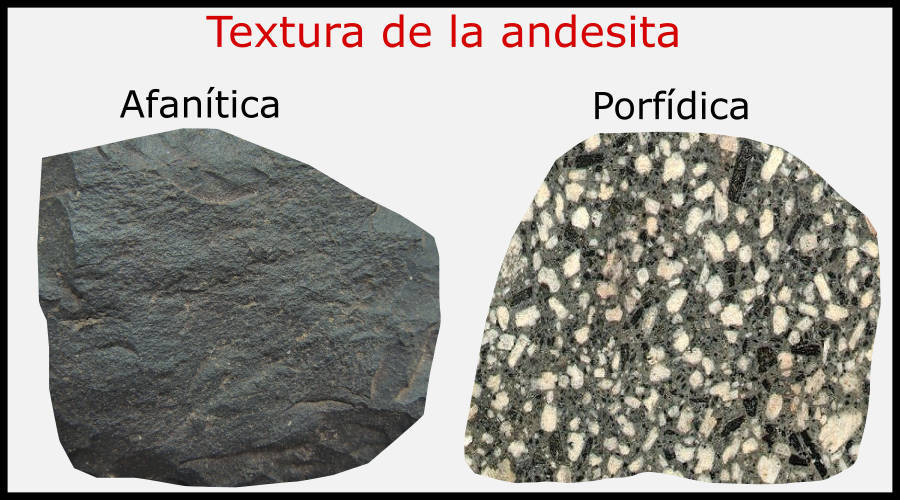


La andesita comúnmente presenta textura porfídica, pero también suele ocurrir con textura afanítica (cristales minerales menores a 1mm). Además, si el enfriamiento en superficie fue brusco puede tener componentes vítreos en la matriz. Las andesitas porfídicas se encuentran asociados con cuerpos subvolcánicos como diques. Mientras que las andesitas afaníticas se asocian con flujos de lava andesíticos en la superficie.


Para reclamar este cache como encontrado deberan enviar al owner de este cache las respuestas abajo indicadas:

1) En las coordendas puedes ver varias rocas de andesita.¿ Cual es su color ? Da una breve descripcion de la roca: Pesada o ligera , suave o aspera

2) ¿Tiene textura Afanítica o Porfídica ?. Si es porfídica indica el tamaño del grano.

3) ¿Que minerales componen la Andesita?, ¿ cual es su porcentage en sílice?

5) Añade una fotografia tuya en el local, u otra en la que se pueda ver algún objeto, o tu nick en un papel

English


Location

To the Northeast of the Altorey mountain range, it is surprising to find in the middle of the multicolored moor a grayish, almost black area in which hardly anything blooms and in which several circles can be distinguished, as if they were volcano mouths. They are formed by outcrops of andresite, a magmatic rock from the Triassic period (when the Central System was formed) that have brought eruptions and earthquakes to the surface. Hence they are known as volcanic hills.

Andesite

  Andesite is an extrusive and also subvolcanic igneous rock that is of intermediate chemical composition, that is, it has between 52 to 63% silica (SiO2), it usually has a porphyric and sometimes aphanitic texture, in addition, mineralogically it is composed of amphibole, plagioclase and pyroxenes mainly.Although andesite is considered as an extrusive rock, it can also have an intrusive origin as a subvolcanic rock, in structures known as dikes and also seams or sills. As for the representative physical and chemical properties of andesite, the following can be mentioned.


Origin

Andesite is the most common product that is generated in volcanism related to active convergent margins, that is, in continental volcanic arches and island arches. Therefore, the magmatic melt that generates the andesites comes directly from the partial melting of the descending or subduced oceanic lithosphere.


Colour

Andesites are generally light to dark gray in color and sometimes a little greenish. They are light gray when there is a marked domain of plagioclase and the presence of quartz. They are medium gray when there is a balance between ferromagnesian and non-ferromagnesian minerals. It is dark gray to almost black in the basaltic andesite variety which even if it has olivine can be dark greenish.

Main minerals and accessories

Andesite mineralogically is composed of amphiboles (about 20%), plagioclase (about 30%) and pyroxenes (about 7% on average). With respect to amphiboles, it is hornblende that mainly composes the rock.While in pyroxenes the most common is augite, but bronzite and hypersthena may also be present. The plagioclase that make up the rock are mainly Bitownite, labradorite and oligoclase (intermediate content of sodium and calcium).As accessory minerals, biotite (less than 5%), potassium feldspar (less than 5%) and quartz (less than 2%) stand out, quartz is rare. Other accessory minerals are magnetite, olivine, garnet, and ilmenite.


Chemical composition

Andesite is a rock that crystallizes from a magmatic melt of intermediate chemical composition, that is, it is in the range between 52% to 63% silica (SiO2). This rock can be on average 56% silica (SiO2), however, there is a variety known as basaltic andesites where the accessory mineral is olivine, and they can have 53% silica (SiO2) almost being mafic. With regard to ferrous oxide (FeO), it reaches at least 4%. While the content of aluminum oxide (Al2O3) stands out, which is between 14% to 17%. Calcium oxide (CaO) reaches a percentage of approximately 6%.

Textura


Andesite commonly has a porphyritic texture, but it also tends to have an aphanitic texture (mineral crystals smaller than 1mm). In addition, if the surface cooling was abrupt, it may have vitreous components in the matrix. Porphyry andesites are found associated with subvolcanic bodies such as dikes. While aphanitic andesites are associated with andesitic lava flows in the superficie.


To log this earthcache, send me an email with the answer to the following questions:

1) In the coordinates you can see several andesite rocks. What is their color? Give a brief description of the rock: heavy or light, soft or rough

2) Does it have aphanitic or porphyritic texture?
If it is porphyritic, it indicates the size of the grain.

3) What minerals make up Andesite? What is its percentage of silica?


4) Add a photo to your local, another one that you can see an object, or one nick in a piece of paper


If you believe you have successfully completed this Earth Cache goals and has already sent to me all the requirements as requested, Please, feel free to log it as found. Later i will verify the requirements sent and, if necessary, contact you in order to make the necessary corrections to your log.


Fuentes:

Geologiaweb

Wikipedia


Additional Hints (No hints available.)