Totally Findable Tourist Caches
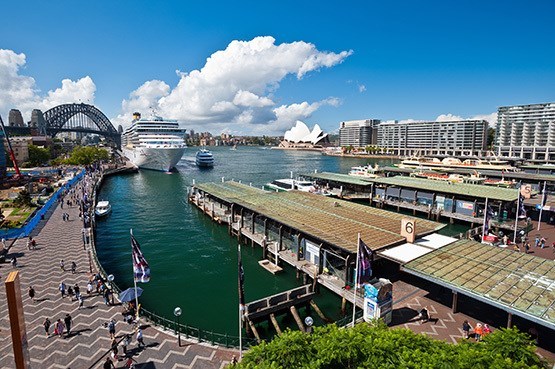
Welcome to Sydney
This series of geocaches is designed primarily with visitors to Sydney in mind who may have limited time and transport options and want a quick and easy find while out enjoying some sightseeing around this beautiful city.
All cache containers will be one of three types; a flat magnetic key case (MKC), a round film canister (FC or MFC for magnetic) or a fake rock (FR).
As always with city caching, the surrounding structures can affect GPS accuracy. If in doubt, use the hint however be mindful that the hint will indicate the type of container used and will be very specific to help you find the cache easily. If you want a challenge to find this cache and don't wish to know exactly where it's hidden, do not look at the hint.
At each location you’ll be given some information about the site you are visiting. I hope you find this information enlightening.
Enjoy!
------------------------------
The Iconic
Sydney Opera House
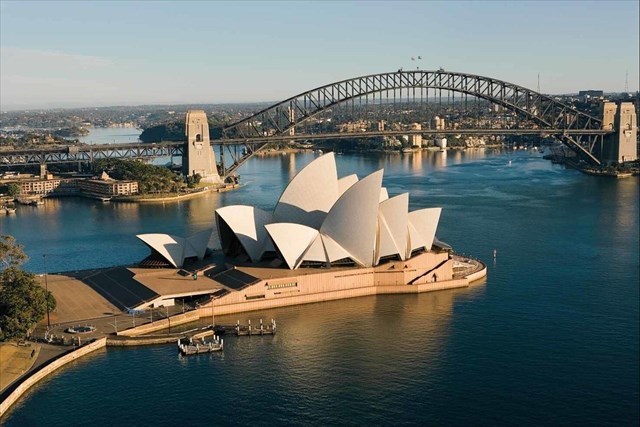
Jorn Utzon was a relatively unknown Danish architect in the 1950s, until he won the competition to design the National Opera House in Sydney Australia, in 1956. He was born in 1918, the son of a naval engineer. He studied architecture at the Copenhagen Royal Academy of Arts and much of his early work was in Sweden. He travelled widely and met many of the best known designers of the era. These included Mies van der Rohe and Charles Eames. In 1950 he opened his own Architectural business.
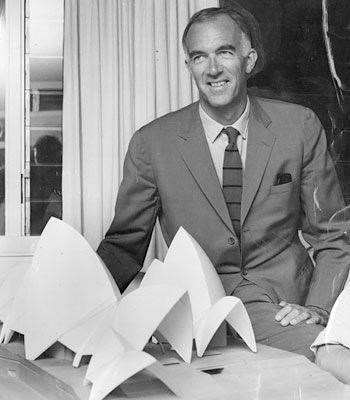
The design of the Sydney Opera House was inspired by nature, its forms, functions and colours. Utzon was influenced in his designs by bird wings, the shape and form of clouds, shells, walnuts and palm trees. He looked upon nature for guidance when designing, as nature over time combined both efficiency and beauty, hand in hand.
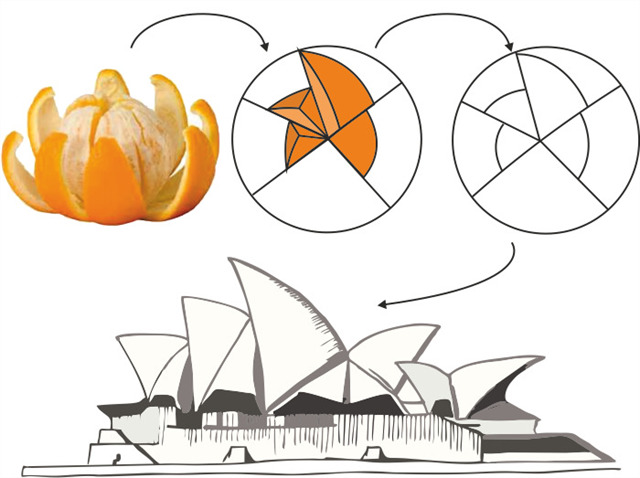
The roof structures of the Opera House are called ‘shells’. The design of the ‘shells’ was one of the most difficult aspects of the building’s design. Jorn Utzon claimed that the final design of the shells, was inspired by peeling an orange. It is said that the shells of the 14 separate roofs, form a sphere if combined.
It took 14 years to build the Sydney Opera House, from its start in March 1959 to its grand opening in October 1973, significantly longer than the original four-year estimate due to design complexities and engineering challenges.
One sad aspect of the Opera House's story is that Jørn Utzon, the original architect, never saw the Sydney Opera House completed and opened. He famously resigned from the project in 1966 due to political conflicts with the NSW Government and left Australia, dying in 2008 without ever seeing his iconic design finished by others. He was however, later honoured for his work and re-engaged as a consultant for restoration efforts.