NOTE: This cache is NOT AVAILABLE after a snowfall. ALSO - THIS IS NOT A NIGHT TIME CACHE (as per the attributes). PLEASE RESPECT THAT.
***PLEASE NOTE - (effective immediately (3/4/22) - The requisite photo is the sculpture - see the example posted. Finds will not be accepted without the correct photo attached to your log and will be deleted without further explanation. Thank you.***
Special tool required: binoculars or a phone/camera with a good zoom lens would help.
Logging notes: please send your complete responses to me ASAP using the in-game messaging system - I will read and respond to each submission. Answers that are grossly incorrect, incomplete, "arm-chair" responses, or just non-existant (yes, that's happened), may have any logged finds deleted. In addition, while I don't expect you to be a geologist, I do expect that you read the lesson and use the information in your response. General responses (e.g. "it's sedimentary because it has layers") will not be accepted. No group responses, please. Each individual should submit their own response and post their own photo. Thank you.
The Lesson - Shale and its purpose here
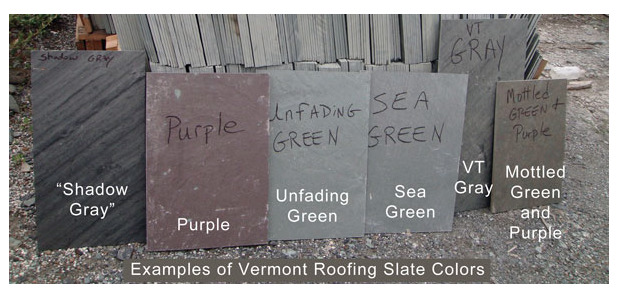
Slate is a type of rock which was formed when heat and pressure transformed an original shale-type rock composed of clay or volcanic ash. Slate is fine-grained, and usually contains minerals, such as white mica and quartz that are highly resistant to water absorption and weathering. It is also possible to see fossils in slate, which is unusual for this type of rock. Slate is frequently grey in colour, but also occurs in other colours, including shades of grey, from pale to dark, purple, green or cyan (a greenish blue colour). Hematite (streaks a red colour) and chlorite (green colour) contribute to the variations. Slate is made up of parallel foliated plates. This gives it the ability to break smoothly and evenly along its cleavage. The hardness of rocks and minerals is measured using the Mohs scale, which ranges from one to 10 with one being the softest and 10 being the hardest. Slate ranks at 5.5 on the Mohs hardness scale.
While the building itself may look old, it was actually constructed in the Collegiate Gothic style between 1929-31, thus making it less than 100 years old. In 2004, the building was renovated, expanded and recladded in local granite and limestone. Four-inch-thick, seam-faced granite -- ranging in color from light gray/yellow to rusty brown -- was the original cladding for the perimeter moat walls as well as for major portions of the building. The stone came from nearby quarries in Weymouth and Hingham, MA. In total, approximately 80% of salvaged Rustic Buff limestone and 20% Hard Gray limestone -- all originally from quarries in the Bedford, IN, area -- were the predominant stone for window surrounds (head, sill and jambs), water tables, parapets, copings and other accent elements, including ornate carvings. From start to finish, the renovations took 13 years to complete.
Slate - Geological Properties
Slate has two lines of breakability – cleavage and grain – which make it possible to split the stone into thin sheets. In other words, it is the finest grained foliated rock of its particular type. When expertly "cut" by striking parallel to the foliation, with a specialized tool in the quarry, many slates will display a property called fissility, forming smooth flat sheets of stone. In geology, fissility is the ability or tendency of a rock to split along flat planes of weakness (“parting surfaces”).
Chemical and Physical Weathering
Chemical weathering causes the decomposition, dissolving and loosening of rocks. Chemical reactions destroy the bonds that hold the rocks together. This causes them to break into small pieces. One effect of chemical weathering is hydrolysis (chemical breakdown of a substance when combined with water). Another type of chemical weathering is oxidation. Oxidation is the reaction of a substance with oxygen, and in the case with rocks undergoing oxidation, they become weak and crumble. Carbonation is another form of chemical weathering that causes the formation of carbonic acid which "eats" away at the rock.
Physical or mechanical weathering of rocks is caused by changes unrelated to chemical processes (i.e. breaks down the rock without changing any of its chemical components). One common way is through wedging due to the expansion of ice in rock cracks or wedges. Plants and salt can also cause wedging. Another mechanical weathering process is abrasion by water or wind, or exfoliation due to a lack of physical pressure on the rocks (consequence: rocks split into thinner sheets).
Slate as a Roofing Material
In North America, slate roofing dates to the 18th century; during this time, slates were imported, usually from Wales. As an interesting aside, the college's main benefactor, Elihu Yale, is buried in Wrexham, Wales. Slate is cost-effective over the potential lifespan of the house or building itself, since it typically lasts for a century or more. In Victorian times, the colours available — dull shades of black, gray, red/purple, green, and blue — were frequently combined to form complex geometric patterns using a variety of butt-end shapes: diamond, square, fish-scale, round, hexagonal, and more. These shapes and colours remain available and in use today, but man-made slate is more common now, although not as durable as the original stone.
Slate is particularly suitable as a roofing material as it has an extremely low water absorption index of less than 0.4%, making the material waterproof. Slate's low water absorption makes it very resistant to frost damage and breakage due to freezing. Natural slate is also fire resistant and energy efficient. In fact, this natural slate, which requires only minimal processing, has the lowest embodied energy of all roofing materials. Embodied energy is the energy consumed by all of the processes associated with the production of a building, from the mining and processing of natural resources to manufacturing, transport and product delivery.
Slate Roof Types
1. Standard - tiles are arranged in a uniform, horizontal pattern;
2. Patterned - includes the use of slate tiles of different colours/shapes. In the past, catalogue patterns were available from quarries;
3. Random width slate roofs - similar to standard but with varying widths (length and thickness remains the same);
4. Multicoloured - exactly as the name suggests, typically used with a random width pattern;
5. Graduated length - The practice of installing slates of varying lengths and widths on a roof came from the days when some quarries produced slate on an “as available” basis rather than in specified lengths and widths. This led to the roofing contractor sorting the slate on site and installing the longest and widest slates at the eaves (where they carried the most water) and “graduating” several other lengths into the roof in courses so that the shortest and narrowest slates were at the top of the roof, where they carried the least water.
6. Graduated length/thickness - the use of mulitiple different tile lengths and thicknesses, the smallest and thinnest being at the top;
7. Textural slate roofs - the use of rough-hewn tiles with varying thicknesses;
8. Hang down slate roofs - a variation of the standard with the use of longer slates.
Slate Colours
Slate Patterns

Questions:
1) While standing at the posted coordinates, identify the colour composition of the slate roof. In your response, describe any differences in colour as well as the overall % of each colour that is represented.
2) Given the age of this slate roof, how would you describe the condition of the slate tiles? Do you believe the roof will need to be replaced soon?
3) What type of slate roof is this (pattern)?
4) Look closely at the tiles on the roof and describe the properties of the rock regarding the texture.
a) What evidence, if any, is there of chemical and/or physical weathering?
b) What examples of fissility, if any, can you see?
c) Explain why the tiles are either homogenous or heterogenous in mineral and crystal composition.
5) To determine you were on site, please post a photo of you/your GPS/another object in front of the sculpture that is in the garden behind you. I will post a sample photo.
Thank you for visiting, and I look forward to your responses!