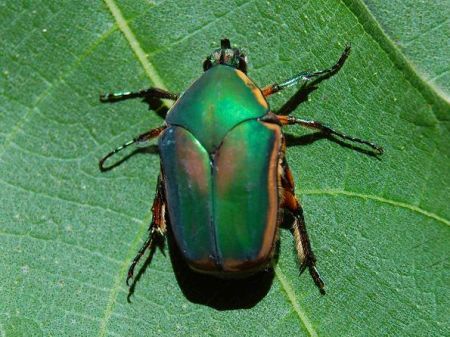
Green June Beetles are a lovely emerald green color with a tan, golden border. Blushes of gold may also form on the elytra (wing coverings). Their belly is also metallic; part green and part brown. Big black eyes sit on either side of the green head. Short dark brown antennae split at the tips. They can grow large, easily over an inch long, and have a solid heft about them. They are frequent and active flyers, and may be mistaken for a carpenter bee when heard flying thanks to the similar noise they make. Green June Beetles visit gardens, orchards, crops, and open wooded areas. Adults feed on stone fruit crops like peaches and plums in the Southeastern U.S., eating into the fruit before humans can get to it. Raspberries, quince, apples, and nectarines are also victims of feeding. The adult beetles skip around to all types of vegetation in search of food. Adults also drink from open flowers like buttercups and hollyhocks, and blossoms on maple and oak trees. The beetle itself if not harmful to humans; just to the crops we grow. Adults bore into ripe fruit, leaving behind feces inside and on the blemished produce.
Larvae (grubs) hatch underground and feed on the roots of grasses, vegetables, and ornamental plants. In large numbers, this weakens a plant and may cause it to die. They also dig deep tunnels into the soil, leaving little holes with mounds of dirt around the opening. This can be problematic for golf courses because the pristine turf is aesthetically compromised by the grubs. A long rainy spell forces grubs to dig their way to the surface of the soil to avoid drowning, but they will try to go back underground once the soil is dry enough. If unearthed or at the soil's surface, they are often seen crawling on their back with their legs in the air, awkwardly inching their way forward. They overwinter deep in the soil and emerge as adults the next spring. Identifying this particular insect as the source of turf issues is critical before attempting to employ biological and chemical management strategies.