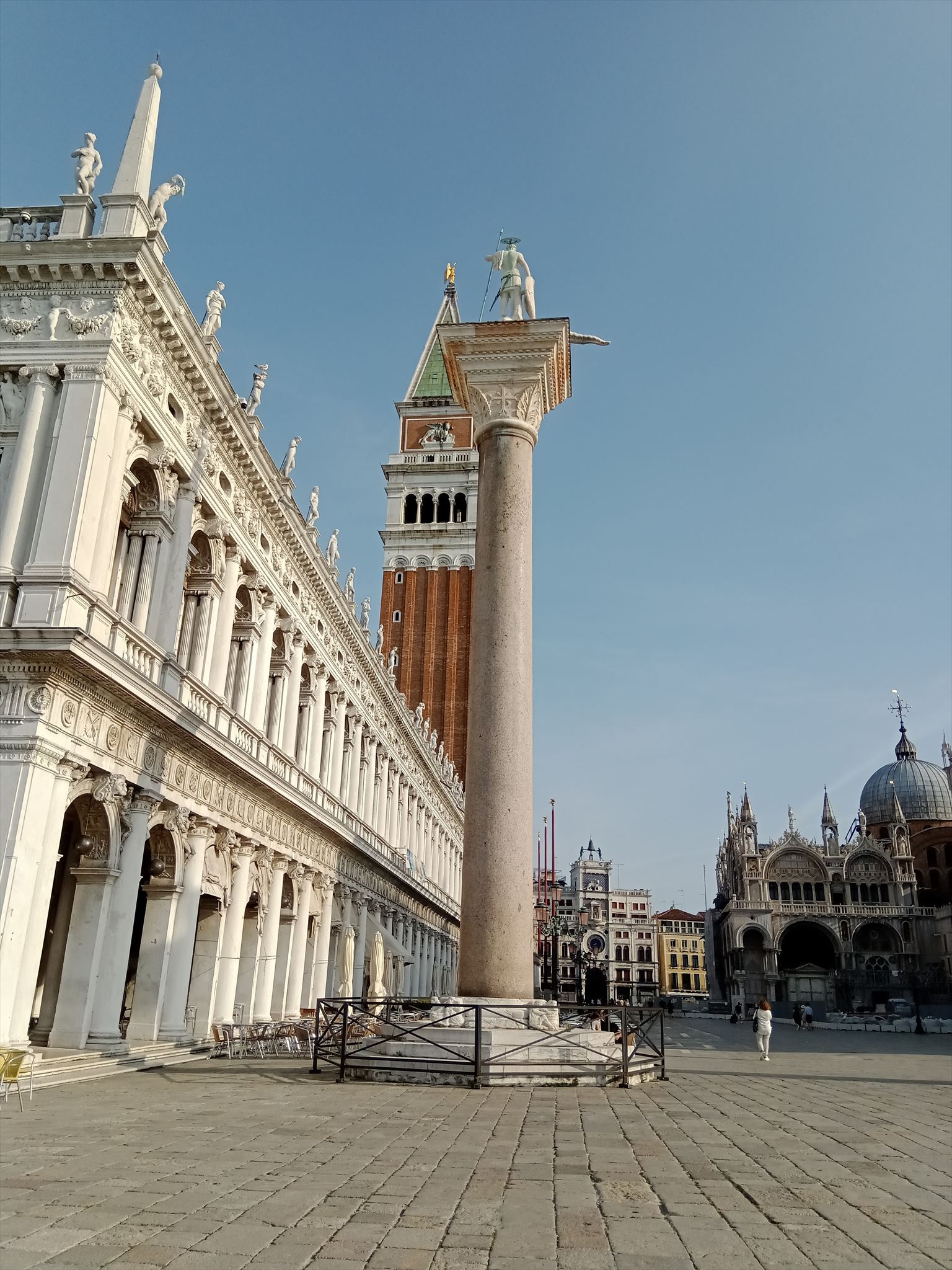

Le Colonne di San Todaro
Le Colonne di San Marco e San Todaro si trovano in fondo alla Piazzetta San Marco e fanno da maestosa cornice alla visione del Bacino di San Marco. Sulle alte colonne granitiche si trovano i protettori della città di Venezia, a destra San Teodoro, in veneziano Todaro, il primo protettore dei venetici. e a sinistra San Marco a forma di leone. Queste colonne hanno un fusto rastremato dell’altezza di circa 12 metri ed un diametro medio di mt. 1,60, sono sormontate da un capitello alto un metro che in base è di forma circolare e va espandendosi a campana rovescia terminando superiormente a sezione quadrata con mt. 1,70 di lato. La base in marmo è composta da tre gradini ed è ottagonale. Nella parte inferiore sono presenti gruppi figurativi aggettanti nei quattro lati opposti.
Come si formano i graniti??
Il granito è la roccia plutonica più comune. Il 44% di tutte le rocce plutoniche continentali sono graniti.
Il granito è formato dalla solidificazione della roccia fusa (magma) all'interno della crosta terrestre, solitamente a una profondità di oltre 2 km sotto la superficie terrestre.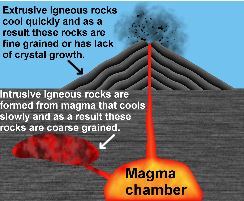 Il granito è quindi una roccia plutonica. Queste rocce sono composte principalmente da feldspato (bianco o rosa), quarzo (grigio), plagioclasio (bianco) e quantità variabili di muscovite (chiaro), biotite (nero) e orneblenda (nero). D'altra parte, le rocce che si solidificano molto vicino alla superficie terrestre (meno di 2 km) sono chiamate rocce subvulcaniche.
Nella maggior parte dei casi, il granito non si forma dal materiale liquido nel mantello terrestre, ma dal materiale fuso nella crosta inferiore. Per la formazione delle camere magmatiche devono essere previsti periodi di 10 - 15 milioni di anni.
Il magma granitico si forma principalmente nella crosta terrestre inferiore, ad esempio nelle aree della radice delle montagne. Lì, il movimento dei flussi di magma nel mantello superiore può portare a un maggiore apporto di calore alla crosta inferiore. Le faglie tettoniche causate dai movimenti della crosta terrestre fungono da facili vie di risalita per i magmi dalla crosta inferiore a quella superiore.L'aumento di tali bolle di magma verso l'alto è indicato come "intrusione". Grandi, spesso gigantesche, camere magmatiche si formano nella crosta terrestre. Queste camere sono chiamate plutone. I movimenti di sollevamento, affondamento o orizzontali della crosta terrestre determinano una riduzione selettiva della pressione.Questo abbassa la temperatura di fusione del magma e porta alla formazione di rocce granitiche per lo più viscose fuse. Mentre si raffredda, i singoli componenti si cristallizzano. Poiché questo processo richiede molto tempo, i singoli grani del granito sono visibili ad occhio nudo.
L'elevata resistenza agli agenti atmosferici del granito è una delle ragioni dei molteplici usi della pietra naturale.
Per loggare questa Earthcache, andare in questa posizione e rispondere alle seguenti domande. Quindi pubblica una foto di te nel luogo del tuo log. Ovviamente, se non vuoi apparire nella foto, un oggetto personale nella foto è una prova sufficiente della tua presenza. (Secondo le linee guida di Earthcache, è richiesto il fotoritocco dal giugno 2019.)
1.) Il granito è una delle rocce più comuni. Perché pensi che?
2.) Osserva attentamente il granito della colonna (non la base o il capitello della colonna): il granito è a grana grossa o fine? Che cosa dice sulla velocità di raffreddamento?
3.) Di che colore è il granito? In base al suo colore, di cosa pensi sia composto principalmente il granito (se è principalmente feldspato, quarzo, plagioclasio, ecc.) ?
4.) Perché pensi che il granito sia usato per l'obelisco?
Puoi loggare immediatamente. Se qualcosa non è corretto, ti contatterò.

The Column of Saint Todaro
The columns of San Marco and San Todaro are located at the end of the Piazzetta San Marco and form a majestic backdrop to the vision of the San Marco Basin. The protectors of the city of Venice can be seen on the high granite columns, on the right San Teodoro, in Venetian Todaro, the first protector of the Venetians, and on the left San Marco in the form of a lion. These pillars have a tapering shank about 12m high and an average diameter of about 1.60m. They are crowned by a 1m high capital, circular at the base and expanding like an inverted bell, ending at the top in a 1.70m square section. The marble base consists of three steps and is octagonal. In the lower part there are protruding figurative groups in the four opposite sides.
How is granite made??
Granite is the most common plutonic rock. 44% of all continental plutonic rocks are granites.
Granite is formed by the solidification of molten rock (magma) within the earth's crust, usually at a depth of more than 2 km below the earth's surface.Granite is therefore a plutonic rock. These rocks are composed primarily of feldspar (white or pink), quartz (grey), plagioclase (white), and varying amounts of muscovite (light), biotite (black), and hornblende (black). On the other hand, rocks that solidify very close to the earth's surface (less than 2 km) are called subvolcanic rocks.
In most cases, granite does not form from the liquid material in the earth's mantle, but from molten material in the lower crust. Periods of 10 - 15 million years must be expected for the formation of magma chambers.
Granitic magma is mostly formed in the earth's lower crust, for example in areas of the root of mountains. There, the movement of magma flows in the upper mantle can lead to an increased supply of heat to the lower crust. Tectonic faults caused by movements of the earth's crust serve as easy ascent routes for the magmas from the lower to the upper crust. The rise of such magma bubbles upwards is referred to as "intrusion". Large, often gigantic, magma chambers form in the earth's crust. These chambers are called pluton. Lifting, sinking or horizontal movements of the earth's crust result in a selective reduction in pressure. This lowers the melting temperature of the magma and leads to the formation of mostly viscous granitic rock melts. As it cools, the individual components crystallize out. Since this process takes a long time, the individual grains in the granite are visible to the naked eye.
The high resistance to weathering of granite is one reason for the many uses of natural stone.
To log this Earthcache, go to this location and answer the following questions. Then post a photo of you at the location to your log. Of course, if you do not want to appear in the photo, a personal item in the photo is enough proof of your presence. (According to the Earthcache Guidelines, photo-proofing has been required since June 2019.)
1.) Granite is one of the most common rocks. Why do you think that?
2.) Look closely at the granite of the column (not the base or capital of the column): Is the granite coarse-grained or fine-grained? What does that say about the cooling rate?
3.) What color is the granite? Based on its color, what do you think the granite is mainly made of (if it is mainly feldspar, quartz, plagioclase, etc.) ?
4.) Why do you think granite is used for the obelisk?
After that you can give your log directly. If anything is not ok, i will contact you.

Die Säule des heiligen Todaro
Die Säulen von San Marco und San Todaro befinden sich am Ende der Piazzetta San Marco und bilden eine majestätische Kulisse für die Vision des San Marco Beckens. Auf den hohen Granitsäulen sind die Beschützer der Stadt Venedig zu sehen, rechts San Teodoro, in Venetian Todaro, der erste Beschützer der Venezianer, und links San Marco in Gestalt eines Löwen. Diese Säulen haben einen verjüngenden Schaft von etwa 12m Höhe und einen durchschnittlichen Durchmesser von etwa 1,60m. Sie werden von einem 1m hohen Kapitell gekrönt, das an der Basis kreisförmig ist und sich wie eine umgedrehte Glocke ausdehnt, die oben in einem quadratischen Querschnitt mit 1,70m endet. Der Sockel aus Marmor besteht aus drei Stufen und ist achteckig. Im unteren Teil sind in den vier gegenüberliegenden Seiten hervorstehende figurative Gruppen.
Wie entsteht Granit ?
Der Granit ist das am häufigsten vorkommende Tiefengestein. 44 % aller kontinentalen Tiefengesteine sind Granite.
Granit entsteht durch die Erstarrung von Gesteinsschmelzen (Magma) innerhalb der Erdkruste, meistens in einer Tiefe von mehr als 2 km unter der Erdoberfläche. Granit ist deshalb ein Tiefengestein (Fachausdruck: Plutonit). Diese Gesteine bestehen hauptsächlich aus Feldspat (weiß oder rosa), Quarz (grau), Plagioklas (weiß) und verschiedenen Mengen an Muskovit (hell), Biotit (schwarz) und Hornblende (schwarz). Gesteine, die sehr nahe an der Erdoberfläche (weniger als 2 km) erstarren, nennt man hingegen Subvulkanite.
Granite entstehen in den meisten Fällen nicht aus dem flüssigen Material des Erdmantels, sondern aus aufgeschmolzenem Material der unteren Erdkruste. Für die Entstehung von Magmakammern muss mit Zeiträumen von 10 - 15 Millionen Jahren gerechnet werden.
Granitisches Magma entsteht meistens in der unteren Kruste der Erde, so z. B. in Bereichen der Wurzel von Gebirgen. Dort kann es durch die Bewegung von Magmaströmen im oberen Erdmantel zu einer erhöhten Wärmezufuhr in die untere Erdkruste kommen. Tektonische Verwerfungen, die durch Bewegungen der Erdkruste entstehen, dienen den Magmen als leichte Aufstiegswege von der unteren in die obere Kruste. Man bezeichnet den Aufstieg derartiger Magmablasen nach oben als „Intrusion“. Dabei bilden sich in der Erdkruste große, oft riesige Magmenkammern. Diese Kammern nennt man Pluton. Durch Hebungen, Senkungen oder Horizontalbewegungen der Erdkruste kommt es punktuell zu einer Verringerung des Druckes. Dadurch sinkt die Schmelztemperatur des Magmas und führt zur Bildung der meistens zähflüssigen granitischen Gesteinsschmelzen. Bei der Abkühlung kristallisieren die einzelnen Bestandteile aus. Da dieser Vorgang sehr lange dauert sind die einzelnen Körner im Granit mit dem bloßen Auge sichtbar.
Die hohe Verwitterungsbeständigkeit von Granit ist ein Grund für die vielfältigen Verwendungsmöglichkeiten des Natursteins.
Um diesen Earthcache zu loggen, begib dich zu dieser Location und beantworte nachfolgende Fragen. Anschließend postet zu eurem Log bitte noch ein Foto von euch an der Location. Wenn ihr selbst nicht auf dem Foto erscheinen wollt, reicht natürlich auch ein persönlicher Gegenstand auf dem Foto als Beweis eurer Anwesenheit. (Laut Earthcache Guidelines ist die Forderung eines Fotobeweises seit Juni 2019 wieder erlaubt.)
1.) Granit ist eines der häufigsten Gesteine. Warum denkst ihr das?
2.) Schaut euch den Granit der Säule einmal genau an(nicht die Basis oder das Kapitell der Säule): Ist der Granit grobkörnig oder feinkörnig? Was sagt das über die Abkühlungsgeschwindigkeit aus?
3.) Welche Farbe hat der Granit? Woraus besteht eurer Meinung nach der Granit aufgrund seiner Farbe hauptsächlich (wenn er hauptsächlich aus Feldspat, Quarz, Plagioklas usw. besteht)?
4.) Warum wird eurer Meinung nach Granit für den Obelisken verwendet?
Danach könnt Ihr sofort loggen. Wenn irgendetwas nicht in Ordnung sein sollte, melde ich mich.
l'indice delle fonti:
· venicewiki.org/wiki/Colonne_di_Marco_e_Todaro
· Diagramma: Wikipedia
· Fotos intrinsecamente