Welc🌎me to Texas! EarthCache
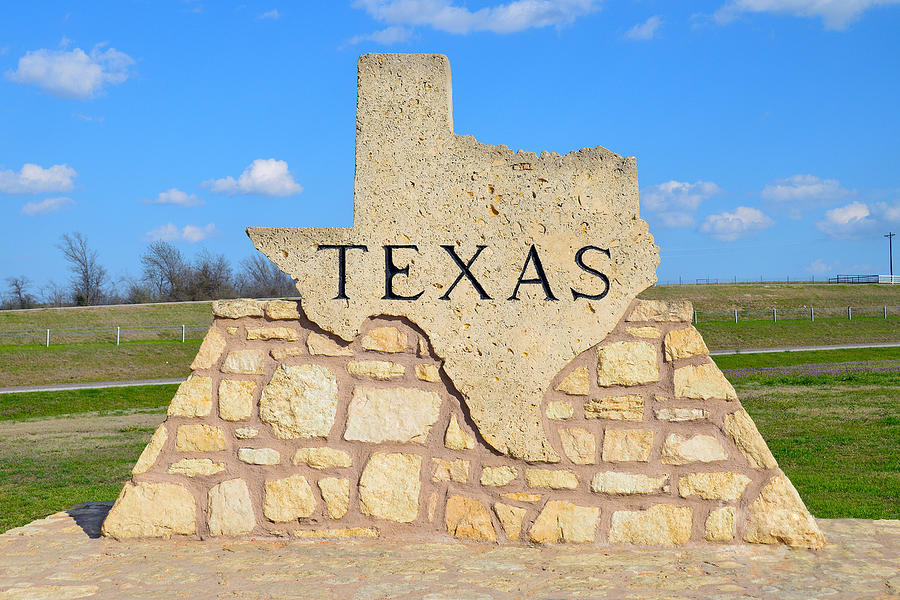
Located just 2.5 miles south of the Oklahoma border, this welcome center has an excellent display of limestone sourced from Texas that is covered in hundreds of fossils!
Before We Begin:
- The Texas Travel Information Center at Gainesville is open from 8am to 5pm every day with a few exceptions.
- They are closed on the following days: New Years Day, Easter, Thanksgiving, Christmas Eve and Christmas Day.
- Observations of the fossils are outside of the building and are available 24 hours a day.
- Please note: This can only be accessed by travelers going southbound on I-35. Northbound travelers can take exit 504 and wrap around to the southbound direction via the frontage road to access I-35 to get there.
As this is an EarthCache, there is no container to find. Instead you will have an opportunity to learn about fossils and make an observation of these excellent specimens on display here.
To get credit for this EarthCache, be sure to complete the logging tasks at the bottom of this page.
Once upon a time (about 260 million years ago) the land in Texas was completely covered by water. The sea was full of early life which lived on the muddy bottom and coral reefs in the shallows. As these early creatures died, their bodies settled to the bottom of the sea. The shallow seas acted as settling basins for thousands of feet of dirt, mud, and sand (called sediment) which would cover the remains of these creatures.
Over time, the layers of these deposited sediments and remains were compressed under great pressure and turned to rock by lithification. Lithification is the process in which sediments compact under pressure and gradually become solid rock. Rocks formed this way are called “sedimentary” rock. Mud and silt would form layers of shale; sand turned into sandstone; and corals, calcium-rich exoskeletons and lime mud turned into limestone. Among these types, limestone is the most common rock in Texas.
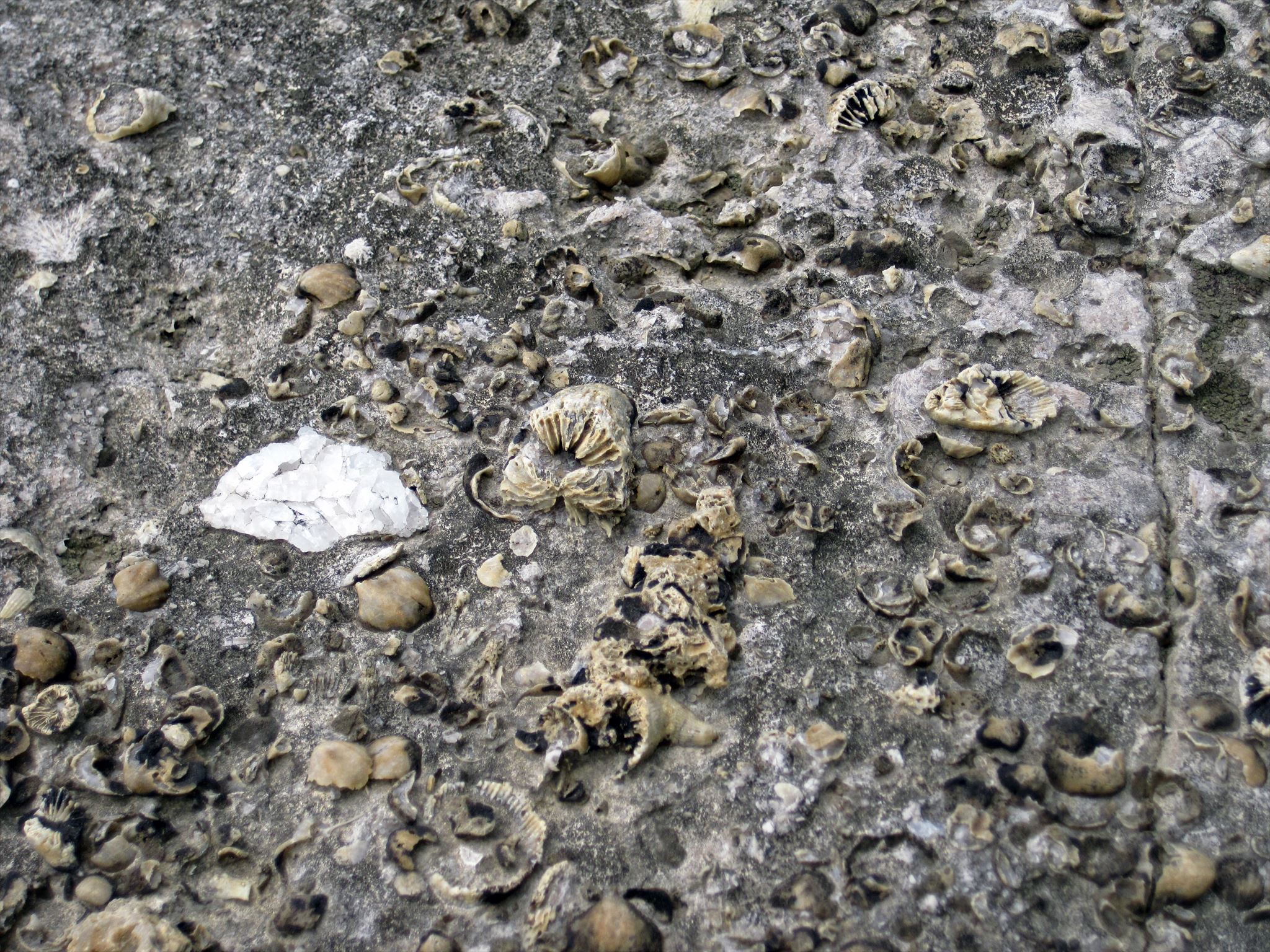
Brachiopods and Corals in Fossiliferous Limestone
The remains of the many species of sea creatures became fossils within the layers of sediment that are frequently visible to the unaided eye on close examination of the stone surface. The fossils in these rocks may be microscopic or macroscopic in size.
Diatoms (single-celled algae that secrete a hard shell composed of silicon dioxide) and two-layered multiple celled organisms form the microscopic sized fossils in the limestone.
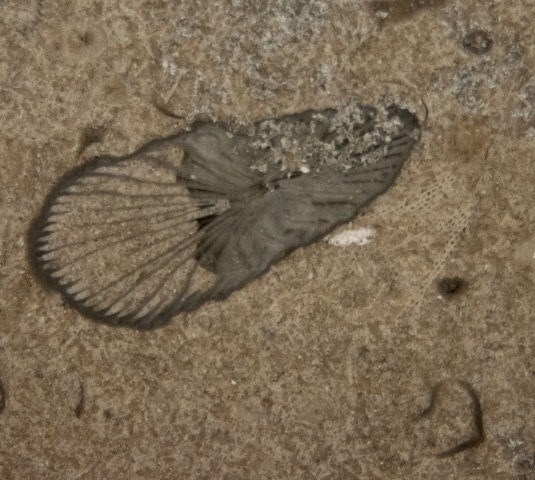
The macroscopic fossils often include Trilobites, Brachiopods, Bryozoa, Gastropods, and Corals including Favosites and Rugosa. Below is a brief description of each with some photos of fossilized remains. Click on the images to see them in more detail.
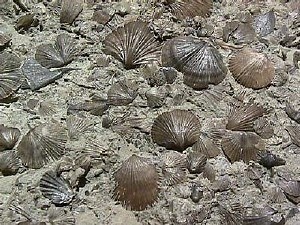
| Brachiopod - A brachiopod is a hard-shelled marine animal. It attached itself to rocks and fed by opening the two halves of its shell with complex muscle systems or a toothed hinge. Brachiopods have a very long history of life on Earth and are often the most common fossils in rock of this age. |
 |
| |
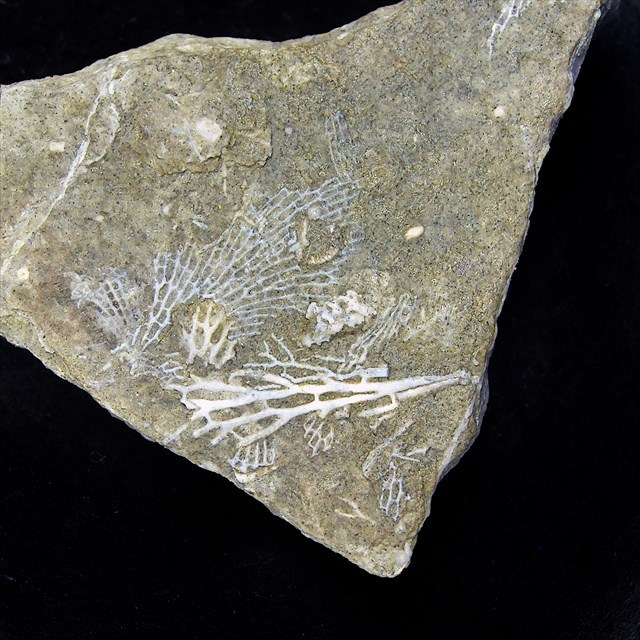
| Bryozoa - Commonly known as moss animals, bryozoa are aquatic invertebrate animals that collect food particles from the water using tentacles lined with cilia. They grow in large colonies and are still found in relative abundance today. |
 |
| |
| Gastropod - Known more commonly as snails. They have a calcareous, coiling shell and glide along the sea bottom grazing or scavenging for food. Gastropods are less common during the Paleozoic era than bivalve Branchiopods making them rarer finds. |
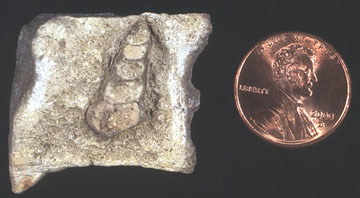 |
| |
| Trilobite - An invertebrate named for the 3 lobes that run lengthwise down their exoskeletons. Trilobite fossils are common because they shed their hard exoskeletons to grow leaving potential fossil material behind many times in their life cycle. |
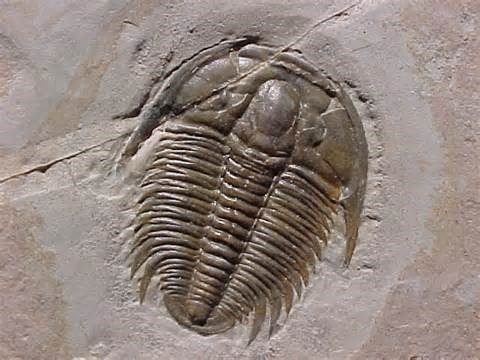 |
| |
| Coral - Marine animals that grow in compact colonies and are still important reef builders today. They form hard shells by secreting calcium carbonate. Corals from this period can be broken down into two types, Rugosa coral and Favosite coral. |
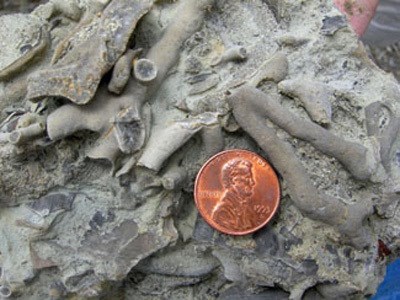 |
| |
| Favosites - An extinct variety of coral with polygonal, closely packed corallites that transfer nutrients between polyps with holes, known as mural pores, in the walls of the polyps. These fossils closely resemble modern day sponges but are actually quite different. Characterized by polygonal closely packed corallites giving it the common name "honeycomb coral". |
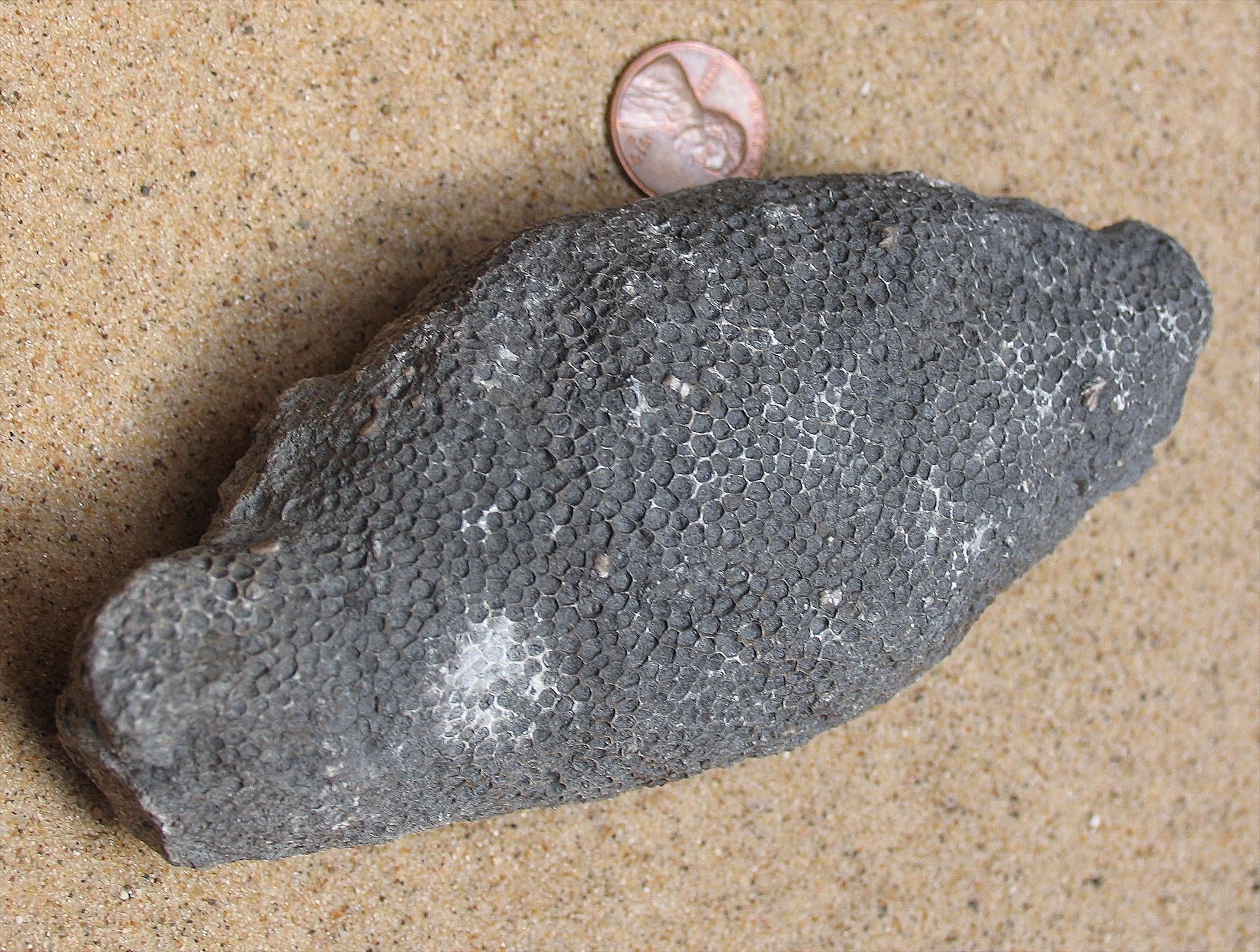 |
| |
| Rugosa - An extinct variety of coral that is also known as horn coral due to its shape. Unlike most corals, rugosa coral grows as individual corallites rather than in grouped colonies. Often referred to as horn corals because of a unique horn-shaped chamber. |
 |
To Get Credit For This EarthCache
Copy the questions below and send your answers via geocaching messages.
- DO NOT post the answers in your log.
- Group answers are fine, just let me know who all was there.
- Note: The photo task is a requirement for each account claiming a find. See acceptable EarthCache logging tasks effective June 10th, 2019.
- Please send the answers in a timely manner or it may result in the deletion of your log (no offense intended).
Logging Tasks
1| The name of this EarthCache: Welc🌎me to Texas!
2| In your log, please provide a photo of yourself at the limestone display. Bonus points if you're pointing to your favorite fossil you found. 
- If you prefer, the photo can be of a personal item here instead. Just make the photo unique to you and your visit. Feel free to have fun with this!
3| After studying this rock, what is the most common fossil you see here? (Brachiopods, Trilobites, Bryozoas, Gastropods, Corals, Favosites or Rugosa)
4| What is the average size of the fossils you can see. Bigger than a half-dollar or smaller?
5| If you were able to cut this rock into several pieces, would you expect to see more fossils inside? Explain why or why not.
*IF YOU ENJOYED THIS EARTHCACHE,
CONSIDER GIVING A FAVORITE POINT!*
Sources:
Permission for this EarthCache placement was granted by the Texas Travel Information Center at Gainesville.