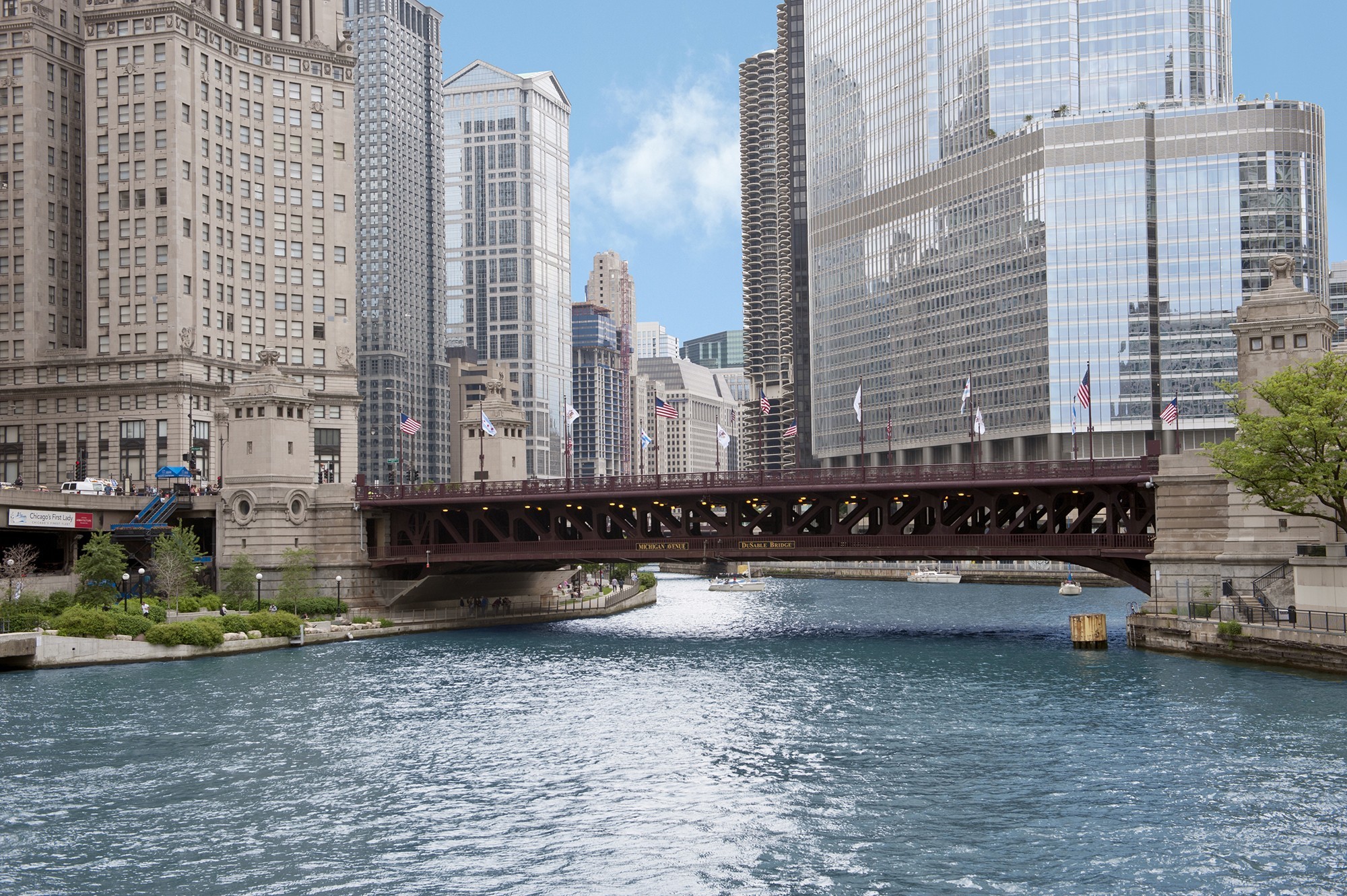
The Michigan Avenue Bridge was opened in 1920 and spans the Chicago River. This is one of the most photographed spots in Chicago and offers views of some of the cities most famous buildings. The 1909 Plan of Chicago recommended that Michigan Avenue be widened and extended north of the river. When the bridge opened in 1920, it was one of last bridges to be built across the main branch of the river. Its completion began a transformation of Michigan Avenue allowing it to become the elegant boulevard we know today. In 1928, sculptures depicting scenes from Chicago's history were added to the outward-facing walls of the four bridgehouses: The Discoverers, The Pioneers, Defense, and Regeneration. The listed coordinates will bring you to The Pioneers, which depicts John Kinzie leading a group through the wilderness.
The sculptures were carved into Indiana Limestone (also called Bedford or Salem Limestone). It is primarily quarried in south central Indiana and is called the best quarried limestone in the United States. Like all limestones, it is composed of calcium carbonate and deposited over the course of millions of years as marine organisms that died decomposed at the bottom of a shallow inland sea that covered much of the Midwest. Indiana limestone has been has been used extensively on exterior of homes along with government and commercial buildings. The stone does have one weakness: acid rain, which wears Indiana Limestone relatively quickly. Because of this, the stone is not as often used in monuments today as it was in the 19th and early 20th centuries.
Weathering is the process by which rocks, soil, and minerals are broken down through contact with Earth's atmosphere, water, and biologic resources. There are three types of weathering, physical, chemical, and biological. Physical weathering is primarily caused through frost wedging, when water seeps into cracks within the rock, and when the water freezes, it expands. This process continues until eventually a piece of the rock breaks away. Another example of physical weathering is exfoliation. This occurs when cracks develop parallel to land surfaces, and it almost looks like "layers" of the rock are being broken apart. Chemical weathering takes place when rain water reacts with minerals within the rock. In most cases, the water is slightly acidic. Lastly, biological weathering takes place when tree roots grow in between cracks within rocks, and as the root grows, it breaks apart the rock. Algae and lichen that live on rock may also produce chemicals that break down the rock so they can obtain the nutrients needed to survive.
Logging Requirements:
- Examin the limestone, describe the color, texture, and grain size of the stone.
- Look closely at the sculpture as well as the inscription found below it. Describe their appearance. What form of weathering do you think is present here?
- Is the rate of weathering consistent on all sides, or does one side appear more weathered than the others?
- Upload a photo with The Pioneers (or your favorite of the four sculptures)