Totally Findable Tourist Caches
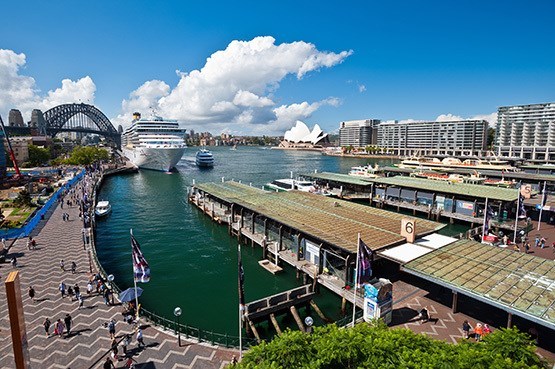
Welcome to Sydney
This series of geocaches is designed primarily with visitors to Sydney in mind who may have limited time and transport options and want a quick and easy find while out enjoying some sightseeing around this beautiful city.
All cache containers will be one of three types; a flat magnetic key case (MKC), a round film canister (FC or MFC for magnetic) or a fake rock (FR).
As always with city caching, the surrounding structures can affect GPS accuracy. If in doubt, use the hint however be mindful that the hint will indicate the type of container used and will be very specific to help you find the cache easily. If you want a challenge to find this cache and don't wish to know exactly where it's hidden, do not look at the hint.
At each location you’ll be given some information about the site you are visiting. I hope you find this information enlightening.
Enjoy!
------------------------------
To Find This Cache:
- Go to the published coordinates and find the statue of Captain Cook.
- You need a code word to enter into Certitude.
- Look at the metal plaque on the plinth below his name.
- Discover the name of the society that affixed the tablet (one word).
- Click on the Certitude icon below and enter the code word you discovered to receive the cache GZ coordinates and hint.

You can validate your puzzle solution with
certitude.
------------------------------
Captain James Cook

Image: surfertoday.com
James Cook was a British navigator, explorer, cartographer, and captain in the British Royal Navy, famous for his three voyages between 1768 and 1779 in the Pacific Ocean and to New Zealand and Australia in particular. He made detailed maps of Newfoundland prior to making three voyages to the Pacific, during which he achieved the first recorded European contact with the eastern coastline of Australia and the Hawaiian Islands, and the first recorded circumnavigation of New Zealand.
In these voyages, Cook sailed thousands of miles across largely uncharted areas of the globe. He mapped lands from New Zealand to Hawaii in the Pacific Ocean in greater detail and on a scale not previously charted by Western explorers. He surveyed and named features, and recorded islands and coastlines on European maps for the first time. He displayed a combination of seamanship, superior surveying and cartographic skills, physical courage, and an ability to lead men in adverse conditions.
Cook was attacked and killed in 1779 during his third exploratory voyage in the Pacific while attempting to kidnap the ruling chief of the island of Hawaiʻi, Kalaniʻōpuʻu, in order to reclaim a cutter taken from one of his ships after his crew took wood from a burial ground.
Whilst there is controversy over Cook's role as an 'enabler of colonialism' and the violence associated with his contacts with indigenous peoples, he did leave a legacy of scientific and geographical knowledge that influenced his successors well into the 20th century, and numerous memorials worldwide have been dedicated to him.
Source: Wikipedia

Cook discovered the east coast of Australia in 1770 sailing the ship, HM Bark Endeavour.
This replica was built in Fremantle in Western Australia and was launched in 1993. It is usually moored at the Australian Maritime Museum in Darling Harbour, Sydney, where visitors can go aboard to inspect. It is well worth a visit. (Entry fees apply.)
Image: PR Image