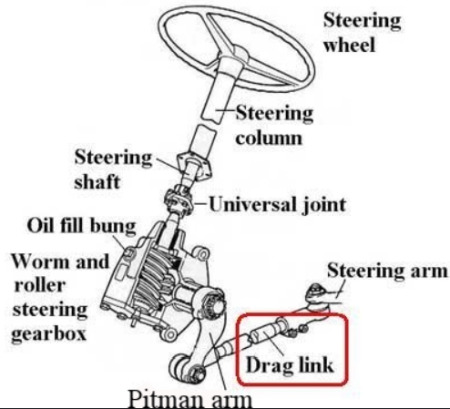
The automotive steering column is a device intended primarily for connecting the steering wheel to the steering mechanism by transferring the driver's input torque from the steering wheel.
A steering column may perform some other secondary functions: energy dissipation management in the event of a frontal collision; provide mounting for: the multi-function switch, column lock, column wiring, column shroud(s), transmission gear selector, gauges or other instruments as well as the hydraulic or electro motor and gear units found in power steering offer height and/or length adjustment to suit driver seating position preference
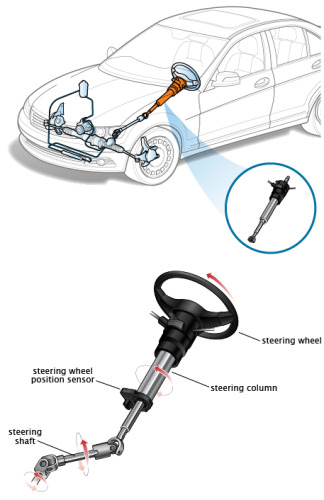
Quite simply, when the driver turns the steering wheel, the column rotates the pinion gear and the rack moves laterally. The track rods are put into action, shifting the wheels. The tie rods are used to link the steering gear to the steering knuckle. The tie rod ends are a ball and socket design that allows the tie rod to flex up and down with the movement of the front suspension. Tie rods should be inspected for excessive movement, grease seal tears, or any visible wear. You should not be able to collapse the ball and socket assembly of the tie rod by attempting to compress it by hand. Any inward movement of the ball and socket should be considered excessive wear.