In order to complete this EarthCache lesson, you will need to bring a magnifying glass and a strong magnet with you. For this reason, this EarthCache's difficulty rating is a bit higher.
------------------------------
Most of the world's beaches are made of quartz-rich sand. This is true for most of the world's continents because the sands are derived from the weathering and erosion of the land masses and their mountains. The land masses and mountains are composed of rocks that are in turn themselves composed of many common minerals, such as quartz, feldspar, amphiboles, and mica, for example. During the weathering process ground waters and dissolved carbon dioxide react with the rocks to break them down. Quartz has the particular ability to survive because it is very stable (unreactive to weathering processes) and because it is very hard - relative hardness is measured from one to ten on the "Mohs Scale", with Talc = 1, Gypsum = 2 (as hard as a finger nail), Calcite = 3, Fluorite = 4, Apatite = 5 (as hard as a knife blade), Feldspar = 6, Quartz = 7, Topaz = 8, Corundum = 9, and Diamond = 10. During weathering, feldspar (an aluminosilicate) rather rapidly converts to clays, while quartz, being unreactive silicon dioxide, survives the weathering process and eventually makes its way to accumulate along the beaches. The clays that were formed by the alteration of the feldspars are winnowed out from the surf zone and washed away to the open ocean to accumulate on the continental shelf and beyond. The quartz remains behind, traveling down the coast line (because the waves approach the coast line obliquely) as a narrow ribbon of sand in what's called longshore or littoral drift. (In reality, the beaches of the continents are actually different mixtures of quartz, feldspars and rock fragments, but quartz usually is dominant). Because most of the world's beaches are made of quartz, beach sand is typically white to tan in color.
------------------------------
The sand here is not white, tan, or typical at all. Only a few beaches in the world are truly black (or very dark gray), and most of those are due to volcanic activity. This beach is commonly called Barrow Beach or Arctic Beach, though it doesn't have an official name. The rich black sand here is volcanic in origin, and much softer than it appears...your feet will typically sink deeper into this sand than at most beaches you've been to in other parts of the world.
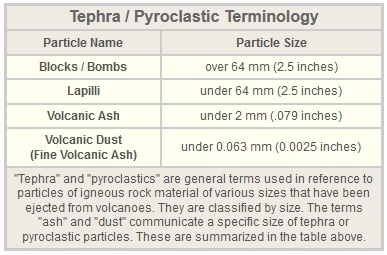
Sand samples of volcanic origin are of two dominant types: clastic detritus eroded from a volcanic terrain and products of explosive volcanic eruptions (pyroclastic sediments, also known as tephra).
The first group of volcanic sand is similar to most other types of sand in terms of genesis. However, they generally have different composition from the so-called normal continental quartz-rich sand. Such volcanic sand is typically immature because most of its components are susceptible to weathering. This type of sand is often composed mostly of rock fragments rather than individual mineral crystals.
The second group consists of volcanic ash. This material is composed of volcanic glass, rock fragments, and crystals in all possible proportions. Lithified volcanic ash is called tuff. Lithified deposit of a pyroclastic flow is called ignimbrite.
Olivine, pyroxene, and magnetite are the most characteristic minerals of most volcanic sand deposits. Most volcanic beach sands are dark-colored. Hence, they are often named black sand. The black color is given to these sands by the minerals augite (pyroxene), magnetite, and sometimes hornblende (dark amphibole). These minerals contain lots of iron in their crystal structure which often gives them black color and a reddish rust-colored hue when weathered.
Black sand can be seen as a layer on top of silica sand in regions with high wave energy, on the flanks of volcanoes, and in areas where most of the source rock is mafic, or dark-colored and poor in silica. It can be composed of a number of different dark minerals - most are iron-rich and heavier than silica sand. This weight enables it to remain when high-energy waves wash the lighter sand grains out into the surf zone.
Mafic rocks such as basalts, gabbro (an intrusive igneous or plutonic rock), and other dark-colored low-silica rocks will erode down to components that are also dark. Some dark-colored minerals, like magnetite, are magnetic. The dark minerals in beach sand are primarily magnetite and amphiboles, which are non-magnetic black minerals. Both of these mineral types tend to fracture into very small grains that collect on the surface of the sand, by virtue of being smaller and, therefore, lighter.
------------------------------
Now, when you look around this fairly flat frozen tundra, you may be asking yourself where the volcanoes that produced this beach are located. The truth is, nobody really knows for sure. The rocks here seem to have more in common with rocks found on the other side of the Arctic Ocean in Siberia than they do with the rest of Alaska. An unusual ocean basin, called the Canada Basin, developed along the north coast of Alaska and the Yukon. A weakened area of ocean crust split open, forming an extensional rift. A relict mantle plume related to formation of the Permian flood basalts in Sibera may have been responsible for this. The rift is located on the floor of the Beaufort Sea, offshore of Alaska's North Slope.
A mantle plume is a proposed mechanism of convection within the Earth's mantle, hypothesized to explain anomalous volcanism. Because the plume head partially melts on reaching shallow depths, a plume is often invoked as the cause of volcanic hotspots, such as Hawaii or Iceland, and large igneous provinces such as the Deccan and Siberian Traps. Some such volcanic regions lie far from tectonic plate boundaries, while others represent unusually large-volume volcanism near plate boundaries.
------------------------------
In order to log this EarthCache, you will need to send me the answers to the following questions, and post a photo (required):
1. Using your magnifying glass, take a close look at a small amount of the sand you have collected from the beach here. What color are the majority of the sand particles here as seen under the magnifying glass?
2. Do you see any other colors of sand particles under the magnifying glass? If so, what do you think they are made out of?
3. Now run a strong magnet through the sand. Did it pick up anything? If so, what type of mineral do you think that is?
4. Do the individual sand particles look smooth or jagged? Why do you think this is the case here?
5. How big in size/diameter would you estimate the sand and pebbles found on this beach to be?
6. Take a photo of yourself, your group, or something that identifies you and post it with your log (your face need not be in it).
------------------------------
Sources:
Roadside Geology of Akaska, Cathy Connor, 2014
The Geography and Geology of Alaska, Cleveland Abbe, Alfred Brooks & Richard Goode, 2022
Classification and Relief Characteristics of Northern Alaska's Coastal Zone, Allan Hartwell, 1973