History:
Glencoe was founded in 1899 with the establishment of the Glenco Post Office on the Eastern Oklahoma Railway. The first lots were sold on April 15, 1900. After J. Hunter Williams, editor of the Glencoe Mirror, was named postmaster on January 4, 1901, he persuaded the U.S. Post Office Department to change the spelling of the town's name to Glencoe. In its early history Glencoe served as a trading center for the area and agriculture was the mainstay of the local economy. On January 22, 1914 a fire swept through downtown and destroyed most of the business district. While, some businesses were rebuilt, the town's future growth was negatively affected by the fire.
 .
. 
According to Clarkson's Fire map of 1903, this corner building was a General Merchandise store and had scales out front on Main Street. Like this building, many buildings around Oklahoma from this time were made from Oklahoma Sandstone. The Sandstone was plentiful especially in the northern part of the state where roads were being cut through the Osage hills. The sandstone provided a very sturdy building material and could easily be cut or shaped into various sized bricks. Many of the Armories in Oklahoma towns are made from this sandstone due to its abundance and sturdiness when building.
Oklahoma Sandstone
Oklahoma Sandstone is a sedimentary rock and is composed primarily of sand-sized grains of mineral, rock, or other organic material. It is found throughout the world and is mined for use in construction. Sandstone contains a materials that bind the sand grains together known as a cementing material, which contains silt or clay sized particles filling the spaces between the grains of sand.

Oklahoma Sandstone also known as Garber Sandstone is a geologic formation from the Permian Period in Oklahoma. This sand stone band is also responsible for the state rock which is a barite formation known as the Oklahoma Rose rock. It also has the distinctive red coloring like Oklahoma Sandstone
Sandstone comes in many colors. Typically, a sandstone ranges in color from an off-white to a tan to brown. Pure quartz is very light in color, while feldspar is more of a darker amber color. A light-colored sandstone indicates that it has a high quartz content and a low feldspar content, and the darker the sandstone indicates a greater feldspar content with much less quartz.
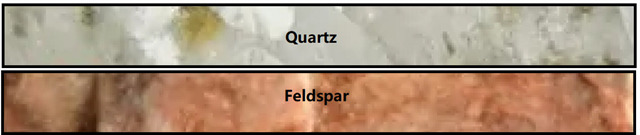
The red color itself is due to the presence of hematite. Hematite is one of the most abundant minerals on the Earth’s surface and in the shallow crust. It is an iron oxide, a common rock-forming mineral, and an important ore of iron.
Sedimentary stones such as sandstone are relatively soft, porous, and have easily crumbled surfaces. The cements that bond the various sediments together can be easily damaged by weathering, salts, and pollution. Anything that causes a difference in the behavior of the outer surface of stone structures compared to the inner regions can lead to stresses that eventually cause cracking and the exfoliation of the outer surfaces.
Weathering
In the case of the Sandstone building in Glencoe, the damage or weathering can be see where the surface of some stones is flaking off. This weathering Is known as Physical Weathering.
Physical weathering is caused by the effects of changing temperature on rocks, causing the rock to break apart. The process is sometimes assisted by water. It is likely that these stones, which have been in place for almost 85 years, have been affected by freezing and thawing which has caused layers to flake off from the surface. The also have been smoothed over the years by wind and particles blowing in the wind causing the smoothing of the surfaces.

Physical Weathering from freeze / thaw causing flaking surface.
Additional weathering evident on the Sandstone Gateway is Biological Weathering.
Biological Weathering is caused by living organisms that can contribute to the weathering process in many ways. The particulat type of biological weathering is from algae and lichens that produce chemicals that help break down the rock on which they live, so they can get the nutrients they need. If you look very closely at the white spots covering the walls you can see that it is not just one large discoloration, but rather hundres=ds of tiny spots which are actually a form of lichen living onthe sandstone surface.
Biological weathering due to lichens on surface of sandstone.
The third type of weathering also evident is Chemical Weathering.
Chemical weathering is caused by rain water reacting with the mineral grains in rocks to form new minerals (clays) and soluble salts. These reactions occur particularly when the water is slightly acidic. Chemical weathering (especially hydrolysis and oxidation) is the first stage in the production of soils. The black discoloration due to deposits of chemicals have over time become part of the sandstone surface.
Chemical weathering from mineral deposits in rain.
Logging Requirements
You will need to complete the following requirements to log this Earthcache:
Send a geocaching message or email with the answers to the questions below. Found It logs without the required information sent within 7 days of logging will be deleted. Do NOT post any answers in your found It log.
Answer the following questions based on your reading and observations at the posted coordinates.
1. Based on your reading to what would you attribute the dark discoloration in this Sandstone gateway?
2. Describe at least one (1) type of weathering you observe at the location and include at least 1 photo of weathering .
3. Describe in your own words what you can see from observing many of the sandstone bricks that would indicate the process of layers upon layers of sediment being deposited as the sandstone formed.
4. Include in your log a photo with you or your favorite Geocaching item at the Sandstone Gateway.
Thank you for visiting this earthcache.

EarthCache Achievements
You can earn achievements for visiting and developing EarthCaches. then Apply for Master or Discovery awards from the Geological society of America and get icons to add to your Geocaching.com profile, click the earthcache logo to visit the application page.