Fortress Sokolac (Sokolačka kula)
There are no reliable historical data on the origin of the Sokolac Castle. Based on architectonic features (the keep on the top of the hill or mound) we can assume that it was first erected in the 12th century. As for the historical references, the years 1020, 1090, 1380 and 1395 are mentioned. The story of Princess Soka, who was, according to a legend, a possible castle builder is also plausible.

The first written documents of the Sokolac Castle date back to 1395 when it was mentioned in court mediation between the castle wardens Ivan Uza and Grgur Eten on one side and the family of Klokočki on the other before the Bihać court. In the 14th century the Sokolac Castle was also mentioned in a charter of King Sigismund in which he takes over Ostrožac Castle from Babonić princely family in exchange for Omršalj and Brekovica which are part of Sokolac estate.
Fortress Sokolac
Sokolac Castle is not large in area, but has been well preserved.The oldest structure in the castle complex is the keep, which was built in the most protected part of the hill, overseeing its steepest cliff and which is inaccessible from its three sides. The fortification within was constructed to withhold the enemy and sustain struggle and survival even if the castle walls were breached. Indeed, such event occured in 1537 when Ottomans entered the castle coutryard but could not take the keep itself. Therefore, the very next year king Ferdinand von Habsburg ordered further fortification of the castle complex.
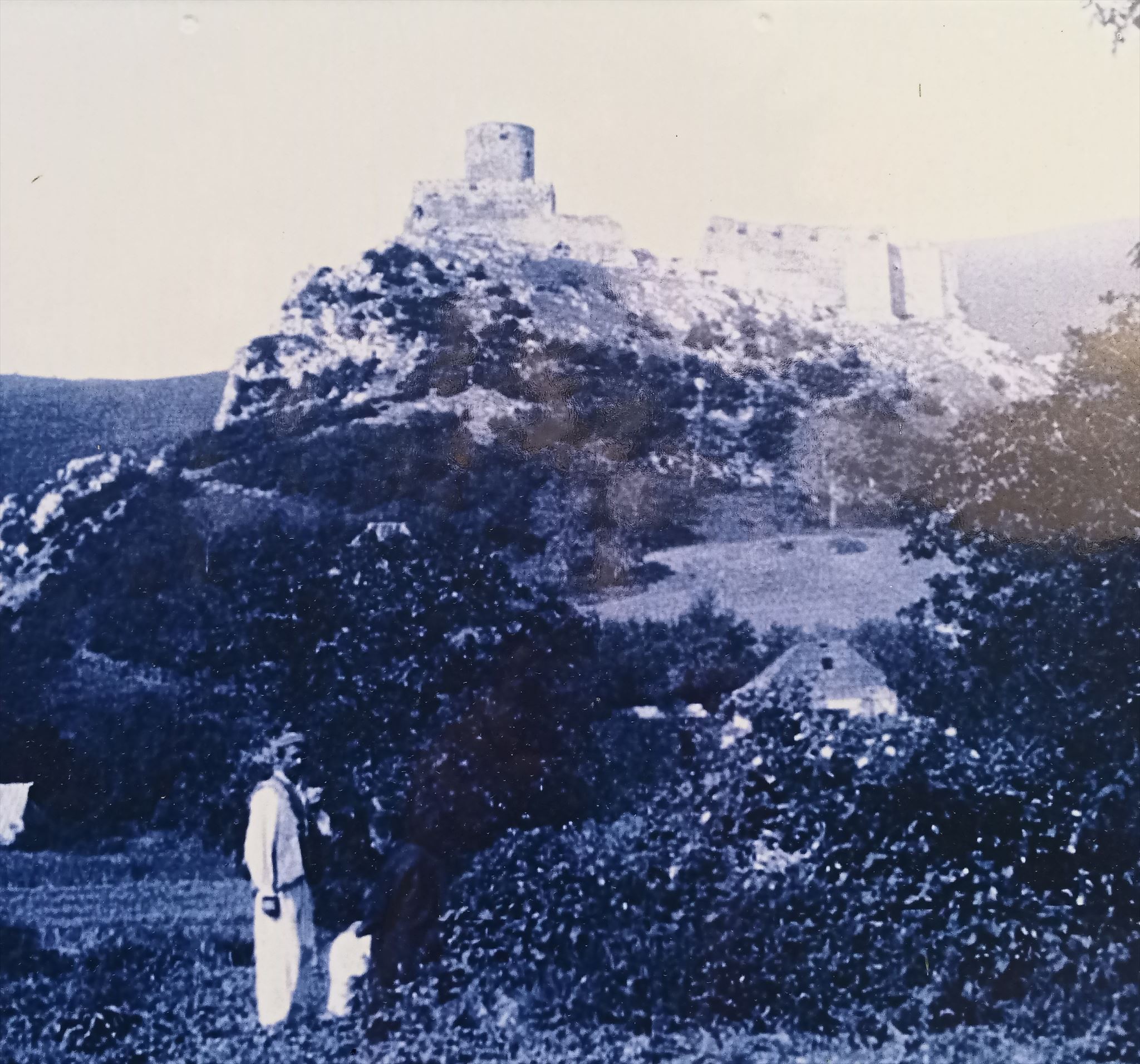
According to the remnants we can imagine what the castle originally looked like before the additional fortification construction. The keep of Sokolac is an exemplary medieval fortification structure with a multitude of carefully constucted details.
Sokolac and the Frangepans
Beatrice de Frangepan was married to Croatian viceroy Ivaniš Korvinus and thus daughter-in-law with Hungarian king Matthias Korvinus from the house of Hunyadi. They got married in spring of 1496 and moved to Bihać, which was a dowry present from her father Bernardin. There, Beatrice gave birth to their three children Elisabeth, Krsto and Matija. However, the family moved further north to Krapina where they felt much safer from the raids of the Ottoman army which Bihać area was getting more and more affected by.

On 12.10.1504, after eight years of the marriage, her husband Ivaniš dies. Soon after, she loses her both sons and eventually her daughter, too. After a period of mourning, being the only heir to the vast Korvinus estates which included Bihać, Sokolac, Ostrovica etc., in 1509 she gets married to German margrave Frederick of Brandenburg. Not a year later, Beatrice dies and her Frederick inherits all her wealth. He sells all inheried propeties to buy a huge estates in Silesia.
The Ground Plans
Sokolac castle belonged to a chain of fortifications which also extends to today's Croatia. At the peak of its use against the Ottomans this fortification chain numbered more then fifty castles and defensive towers. In 1527 military borderline (Vojna Krajina) was established and Bihać, as its main town was directly administrated by the Austrian Empire.

The town became the outer border spot of the Duchy of Carniola (Krain). Bihać remained the military and administrative center of Kraijna (at that time called Serhat - Turkish for military borderline) after being occupied by the Ottomans in 1592, too. The Krajina borderline lasted until 19th century. The name Krajina remained.
The Eagles Fly Early
The Eagles Fly Early is a Yugoslav movie from 1966 based on the novel written by Branko Ćopić. Amongst other locations, the movie was also filmed at the Sokolac Castle.
The story depict the pre-WW2 events and tell the story of a group of children who start to playing truant due to the terror of their ever drunk teacher nicknamed Paprika, as his nose was always red due to his drinking. Soon after the company was disbanded, because parents find out about their absence.
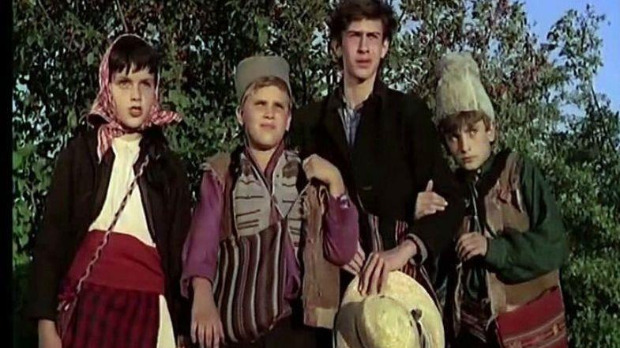
After WW2 started in 1941, the war turns the children's hide and seek into a brutal reality, when the old company gathered together again to fight the occupier.
On The Top Of The Sokolac Keep
The keep has a ground floor and two floors. The keep used to be entered by a paved entry hall and movable bridge through the door with a stone framework which has not been preserved. The access to the living areas is on the first floor. All the rooms have doomed ceilings.
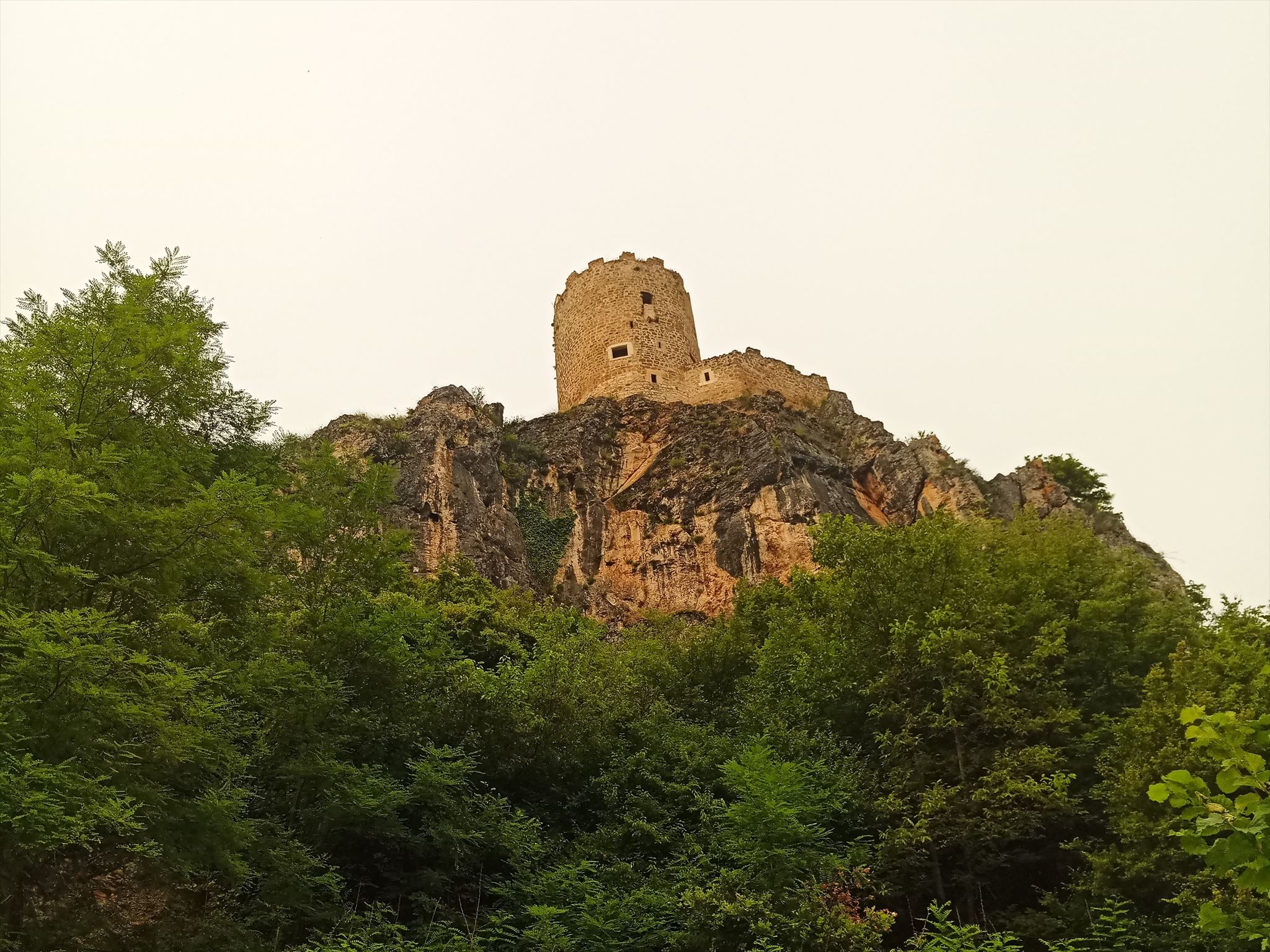
In the first floor there is an entry area, with staircase leading down to an additional room lit by one small window, which was used as a dungeon. The first floor has two large windows with a spacious niches and stone benches. All the rooms in the keep possess fireplaces too. Construction details reveal that the keep was not used only by the soldiers and servants but by wealthy gentelman too. Another staircase leads to the second floor and the platform which was certainly roofed in the medieval times. The room on the top floor is also known as Banova soba. Whether the rooptop of the keep was constructed with stone or wooden beams and fitted with battlements and crenellation is hard to determinate.