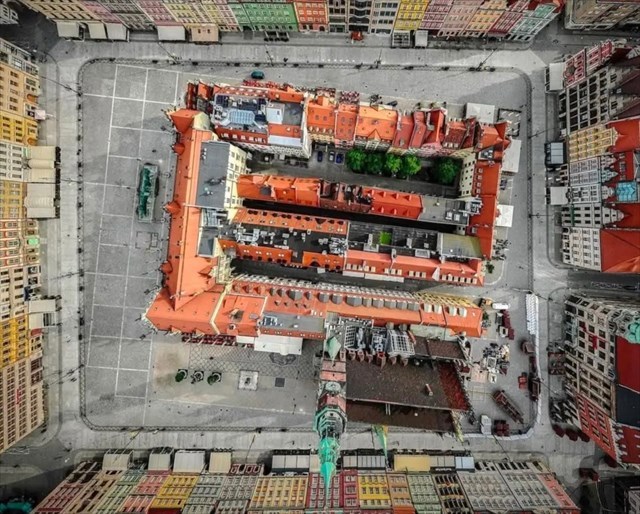
Kamera Wrocław Rynek
Link do obrazu kamery
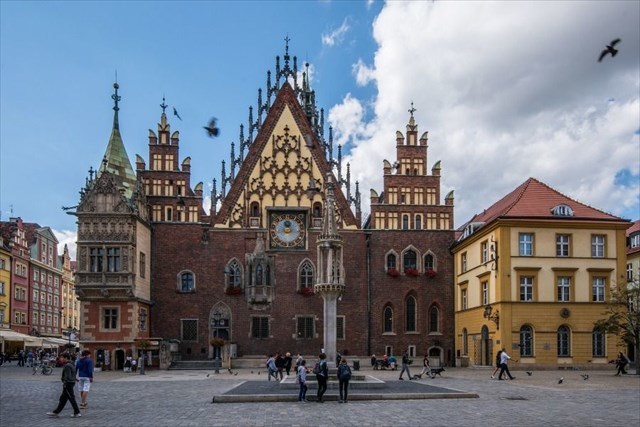
1. Stań na współrzędnych głównych skrytki, na skrzyżowaniu ciemnych pasów. Jeśli dasz radę, to stań na jednej nodze. Jeśli miejsce nie jest dostępne (np. z powodu imprezy), stań jak najbliżej.
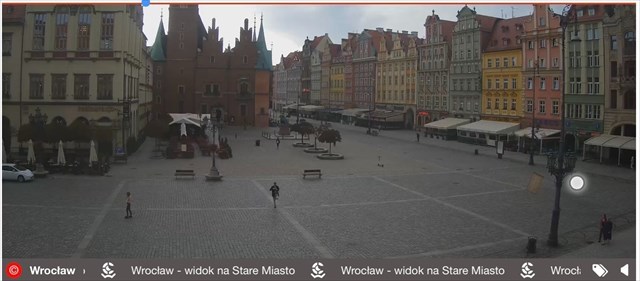
Zrób zdjęcie kamerą internetową (kamera ma kilkanaście sekund opóźnienia). Jeśli z jakiegoś powodu nie możesz / nie chcesz użyć kamery internetowej, wystarczy zdjęcie zrobione własnym aparatem. Zdjęcie załącz do logu. Przykładowe zdjęcie:
1. Stand at the cache's main coordinates, at the intersection of the dark stripes. If you can, stand on one leg. If the spot is not available (e.g. due to a party), stand as close as possible.
Take a picture with the WebCam (the camera has a delay of several seconds). If for some reason you can't/don't want to use a webcam, a photo taken with your own camera will suffice. Photo attach to the log. Sample photo:
2. Na współrzędnych „Wielka waga" znajduje się wygrawerowany w granicie dwu wersowy napis. Wprowadź treść drugiego wersu do walidatora. Format odpowiedzi XXX XXXX. Aby odpowiedź została zapamiętana na liście zdobywców, wymagane jest zalogowanie kontem geocaching do walidatora. Jeśli nie zamierzasz wykonywać dodatkowego logowania, przyślij mi wynik walidatora poprzez wiadomość prywatną.
2. On the coordinates „Wielka waga" there is a two-line inscription engraved in granite. Enter the content of the second line into Validator. Answer format XXX XXXX. In order for the answer to be saved on the list of winners, it is required to log in to the validator with a geocaching account. If you do not intend to perform an additional login, send me the validator result via private message.
Ciekawostki o wrocławskim Rynku
Wielka Waga
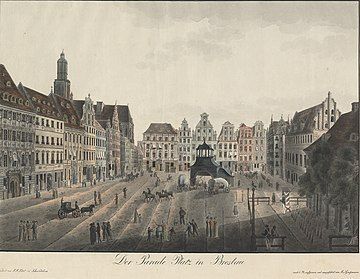
Na placu handlowym działały dwie wagi. Dzięki przywilejowi „Prawo składu” który Wrocław otrzymał od Księcia Henryka Probusa w roku 1273 wszystkie towary o wadze powyżej 1 centaura (ok. 50 kg) musiały być ważone na wadze miejskiej oraz podlegały obowiązkowemu wystawieniu towarów do sprzedaży przez okres minimum 3 dni. Wielka waga ważyła towary o wadzi powyżej 10 centaurów, lżejsze towary były ważone na Małej Wadze. Prawo składu zapewniało miastu ogromne zyski z pośrednictwa w handlu.
.
Great weight
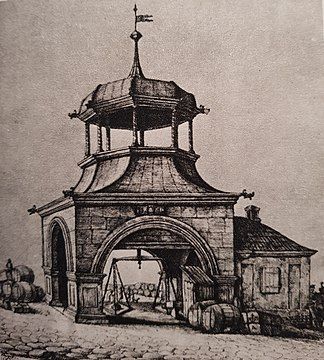
There were two scales in operation at the market square. Thanks to the privilege of the "Right of storage" that Wrocław received from Duke Henryk Probus in 1273, all goods weighing more than 1 centaur (approx. 50 kg) had to be weighed on the city scales and were subject to the mandatory display of goods for sale for a period of at least 3 days. The large scale weighed goods weighing more than 10 centaurs, lighter goods were weighed on the Small Scale. The right of storage provided the city with huge profits from brokering trade.
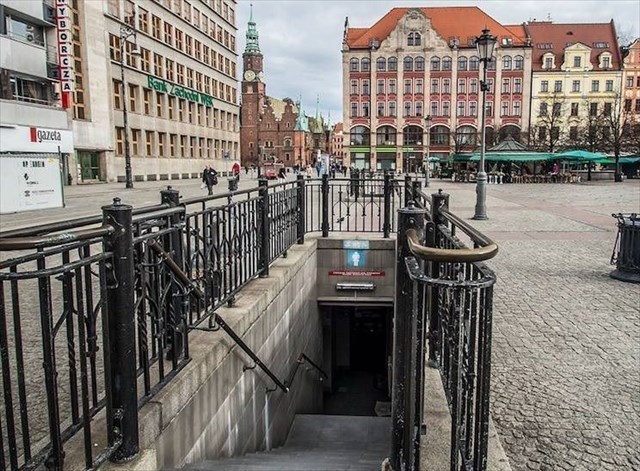
Toaleta miejska z własnym schronem przeciwlotniczym
Każdy turysta odwiedzający Wrocław zadaje sobie pytanie o najbliższą toaletę publiczną. Toaleta jest pod Placem Solnym – pomocniczym dla Rynku placem targowym. Obok toalety znajduje się wejście do zbudowanego w roku 1942 schronu przeciwlotniczego. Część pomieszczeń schronu zajmuje obecnie muzeum MovieGate.
.
A public toilet with its own air raid shelter.
Every tourist visiting Wrocław asks themselves about the nearest public toilet. The toilet is under Plac Solny – a market square that is an auxiliary one for the Market Square. Next to the toilet is the entrance to the air raid shelter built in 1942. Part of the shelter is currently occupied by the MovieGate museum.
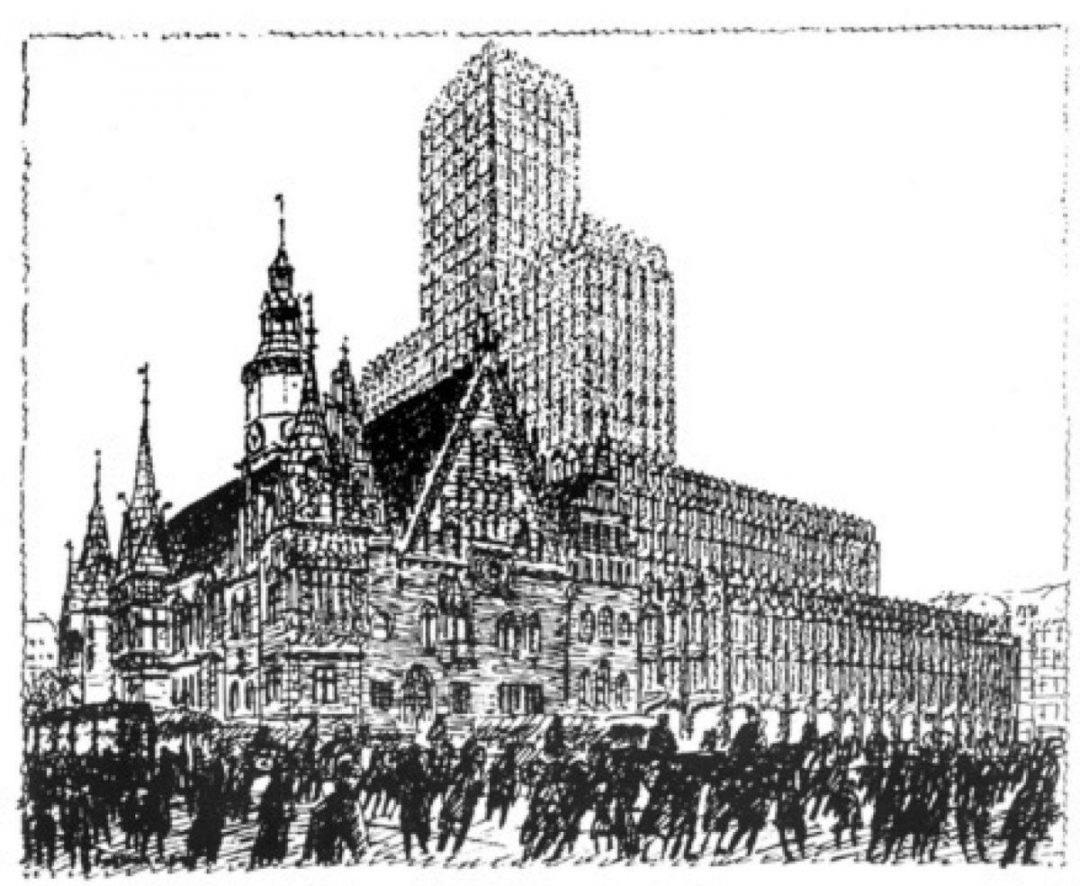
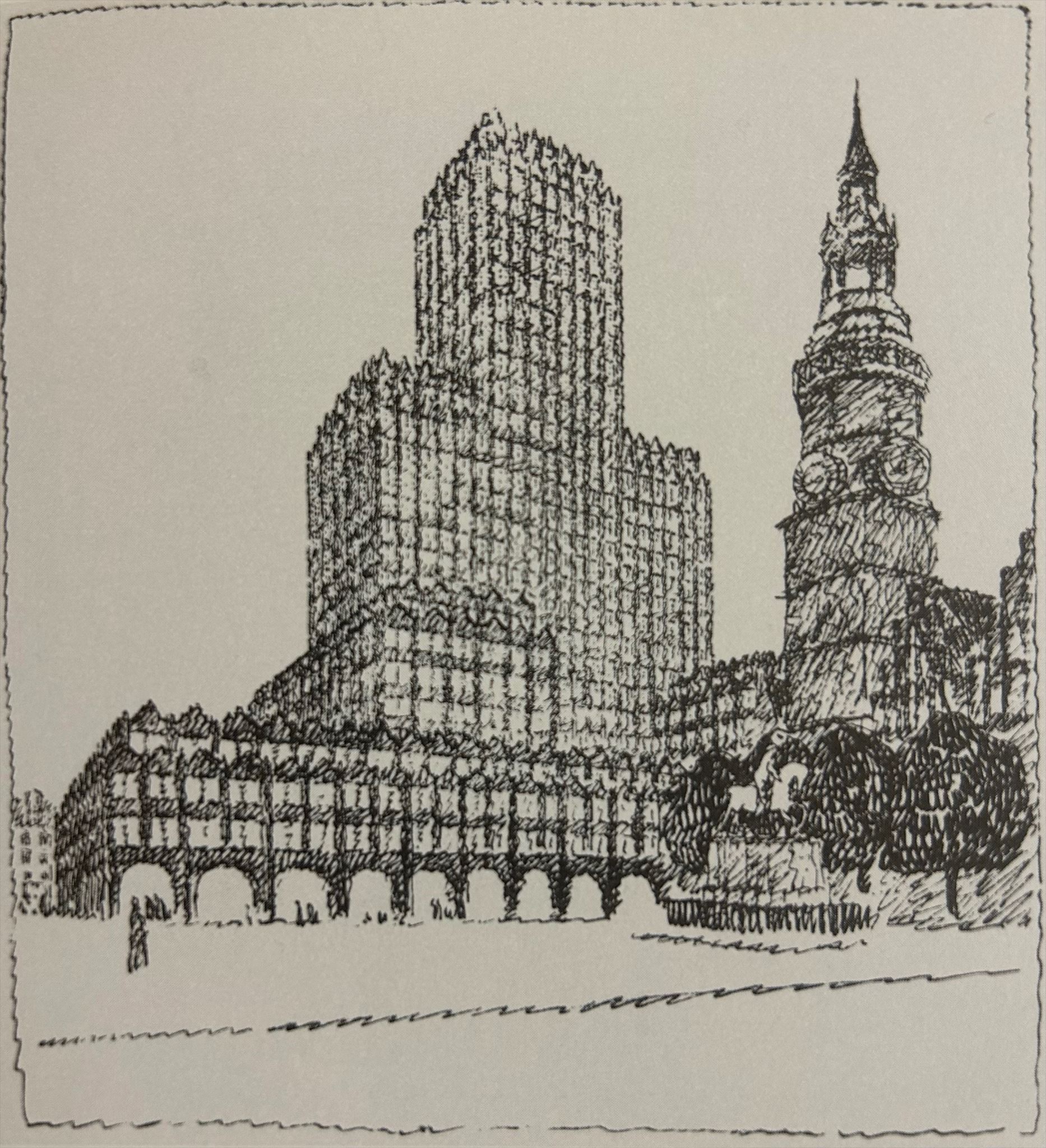
Wieżowiec na wrocławskim Rynku
Wieżowiec na zachodniej pierzei Rynku nie pasuje do średniowiecznych kamienic? Modernistyczny budynek powstał po roku 1930, niedługo po sukcesie architektonicznym Hali 100-lecia Maxa Berga. Zaprezentowane powyżej projekty pokazują jak miasto o średniowiecznej historii miało się zamienić w żelazo-betonową pustynię zastępując wszystkie średniowieczne kamienice. Projektów na szczęście nie zrealizowano. Na uwagę zasługuje winda paciorkowa („ojcze nasz”) z 20 kabinami. Winda nie zatrzymywała się na piętrach, wsiadało się do niej wskakując i wyskakując w ruchu. Wejście główne z motywami sztuki egipskiej.
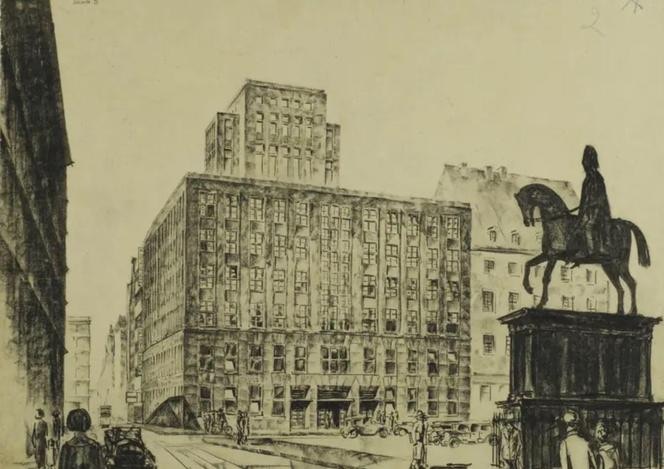
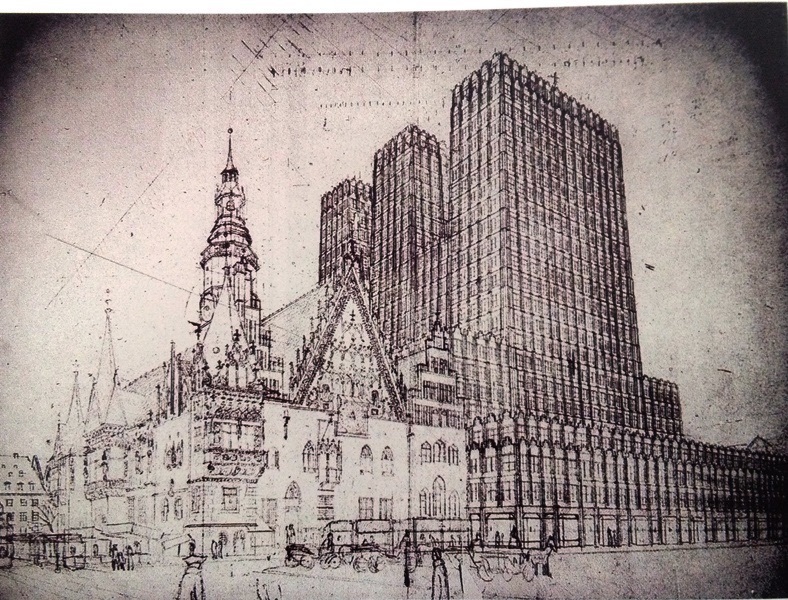
Skyscraper on the Market Square in Wrocław
The skyscraper on the western side of the Market Square doesn't fit in with the medieval tenement houses? The modernist building was built after 1930, shortly after the architectural success of Max Berg's Centennial Hall. The designs presented above show how the city with a medieval history was to be transformed into a ferro-concrete desert, replacing all the medieval tenement houses. Fortunately, the designs were not implemented. The bead elevator ("paternoster") with 20 cabins is worthy of attention. The elevator did not stop at floors, you got on and off while it was moving. The main entrance with Egyptian art motifs.
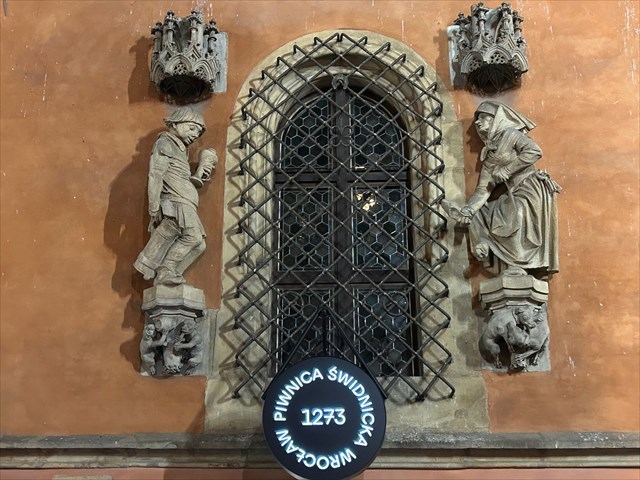
Najstarsza restauracja w Polsce
Restauracja „Piwnica Świdnicka”, jedna z najstarszych w Europie i najstarsza w Polsce średniowieczna restauracja – działalność rozpoczęła w 1273 roku.
.
The oldest restaurant in Poland
“Piwnica Świdnicka” restaurant, one of the oldest in Europe and the oldest medieval restaurant in Poland – it began operating in 1273.
Stacja benzynowa
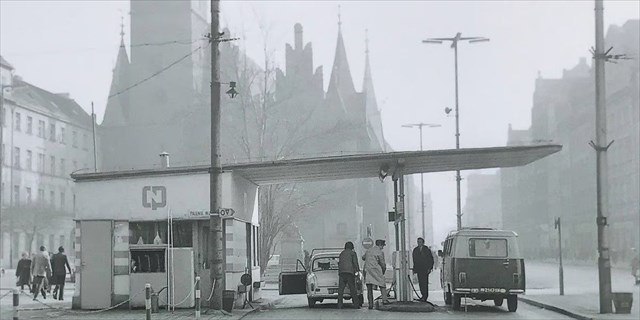
Jeszcze nie tak dawno w tym miejscu można było zatankować paliwo. Po Rynku jeździły tramwaje i można było swobodnie zaparkować samochód. To się już nie wróci.
.
Petrol station
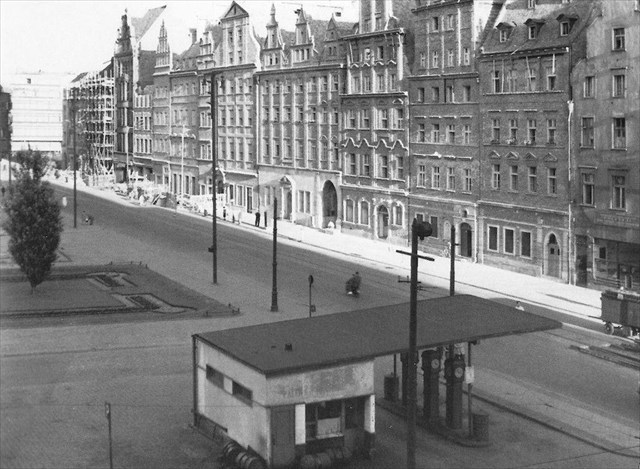
Not so long ago, you could fill up with fuel here. Trams ran around the Market Square and you could park your car freely. That won't happen again.
Pręgierz
Wrocławski Rynek był miejscem, gdzie odbywały się publiczne egzekucje. Pręgierz stoi tu (z przerwami) od roku 1492. Ostatnia publiczna egzekucja odbyła się w XVIII wieku, a kara chłosty pod koniec XIX stulecia. Według legendy wychłostano pod nim m.in. Wita Stwosza, któremu udowodniono sfałszowanie weksla. Innym narzędziem do utrzymania praworządności w mieście była metalowa klatka, w której zamykano osoby popełniające lżejsze wykroczenia.
.
Pillory
Wrocław's Market Square was the place where public executions took place. The pillory has been standing here (with breaks) since 1492. The last public execution took place in the 18th century, and the last flogging was in the late 19th century. According to legend, Wit Stwosz, who was proven to have forged a bill of exchange, was whipped under it. Another tool for maintaining law and order in the city was a metal cage, in which people who committed minor offenses were locked up.
Tramwaje
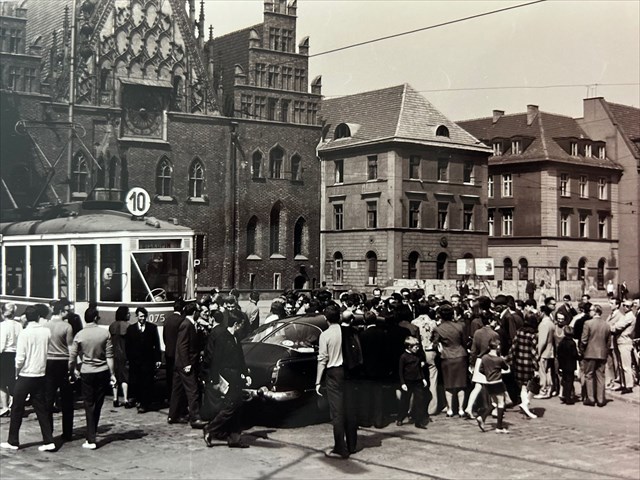
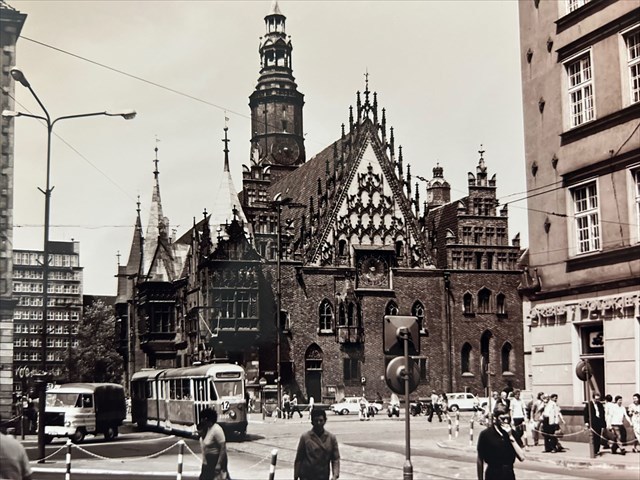
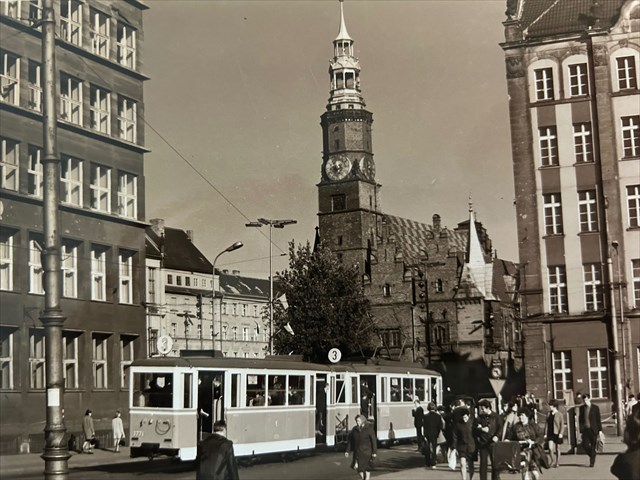
Wrocław posiada najstarszy w Polsce system tramwajów elektrycznych. Zaczęło się w 1877 od jednoszynowego tramwaju konnego. Od 1893 powoli były zastępowane tramwajami elektrycznymi, a sieć została uzupełniona kolejką wąskotorową do Trzebnicy. Wszystkie linie przechodziły przez Rynek, który pełnił funkcję centrum komunikacyjnego miasta, od 1943 każda dzielnica miała połączenie z Rynkiem oraz Dworcem Głównym. Tramwaje zniknęły z Rynku pod koniec lat 70. poprzedniego wieku, kiedy ruch przerzucono na Trasę W-Z. Symbolem Wrocławia są tramwaje koloru niebieskiego.
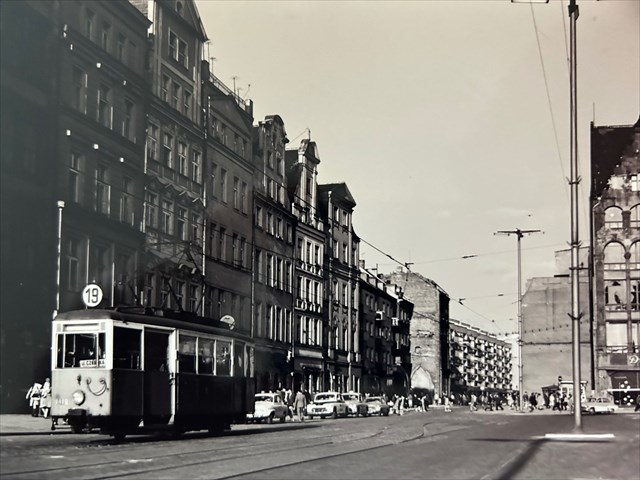
Trams
Wrocław has the oldest electric tram system in Poland. It started in 1877 with a monorail horse tram. From 1893 they were slowly replaced by electric trams, supplemented by a narrow-gauge railway to Trzebnica. All lines passed through the Market Square, which served as the city's communication center, from 1943 each district had a connection to the Market Square and the Main Railway Station. Trams disappeared from the Market Square in the late 1970s, when traffic was transferred to the W-Z Route. The symbol of Wrocław are blue trams.
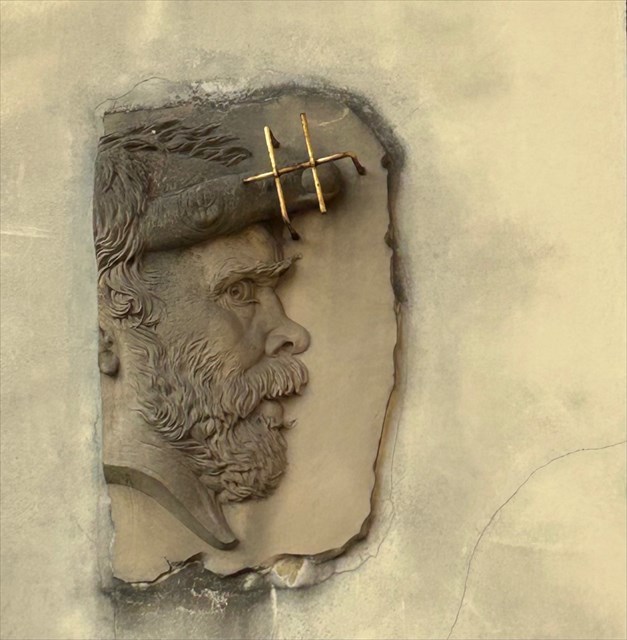
Zrób to sam
Kamieniczki Jaś i Małgosia to dawne domki altarystów, otaczały cmentarz przy pobliskim kościele. Na uwagę zasługują dzieła Eugeniusza Get Stankiewicza, który prowadził tu swoją pracownię płacąc miastu dzierżawę 1 grosz rocznie.
.
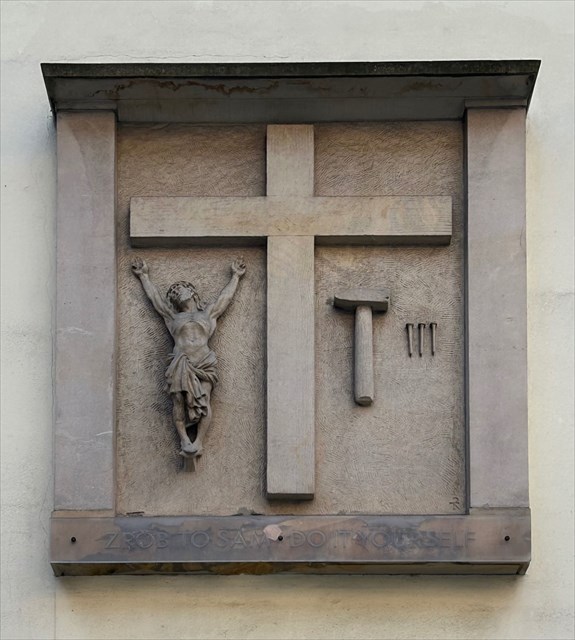
Do it yourself
The Jaś and Małgosia tenement houses were former altar houses, they surrounded the cemetery at the nearby church. The works of Eugeniusz Get Stankiewicz are worthy of attention, as he ran his studio here, paying the city 1 grosz a year in rent.
Virtual Rewards 4.0 - 2024-2025
This Virtual Cache is part of a limited release of Virtuals created between January 17, 2024 and January 17, 2025. Only 4,000 cache owners were given the opportunity to hide a Virtual Cache. Learn more about Virtual Rewards 4.0 on the Geocaching Blog.