This is an Earthcache – as such, there is no physical cache. Instead after examining the stones at the Pinoak Fountain, you will answer 3 questions and message the answers to me. All observations can be made without entering the chain fence. Please visit during daylight hours only.

The Pinoak Fountain served as the surrounding community’s main water supply through the mid-20th century. This fountain was powered by gravity, as the actual spring was located up the hill behind the fountain.
The fountain is built from native stone and quartz, sits on a 16-foot square of flagstone. Flagstone is a sedimentary rock usually made of sandstone bound together by minerals like silica, calcite, or iron ore. The sandstone used for the pillars and frame of the fountain was deposited early in the Devonian Period, 400 million to 345 million years ago.
The water flow to Pinoak Fountain was discontinued by the County prior to 1980 due to health reasons, yet it still stands here today as testament to the Hampshire County artisans who built it.

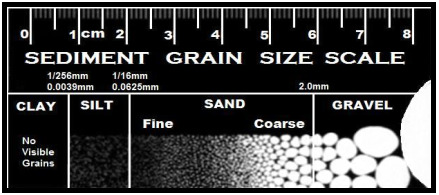
The grains of sand in sandstone have been reduced to their sand size through weathering, and they are transported and deposited via water, wind, or glacial action. Sandstone may contain larger sized grains, such as granules, but the rock would still be classified as sandstone if the primary component is sand-sized grains. The time and distance these sand grains have traveled will vary. If the sand is deposited near its source, the composition of the sandstone will more closely match the composition of the source rock. The longer the distance the sand grains have traveled will likely give the sandstone a more varying composition. More rounded grains indicate greater weathering and are an indication that the sand likely traveled a greater distance from its source rock.
But the most remarkable feature of this structure is the spiky layer of crystal quartz that lines the ceiling. The crystal quartz was gathered from “behind the Iron furnace property on Route 127 in Bloomery, West Virginia,” and originates as part of the Tuscarora Formation. This geological formation has a particularly pure bed of quartz, compressed into sandstone by several cycles of mountain building. In the initial cycle, perhaps 2 billion years ago, a sandy beach was compressed into sandstone and then uplifted into this mountain range.
To build the spiky ceiling, a wooden frame was filled with sand to hold the quartz upright, and then cement was poured over the sand to seal the quartz in place. When it dried, the wooden frame was removed, it was flipped over, and the the concrete slab was placed on the fountain pillars with its quartz spikes now facing down.
LOGGING REQUIREMENTS:
To log this Earthcache: Read the geology lesson above. Answer all three questions posted below. Answers can be sent via e-mail or messenger contacts on my Geocaching profile within a reasonable time. Group answers are fine, but do not post the answers to the questions in your logs.
QUESTION 1.Do the quartz spikes appear pure white, or does it appear to have a foggy yellow tinge to it?
QUESTION 2. Observe the sandstone pillars. Does the texture have and even texture of sand sized particles, or do you see larger pebbles of different sizes mixed in it?
QUESTION 3. Now that you know the texture, did this sandstone travel a short range or a long range from its source rock?
OPTIONAL PHOTO: Posting a photo that readily indicates that you (and anyone else logging the find) are at the location.

 Awesnap has earned GSA's highest level:
 REFERENCES:
1. Everyone in West Virginia Must Visit This Epic Natural Spring As Soon As Possible R.Jarvis, Only In Your State, January 1, 2019, website, onlyinyourstate.com
2. Pinoak Fountain National Register of Historic Places Registration Form, NPS Form 10-900, April 15, 2016, npgallery.nps.gov
3. Fountain Restoration Making Great Progress Hampshire County Historical Society, Newsletter, 1993, historichampshire.org