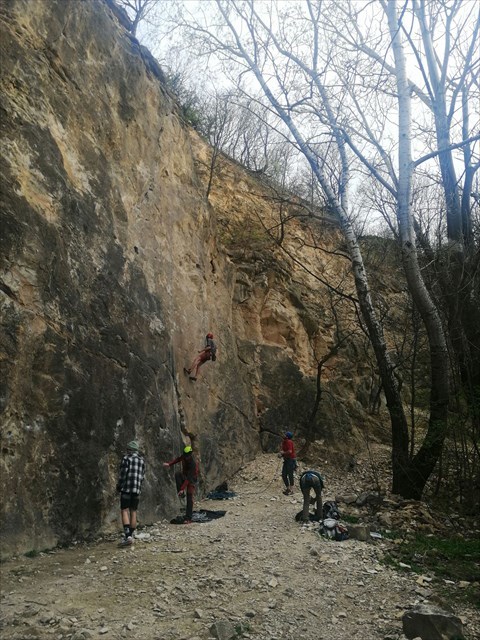

Kissvábhegyi kőfejtő
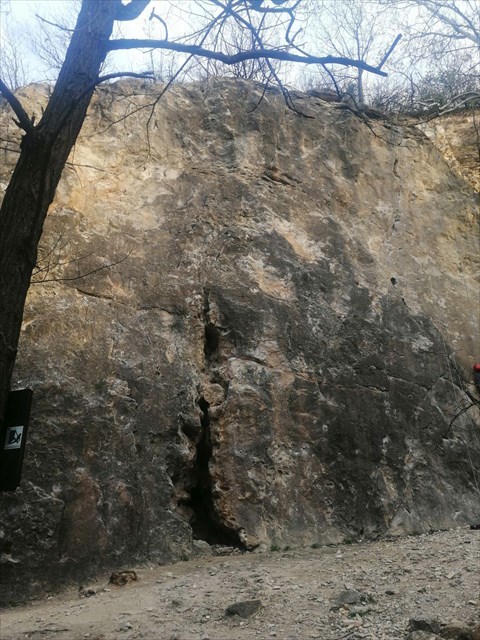
A Kis-Sváb-hegy a Budai hegység része, a János-hegy egyik előhegye. Itt található a már bezárt mészkő bánya. Érdekesség, hogy a hegy belsejében több üreg és kisebb barlang is van, a bányászat során fedezték fel őket. Az üregekből sok a bányászat során megsemmisült, megrongálódott, bizonyos szakaszokat betömtek. Az egyetlen ma is látható ilyen üreg a Martinovics-hegyi kristályfülke ami a hegy korábbi nevéről kapta a nevét. A kristályfülke magas hasadék szerű, és körülbelül 3 méter mély. Jellegzetessége, hogy falát végig kalcitkristályok borítják. Hasonló kalcitos formák az egész volt mészkőbánya területén megtalálhatóak. A bánya a 20. században nagyon sok budapesti geológusnak és az ásvány gyűjtőnek fő kutató- és lelőhelye volt, azonban a területet a 90-es években lezárták, csak 2014-ben nyitották meg és tisztították ki. A kőfejtő jelenleg sziklamászók körében népszerű, több kijelölt pálya is van. Az ásványok gyűjtése és a sziklafal vagy az üreg megrongálása szigorúan tilos!
A hegy a Budai-hegység sok más hegyéhez hasonlóan a Budai Paleogén medence üledékképződése során keletkezett. Ez az üledékciklus az 56 millió évvel ezelőtt kezdődött és 33 millió évvel ezelőtt befejeződött eocén középső korszakában, a középső-eocén elején kezdődött a déli-délnyugati irányból érkező tengerelöntés hatására. Ez nem keverendő össze az ennél több mint 10 millió évvel később, a miocénben keletkezett Pannon-tengerrel. A tengerelöntés legkorábban a Zalai-medencét és a Déli-Bakonyt érte el, a Budai-hegységig csak később, a felső-eocén korban jutott el. Ez idő alatt az akkori világtengerekkel való összeköttetést mindvégig a Szlovéniai-korridor biztosította. A hegy felső-eocén korú mészkőjét nummuliteszes mészkőnek nevezzük. A mészkő a tengeri üledék felhalmozódásából és az akkor élő meszes vázú élőlények maradványaiból jött létre. A tengerelöntés során keletkezett kőzetben nummuliteszek, a korban élő nagy méretű tengeri egysejtűek élőlények találhatóak. A kissvábhegyi lelőhelyen sajnos nem látható ilyen kövület jelenleg.
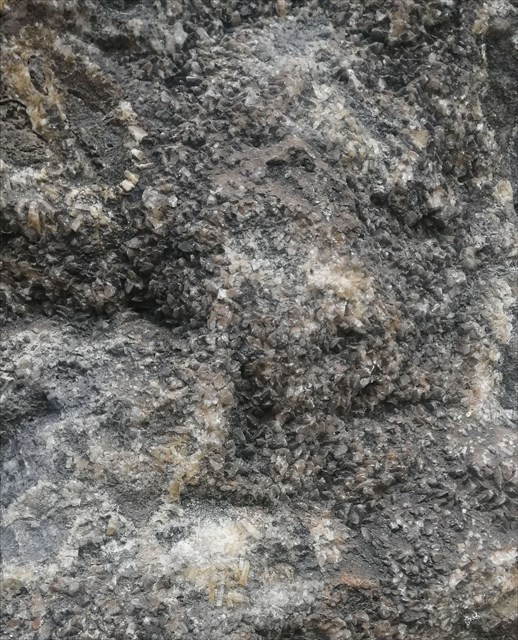
A volt bánya kristályfülkéjének a falát és a kőfal más pontjait is kristályok borítják. A terület 2 legjellemzőbb ásványfajtája a kalcit és a barit. A kalcit főként kalcium-karbonátból (CaCO3) épül fel. Igencsak gyakran fordul elő a mészkővel, azonos anyagból épülnek fel. A folyamat során először mészkő keletkezik, majd az idők során, hőmérséklet és nyomás hatására kristályos szerkezet alakul ki. Képződési hőmérsékletétől függően számtalan kristályformája ismert: gyakran táblás, éderes vagy prizmás formákban jelenik meg. Vaskos, szemcsés, szálas vagy rostos formában is gyakori. Itt is több formájával találkozhatunk. Igen elterjedt és nagy mennyiségben szereplő ásvány. A barit fő felépítőeleme a bárium-szulfát (BaSO4) Hidrotermás eredetű, keletkezése során a mélyből feltörő oldatok közepes és magas hőmérsékleten átitatják a környező kőzeteket, azokat átalakítják. A barit is több formában előfordul. Jelenleg a kőfejtőben már nem található belőle a gyűjtögetések miatt. A barit alapvetően semleges színű ásvány, viszont az itt talált leletekre jellemző a sárgás elszíneződés.
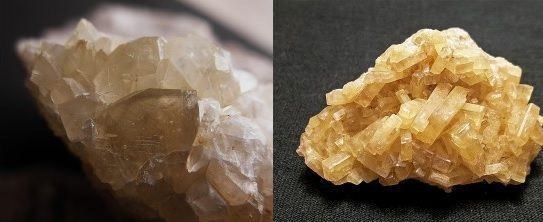
Kalcit és barit a Kissvábhegyről
Kérdések:
1. Vizsgáld meg a kristálykamra kristályait! Mit tapasztalsz mekkora, milyen a színe, milyen a textúrája a kristályoknak?
2. Hány éve keletkezett a hegyet felépítő mészkő?
3. Mi a fő különbség a barit és a kalcit között?
4. Mi okozhatja az itt megtalálható barit sárga színét?
5. Készíts magadról vagy egy hozzád köthető tárgyról fotót a helyszínen!
A válaszokat küldd el nekem geocaching üzenetben vagy a geoblackangle73@gmail.com email címre. A válaszok elküldése után nyugodtan logolj, ha valami probléma van a válaszoddal azt jelzem feléd.

Kissvábhegy Quarry
Kis-Sváb-hegy (meaning Small Swabian Hill) is part of the Buda Mountains, it is one of the foothills of János Hill. The closed limestone quarry is located there. There are several caves and smaller caverns inside the hill, which were discovered during mining. Many of these cavities were destroyed or damaged during mining, and certain sections were filled in. The only visible cavity today is the Martinovics Hill Crystal Chamber, named after the hill's previous name. The crystal chamber is a high crevice-like structure, approximately 3 meters deep. Its characteristic feature is that its walls are covered with calcite crystals. Similar calcite formations can be found throughout the former limestone quarry area. In the 20th century, the quarry was a major research and collecting site for many geologists and mineral collectors from Budapest. However, the area was closed off in the 1990s and was only reopened and cleaned up in 2014. The quarry is currently popular among rock climbers, with several designated routes. Collecting minerals and damaging the rock face or the cavern is strictly prohibited!
Like many other hills in the Buda Mountains, this hill was formed during the sedimentation of the Buda Paleogene Basin. This sedimentary cycle began 56 million years ago and ended 33 million years ago in the middle Eocene epoch, starting in the early Middle Eocene due to the influx of the sea from the south-southwest direction. This should not be confused with the Pannonian Sea, which formed more than 10 million years later in the Miocene. The influx of the sea first reached the Zala Basin and the Southern Bakony, only later reaching the Buda Mountains during the Upper Eocene. Throughout this time, the connection with the seas of that era was ensured by the Slovenian corridor. The upper Eocene limestone of the mountain is called nummulitic limestone. The limestone was formed from the accumulation of marine sediment and the remains of calcareous organisms that lived at that time. In the rock formed during the influx of the sea, nummulites, large single-celled marine organisms of the time, can be found. Unfortunately, such fossils are not currently visible at the Kissvábhegy site.
The walls of the former quarry's crystal chamber and other parts of the rock wall are also covered with crystals. The two most characteristic mineral species in the area are calcite and barite. Calcite is mainly composed of calcium carbonate (CaCO3). Calcite often occurs with limestone, being composed of the same material. During the process, limestone is formed first, and over time, under the influence of temperature and pressure, a crystalline structure develops. Depending on the formation temperature, numerous crystal forms are known: it often appears in tabular, nodular, or prismatic forms. Coarse, granular, fibrous, or stalactitic forms are also common. Various forms can be encountered here as well. It is a widespread and abundant mineral. Barite's main constituent is barium sulfate (BaSO4). It is of hydrothermal origin; during its formation, solutions rising from the depths infiltrate the surrounding rocks at medium and high temperatures, altering them. Barite also occurs in various forms. Currently, it is no longer found in the quarry due to collection activities. Barite is fundamentally a neutral-colored mineral, but the yellowish discoloration found in the specimens here is common.
Calcite and barite from the quarry
Questions:
1st Examine the crystals in the crystal chamber! What size, color, and texture do the crystals have?
2nd How many years ago was the limestone that makes up the mountain formed?
3rd What is the main difference between barite and calcite?
4th What could cause the yellow color of the barite found here?
5th Take a photo of yourself or an object related to you at the site!
Send your answers to me via geocaching message or to the email address geoblackangle73@gmail.com. After sending your answers, feel free to log, and if there are any problems with your answers, I will notify you.