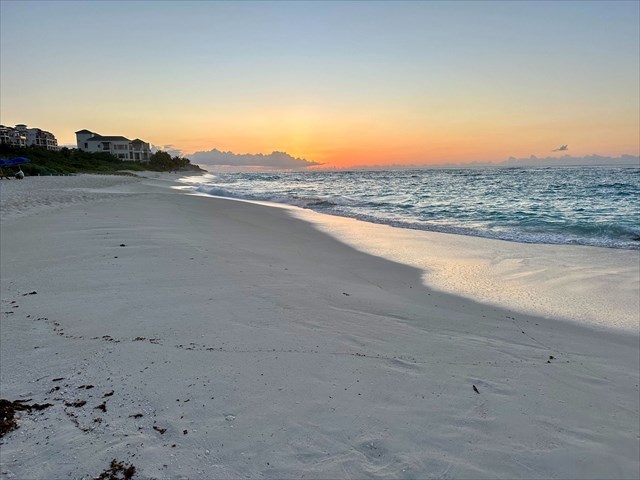
Shoal Bay is a stunning coastal destination renowned for its pristine beaches and crystal-clear turquoise waters. Located in the northeastern part of Anguilla, a British Overseas Territory in the Caribbean, Shoal Bay is celebrated for its powdery white sands and idyllic surroundings. Visitors flock to Shoal Bay to indulge in various water activities such as snorkeling and swimming, while also enjoying the laid-back atmosphere and picturesque views.
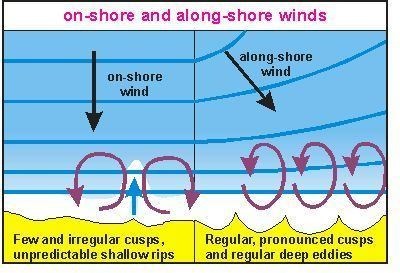
At Shoal Bay Beach, you'll have a unique opportunity to observe beach cusps, which are fascinating formations that occur along certain shorelines, characterized by regularly spaced, crescent-shaped embayments and protrusions. They typically emerge in environments with moderate to steep gradients, where wave action and sediment movement interact. The formation process involves a delicate balance between wave refraction and self-organization of sediment. As waves approach the shore at an angle, they refract, concentrating energy on certain points and dissipating it elsewhere, leading to the deposition of sediment in the embayments and erosion in the protrusions. Over time, this repetitive pattern creates distinct beach cusps, showcasing the intricate interplay between natural forces and coastal morphology.
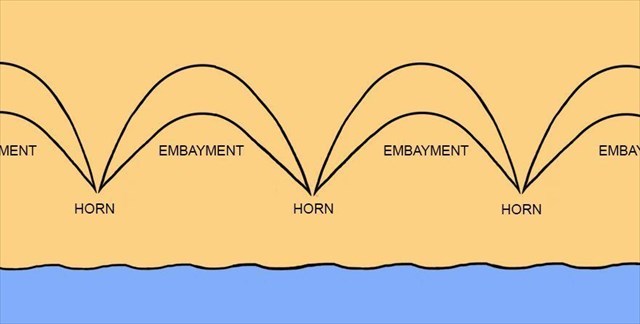
The formation of beach cusps is influenced by several geological factors. Wave refraction plays a crucial role, as waves approach the shoreline at an angle, causing them to refract and concentrate energy at certain points while dissipating it elsewhere. This differential energy distribution leads to the deposition of sediment in embayments and erosion in the areas between them. Sediment size and composition also contribute, with finer grains accumulating in embayments and coarser grains accumulating in the cusp horns. Additionally, the presence of irregularities in the shoreline, such as headlands or offshore bars, can further influence cusp formation through wave interactions.
Beach cusps serve as valuable indicators of coastal processes and environmental conditions. Their presence can provide insights into the prevailing wave climate, sediment dynamics, and shoreline stability. By studying beach cusps, geologists can better understand how waves shape coastal landforms and how sediment is transported and deposited along shorelines. Moreover, changes in the morphology of beach cusps over time can signal shifts in environmental conditions, such as alterations in wave patterns or changes in sediment supply. As such, beach cusps are important geomorphological features that contribute to our understanding of coastal evolution and management.
One other topioc worth mentioning is the Wentworth Scale. The Wentworth scale, commonly referred to as the Udden-Wentworth scale, is a widely accepted classification system used in geology to categorize sediment particles based on their size. It was developed by geologists Chester K. Wentworth and Johan A. Udden. The scale divides sediment particles into several distinct size classes. At the larger end of the scale are boulders, with a diameter exceeding 256 millimeters, followed by cobbles ranging from 64 to 256 millimeters, and pebbles measuring 4 to 64 millimeters. Granules fall into the next size category, with diameters between 2 and 4 millimeters. Sand particles are further subdivided into very coarse, coarse, medium, fine, and very fine categories, with diameters ranging from 1 millimeter down to 0.0625 millimeters. Finer particles are categorized as silt, ranging from 0.0039 to 0.0625 millimeters, and clay, with diameters less than 0.0039 millimeters. This standardized classification system is essential for describing sedimentary deposits accurately and aiding in the understanding of sediment transport processes.
Logging Requirements:
- Describe the beach cusps visible in the area (diameter, shape, ...etc). Are all of them similar in size, or do some vary slightly?
- Examine the sand located in the horn of the beach cusp. How would you classify it according to the Wentworth Scale?
- Examine the sand located in the embayment of the beach cusp. How would you classify it according to the Wentworth Scale?
- Which part of the beach cusp has the smallest sand? The largest sand?
- Based on the description and your observations, what factors do you think might have contributed to the formation of beach cusps along Shoal Bay Beach?
- Upload a photo taken on Shoal Bay Beach. You don't have to be in the photo, though it is strongly encouraged.