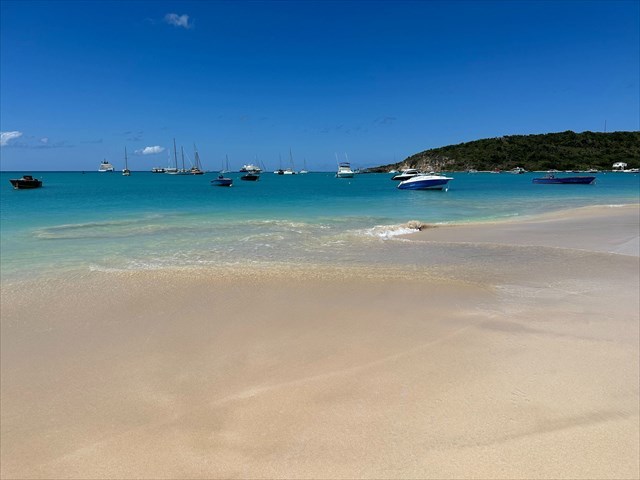
Sandy Ground Beach in Anguilla is a renowned destination known for its stunning coastline and vibrant atmosphere. Situated on the southern coast of the island, Sandy Ground Beach is famed for its powdery white sands and calm, turquoise waters. Visitors can enjoy a range of water sports, including snorkeling, paddleboarding, and boat tours, or simply relax under the Caribbean sun.
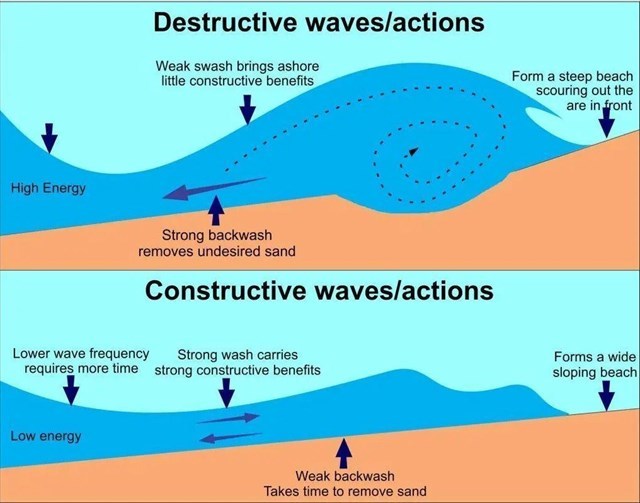
Constructive and destructive waves are fundamental forces shaping coastal landscapes, each with distinct characteristics and effects. Constructive waves, characterized by their long wavelengths and gentle amplitudes, transport sediment shoreward, gradually building and maintaining beaches. These waves typically occur during periods of calm weather, allowing sediment to settle and accumulate along the shoreline. Over time, the continuous action of constructive waves contributes to the formation of wide, sandy beaches and coastal features such as spits and barrier islands.
In contrast, destructive waves possess shorter wavelengths and higher energy levels. With their forceful impact, they erode coastlines, removing sediment and reshaping landforms through processes like cliff undercutting and sea cave formation. Destructive waves are often associated with storms, hurricanes, or intense weather events, which exacerbate their erosional power. The relentless pounding of destructive waves can lead to significant coastal erosion, threatening infrastructure, property, and natural habitats along the shoreline.
Several factors influence the balance between constructive and destructive waves along coastlines in the Caribbean. Wave energy, primarily determined by wind strength, duration, and fetch (basically the uninterrupted stretch of open water over which wind can travel without encountering obstacles such as islands or land), plays a significant role. Stronger winds over longer distances can generate higher-energy waves, increasing the potential for destructive erosion. Additionally, coastal geomorphology, including shoreline shape and bathymetry, influences wave behavior. Steep, irregular coastlines are more prone to wave energy concentration and erosion, whereas gently sloping beaches may favor sediment deposition and constructive wave action.
Seasonal variations, particularly during the hurricane season, also impact wave dynamics and the dominance of constructive versus destructive waves. In the Caribbean, the hurricane season typically spans from June to November, bringing increased wind speeds and larger swells. During this period, destructive waves may prevail, leading to heightened erosion and sediment displacement along the coastline. Conversely, outside of hurricane season, calmer conditions may allow for constructive wave action, facilitating sediment accumulation and beach stabilization. Understanding these seasonal variations is crucial for effective coastal management and adaptation to changing environmental conditions in the Caribbean region.
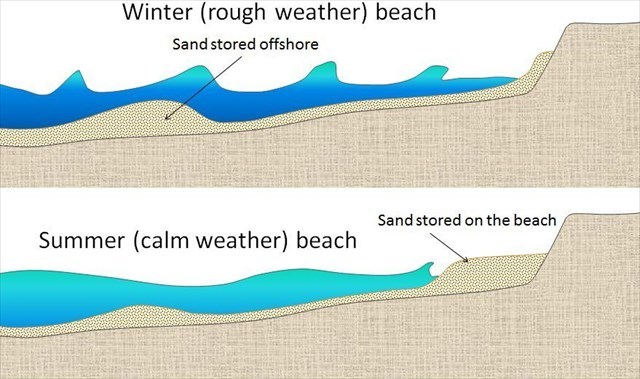
One other topic worth mentioning is summer and winter beaches. These types of beaches exhibit distinct geological characteristics influenced by seasonal variations in climate and environmental conditions. During the summer months, beaches often experience reduced wave energy, and calmer seas, fostering sediment deposition and shoreline stability. These conditions promote the accumulation of sand and the development of wider, more gently sloping beaches. Moreover, summer beaches are subject to seasonal fluctuations in sediment transport and coastal processes, which can influence beach morphology and sedimentary patterns.
In contrast, winter beaches undergo significant transformations due to stronger winds, and higher wave energy, particularly in regions prone to storms or hurricanes. The increased wave energy during winter can lead to enhanced erosion along the shoreline, resulting in the removal of sediment and changes in beach profile. Winter storms may also introduce sediment from offshore sources, leading to beach accretion or reshaping. Consequently, winter beaches often exhibit narrower profiles and steeper gradients compared to their summer counterparts.
It's important to note that the designations of "summer" and "winter" beaches aren't strictly confined to the seasons indicated. In various regions, including those with distinct weather patterns or tropical climates, the characteristics of summer and winter beaches can manifest at different times of the year. For instance, in hurricane-prone areas like the Caribbean, the effects of tropical storms can create conditions reminiscent of "winter beaches", even during the traditional summer months.
Logging Requirements:
- Describe the beach in front of you. Do you think constructive or destructive waves are dominant here? What led you to that conclusion?
- Looking around, how do you think the surrounding topography influences the types of waves that are dominant here?
- Would you consider Sandy Ground Beach a summer or winter beach?
- Based on your observations and what you have learned, how do you think the beach profile (summer or winter) is related to type of dominant wave action (constructive or destructive)?
- Upload a photo taken at Sandy Ground Beach. You don't have to be in the photo, though it is strongly encouraged. No group photos are allowed, each person must upload his/her own photo.