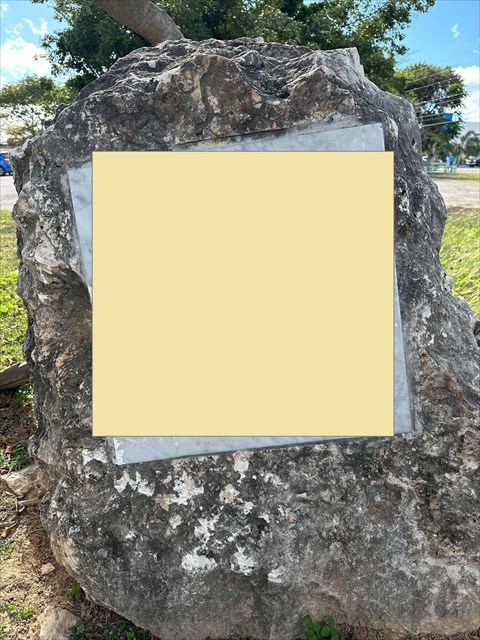
The Valley is the capital and commercial center of Anguilla. Located in the southern part of the island, it serves as the hub for government, business, and cultural activities. Despite its modest size, The Valley boasts colorful Caribbean architecture, vibrant markets, and a welcoming atmosphere. Here, you will find a marble plaque dedicated to Queen Elizabeth, which reads 'This plaque was unveiled by Her Majesty The Queen on 19th February 1994 on the occasion of her visit to Anguilla'. During her stay, Queen Elizabeth participated in various events, including ceremonial occasions and meetings with local officials. Her presence not only honored Anguilla's heritage but also highlighted the island's importance within the Commonwealth.
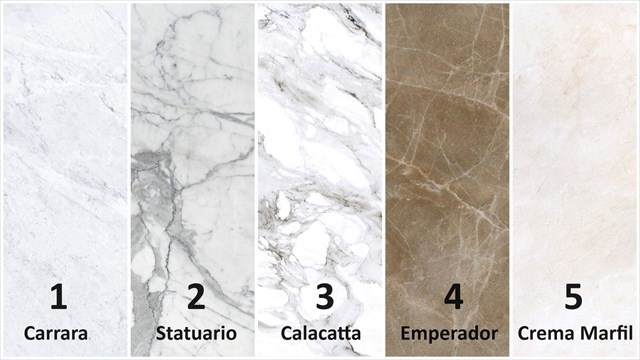
Marble is a metamorphic rock which is renowned for its beauty and durability. It originates from limestone, a sedimentary rock composed mainly of calcite, which undergoes profound changes in response to heat and pressure deep within the Earth's crust. Through the process of metamorphism, limestone is transformed into marble, where recrystallization of minerals occurs, resulting in a distinct crystalline structure and the emergence of vibrant colors and veining patterns. The five most common types of marble are shown in the image above and include carrara, statuario, emperador, and crema marfil.
Carrara marble is one of the most famous types of marble in the world, and is revered for its timeless beauty and understated elegance. It has a pristine white hue accented with delicate gray veining. The stone is quarried from the Carrara region in Italy. The stone is regularly used for sculptures and marble buildings. Next, there is Statuario marble, which has a uniform light gray background color that makes the deep, rich veins stand out. Statuario marble is usually priced lower than Calacatta marble but higher than Carrara marble. Statuario marble is primarily quarried in the Apuan Alps in Carrara, Italy. Next, there is Calacatta marble, which is haracterized by a luminous white background adorned with dramatic veins of gold, gray, or taupe. Geologically, it is rich in calcite and other minerals, which increases its durability. Next there is Emperador marble, which ranges in color from luminous tans to deep, lustrous browns. This stone has lavish hues and intricate veining, which makes it popular for floors, countertops, or accent pieces. The last marble on the list is crema marfil. This type of marble is known for its warm beige or creamy color with subtle veining, and is primarily quarried in Spain. The main quarries are located in the Alicante region, particularly around the town of Pinoso. The geological formation of Crema Marfil marble involves sedimentary processes over millions of years, resulting in the accumulation of fossilized remains and mineral deposits that contribute to its unique appearance.
Logging Requirements:
- Describe the color, veining, and any other unique characteristics of the marble plaque in front of you. Using the description as a guide, which type of marble was used for the plaque?
- Why do you think this particular type of marble was chosen, instead of let's say any of the other four popular types of marble?
- Upload a photo taken in the general area of the plaque. You don't have to be in the photo, though it is strongly recommended. No group photos are allowed, each person must upload his/her own photo.