
🌍 EarthCache: Merveilles de Sable Blanc – Sable Biogénique de Bora Bora
🌋 Contexte Géologique
Bora Bora fait partie des Îles de la Société en Polynésie française. Elle s’est formée il y a environ 7 millions d’années à la suite d’une activité volcanique. Le volcan central (le mont Otemanu) est aujourd’hui éteint et largement érodé, ne laissant qu’un noyau montagneux entouré d’un lagon peu profond et d’un récif corallien.
🌀 Formation d’un Atoll
-
Un volcan émerge de l’océan et forme une île.
-
Des récifs coralliens se développent autour de son rivage (récif frangeant).
-
L’île volcanique s’enfonce et s’érode progressivement.
-
Les coraux continuent à croître vers la surface, formant une structure en anneau.
-
Finalement, l’île disparaît, laissant un atoll corallien avec un lagon au centre.
Bora Bora est à un stade avancé de ce processus – le sommet volcanique est encore visible, mais il est entouré de récifs et de bancs de sable formés par l’activité biologique.
🧪 Origine du Sable
Le sable de Bora Bora est biogénique, c’est-à-dire qu’il provient d’organismes marins vivants plutôt que de roches érodées. Il comprend notamment :
-
Fragments de coraux brisés
-
Coquilles et restes de mollusques
-
Foraminifères (minuscules planctons calcifiants)
-
Algues calcaires
-
Débris et épines d’oursins
🐠 L’un des contributeurs les plus importants est le poisson-perroquet, qui broie le corail avec ses dents pour en extraire les algues. Il digère la matière organique et rejette le reste sous forme de sable blanc très fin. Un seul poisson-perroquet peut produire jusqu’à 220 kg de sable par an !
🔬 Composition
-
Composant principal : Carbonate de calcium (CaCO₃) – principalement sous forme d’aragonite ou de calcite
-
Couleur : Blanc éclatant à crème
-
Texture : Grains fins à moyens
-
Forme : Arrondie à anguleuse, selon l’origine et le transport
Ce type de sable réagit avec un acide (comme le vinaigre) en produisant des bulles – une manière simple de prouver qu’il est d’origine calcaire.
🧠 But Éducatif
Cet EarthCache permet de comprendre la différence entre sable géogénique et biogénique, de mettre en lumière l’interaction entre biologie et géologie, et d’explorer des expériences simples sur la géologie côtière tropicale.
📨 Instructions de Log (à envoyer par message ou e-mail)
-
Nom de l’EarthCache et code GC
-
Qui a participé ?
-
Test du sable : Prenez une poignée de sable sec et ouvrez lentement les doigts. Le sable tombe-t-il ou colle-t-il ? Que cela indique-t-il sur la taille des grains ?
-
Test de température : Creusez un petit trou de 10–20 cm. Comparez la température du sable en surface et en profondeur. Y a-t-il une différence ? Sinon, pourquoi ?
-
Expérience au vinaigre : Apportez du vinaigre. Placez une pincée de sable sur une cuillère ou dans la paume de la main, ajoutez du vinaigre. Observez attentivement. Que voyez-vous ? (Des bulles = présence de CaCO₃)
-
2 photos :
Remarque : Veuillez vous laver les mains après l’utilisation de vinaigre si vous l’avez versé sur la peau.

🌍 EarthCache: White Sand Wonders – Biogenic Sand of Bora Bora
🌋 Geological Background
Bora Bora is part of the Society Islands in French Polynesia and was formed about 7 million years ago through volcanic activity. The central volcano (Mount Otemanu) is now extinct and mostly eroded, leaving behind a mountainous core surrounded by a shallow lagoon and coral reef.
🌀 How Atolls Form
- A volcano rises above the ocean and forms an island.
- Coral reefs grow around the island’s shoreline (fringing reef).
- The volcanic island begins to sink and erode over time.
- Corals continue to grow upward, forming a ring-shaped structure.
- Eventually, the island disappears, leaving a coral atoll with a lagoon in the middle.
Bora Bora is in a late stage of this process – the volcanic peak remains visible, but is surrounded by reef and sandbanks created through biological activity.
🧪 How the Sand is Formed
The sand on Bora Bora is biogenic, meaning it comes from living marine organisms instead of eroded rock. This includes:
- Broken coral fragments
- Shells and snail remains
- Foraminifera (tiny calcifying plankton)
- Calcareous algae
- Sea urchin spines and skeletal debris
🐠 One of the most important contributors is the parrotfish, which grinds coral with its teeth to extract algae. It digests the organic matter and excretes the rest as fine white sand. One parrotfish can produce up to 220 kg of sand per year!
🔬 Composition
- Main component: Calcium carbonate (CaCO₃) – mainly as aragonite or calcite
- Color: Bright white to cream
- Texture: Fine to medium grain
- Shape: Rounded to angular depending on origin and transport
This kind of sand reacts with acid (like vinegar) by fizzing – a simple way to prove it’s made of limestone material.
🧠 Educational Purpose
This EarthCache teaches the difference between geogenic and biogenic sand, highlights biological-geological interaction, and allows you to explore simple field experiments in tropical coastal geology.
📨 Logging Instructions (Send via Message or Email)
- Name of the EarthCache and GC code.
- Who participated?
- Sand test: Take a handful of dry sand and gently spread your fingers. Does it fall through or stick? What does this say about grain size?
- Temperature test: Dig a small hole 10–20 cm deep. Compare the temperature of sand from the surface and from the hole. Is there a difference? If not – why?
- Vinegar experiment: Bring vinegar. Place a pinch of sand on a spoon or palm, add vinegar. Watch closely. What do you see? (Bubbles indicate CaCO₃)
- 2 photos:
- Your cacher name written in the sand
- You or an object with beach & sea in the background. Your cacher name must be visible in the photo.
Note: Please wash your hands after using vinegar if done on your skin.

🌍 EarthCache: White Sand Wonders – Biogener Sand von Bora Bora
🌋 Geologischer Hintergrund
Bora Bora gehört zu den Gesellschaftsinseln in Französisch-Polynesien und entstand vor ca. 7 Millionen Jahren durch vulkanische Aktivität. Der zentrale Vulkan (Mount Otemanu) ist längst erloschen und stark erodiert. Übrig bleibt ein zentraler Berg, der von einer flachen Lagune und einem Korallenriff umgeben ist.
🌀 Wie ein Atoll entsteht
- Ein Vulkan steigt aus dem Ozean auf und bildet eine Insel.
- Korallen wachsen an den Küstenlinien (Saumriff).
- Die Insel beginnt zu sinken und erodiert über Zeit.
- Das Riff wächst weiter, bildet einen Ring.
- Die Insel verschwindet – zurück bleibt ein Korallen-Atoll mit einer Lagune in der Mitte.
Bora Bora befindet sich in einem späten Stadium dieses Prozesses – der Vulkangipfel ist noch sichtbar, aber vollständig von Riff und biogenem Sand umgeben.
🧪 Wie der Sand entsteht
Der Sand auf Bora Bora ist biogenen Ursprungs. Das bedeutet, er stammt von lebenden Meeresorganismen und nicht von verwittertem Gestein:
- Korallenfragmente
- Muschel- und Schneckenschalen
- Foraminiferen (mikroskopisch kleine Kalkorganismen)
- Kalkalgen
- Reste von Seeigeln und anderen Meerestieren
🐠 Besonders wichtig ist der Papageienfisch. Er frisst Korallen, um an Algen zu gelangen, und scheidet den zerkleinerten Kalk als feinen weißen Sand wieder aus. Ein einziger Papageienfisch kann bis zu 220 kg Sand pro Jahr produzieren!
🔬 Zusammensetzung
- Hauptbestandteil: Calciumcarbonat (CaCO₃) – meist als Aragonit oder Calcit
- Farbe: Hellweiß bis cremefarben
- Struktur: Fein- bis mittelkörnig
- Form: Rundlich bis kantig, je nach Herkunft
Solcher Sand reagiert mit Säure (z. B. Essig) – es bilden sich Bläschen, was ein Beweis für Kalk ist.
🧠 Bildungsziel
Dieser EarthCache zeigt eindrucksvoll:
- die Unterschiede zwischen geogenem und biogenem Sand,
- die Verbindung von biologischen und geologischen Prozessen,
- und wie man einfache Feldexperimente durchführen kann.
📨 Logging-Anforderung (Bitte per Nachricht oder E-Mail senden)
- Name des Caches und GC-Code.
- Namen aller GeoCacher.
- Sandtest: Nimm eine Handvoll trockenen Sand und spreize leicht deine Finger. Rieselt der Sand durch oder bleibt er kleben? Was sagt das über die Korngröße aus?
- Temperaturvergleich: Grabe ein 10–20 cm tiefes Loch. Vergleiche den Sand aus dem Loch mit dem an der Oberfläche. Spürst du einen Unterschied? Wenn nicht – warum?
- Essig-Experiment: Gib eine Prise Sand auf einen Löffel oder deine Handfläche und träufle etwas mitgebrachten Essig darauf. Was beobachtest du?
- 2 Fotos:
- Dein Cachername in den Sand geschrieben (von oben fotografiert)
- Ein Foto von dir oder einem Gegenstand mit Strand & Meer im Hintergrund. Dein Cachername muss lesbar im Bild sein.
Hinweis: Bitte Hände nach dem Experiment gründlich waschen.
Banner:
Für die Bannerfans von euch gibt es hier noch ein Banner das ihr gerne in eurem Profil einfügen könnt.
For the banner fans of yours, there is another banner that you can add to your profile.
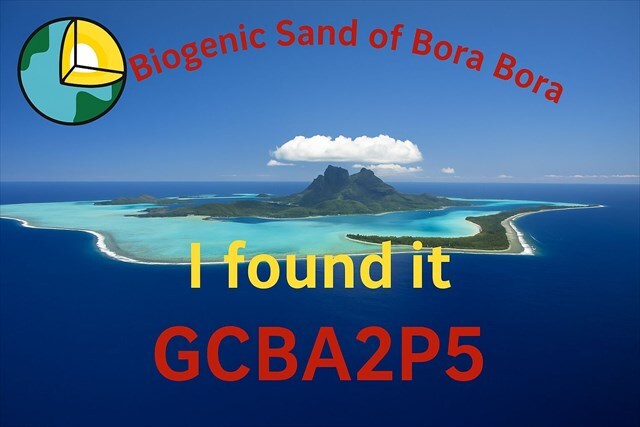
<a href="http://coord.info/GCBA2P5"><img src="https://s3.amazonaws.com/gs-geo-images/47c8f229-858f-48ad-acb3-ff5c66e9b5b0_l.jpg" alt="GCBA2P5" width="307" height="197" /> </a>
