Skip to content

Clastic Secrets EarthCache

Hidden : 9/5/2025
Difficulty:
2.5 out of 5
Terrain:
1 out of 5

Size: Size:   other (other)

Join now to view geocache location details. It's free!

Watch

How Geocaching Works

Please note Use of geocaching.com services is subject to the terms and conditions in our disclaimer.

Geocache Description:


Nota

Questa EarthCache si trova nella Basilica di San Pietro. È necessario superare i controlli di sicurezza. Per entrare nella basilica, spalle e ginocchia devono essere coperte e non sono ammessi cappelli. I tempi di attesa possono essere lunghi, quindi conviene arrivare presto. Orari di apertura:

- Ott–Mar: 08:00–17:00 (chiuso il mercoledì)
- Apr–Set: 07:00–19:00
- Se c’è la messa del mercoledì, la basilica apre alle 12:00.

Note

This EarthCache is at St. Peter's Basilica. Security checks are required. To enter the basilica, shoulders and knees must be covered, and hats are not allowed. Wait times can be long, so arriving early is recommended. Opening hours:

- Oct–Mar: 08:00–17:00 (closed on Wednesdays)
- Apr–Sep: 07:00–19:00
- If there is a Wednesday mass, the basilica opens at 12:00.


Formazione dei clasti nella Basilica di San Pietro. Formation of clasts in St. Peter’s Basilica


IT


Per poter registrare questa EarthCache, è necessario rispondere correttamente alle seguenti domande e inviare successivamente le risposte al mio indirizzo e-mail.

Recatevi alle coordinate dell’EarthCache. La foto Spoiler 1 indica l’area della Basilica e la foto Spoiler 2 indica la roccia giusta da osservare.

1) Quali sono i colori principali dei clasti?

2) Qual è la dimensione massima approssimativa dei clasti che formano la roccia? (lunghezza/larghezza in centimetri)

3) Si tratta di un conglomerato o di una breccia?

4) Descrivi il colore predominante del cemento che unisce i clasti. In base a questo colore, quale minerale o processo di formazione potrebbe essere all’origine di questa tonalità?

5) Allegate una foto al vostro log, può essere un semplice selfie o un foglio con il vostro nickname, per dimostrare il passaggio alle coordinate. Dalla foto non deve essere possibile dedurre le risposte.

Grazie per la visita!

EN


In order to log this EarthCache, you must answer the following questions correctly and then send the answers via the message center or my email.

Go to the EarthCache coordinates. Spoiler Photo 1 shows the area of the Basilica, and Spoiler Photo 2 shows the correct rock to observe.

1) What are the main colors of the clasts?

2) What is the approximate maximum size of the clasts forming the rock? (length/width in centimeters)

3) Is it a conglomerate or a breccia?

4) Describe the predominant color of the cement that binds the clasts. Based on this color, which mineral or formation process might be responsible for this shade?

5) Attach a photo to your log, either a simple selfie or a paper with your nickname, to prove you visited the coordinates. The answers should not be deducible from this photo.

Thank you for your visit!

Spoiler 1 Spoiler 2


IT


I clasti sono frammenti di roccia o di minerali che derivano dalla disgregazione di rocce preesistenti, attraverso processi fisici e chimici come l’erosione, la meteorizzazione o l’attività tettonica. Questi frammenti possono variare molto in dimensione, dalle argille microscopiche fino a blocchi di decine di centimetri, e costituiscono la base delle rocce sedimentarie detritiche. La forma, il grado di arrotondamento e la composizione dei clasti forniscono informazioni preziose sull’origine e sulla storia geologica dei sedimenti, in particolare sulla distanza di trasporto e sull’energia dell’ambiente in cui sono stati depositati.

Un altro esempio all’interno della Basilica di San Pietro

I conglomerati sono rocce sedimentarie clastiche formate principalmente da clasti arrotondati, di dimensioni superiori a 2 millimetri, cementati da materiali fini come silice, calcite o ossidi di ferro. L’arrotondamento dei clasti indica che questi frammenti sono stati trasportati per lunghe distanze in ambienti ad alta energia, come fiumi a corrente forte, spiagge o delta. Pertanto, i conglomerati sono testimonianze di antichi sistemi fluviali o costieri, dove la forza dell’acqua ha fatto rotolare e levigare i frammenti prima della loro deposizione e cementazione.

Conglomerati

Le brecce (o breccias) si distinguono dai conglomerati per la forma angolosa dei loro clasti, che rivela un trasporto molto breve o quasi inesistente. Si formano spesso vicino alla fonte dei frammenti, come nelle zone di faglia tettonica, sui versanti montuosi o in depositi di origine vulcanica. La loro tessitura irregolare e la varietà dei frammenti rendono le brecce un importante registro di fenomeni geologici ad alta energia, come frane, movimenti di massa o fratture profonde nella crosta terrestre.

Brecce

Il cemento è il materiale che riempie gli spazi tra i clasti e che trasforma un sedimento sciolto in una roccia solida. Nella roccia osservabile nella Basilica di San Pietro, il cemento può presentare diverse tonalità (biancastre, giallastre o brunastre) che derivano dalla presenza di minerali come la calcite, la silice o gli ossidi di ferro. Questi minerali precipitano da soluzioni ricche di ioni che circolano nei pori della roccia durante la diagenesi, cioè il processo di compattazione e consolidamento dei sedimenti dopo la deposizione. Il colore del cemento fornisce indizi sulle condizioni chimiche e ambientali in cui la roccia si è formata: ad esempio, toni rossastri o brunastre indicano frequentemente la presenza di ferro ossidato (ambiente ossidante), mentre toni chiari suggeriscono una cementazione prevalentemente calcitica o silicea. Lo studio del cemento permette quindi di comprendere non solo come i frammenti siano stati uniti, ma anche l’ambiente geochimico in cui ciò è avvenuto.

References
Geology.com, Sedimentar Rocks: Conglomerate and Breccia
ThoughtCo, Breccia Rock Geology and Uses


EN


Clasts
are fragments of rock or minerals that result from the breakdown of pre-existing rocks through physical and chemical processes such as erosion, weathering, or tectonic activity. These fragments can vary greatly in size — from microscopic clay particles to blocks several tens of centimeters across — and form the basis of detrital sedimentary rocks. The shape, degree of rounding, and composition of clasts provide valuable information about the origin and geological history of the sediments, particularly the transport distance and the energy of the depositional environment.
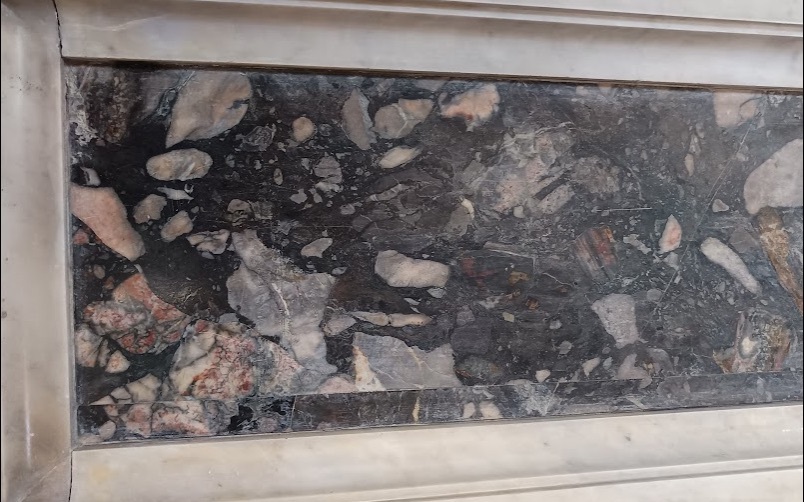

Another example inside St. Peter’s Basilica

Conglomerates are clastic sedimentary rocks mainly composed of rounded clasts larger than 2 millimeters, cemented together by fine materials such as silica, calcite, or iron oxides. The rounding of the clasts indicates that these fragments were transported over long distances in high-energy environments such as fast-flowing rivers, beaches, or deltas. Thus, conglomerates are evidence of ancient fluvial or coastal systems where the power of moving water rolled and polished the fragments before their deposition and cementation.
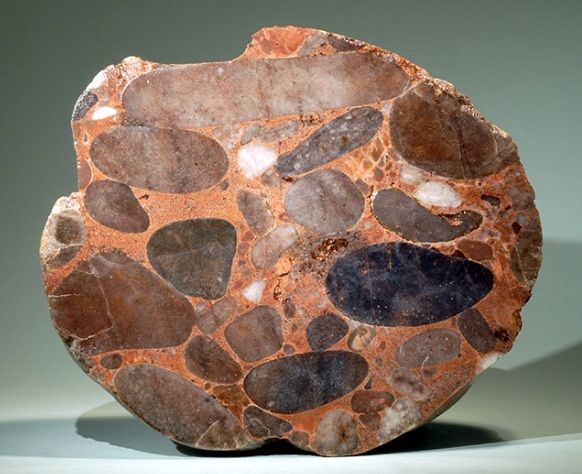
Conglomerates

Breccias are distinguished from conglomerates by their angular clasts, indicating very short or almost no transport. They often form near the source of the fragments, such as along tectonic fault zones, mountain slopes, or in deposits of volcanic origin. Their irregular texture and variety of fragments make breccias an important record of high-energy geological phenomena such as landslides, mass movements, or deep fractures within the Earth’s crust.
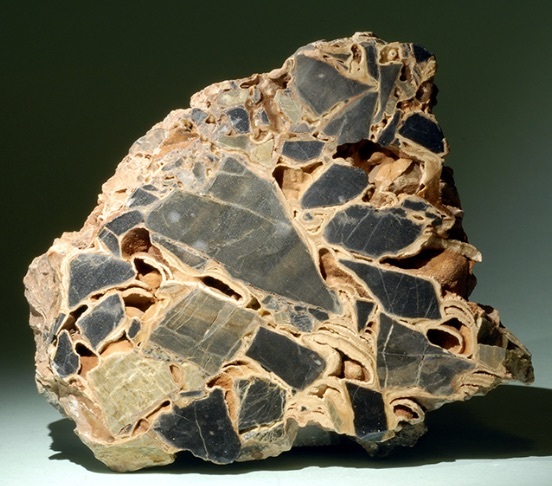
Breccias

Cement is the material that fills the spaces between clasts and transforms loose sediment into a solid rock. In the rock observable at St. Peter’s Basilica, the cement can show different shades (whitish, yellowish, or brownish) resulting from the presence of minerals such as calcite, silica, or iron oxides. These minerals precipitate from ion-rich solutions circulating through the rock pores during diagenesis, that is, the process of compaction and consolidation of sediments after deposition. The color of the cement provides clues about the chemical and environmental conditions in which the rock formed: for example, reddish or brownish tones often indicate the presence of oxidized iron (oxidizing environment), while light tones suggest predominantly calcitic or siliceous cementation. Studying the cement allows us to understand not only how the fragments became bound together, but also the geochemical environment in which this occurred.

References
Geology.com, Sedimentar Rocks: Conglomerate and Breccia
ThoughtCo, Breccia Rock Geology and Uses


Additional Hints (No hints available.)