
Quelles roches au cloître du Mont-Saint-Michel ?
Rappel concernant les Earthcaches :
Il n'y a pas de conteneur à rechercher ni de logbook à signer. Après avoir été sur les lieux pour chercher les réponses aux questions, loguez cette cache "Found it" et envoyez-moi vos propositions de réponses, en précisant le code GC de la cache, soit via mon profil, soit via la messagerie geocaching.com (Message Center), et je vous contacterai en cas de problème.
Horaires d'ouverture :
- Du 2 mai au 31 aout : 9h à 19h
- Du 1er septembre au 30 avril : 9h30 à 18h
Fermé le 1er janvier, le 1er mai et le 25 décembre.
Attention : La dernière entrée se fait une heure avant la fermeture.
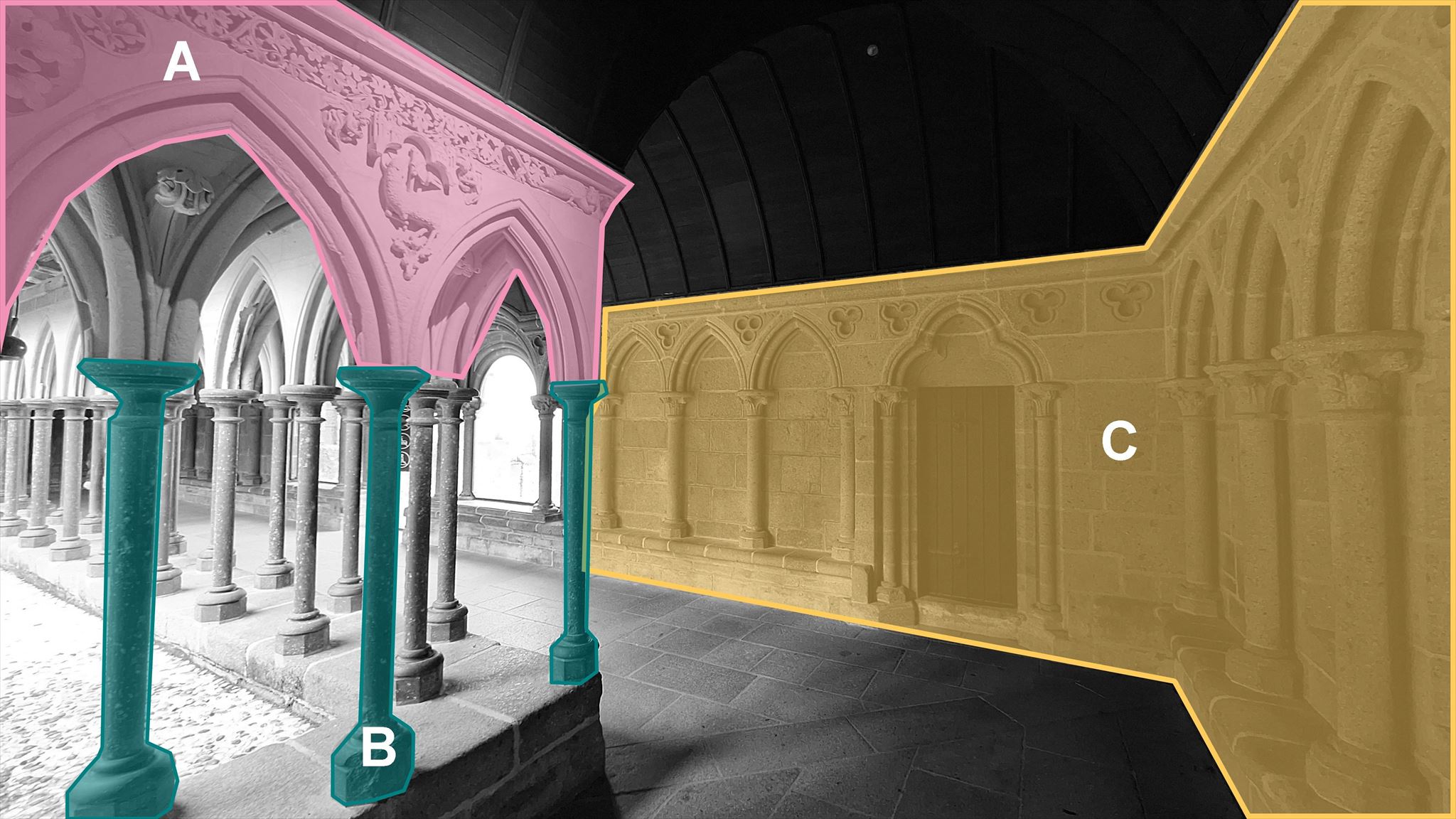
Questions :
1- Décrivez la roche utilisée dans la zone A et identifiez-la.
2- Décrivez la roche utilisée dans la zone B et identifiez-la.
3- Décrivez la roche utilisée dans la zone C et identifiez-la.
4- Dans quelle(s) zone(s) pouvez vous observer des taches de couleur rouille ?
Descriptif de l'earthcache
Quelques mots sur l’abbaye et son cloître
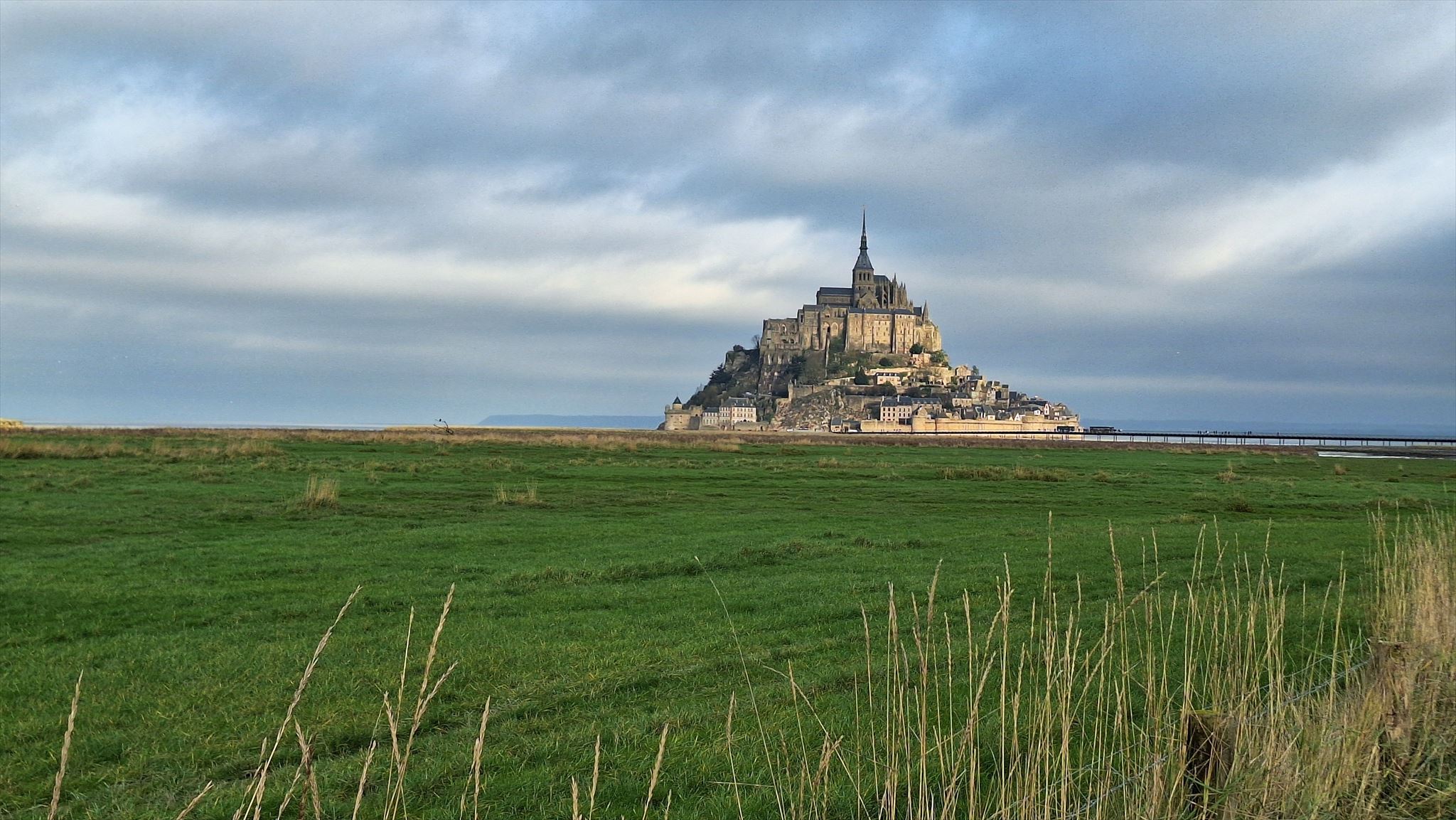
L’histoire du Mont-Saint-Michel commence en 708, lorsque l’archange Michel aurait demandé à l’évêque Aubert d’y bâtir un sanctuaire, bientôt remplacé par une abbaye bénédictine fondée en 966. Devenue un grand centre spirituel, intellectuel et politique du Moyen Âge, l’abbaye accueille pèlerins et souverains tandis qu’elle se fortifie pour résister aux conflits, notamment à la guerre de Cent Ans où elle demeure imprenable. Transformée en prison du XVIIᵉ au XIXᵉ siècle, elle échappe ainsi à la ruine avant d’être classée monument historique en 1874 et restaurée. Aujourd’hui habitée par une communauté monastique et inscrite au patrimoine mondial de l’UNESCO, elle reste l’un des sites les plus emblématiques de France.
Le cloître du Mont-Saint-Michel, joyau gothique intégré à la Merveille, offre un espace suspendu entre ciel et mer, mêlant panorama exceptionnel et architecture raffinée. De forme trapézoïdale, il s’organise autour d’un jardin entouré d’une galerie soutenue par 137 colonnettes disposées en quinconce, témoignant du savoir-faire du XIIIᵉ siècle. Construit avec des matériaux locaux et importés, il servait autrefois de lieu de méditation pour les moines ainsi que de passage entre les principaux espaces de l’abbaye.
La pierre de Caen
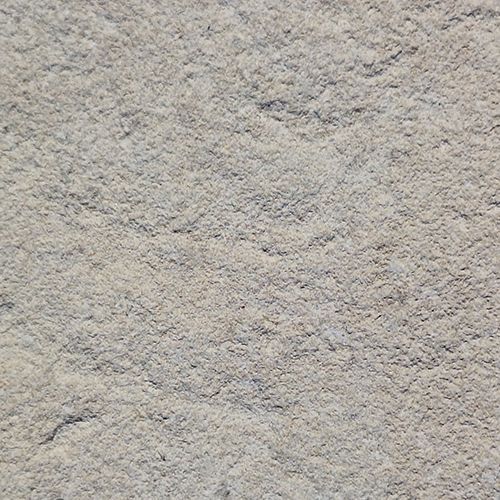 La pierre de Caen est un calcaire qui s’est déposé au Jurassique moyen, durant le Bathonien, il y a environ 167 millions d’années, à l’époque où la mer atteignait son avancée maximale. Il s’est formé dans une zone marine peu profonde proche du rivage, semblable à un environnement de mangrove, à partir de fragments coquilliers fins liés par une boue carbonatée composée de débris organiques cimentés par de la calcite microcristalline. Cette pierre mi-dure, de teinte jaune pâle pouvant blanchir en surface à l’air libre a servi à l’édification de nombreux monuments remarquables, en France comme à l’étranger. Sa texture homogène permet de réaliser des sculptures et des détails architecturaux d’une grande précision, ce qui en fait l’un des matériaux emblématiques du patrimoine normand.
Le granite de Chausey
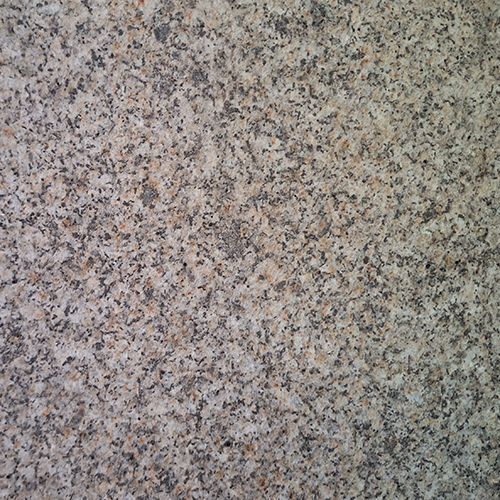 Le granite de Chausey, plus précisément une granodiorite, est une roche plutonique de couleur gris-bleuté, à texture grenue, à grain fin-moyen. Le granite est composé de 53.5% de feldspaths, de 31% de quartz et 14,5% de biotite. On peut observer des enclaves surmicacées de teintes sombres, aux contours diffus. Ces enclaves sont riches en micas noirs qui contiennent du fer et dont l'altération se traduit par une oxydation de type « rouille », formant ainsi des taches dorées brunâtres.
Le poudingue de Lucerne
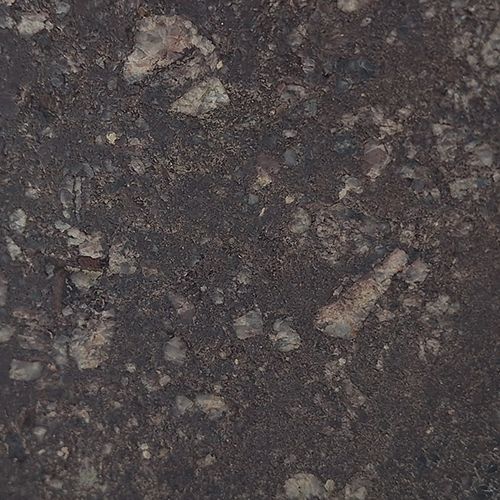 Historiquement c'est un calcaire lumachelle (marbre de Purbeck) qu'il fallait importer à grands frais du royaume d'Angleterre, qui a été utilisé pour la construction du cloître. Mais suite à plusieurs rénovations, ce calcaire anglais a été remplacé par le poudingue de Lucerne. Ce poudingue pourpré est une roche sédimentaire constituée de galets de quartz qui ont été transportés sur une certaine distance dans des rivières ou sur un littoral. La roche s'est formée pendant le Cambrien et a été extraite dans les environs de La Lucerne d'Outremer, ce qui facilitait l'approvisionnement en matériaux.

What rocks are in the cloister of Mont-Saint-Michel?
Reminder about Earthcaches:
There are no containers to search or logbooks to sign. Once you've been to the site to look for the answers to the questions, log this cache “Found it” and send me your suggested answers, specifying the cache's GC code, either via my profile or via geocaching.com (Message Center), and I'll contact you if there's a problem.
Opening hours:
- From 2 May to 31 August: 9am to 7pm
- From 1 September to 30 April: 9.30am to 6pm
Closed on 1 January, 1 May and 25 December.
Please note: Last admission is one hour before closing time.
Questions :
1- Describe the rock used in zone A and identify it.
2- Describe the rock used in zone B and identify it.
3- Describe the rock used in zone C and identify it.
4- In which zone(s) can you see rust-colored spots?
Earthcache description
A few words about the abbey and its cloister
The history of Mont-Saint-Michel began in 708, when the archangel Michael is said to have asked Bishop Aubert to build a sanctuary there, which was soon replaced by a Benedictine abbey founded in 966. Having become a major spiritual, intellectual and political centre in the Middle Ages, the abbey welcomed pilgrims and sovereigns while fortifying itself to withstand conflicts, notably the Hundred Years' War, during which it remained impregnable. Transformed into a prison from the 17th to the 19th century, it thus escaped ruin before being classified as a historic monument in 1874 and restored. Today, it is home to a monastic community and is listed as a UNESCO World Heritage Site, remaining one of the most iconic sites in France.
The cloister of Mont-Saint-Michel, a Gothic gem integrated into the Merveille, offers a space suspended between sky and sea, combining exceptional views with refined architecture. Trapezoidal in shape, it is organised around a garden surrounded by a gallery supported by 137 columns arranged in a staggered pattern, demonstrating the expertise of 13th-century craftsmanship. Built with local and imported materials, it was once used as a place of meditation for monks and as a passageway between the main areas of the abbey.
Caen stone
Caen stone is a limestone that was deposited during the Middle Jurassic period, in the Bathonian stage, around 167 million years ago, at a time when the sea reached its maximum extent. It was formed in a shallow marine area close to the shore, similar to a mangrove environment, from fine shell fragments bound together by carbonate mud composed of organic debris cemented by microcrystalline calcite. This semi-hard stone, which is pale yellow in colour and can whiten on the surface when exposed to the open air, has been used in the construction of many remarkable monuments, both in France and abroad. Its homogeneous texture allows for the creation of sculptures and architectural details of great precision, making it one of the emblematic materials of Normandy's heritage.
Chausey granite
Chausey granite, more specifically granodiorite, is a plutonic rock that is bluish-grey in colour with a grainy texture and fine to medium grain size. Granite is composed of 53.5% feldspar, 31% quartz and 14.5% biotite. Dark-coloured, diffusely contoured surmicaceous enclaves can be observed. These enclaves are rich in black micas containing iron, which weather to form rust-like oxidation, creating brownish-gold spots.
Lucerne puddingstone
Historically, lumachelle limestone (Purbeck marble) had to be imported at great expense from England and was used in the construction of the cloister. However, following several renovations, this English limestone was replaced by Lucerne puddingstone. This purple puddingstone is a sedimentary rock consisting of quartz pebbles that have been transported some distance in rivers or along coastlines. The rock was formed during the Cambrian period and was quarried in the vicinity of Lucerne d'Outremer, which facilitated the supply of materials.