|

🇩🇪 Luxemburg ist eine geologisch vielfältige Stadt. Dieses EarthCache wird dich in das Geheimnis der Stratigraphie einführen.
🇬🇧
Luxembourg is a geologically diverse city. This EarthCache will introduce you to the secret of stratigraphy.
🇫🇷 Luxembourg est une ville géologiquement diversifiée. Cet EarthCache vous fera découvrir le secret de la stratigraphie.
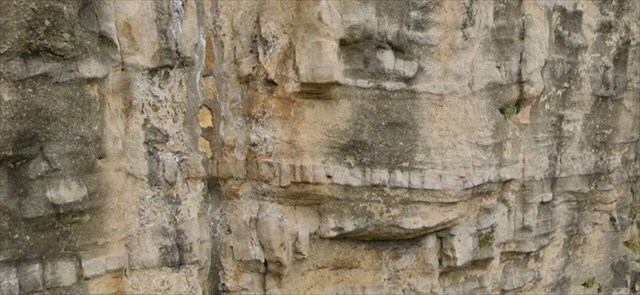
Gesteinsschichten / Rock Layers / Couches Rocheuses
🇩🇪 Der Luxemburger Sandstein weist deutlich ausgeprägte sedimentäre Schichtungen auf, die zu seinen charakteristischsten geologischen Merkmalen gehören. Die Schichten sind im Allgemeinen horizontal bis leicht gewellt und reichen in der Mächtigkeit von wenigen Zentimetern bis zu mehreren Metern. Unterschiede in Korngröße, Farbe und Zementierung innerhalb der Schichten spiegeln Veränderungen in der Energie und Dynamik des Ablagerungsmilieus wider.
Die Schichtung tritt häufig diskret auf, mit scharf getrennten Lagen, oder graduiert, wobei ein allmählicher Übergang von grobkörnigen Partikeln an der Basis zu feineren Partikeln an der Spitze sichtbar ist. Diese Gradierung weist auf eine abnehmende Sedimenttransportenergie im Verlauf der Ablagerung hin. Ein weiteres häufiges Merkmal ist das Kreuzlager, das durch wechselnde Wasser- oder Windströmungen gebildet wird und geneigte oder sich kreuzende Lagen innerhalb der Haupthorizontalen erzeugen kann.
Bioturbation, verursacht durch die Aktivität von Organismen, kann lokal die Schichtung stören und unregelmäßige oder unterbrochene Horizonte erzeugen. Die Farbe der Schichten variiert von hellem Ocker und Gelb bis zu dunklerem Braun, abhängig vom Gehalt an Ton und Eisenoxiden.
🇬🇧
The Luxembourg sandstone exhibits well-defined sedimentary layering, which is one of its most distinctive geological features. The layers are generally horizontal to gently undulating, with thicknesses ranging from a few centimeters to several meters. Variations in grain size, color, and cementation within the layers reflect changes in the energy and dynamics of the depositional environment.
Layering often appears discrete, with sharply separated laminae, or graded, showing a gradual transition from coarser grains at the base to finer grains at the top. This grading indicates a decrease in sediment transport energy over time.
Another common feature is cross-bedding, formed by shifting water or wind currents, which can create inclined or intersecting layers within the main horizontal sequence.
Bioturbation, caused by the activity of organisms, can locally disturb the layering, producing irregular or disrupted horizons. The color of layers varies, from light ochre and yellow to darker brown, depending on the amount of clay and iron oxides.
🇫🇷 Le grès du Luxembourg présente un stratification sédimentaire bien définie, l’une de ses caractéristiques géologiques les plus distinctives. Les couches sont généralement horizontales à légèrement ondulées, avec des épaisseurs allant de quelques centimètres à plusieurs mètres. Les variations de taille des grains, de couleur et de cimentation au sein des couches reflètent les changements d’énergie et de dynamique de l’environnement de dépôt.
La stratification apparaît souvent discrète, avec des lamines nettement séparées, ou graduée, montrant une transition progressive des grains plus grossiers à la base vers des grains plus fins au sommet. Cette gradation indique une diminution de l’énergie de transport des sédiments au fil du temps. Une autre caractéristique fréquente est le lit croisé, formé par le mouvement des courants d’eau ou de vent, qui peut créer des couches inclinées ou se croisant au sein de la séquence horizontale principale.
La bioturbation, causée par l’activité des organismes, peut localement perturber la stratification, produisant des horizons irréguliers ou interrompus. La couleur des couches varie du jaune clair et ocre au brun plus foncé, en fonction de la quantité d’argile et d’oxydes de fer.
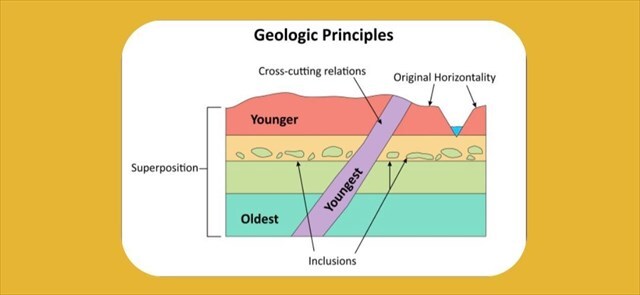
Stratigraphie / Stratigraphy / Stratigraphie
🇩🇪
Jede Gesteinsschicht ist größtenteils eine von mehreren parallelen Gesteinsschichten, die übereinanderliegen und nach charakteristischen Abläufen angeordnet sind. Sie können sich über viele Tausend Quadratkilometer der Erdoberfläche erstrecken. Schichten werden normalerweise als Gruppen von unterschiedlich gefärbtem oder kontrastierend strukturiertem Material wahrgenommen, das in Klippen, Straßenschnitten, Steinbrüchen und Flussuferprofilen freigelegt ist. Einzelne Gruppen können in der Mächtigkeit von wenigen Millimetern bis zu einem Kilometer oder mehr variieren. Jede Schicht repräsentiert eine bestimmte Ablagerungsart: Flussschlamm, Strandsand, Torfmoor, Sanddüne, Lavaschicht usw.
Geologen untersuchen Gesteinsschichten und ordnen sie nach dem Material der Lagen. Jede einzelne Schicht wird in der Regel einer Formation zugewiesen, meist benannt nach einer Stadt, einem Fluss, einem Berg oder einer Region, in der die Formation aufgeschlossen und für Studien zugänglich ist.
Eine Formation oder geologische Formation ist die grundlegende Einheit der Lithostratigraphie. Eine Formation besteht aus einer bestimmten Anzahl von Gesteinsschichten, die eine ähnliche Lithologie, Fazies oder andere vergleichbare Eigenschaften aufweisen. Formationen werden nicht nach der Mächtigkeit der enthaltenen Gesteinsschichten definiert, und die Mächtigkeit verschiedener Formationen kann daher stark variieren.
🇬🇧
Every rock layer is for the most part one of various parallel rock layers that lie one upon another, set around characteristic procedures. They may stretch out over a huge number of square kilometres of the Earth's surface. Strata are normally seen as groups of diverse shaded or contrastingly organized material uncovered in bluffs, street cuts, quarries, and waterway banks. Individual groups may fluctuate in thickness from a couple of millimetres to a kilometre or more. Every band speaks to a particular method of affidavit: stream residue, shoreline sand, coal bog, sand ridge, magma bed, and so on.
Geologists study rock strata and sort them by the material of beds. Each particular layer is normally doled out to the name of sheet, generally in view of a town, stream, mountain, or locale where the arrangement is uncovered and accessible for study.
An formation or geological formation is the basic unit of lithostratigraphy. An arrangement comprises of a sure number of rock strata that have an equivalent lithology, facies or other comparable properties. Developments are not characterized on the stone's thickness strata they comprise of and the thickness of distinctive formation can thus change broadly.
🇫🇷 Chaque couche rocheuse est pour la plupart l’une de plusieurs couches parallèles de roches qui se superposent selon des processus caractéristiques. Elles peuvent s’étendre sur des milliers de kilomètres carrés à la surface de la Terre. Les strates sont généralement observées comme des ensembles de matériaux de couleurs différentes ou structurés de manière contrastée, visibles dans les falaises, les coupes routières, les carrières et les berges des rivières. Chaque ensemble peut varier en épaisseur, allant de quelques millimètres à un kilomètre ou plus. Chaque couche représente un mode particulier de dépôt : sédiments fluviaux, sable de plage, tourbière, dune de sable, coulée de lave, etc.
Les géologues étudient les strates rocheuses et les classent selon le matériau des lits. Chaque couche spécifique est généralement rattachée à une formation, souvent nommée d’après une ville, une rivière, une montagne ou une région où la formation est exposée et accessible à l’étude.
Une formation géologique est l’unité de base de la lithostratigraphie. Une formation comprend un certain nombre de strates rocheuses ayant une lithologie, des faciès ou d’autres propriétés comparables. Les formations ne sont pas définies par l’épaisseur des couches qui les composent, et l’épaisseur des différentes formations peut donc varier considérablement.
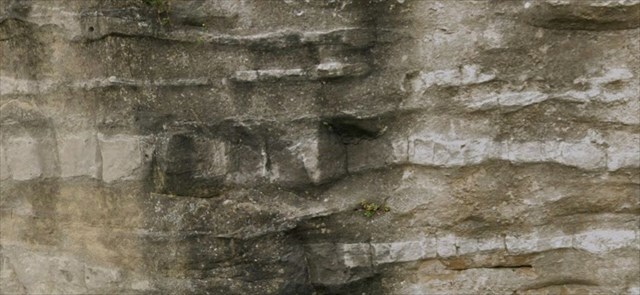
Sedimentation / Sedimentation / Sédimentation
🇩🇪
Sedimentation ist einer der gesteinsbildenden Prozesse. Dabei wird eine bestimmte Art von Material durch Wasser transportiert (zum Beispiel Sand) und sinkt dann langsam zu Boden, wenn die Strömung nicht mehr stark genug ist, um es weiter zu transportieren. Im Laufe der Zeit wird dieses angesammelte Material (manchmal unter dem Einfluss von hohem Druck oder anderen chemischen Prozessen) in Gestein umgewandelt.
Je nach der genauen Kombination aus Druck, Sediment und chemischen Bedingungen können verschiedene Gesteinsarten entstehen. Aber wie genau läuft der Sedimentationsprozess ab?
1. Lockeres Material, das vom Wasser transportiert wird, sinkt zu Boden und bildet nach und nach eine Sedimentschicht.
2. Mit der Zeit sammelt sich immer mehr Material an, und die unteren Schichten werden verdichtet.
3. Später drückt das Gewicht mehrerer Schichten Wasser aus den unteren Schichten heraus, sodass sie weiter verdichtet werden können.
4. Salzkrusten im Sediment können die stark komprimierten Schichten miteinander verfestigen, und mit der Zeit entsteht ein sedimentäres Gestein.
🇬🇧
Sedimentation is one of the rock-forming processes. In this case, a certain type of material is transported by water (for example, sand) and then slowly settles to the bottom when the current is no longer strong enough to carry it further. Over a long period of time, this accumulated material (sometimes under the influence of high pressure or other chemical processes) is transformed into rock.
Depending on the exact combination of pressure, sediment, and chemical conditions, different types of rocks can be formed. But how exactly does the sedimentation process occur?
1. Loose material carried by water settles and gradually forms a layer of sediment on the bottom.
2. Over time, more and more material accumulates, and the lower layers become compacted.
3. Later, the weight of multiple layers squeezes water out of the lower layers, allowing them to be further compacted.
4. Salt crystals in the sediment can cement the tightly compressed layers together, and over time, a sedimentary type of rock is formed.
🇫🇷 La sédimentation est l’un des processus de formation des roches. Dans ce cas, un certain type de matériau est transporté par l’eau (par exemple du sable) puis se dépose lentement au fond lorsque le courant n’est plus assez fort pour le déplacer davantage. Au fil du temps, ce matériau accumulé (parfois sous l’effet d’une pression élevée ou d’autres processus chimiques) se transforme en roche.
Selon la combinaison exacte de pression, de sédiment et de conditions chimiques, différents types de roches peuvent se former. Mais comment se déroule exactement le processus de sédimentation ?
1. Le matériau meuble transporté par l’eau se dépose et forme progressivement une couche de sédiment au fond.
2. Au fil du temps, de plus en plus de matériau s’accumule, et les couches inférieures se compactent.
3. Plus tard, le poids des couches supérieures chasse l’eau des couches inférieures, ce qui permet leur compactage supplémentaire.
4. Les cristaux de sel dans le sédiment peuvent cimenter les couches fortement comprimées, et avec le temps, un type de roche sédimentaire se forme.
🇩🇪
Um log als "gefunden" anzumelden, musst du mirüber mein Profil eine E-Mail senden und Antworten auf die folgenden Fragen und Aufgaben senden:
1) Was ist Stratigraphie und wie entstehen Sedimentschichten? 2) Beobachte die sichtbaren Gesteinsschichten an den ursprünglichen Koordinaten. Unterscheiden sie sich in ihren Eigenschaften vom umgebenden Sandstein? 3) Ist die ungefähre Richtung aller Schichten hier einheitlich? Erklären Sie. 4) Fügen Sie Ihrem Logbuch ein Foto bei, das den Gesteinsaufschluss an den Ausgangskoordinaten einschließlich Ihnen selbst oder Ihrem GPS-Gerät zeigt.
🇬🇧
For log as "found it" please send me answers for those questions via my profile:
1) What is stratigraphy and how do sedimentary layers form? 2) Observe the visible rock layers at the initial coordinates. Are they any different in properties from the surrounding sandstone? 3) Is the approximate direction of all the layers here uniform? Explain. 4) Attach a photograph to your log that captures the rock outcrop on initial coordinates including yourself or your GPS device.
🇫🇷 Pour vous connecter comme "trouvé", veuillez m'envoyer des réponses à ces questions via mon profil : 1) Qu'est-ce que la stratigraphie et comment se forment les couches sédimentaires ? 2) Observez les couches de roche visibles aux coordonnées initiales. Diffèrent-elles par leurs propriétés du grès environnant ? 3) L'orientation approximative de toutes les couches est-elle uniforme ? Expliquez. 4) Joignez à votre journal une photographie de l'affleurement rocheux aux coordonnées initiales, vous montrant ainsi, vous ou votre appareil GPS, sur place.
🇬🇧
Please log the cache immediately after sending your answers, thanks. By DanielKotmel, 2026. Sources -
Rock layers [online] Available from https://www.nps.gov/colm/learn/nature/rock-layers.htm/ [17. 01. 2026]
Stratigraphy [online] Available from https://en.wikipedia.org/wiki/Stratigraphy/ [17. 01. 2026]
Sedimentary rocks, weathering and erosion [online] Available from https://geo.libretexts.org/Bookshelves/Geology [17. 01. 2026]
Sedimentation [online] Available from https://ugc.berkeley.edu/background-content/sedimentation/ [17. 01. 2026]
 |