|

🇩🇪 Luxemburg ist eine geologisch vielfältige Stadt. Dieser EarthCache wird Ihnen das Geheimnis des Rosa Ghiandone Granits vorstellen.
🇬🇧
Luxembourg is a geologically diverse city. This EarthCache will introduce you to the secret of Rosa Ghiandone Granite.
🇫🇷 Luxembourg est une ville géologiquement diversifiée. Cet EarthCache vous fera découvrir le secret du granite Rosa Ghiandone.
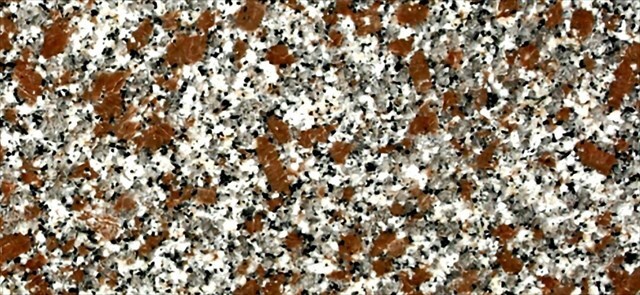
Rosa Ghiandone Granit / Rosa Ghiandone Granite / Granite Rosa Ghiandone
🇩🇪 Rosa Ghiandone ist eine Art von natürlichem Granit mit einer charakteristischen rosa bis rosa-grauen Farbe und einer grobkörnigen Textur. Es handelt sich um ein intrusives felsisches Gestein, das durch langsame Kristallisation von Magma tief unter der Erdoberfläche entstand. Dies verleiht ihm eine holokrystalline Struktur, die hauptsächlich aus Quarz, Orthoklas (rosa Feldspat) und Plagioklas sowie Biotit und anderen dunklen Mineralen besteht. Große Orthoklas-Kristalle, die oft kleinen „Eicheln“ ähneln, sind ein markantes Merkmal, wovon auch der italienische Name ghiandone (von „Eichel“) abgeleitet ist.
Geologisch ist Rosa Ghiandone eng mit den plutonischen Gesteinskörpern Sardiniens verbunden, insbesondere in der Umgebung von Monte Limbara und der Region Tempio Pausania. Diese Granitmassen entstanden während des Karbon-Zeitalters, vor etwa 330 Millionen Jahren, als große Granitmagma-Körper in die Erdkruste eindrangen und sich langsam in der Tiefe verfestigten. Im Laufe der Zeit legten Erosions- und tektonische Prozesse diese Granitformationen frei, die heute einen wichtigen Teil der geologischen Struktur Sardiniens bilden und als bedeutende Quelle für Naturstein dienen.
Petrologisch wird Rosa Ghiandone als porphyrischer Biotit-Monzogranitoid klassifiziert, mit auffälligen Orthoklas-Phänokristallen in einer feinkörnigeren Mineralgrundmasse. Ihre Mineralzusammensetzung und Textur spiegeln komplexe magmatische Kristallisationsprozesse wider, bei denen zuerst große Feldspatkristalle und anschließend kleinere Quarz- und Nebengesteinsminerale gebildet wurden. Aufgrund ihrer Struktur und chemischen Zusammensetzung ist dieser Granit sehr widerstandsfähig gegenüber mechanischer und chemischer Verwitterung.
Bioturbation, verursacht durch die Aktivität von Organismen, kann lokal die Schichtung stören und unregelmäßige oder unterbrochene Horizonte erzeugen. Die Farbe der Schichten variiert von hellem Ocker und Gelb bis zu dunklerem Braun, abhängig vom Gehalt an Ton und Eisenoxiden.
🇬🇧
Rosa Ghiandone is a type of naturally occurring granite with a characteristic pink to pink‑gray color and a coarse-grained texture. It is an intrusive felsic rock formed by the slow crystallization of magma deep beneath the Earth’s surface, giving it a holocrystalline structure composed mainly of quartz, orthoclase (pink feldspar), and plagioclase, along with biotite and other dark minerals. Large orthoclase crystals, often resembling small “acorns,” are a distinctive feature, which gives the granite its Italian name ghiandone (from “acorn”) due to this resemblance.
Geologically, Rosa Ghiandone is closely associated with Sardinian plutonic bodies, especially around Monte Limbara and the Tempio Pausania region. These granite masses formed during the Carboniferous period, approximately 330 million years ago, when large bodies of granitic magma intruded into the crust and slowly solidified at depth. Over time, erosional and tectonic processes exposed these granite formations, which today constitute an important part of Sardinia’s geological structure and serve as a significant source of dimension stone.
From a petrological perspective, Rosa Ghiandone is classified as a porphyritic biotite monzogranitoid, with prominent orthoclase phenocrysts set in a finer-grained mineral matrix. Its mineral composition and texture reflect complex magmatic crystallization processes, where large feldspar crystals formed first, followed by smaller quartz and accessory mineral grains. Due to its structure and chemical composition, this granite is highly resistant to mechanical and chemical weathering.
🇫🇷 Le Rosa Ghiandone est un type de granite naturel caractérisé par une couleur rose à rose-gris et une texture à gros grains. Il s'agit d'une roche férique intrusive formée par la cristallisation lente du magma en profondeur sous la surface de la Terre, ce qui lui confère une structure holocristalline composée principalement de quartz, d'orthose (feldspath rose) et de plagioclase, ainsi que de biotite et d'autres minéraux sombres. Les grands cristaux d'orthose, souvent comparables à de petites « glands », sont une caractéristique distinctive, d'où le nom italien ghiandone (qui signifie « gland »).
Géologiquement, le Rosa Ghiandone est étroitement lié aux corps plutoniques sardes, en particulier autour du Monte Limbara et de la région de Tempio Pausania. Ces masses granitiques se sont formées pendant la période carbonifère, il y a environ 330 millions d’années, lorsque de grands corps de magma granitique ont intrudé la croûte terrestre et se sont solidifiés lentement en profondeur. Au fil du temps, l’érosion et les mouvements tectoniques ont exposé ces formations granitiques, qui constituent aujourd’hui une partie importante de la structure géologique de la Sardaigne et représentent une source significative de pierre de taille.
D’un point de vue pétrologique, le Rosa Ghiandone est classé comme un monzogranitoïde biotite porphyrique, avec des phénocristaux d’orthose proéminents dans une matrice minérale plus fine. Sa composition minéralogique et sa texture reflètent des processus complexes de cristallisation magmatique, où les grands cristaux de feldspath se sont formés en premier, suivis par de plus petits cristaux de quartz et de minéraux accessoires. En raison de sa structure et de sa composition chimique, ce granite est très résistant à l’altération mécanique et chimique.

Fenokristallformen / Phenocryst Shapes / Formes des Phénocristaux
🇩🇪
Die Bildung von Phänokristallen beginnt damit, dass sich kleine Partikel (wie kleine Bausteine) zusammenschließen, um einen kleinen Phänokristall zu bilden. Anschließend lagern sich weitere Partikel an diesen kleinen Kristall an, wodurch er größer wird. Dieser Prozess setzt sich fort, bis der Phänokristall die gewünschte Größe erreicht und eine der folgenden vier Formen annimmt:
A) Idiomorph: Die Kristallflächen sind gut ausgebildet. Das bedeutet, dass sich die Kristalle frei im Magma entwickeln konnten, ohne gestört zu werden.
B) Subidiomorph: In diesem Fall sind nicht alle Kristallflächen perfekt, aber noch teilweise erkennbar. Das bedeutet, dass die subidiomorphen Kristalle während ihrer Entwicklung auf andere Kristalle gestoßen sind, die ihr Wachstum eingeschränkt haben. Diese Kristalle bildeten sich im Magma nach den idiomorphen Kristallen.
C) Allotriomorph: Diese Kristalle haben keine definierte Form, da sie während ihrer Bildung in alle Richtungen eingeschränkt waren. Sie sind die letzten Kristalle, die im Magma entstehen.
D) Skelettkristall: Die Flächen sind wie bei Idiomorphen gut definiert, aber der Kristall ist nicht vollständig ausgebildet, da er Hohlräume enthält. Diese Hohlräume werden üblicherweise von der Grundmasse (Groundmass) ausgefüllt. Die Kristalle entwickelten sich früh, konnten ihre Entwicklung aber aufgrund schneller Abkühlung nicht vollständig abschließen. Es kann auch sein, dass nicht genügend chemische Elemente vorhanden waren, um die vollständige Kristallbildung zu ermöglichen.
🇬🇧
Phenocryst formation begins with small particles (like small building blocks) joining together to form a small phenocryst. Then, other particles attach to this small crystal to make it larger. This continues until the phenocryst grows to the desired size and one of the following four shapes -
A) Idiomorphic. The crystal faces are well defined. This means that the crystals developed freely inside the magma without any disturbance.
B) Subidiomorphic. In this case, not all faces of the crystal are perfect, but they are still partially recognizable. This means that during their development, subidiomorphic crystals encountered other crystals that constrained them. These crystals formed in the magma after the idiomorphic crystals.
C) Allotriomorphic. They do not have a defined shape because they were limited in all directions during their formation. They are the last to form in magma.
D) Skeletal. The faces are well defined as in idiomorphs, but in this case the crystal is not fully developed because it contains voids. These cavities are usually filled with groundmass. The crystals developed early, but did not complete their development due to rapid cooling. It may also have lacked enough of the chemical elements needed to complete their development.
🇫🇷 La formation des phénocristaux commence lorsque de petites particules (comme de petits blocs de construction) se rejoignent pour former un petit phénocristal. Ensuite, d’autres particules se fixent à ce petit cristal pour le rendre plus grand. Ce processus se poursuit jusqu’à ce que le phénocristal atteigne la taille souhaitée et prenne l’une des quatre formes suivantes :
A) Idiomorphe : Les faces du cristal sont bien définies. Cela signifie que le cristal s’est développé librement dans le magma sans aucune perturbation.
B) Subidiomorphe : Dans ce cas, toutes les faces du cristal ne sont pas parfaites, mais elles restent partiellement reconnaissables. Cela signifie que les cristaux subidiomorphes ont rencontré d’autres cristaux pendant leur croissance, ce qui a limité leur développement. Ces cristaux se sont formés dans le magma après les cristaux idiomorphes.
C) Allotriomorphe : Ces cristaux n’ont pas de forme définie, car ils ont été limités dans toutes les directions pendant leur formation. Ils sont les derniers à se former dans le magma.
D) Squelettique : Les faces sont bien définies comme pour les idiomorphes, mais le cristal n’est pas complètement développé car il contient des cavités. Ces cavités sont généralement remplies par la matrice (groundmass). Les cristaux se sont développés tôt, mais n’ont pas pu terminer leur croissance à cause d’un refroidissement rapide. Il se peut également qu’il n’y ait pas eu suffisamment d’éléments chimiques pour compléter leur développement.
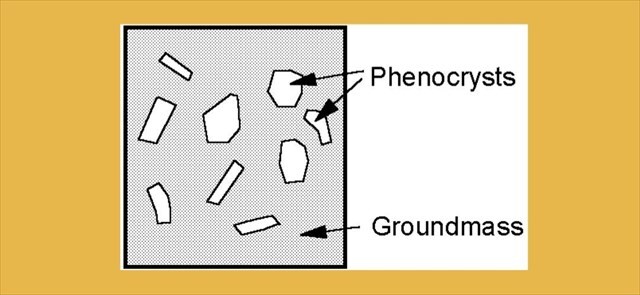
Fenokristalltypen / Phenocryst Types / Types de Phénocristaux
🇩🇪
Im Rahmen der Beobachtung der Strukturen von Granit können wir die drei häufigsten Arten von Fenokristallen in Graniten wie Rosa Ghiandone identifizieren:
Quarz-Fenokristalle haben eine schlecht entwickelte Form, was bedeutet, dass ihre Kristallflächen teilweise ausgebildet oder vollständig fehlen. Quarz besitzt keine Spaltbarkeit, daher erscheinen diese Fenokristalle oft als unregelmäßige, glasig aussehende Körner.
Orthoklas-Fenokristalle sind im Rosa Ghiandone Granit sehr auffällig. Sie gehören zur Feldspatgruppe und werden auch als Alkalifeldspat oder K-Feldspat bezeichnet. Diese Kristalle sind normalerweise groß, gut ausgebildet und können idiomorphe oder subidiomorphe Formen annehmen, was dem Granit seine charakteristische rosa Farbe und das „eichelartige“ Aussehen verleiht.
Plagioklas-Feldspat-Fenokristalle sind normalerweise tafel- oder blockförmig und können Zwillingsstrukturen zeigen, ein häufiges Merkmal, bei dem der Kristall wie aus parallelen Schichten zusammengesetzt erscheint.
🇬🇧
As part of observing structures of granite, we can identify the three most common types of phenocrysts in granites like Rosa Ghiandone:
Quartz phenocrysts have a poorly developed shape, which means that their crystal faces are either partially formed or completely absent. Quartz lacks cleavage, so these phenocrysts often appear as irregular, glassy-looking grains.
Orthoclase phenocrysts are very prominent in Rosa Ghiandone granite. They belong to the feldspar group and are also called alkali feldspar or K-feldspar. These crystals are usually large, well-formed, and can have an idiomorphic or subidiomorphic shape, giving the granite its characteristic pink color and “acorn-like” appearance.
Plagioclase feldspar phenocrysts are usually tabular or blocky and may show twinning, a common feature where the crystal appears to be composed of parallel layers.
🇫🇷 Dans le cadre de l’observation des structures du granite, on peut identifier les trois types de phénocristaux les plus fréquents dans des granites comme le Rosa Ghiandone :
Phénocristaux de quartz : ils ont une forme peu développée, ce qui signifie que leurs faces cristallines sont partiellement formées ou totalement absentes. Le quartz ne possède pas de clivage, donc ces phénocristaux apparaissent souvent comme des grains irréguliers à l’aspect vitreux.
Phénocristaux d’orthose : ils sont très caractéristiques du granite Rosa Ghiandone. Ils appartiennent au groupe des feldspaths et sont également appelés feldspath alcalin ou feldspath potassique (K-feldspath). Ces cristaux sont généralement grands, bien formés et peuvent présenter une forme idiomorphe ou subidiomorphe, ce qui donne au granite sa couleur rose typique et son apparence « en forme de gland ».
Phénocristaux de feldspath plagioclase : ils sont généralement tabulaires ou prismatiques et peuvent présenter un clivage en « twins » (jumeaux), un phénomène courant où le cristal semble composé de couches parallèles.
🇩🇪
Um log als "gefunden" anzumelden, musst du mirüber mein Profil eine E-Mail senden und Antworten auf die folgenden Fragen und Aufgaben senden:
1) Wie würden Sie den Rosa-Ghiandone-Granit charakterisieren? Was macht ihn einzigartig? 2) Betrachten Sie den Boden der Station und achten Sie auf die rosafarbenen Einsprenglinge im Gestein. Um welche Form [A, B, C, D] handelt es sich? 3) Welche der oben beschriebenen Einsprenglinge kommen im Rosa-Ghiandone-Granit vor? Begründen Sie Ihre Antwort. 4) Fügen Sie Ihrem Logbuch ein Foto bei, das den Rosa-Ghiandone-Granit an der Station zeigt, inklusive Ihnen selbst oder Ihrem GPS-Gerät.
🇬🇧
For log as "found it" please send me answers for those questions via my profile:
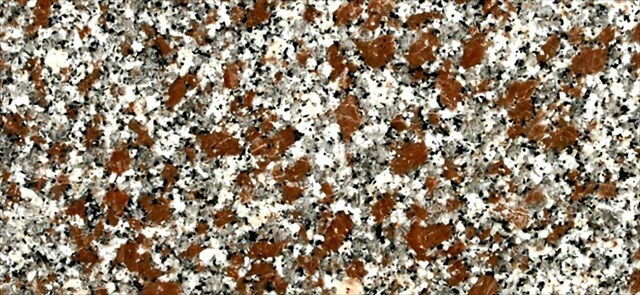
1) How would you characterize the Rosa Ghiandone granite? What makes it unique? 2) Observe the floor at the station and notice the pinkish phenocrysts inside the rock. Which shape [A, B, C, D] is this? 3) Which of the above-described phenocrysts are found in Rosa Ghiandone? Justify your statement. 4) Attach a photo to your log that captures the Roso Ghiandone in the station including yourself or your GPS device.
🇫🇷 Pour vous connecter comme "trouvé", veuillez m'envoyer des réponses à ces questions via mon profil : 1) Comment caractériseriez-vous le granite Rosa Ghiandone ? Qu’est-ce qui le rend unique ? 2) Observez le sol de la station et remarquez les phénocristaux rosés à l’intérieur de la roche. De quelle forme s’agit-il [A, B, C, D] ? 3) Lesquels des phénocristaux décrits ci-dessus se trouvent dans le Rosa Ghiandone ? Justifiez votre réponse. 4) Joignez à votre journal une photo du Rosa Ghiandone à la station, vous montrant ou montrant votre appareil GPS.
🇬🇧
Please log the cache immediately after sending your answers, thanks. By DanielKotmel, 2026. Sources -
ROSA GHIANDONE [online]. Available from https://www.https://www.zenithc.com/en/
materials/granite/rosa-ghiandone [17. 01. 2026].
Porphyry Geological Feature [online]. Available from https://www.britannica.com/science/porphyry-geological-feature [17. 01. 2026].
Phenocryst [online]. Available from https://www.sciencedirect.com/topics/earth-and-planetary-sciences/phenocryst [17. 01. 2026].
Porphyry [online]. Available from https://www.sandatlas.org/porphyry/ [17. 01. 2026].
Crystal shape [online]. Available from https://learningzone.oumnh.ox.ac.uk/crystal [17. 01. 2026].
 |