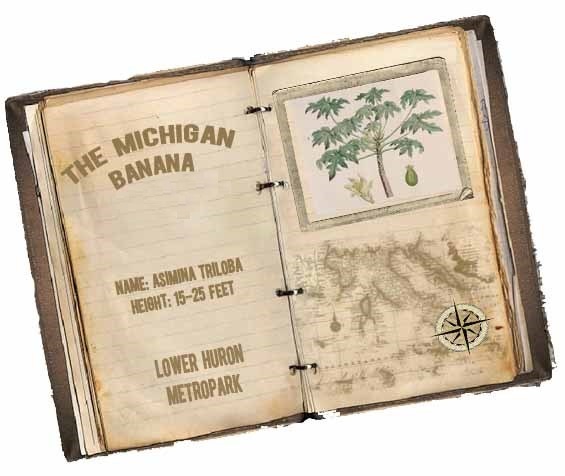
Pawpaws – sometimes called “the Michigan banana” – once were widespread across the eastern United States. Thomas Jefferson grew them at Monticello. George Washington ate them for dessert. In September 1806, explorer William Clark wrote that the men on his and Meriwether Lewis’ were “very fond” of the fruit they called the “custard apple,” and gathered as many as they could.
They've fallen out of favor in modern times, mostly because they're hard to ship and don't keep long. The pawpaw's short two- to three-week harvest season and its delicate nature make it difficult to grow and ship commercially. Pawpaws bruise easily and last only a few weeks in the fridge, unlike apples, which can stay in cold storage for months.
The fruits are healthy eating, with about 80 calories each and significant amounts of iron, manganese, magnesium, potassium, and vitamin C.
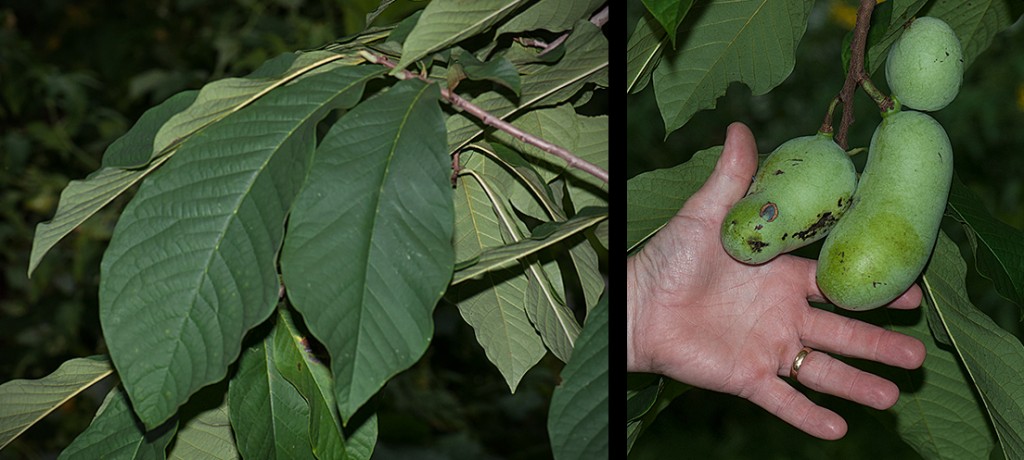
Pawpaw or Wild-banana or American Custard-apple (Asimina triloba) occurs in the southern third of Michigan’s Lower Peninsula. We are at the northern edge of its range. It is Michigan’s only member of the largely tropical Custard-apple Family (Annonaceae).
Pawpaw is a shrub or small tree that can bear fruit on plants as little as a meter (3 feet) tall. In Michigan, they normally grow along rivers in floodplains but also occur in rich deciduous forests and swamps.
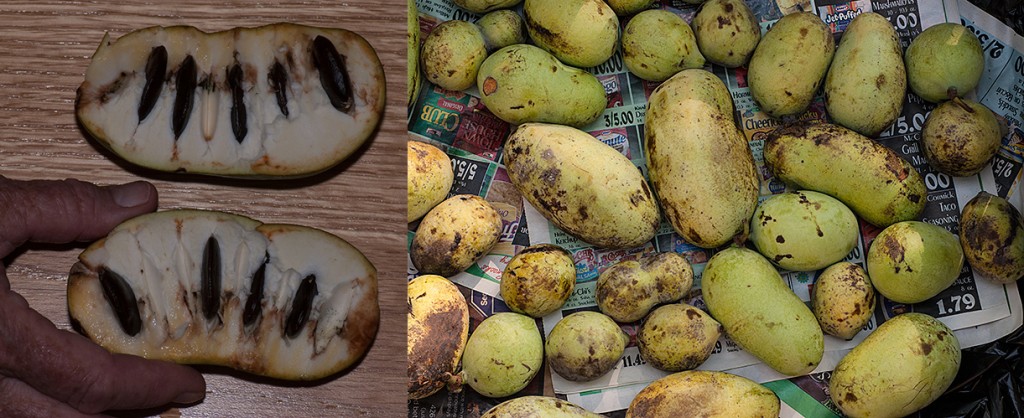
Pawpaw has the largest fruit of any native Michigan plant, up to 5 inches long and 1 inch thick. It is a large berry containing four to twelve flattened black seeds about the size of a lima bean. The fruiting season is short, and they are best picked when they are slightly green and will ripen in a few days.
The Cache: The cache is a medium-sized lock & lock hidden along the Paw Paw hiking trail.
This cache is located in Lower Huron Metropark. A Metroparks vehicle permit is required for entry to the parks: $10 daily pass, $40 annual pass, $29 annual seniors pass. All park rules and regulations apply. Please park in parking lots only.
For general information please call 810-227-2752 800-47-PARKS, or visit www.metroparks.com. Dogs on a leash are allowed in this section of the park The hours for the trail are dawn to dusk.
A Metropark geocaching permit has been filed and approved by Kevin Arnold (Southern District Interpretive Supervisor).