Crosswinds Marsh Meanderings 2018 Series
For the 4th year in a row we continue the geocaching community’s recognition of Wayne County’s efforts in providing replacement wildlife wetlands habitat removed by the Detroit Metro Airport expansion. Crosswinds Marsh Wetland Interpretive Preserve is one of the largest man-made wetlands in the country. It was built to replace the wetlands that were paved over to expand Wayne County's (the McNamara terminal). Wayne County, The area is managed by the Wayne County Parks.
On August 11 the Parks system put on a Hobby day and invited the Crosswinds Cache Crew to participate again. As part of the day's activities a Geocahing event was held which included the launch of 12 Geocaches dedicated to the 12 invasive species located in the reserve. This cache is one of them.
A link to all 12 of the caches may be FOUND HERE. In the cover of the cache you will find a three digit code. Record this code for entering into a online form for registration for a commemorative collectible for those that complete the series. The link to the form is found HERE.
Invasive Species
An invasive species is one that is not native and whose introduction causes harm, or is likely to cause harm to the economy, environment, or human health. Many non-native species, including fruits, vegetables, field crops, livestock and domestic animals, are important to our economy and lifestyle. Most non-native species are not harmful and may provide economic benefits. Invasive species cause harm when they out-compete native species by reproducing and spreading rapidly in areas where they have no natural predators and change the balance of the ecosystems we rely on. An invasive species can be any kind of living organism—an amphibian, plant, insect, fish, fungus, bacteria, or even an organism's seeds or eggs—that is not native to an ecosystem and causes harm.
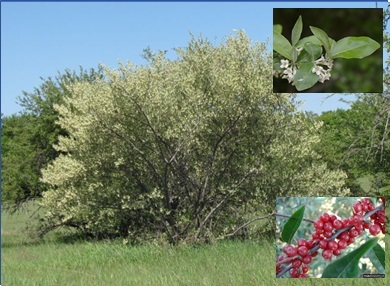
Autumn Olive
Autumn olive is a shrub that is native to Asia. It was intentionally brought over to the U.S. in the 1830s to provide wildlife habitat and shelter. The root nodules of autumn olive fix atmospheric nitrogen, meaning that they take nitrogen from the atmosphere and turn it into ammonia that the plant roots can absorb and use throughout the shrub. This is not necessarily a bad thing, as some of our native plant species also have the ability to fix nitrogen. However, when in a habitat such as a prairie where nitrogen in the soil is low and plants that grow there are adapted to that, adding a lot of nitrogen to the soil opens the door to new weedy species coming in and outcompeting with the native species that do not need much nitrogen. The fruit of autumn olive is eaten by many animals, which results in dispersal of the seed when those animals use the bathroom later. Even humans make jellies and jams with autumn olive berries, which are full of anti-oxidants.
This invasive species description was provided by Jennifer Panek, Crosswinds Marsh Naturalist.
While searching for this cache please remain on the boardwalk.
Crosswinds Marsh Rules
No fires
No bikes / ATVs / personal watercraft
No swimming or ice fishing
Dogs must be leashed
No alcohol or illegal substances
No camping
Fishing in designated areas only
Collecting of plants & animals prohibited
Park only at N 42 05.744 W 83 26.552
All Geocachers must follow the above rules.
Crosswinds Marsh is open from DAWN to DUSK. Admission is free.


This cache has been placed with the permissions of Wayne County Parks. Permit MM18-02 has been submitted and is on file at the park office.