Español
Scroll down for English version
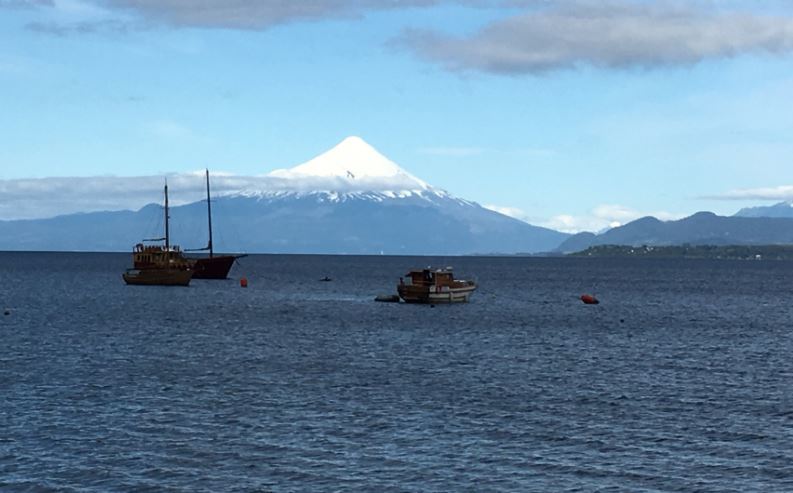
Tras admirar la hermosa vista de los volcanes detrás del Lago Llanquihue, en GZ, encontrarás una estatua de Vicente Pérez Rosales, un diplomático chileno, quien coordinó la llegada de alemanes para colonizar el sur de Chile, en un momento dado, cuando existía una disconformidad con la situación política dentro Alemania.
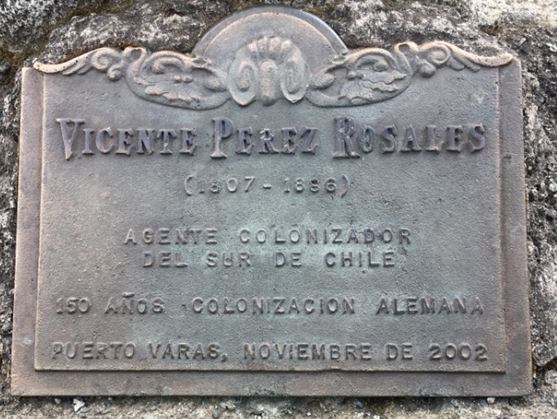
Le estatua fue erigida en el año 2002, para marcar los 150 años de la exitosa colonización alemana en el sur de chile.
Este Earthcache, se relaciona con la roca de la cual está hecha la estatua. Si se fijan con detención, se darán cuenta que está hecha de cristales entrelazados, lo que significa que es una roca ígnea, es decir una que se ha enfríado a partir roca derretida llamada magma.
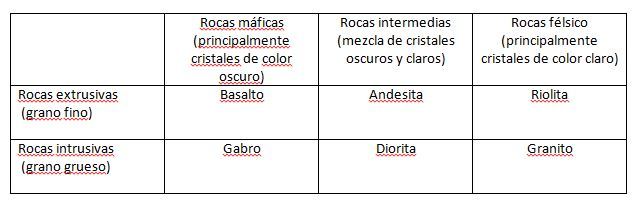
El magma puede enfriarse para formar una roca en las profundidades de la tierra, (a esto se llama una roca Intrusiva), o también puede erupcionar hacia la superficie, enfriarse ahí y formar una roca extrusiva. Si el magma se enfría rápido, los cristales formados son muy pequeños, y no se pueden ver sin un microscopio. Si el magma se enfría más lentamente, hay tiempo para que se formen cristales más grandes, generalmente de varios mm, y son muy fáciles de ver a simple vista. La composición del magma determina el tipo de cristales que se forman, y también el nombre de la roca, como se muestra en la siguiente tabla
Cuando observes la estatua, verás algunos trozos más oscuros dentro de la roca. Esto indica una composición diferente. Hay dos posibles fuentes de estos pedazos, los cuales los geólogos llaman “inclusiones”. Éstos podrían ser trozos de roca sólida de alrededor del magma, que se han atrapado en el mismo magma mientras viajaba hacia la superficie. Dichos trozos son de forma irregular, con puntas filudas en los lugares donde se han quebrado. Éstos se llaman “xenolitos”. También, los trozos pueden ser formados a partir de gotas de magma con una composición diferente, y han sido mezclados en el magma original, probablemente dentro de la cámara magmática. Son llevados hacia la superficie con el magma, sin mezclarse completamente, por lo que parecen gotas o manchas redondeadas. Estos se llaman “autolitos”
Para reclamar este Earthcache, envíe un mensaje a Brown Teddies, dando las respuestas a estas preguntas. No los respondas en tu registro. Los registros sin respuestas de apoyo pueden ser eliminados.
Preguntas:
1. Puede las roca de la estatua, haber salido como lava de un volcán, como por ejemplo alguno de los que están al otro lado del lago? Esta es una roca intrusva o extrusiva?
2. En base a la información de la tabla, qué nombre darías a esta roca?
3. Observa las inclusiones (las manchas oscuras). Son xenolitos (trozos de roca sólida despendidos), o autolitos (manchas de magma de una composición diferente)?
4. En qué parte de la estatua está la mayor inclusión?
5. En febrero de 2017, los vándalos, rompieron la cabeza de la estatua, y ésta fue reemplazada. Qué evidencia de este vandalismo puedes ver en la cara?
English
After you have admired the wonderful view of volcanoes across Lake Llanquihue, at GZ you will find the statue of Vicente Perez Rosales, a Chilean diplomat who organised the colonisation of southern Chile, by people from Germany, at a time when there was general discontent with the political situation in Germany. The statue was erected in 2002 to mark 150 years since the successful German colonisation of the south of Chile.
This Earthcache relates to the rock from which the statue is carved. If you look carefully at the rock, you will see that it is composed of interlocking crystals, which means that it is an igneous rock, one that has cooled from molten rock called a magma.
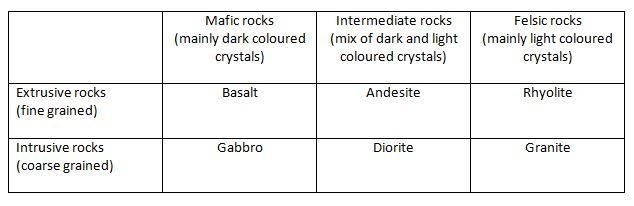
Magma can either cool to form a rock deep within the ground - this is called an intrusive rock - or the magma can erupt onto the surface and cool there, in which case it forms an extrusive rock. If a magma cools quickly, then the crystals formed are very small, often too small to see without a microscope. If a magma cools more slowly, there is time for relatively large crystals to grow, usually several mm across and quite easy to see with the naked eye.
The composition of the magma determines the type of crystals that form and so the name of the rock, as shown in this table:
As you look round the statue, you will see some pieces within the rock that are much darker than the rest, indicating a different composition. There are two possible sources of these pieces, which geologists call ‘inclusions’. They could be pieces of the solid rock from around the magma, which have got caught up in the magma as it has been travelling upwards. Such pieces are normally irregular in shape, with sharp corners on them, where they have been broken off. They are called ‘xenoliths’. Alternatively, the pieces can formed from blobs of a magma with a slightly different composition, that have been mixed into the original magma probably in the magma chamber. They get carried upwards with the magma, without mixing completely into it and so appear as rounded blobs. These are called ‘autoliths’.
To claim this Earthcache, send a message to the Brown Teddies, giving the answers to these questions. Do not answer them in your log. Logs without supporting answers may be deleted.
1. Could the rock from which the statue is carved have been erupted as lava from a volcano, like one of the ones across the lake? Is the rock an intrusive or an extrusive rock?
2. Based on the information in the table, what name would you give to this rock?
3. Look at the inclusions (the darker blobs). Are they xenoliths (pieces of solid rock broken off) or autoliths (blobs of magma with a slightly different composition)?
4. Where on the statue is the biggest of the inclusions?
5. In February 2017, vandals broke the head off this statue. The head has now been replaced, but what evidence of this vandalism can you see on the face?