Granite is a common intrusive plutonic igneous rock. Intrusive means that it has moved into other rocks by force coming up from the mantle. Plutonic means that it is magma that does not reach the surface of the earth and so cools very slowly underground. Because it cools slowly crystals have time to form. Its name comes from the Latin word granum which means “a grain” for the coarse grain crystalline structure of the rock.
This rock has made its way into the earth’s crust during all geologic periods. Most of the granite we see today had its origin during Precambrian times.
Granite is made up of quartz, mica, and feldspar. It comes in a wide variety of colours including reds, browns, and many shades of gray from almost black to nearly all white.

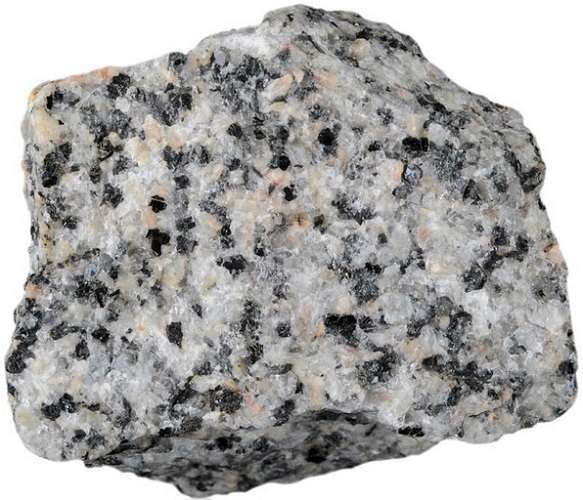
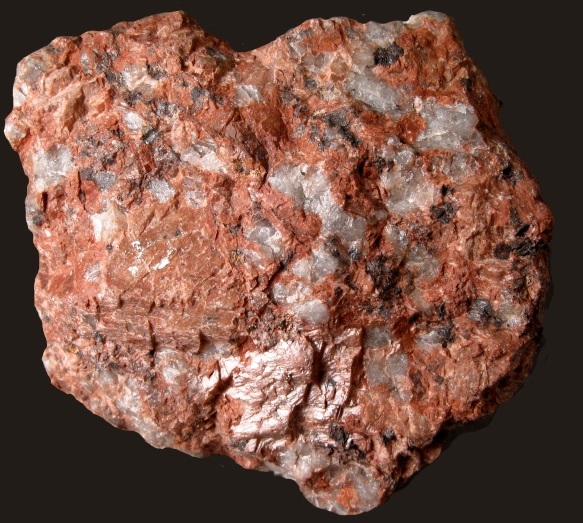
There are many types of granite. The type of granite a particular specimen is, depends upon the percentages of minerals that make up the rock, especially quartz (Greyish colour), K-feldspar (Redish colour), Na-feldspar (White) and Biotite (Black).
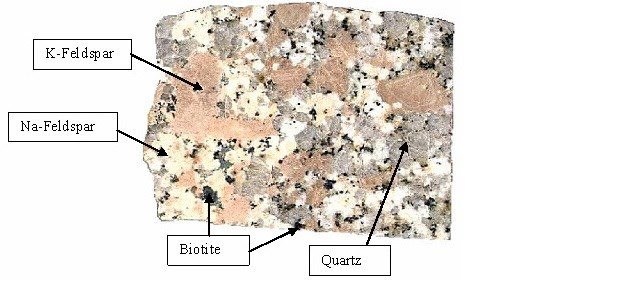
Some of the minerals that make up Granite
Granite makes up a large part of the continental plates. It is lighter than the basalts of the oceanic plates and so it floats over them. It is the most common bedrock in continental plates.
Logging requirement:
Please email us the answers to the following questions,
A - The name of this EarthCache.
B - At this location, what colour is the Granite and what mineral do you think makes up the highest percentage in the granite?
C - Looking around, do you think these rocks originated here?