Geocaching.com Presents – Extreme Multi-Caching

[vsw id=”UXkTDMvEUX8″ source=”youtube” width=”425″ height=”344″ autoplay=”no”]

By: Kelly Ranck

Rappelling after a Tree Climb

Consider yourself an adrenaline junkie? Crave physical and mental challenges that include long days of geocaching with “Gear, fear and fun?” If so, Extreme Multi-Caches are your speed. Watch the Geocaching.com Presents video “Extreme Multi-Caching” to experience extreme caching from the comfort (and safety) of your home.

If you’re new to geocaching, a Multi-Cache is a cache that involves two or more locations. An extreme Multi-Cache challenges geocachers to go to their physical limits. The caches are often best enjoyed with an experienced group of geocaching friends. Each location of a Multi-Cache leads to the next, often involving a puzzle of sorts, until you discover the final, physical container.

In the case of Jonathan Burns’ (lefalaf) and Thomas Solly’s (weatherguy726) Extreme Multi-Cache An Extreme Tour of Centralia!, much more than a sense of adventure is required. In this Geocaching.com Presents video ‘Extreme Mulit-Caching’, lefealaf and weatherguy726 are joined by four other geocachers- Dwight Kempf (Clancy’s Crew), Rob Campbell (Sandcast69), Eric Schott (GoHangASalami), and Jeff Kaye (The K-Team). The group wakes up at six am to head to the uniquely dangerous city of Centralia, Pennsylvania. Centralia is a ghost town where steam spews from cracked roadways. An underground coal mine fire has been burning under Centralia since 1962.
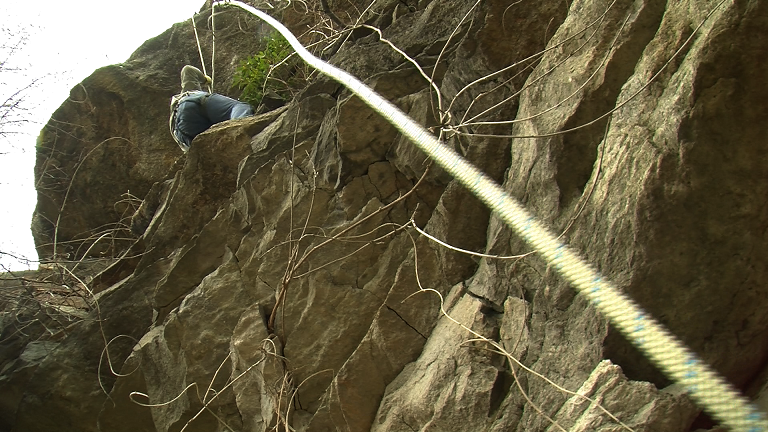
Extreme Multi-Cache Rappelling

As the geocachers ascend and rappel up and down trees, scale rocky cliffs, and crawl into deep caves, you will see how this energetic group attempt this five star difficulty/five star terrain twelve stage Extreme Multi-Cache. The cache takes most groups more than ten hours to complete.

The group shows how to experience Extreme Multi-Caches the safe way while challenging your basic human fears such as heights, tight spaces, and bugs (of sorts).

Because Extreme Multi-Caches require working in a team, they are also a great way to build community. The cache page reads, “Like all caches of this type, this cache is best designed to be shared with a group of friends.”
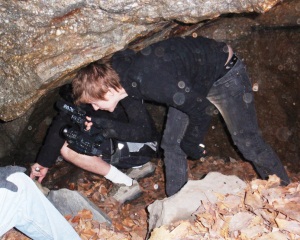
Extreme Multi-Cache Caving

Watch the video to learn more about what it takes to complete an Extreme Multi-Cache. For more Extreme Caching information, visit Extreme-Caching.com.
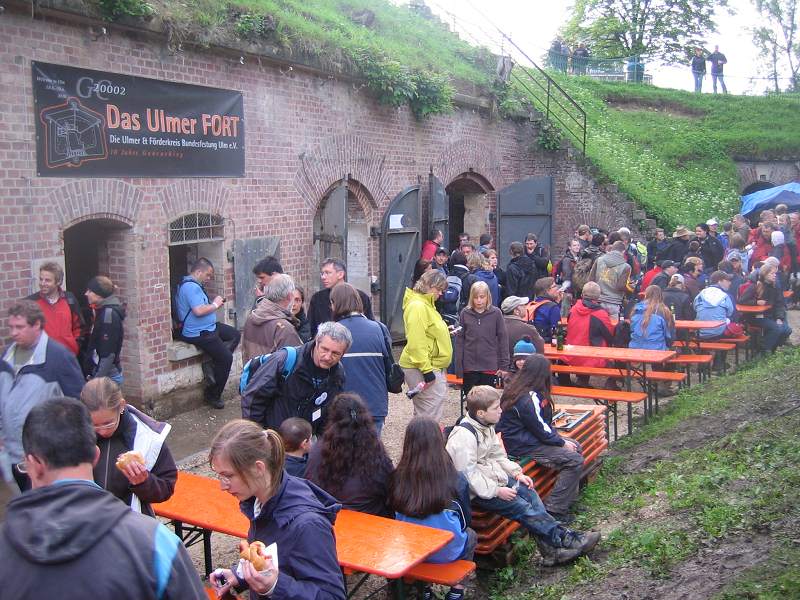
Celebrating 10 Years in Germany

Mega-Event Cache Das Ulmer Fort GC20002

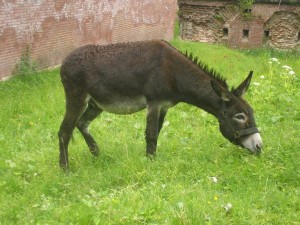
In an area next to Ulm University, a short drive away from Stuttgart, Germany, is a 130 year old abandoned fort occupied by a few sheep, some goats and a donkey named Paul.

Paul the Donkey

It was here on June 19th that local geocachers hosted Das Ulmer FORT – the Mega Event in Germany for 2010 (GC20002).

Six months ago the local geocaching community started preparations for the event. The fort had been neglected for 30 years, so an army of volunteers had to dig out the, err, deposits left by the local residents. The electricity had to be rewired, sharp protrusions had to be cut down and sanded, repairs had to be made, rooms had to be swept out, and trash had to be removed. This was necessary to make the location capable of holding over 300 campers who resided in the walls of the fort for the weekend.

Elias, Bryan and I, the three founders of Geocaching.com, had the privilege of attending the event this year.

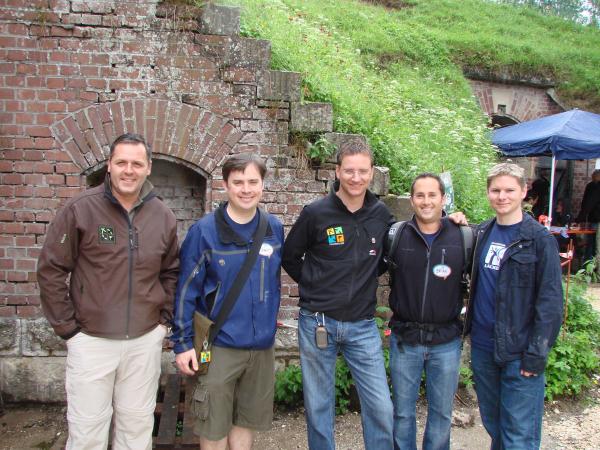
The founders of Geocaching.com posing with geocaching attendees. Jeremy Irish (second from left), Bryan Roth (second from right) and Elias Alvord (far right)
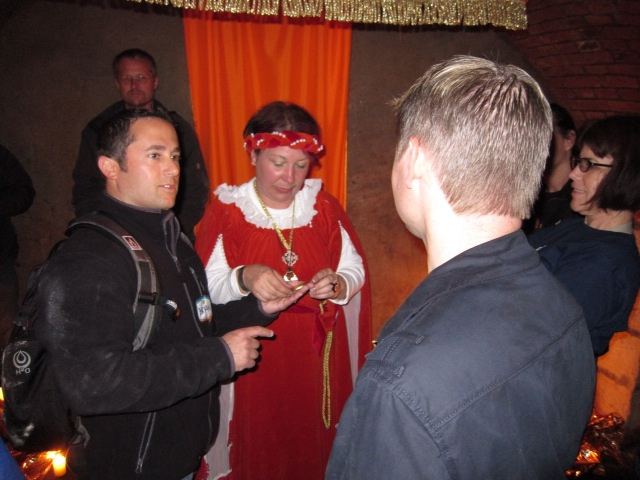
Bryan Roth and Elias Alvord with the Queen of Fort Ulm

In the course of four hours we were able to mingle with the local geocachers, visit the various rooms and corridors in the Fort, meet the lovely Queen of Fort Ulm and celebrate a successful day with the organizers by eating a delicious Signal cake.

Signal was not harmed and
Signal was not harmed and was, in fact, also in attendance

It’s not often that we can visit geocachers in Europe, so we used this opportunity to listen to feedback about the web site. High on the list was having better ways to rate and search for geocaches by their ratings, which has been a common theme in the US. As geocaches increase in numbers it gets harder and harder to find the best ones.

Although geocachers in the world have far more similarities than differences, there were also some notable observations in how Germans play the game.

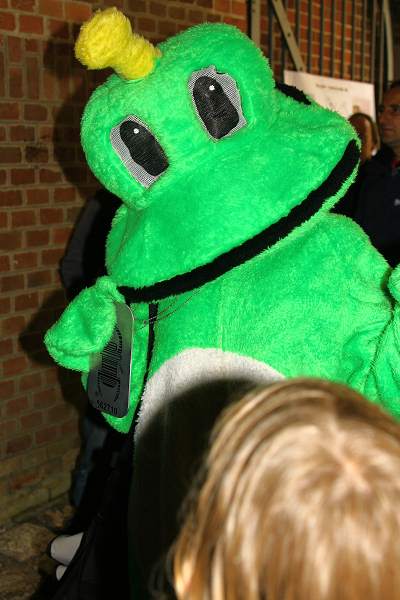
Signal waves to a fan

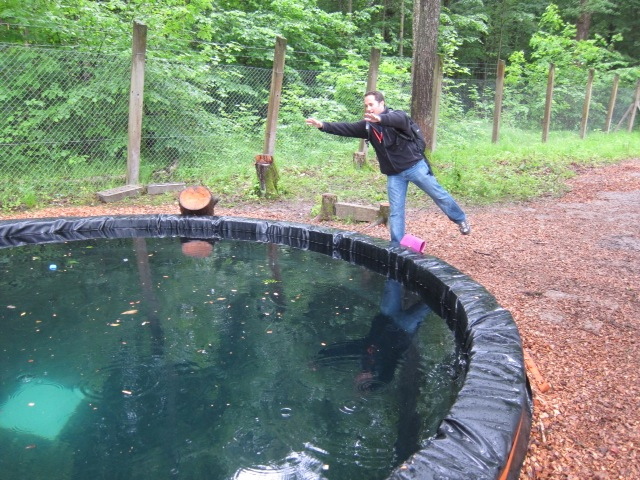
1. Many German geocachers enjoy finding terrain level 5 caches, or what are locally called “T5” caches. Many of these caches are located in trees, requiring special climbing gear. The event even had FORTgeschrittene, a T5 event for finding these extreme geocaches. In addition to a ropes course, you could dive into a freezing pool to find a cache. Fortunately you could enter a portable sauna to warm up afterward. Sadly I didn’t pack a bathing suit.

Bryan Roth (almost) diving into pool to retrieve a geocache.

2. According to the “Flashlight Pope” at the event, there are quite a few caches that require a black light. This is so you can see writing that takes you to the next location. As a gift he gave each of us a black light to use on our next geocaching adventure.

3. Multi-Caches are far more popular in Germany (and in Europe) than in the United States. Many more geocachers seem to be willing to spend days on one puzzle cache there. There may be a lot of multi-cache fans in the U.S. but the ratios of multis in Germany to U.S. caches are significantly higher.

Aside from the event we were able to locate unique geocaches in Germany, such as a cache in the center of Berlin with over 3,000 finds (GCTA4W), and a cache in the spire of the world’s tallest church (GCJ7E0), located in the city of Ulm.

If the locals plan on having a FORTsetzung (sequel) next year you don’t want to miss it. Thanks to everyone who planned one of the best geocaching events that we have ever attended. I hope to see you again next year!