Inside Geocaching HQ Podcast Transcript (Episode 8): What’s it like to be a reviewer?

[music]

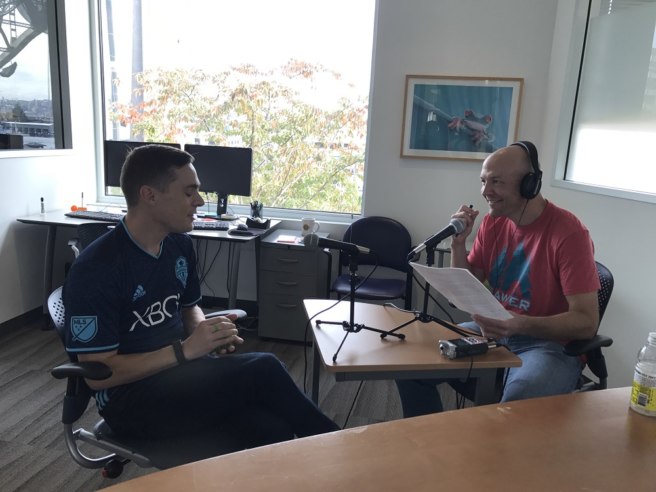
Chris Ronan: Hey, everybody. Welcome to Inside Geocaching HQ, the podcast from Seattle. I am Chris Ronan, my username is Rock Chalk, I am one of the folks who works here at Geocaching HQ. And on today’s episode we have Cathy Hornback, she is an HQ staffer who is also a volunteer Geocaching reviewer. So Cathy brings some very interesting insights to her job here at HQ because she is also a reviewer. And we’ve had some folks write in to us and by the way, you can write in to us, just email podcast@geocaching.com and let us know what you’d like to hear about on our podcast. We’ve had some folks write in and say they would like to hear about geocache reviewing, and since Cathy is also a reviewer in addition to working here we thought she would be a great person to ask some questions of. So here is me and Cathy, talking about reviewing geocaches.

[music]

CR: Well, Cathy let’s just start with what do you do with Geocaching HQ? What keeps you busy everyday?

Cathy Hornback: Well, I’m part of the Community Volunteer Support team and together, we support about 400… Actually 426 at the moment, volunteers from all over the world and these would be reviewers, moderators, and translators. We also curate the guidelines and the Help Center. Personally, I spend most of my time working with the voluntary viewers and cache owners and guidelines and the EarthCaching.

CR: So you’ve been involved with Geocaching much longer than you have been a reviewer or you’ve been at HQ. So let’s start with that, how did you get involved with the game in the first place?

CH: Oh, okay. So back in 2003, I needed to get a birthday gift for my husband and I didn’t know what to get him and I remembered reading about Geocaching in the newspaper months before and thought, “Oh, you know that would be a good thing to get him for his birthday then maybe we could have fun on the occasional sunny weekend?” [laughter] But I was so freaking wrong about that. I got addicted as soon as I found my first cache and then I learned how to use the unit myself and took off on my days off when he was at work and I’ve been going ever since, and I love it just as much now as I did back in the beginning.

CR: And you two still cache together quite a bit.

CH: Yeah, on Saturdays we definitely do cache together. I’m lucky to work for a company where I can sneak out at lunch and get away with caching [chuckle] as long as I’m back reasonably fast.

CR: So we have a couple of Geocaching username personalities we’re dealing with here. Your player name?

CH: My player name’s Prying Pandora.

CR: And that is from where?

CH: That’s from the Phantom of the Opera. It comes from when Christine pulls his mask off and he’s furious and he calls her a prying Pandora. [chuckle]

CR: And then your reviewer name?

CH: My reviewer name is Rock Rabbit, which is another word for pikas and when I’m hiking in the mountains I love seeing pikas and listening to them squeak, they’re so cute.

CR: Okay, so you started playing in 2003 and when did the reviewer thing first come around?

CH: That happened in 2009. I got an email from one of the Washington state reviewers and just asked me about this and I’d just about spit my drink all over the keyboard. It’s [chuckle] usually a surprise, nobody really expects to be asked to do this. So ever since I’ve been working really hard to be worthy of that honor because it is a huge honor to be able to help the community in that way.

CR: So when they first approached you about being a reviewer, did they say, “Here’s why we’d decided to ask you about this.”?

CH: It happened because Moun10Bike retired and they needed another person to fill his shoes, not that anyone ever could, and so they came to me. I apparently was the only person on all of the list from all of reviewers in the state, so they asked me.

CR: And so for people that might… I don’t think there are many but people that might not know Moun10Bike, he is the father of the geocoin and he is a Geocaching HQ staffer, so one of our co-workers here at the office. Okay so 2003, you start playing the game. 2009, you start reviewing and then how many years until you start working here at HQ?

CH: I started working at HQ in 2010, so it was about a year and a half after I started reviewing. I had the very good fortune to be the only reviewer that worked within driving distance of headquarters [chuckle] so that was great. And headquarters works very closely with the reviewers so they knew already from my work that I could explain things to people and had a thick skin and a long fuse, all of those things are really important if you’re gonna review.

CR: Yeah, so let’s talk about that when people talk to you about reviewing, maybe people in the community, what kind of things do you tell them are important for people that might think that this is something that if the opportunity came up they might be interested in in the future? What do you look at as those qualities that are important to be a volunteer reviewer?

CH: Oh, to be a reviewer? I think important thing with the reviewer is that you need to be patient. You need to have a thick skin. You need to be able to be firm but soothing as well, and ethical. You can’t never mess with your ethics. You have to be a good teacher. You need to show that you’re active in the community because if you don’t have time for that then you’re not gonna have time to review. It takes time, it takes a fair bit of time that we tell people that it takes as much time as you give it, but once you’re doing it, you feel like you have a responsibility and it ends up being a little more time consuming.

[laughter]

CR: So if you’re talking to the version of you from 2009, are there things that you would tell that person, things that you know now that you wish you would have known then about reviewing?

CH: Not really. I loved it from the very beginning, I really wanted to be able to give back to the game that has brought so much to me personally with adventure, and fun and friends, and more than I can even say. And I think every reviewer goes into this, “Wow, this is so cool phase,” after they get their feet under ’em and then they wanna review every minute, and they will. I’ve seen this in every reviewer that we’ve brought on since me, that once they figure out what they’re doing, they go crazy and then you can take a few weeks off because they want to review everything that comes in the kill. [laughter] And then they settle down a little bit. [laughter] It’s back to work for everybody.

CR: And so in some areas, and Washington state is one of them, there are multiple people that are reviewing, it’s more of a team situation, so how does that work? Do you all split the amount of caches? Are there certain… Does one person focus on certain kinds? How do you guys decide which caches each of you will review?

CH: Well, each team in different places comes up with their own way of sharing the work. Washington, what we do is we have a long queue that we go through and as soon as someone touches a cache in the queue, it belongs to them until they give it away. And so that way, if you see someone else is already working on something, you don’t step on their toes, you don’t mess with it. And if you, for some reason, can’t finish or you’re having trouble then you can give it to one of the other reviewers and they can take over for you.

CR: And what about working together on things? I would assume that there’s a certain amount of, maybe a few aren’t quite sure about a cache, maybe you can touch base with your fellow people on the team about that?

CH: Absolutely. We all use Gmail, which has a great chat function, and yeah, that’s actually something you oughta know. If you think you’re gonna try and pull something over on your reviewer, they talk to each other, so don’t play mom against dad.

[laughter]

CR: And not just within your state right? Reviewers from around the world will often look for guidance and look for help if they’re not sure of the answer on something.

CH: Absolutely. I think even though we’re from different countries, and our cultures are different, geocachers are a lot the same, and the reviewers all seem to come up with same problems, and work with each other on how to deal with those problems, and help people. It’s never so much dealing with it as, I didn’t get my message across to this person, how can I help them better? Or how can I not get sucked into this or something? There’s always stuff with… We’re working with the public even though geocachers are the coolest people in the world, there is all different kinds. [chuckle]

CR: Sure. So is there advice that you give to cache hiders for how they can make the process go as smoothly as possible when they’re submitting the new cache?

CH: Oh, yeah. I’d love to do that. [laughter] It saves everybody work. The most important thing is to read those guidelines. We have just made them more simple and easier to do but a lot of people check that box on the cache submission form and think it’s a software agreement. And they don’t read ’em. And then they submit their cache, they buy a later bunch of guidelines, and it gets immediately kicked back. So you save time by going through those guidelines, make sure you understand them, they are much easier now, we have shortened them considerably, and each guideline links to a page in the help center that can give you more detailed information, if you don’t see what you need in the guidelines. So I would suggest going through the guidelines first with your placement, and then after you’re done before you submit it, go through ’em again and look at them against your cache, if your cache meets all of those guidelines and then go ahead and submit it.

CH: I think the other thing I wish I could get to people and catch them from is, if they’re going to do something that takes a huge amount of effort, or work, or expense, it’s better to check and make sure the thing is okay with the reviewer before you go through the work. Like, if you’re gonna go through the mother of all hikes and camp three days before you can get to the place, and then find out it’s a wilderness area and they don’t allow geocaches, I’d much rather prevent you from having to go through that if you asked first, or if you’re going to make some kind of gadget or mount something in a way that you’re doing in cement and you can’t get it out. It’s really good to figure out if you can have that spot in the first place. So I’d suggest checking more carefully if you’re gonna do something that takes a lot of work.

CR: Are there common mistakes that you see over the course of time? Are there certain things that you often have to push back on with cache hiders?

CH: Well, being in the Seattle area, we have a lot of puzzle caches, and it’s pretty saturated. So most of the time, if a new cacher thinks a spot is available, it can be too good to be true. And I actually feel kind of bad ’cause somebody will not have solved a lot of puzzles ’cause they’re hard. We have a lot of engineers that live in Seattle, and they’ll put a cache out and I’ll tell ’em it’s too near a puzzle and then they’ll move it. And then it’ll be too near a different puzzle and after a few times they get really impatient and I don’t blame them, I really feel bad, but we have to go by where those containers are whether you know where they are or not, and I cannot tell you because it will spoil that person’s puzzle.

CR: Yeah, I know we’ve had people write in many times over the years and say, “Why can’t you just say where everything is on the map?” But if we do that then that makes it… Unfortunately people would “battleship” those puzzle and multi-caches and what have you, and unfortunately, I just don’t think that there’s a perfect way to make that system work better.

CH: No, not really. That can go into the lots of effort thing though. You can run some coordinates by your reviewer. The easiest way to do that is to make a cache page for them and put the coordinates in that so the reviewer can check them faster and they can tell you before you even put your container out whether that spot’s available.

CR: Okay, so in the unlikely event that you go through the cache submission process, it doesn’t work out for whatever reason. You and the reviewer says that your cache can’t be published for some reason, there is an appeals process where you can write to Geocaching HQ and appeal a decision. How does that process work for people that aren’t familiar with it?

CH: Well, the first thing you do is go to the help center and there’s a link called “Email Us” and you click on that and it actually has a really neat system, where it steers you toward the information that you need to put down for what is your problem. So, if you’re appealing a cache, there’s a path that goes to Cache Appeals, and then we tell you what we need to know from you, and you need to write that down in there, and then we get all of those appeals in the department… Oh, well all day long as the emails come in, and we get together every morning, and go through them, and decide on an answer so that we can all be on the same page, be consistent, and then we divvy ’em up.

CR: I’ve seen some people say, “Oh, you guys always side with the reviewers in those appeals,” but the reason for that is the reviewers know the guidelines pretty darn well.

CH: Yeah. Reviewers are smart and they know what they’re talking about. They know those guidelines like the back of their hand. And if… Once in a while we have to coach one of them that’s making a mistake, but most of the time your reviewer really is right. So that’s why we support them so often.

CR: Yeah, and oftentimes I’ve seen reviewers say or sometimes they might encourage a person to write to HQ because they’re not completely sure of what… Maybe it’s a novel idea or something they haven’t seen before, they wanna learn, they wanna do it right, and so they encourage that person to write in and get our thoughts on it.

CH: Oh, for sure. Anytime there’s a new idea, we try to train them not to make that decision ’cause there could be more going on with it than they see, and they will encourage you to take it to appeals so we can decide and then we can come up with a policy for that and then they know what to do. So sometimes it’s just because they’d like to do it, but they don’t have the authority to do it, so they kick you upstairs.

CR: And besides appeals, you’re very involved in EarthCaches as well.

CH: Yes.

CR: Maybe talk about how that came about for you and what all you do with working with the Geological Society of America?

CH: Well, that came upon me ’cause I’m a geek and I think geology is really cool. [laughter] So yeah, we partner with the Geological Society of America on that, and I had already created a… Actually I’m a Platinum EarthCache Master so I know a lot.

CR: That sounds very important.

CH: It sounds more important than it really is but… [chuckle] Anyway. So, we work with them, there’s probably… There’s less than a hundred EarthCache reviewers, but we do have reviewers dedicated to that because there are a more difficult and complicated cache type to review. They are educational and they take you to a geological feature and teach you what that is, how it happened or whatever about it. And the standards are high. That’s because it’s the educational department of the Geological Society that oversees this, so they want these to be a legitimate lesson and they want you to think when you’re there. So that’s why we do the, “No, don’t ask questions, so you can just look up on the Internet, you have to get stuff that’s from there, and learn something while you’re doing it.” It’s not just a tick off the answers and get my smiley.’ But EarthCaches have more favorite points than all the other cache types put together, and the reason for that is that quality, so it’s worth it.

CR: So, it’s been what? Eight years that you’ve been reviewing? Is that eight or nine years?

CH: 2009, eight years, yeah.

CR: Yeah, right about eight years. So what do you like most about being a reviewer?

CH: I really like helping people, and I get a great deal of satisfaction with that. I like taking the time to explain things so people understand. And so, when I get someone successfully to getting their cache published and they were frustrated before, but now I’ve smoothed the way, I love that. I love that. I love helping people.

CR: And what are the… Are there any pet peeves? Is there anything about it that is…

[laughter]

CH: Well, like I said before, I get really frustrated when people don’t read the guidelines ’cause that’s so basic. I think it’s variations on guidelines. Sometimes someone will feel really passionate about something and they want to use Geocaching to promote it, and it’s a horrible disease or something tragic and sad. And we feel terrible about that, both at headquarters and as reviewers ’cause we’re sympathetic nice people. But Geocaching is a way to get away from all of that and not have to bring all the really bad things in the world into the game, it’s an escape from it. And so having to tell people that they can’t share this important passionate thing that they want to do is really hard. So that’s… I cringe every time I see those, and I think every reviewer does, nobody likes that stuff. But we are very sympathetic, we just can’t do it.

CR: Yeah, that whole slippery slope thing, it’s very difficult. I would think that you have a very unique perspective and that obviously, you’ve been a player for a long time. But being a volunteer and also working at Geocaching HQ, what do you see as the benefits of having both of those roles and kind of being able to see both of those sides of things?

CH: It helps a lot. Since I support reviewers, I wouldn’t do as good a job if I didn’t know what they go through, and the frustrations they feel, and the tools they use, and the mixed messages that they might think they get. I know how frustrating it is. I also know how happy it makes you, I know all of those things. So I really can listen to them and understand what they’re saying right away and help them with that.

CR: So if somebody is interested in volunteering for Geocache and they think that reviewing is something that they would wanna do, we do have folks that write in and ask us about that sometimes, what do you tell people?

CH: I tell them that generally the reviewer’s identified by other reviewers ’cause they know the people in their community, they know what they act like when they’re frustrated, they know how they communicate, they know if they’re out supporting their local organization, helping the community, and that’s a way to get noticed in a big way. Putting your hand up really doesn’t help you. You need to be acting the way that is reviewer like when people are not watching, when you don’t think people are watching you. So you have to know the guidelines real well and active in the community. You have to be a good cacher and a good cache owner. You have to take care of your caches and be ethical, and kind, and patient in the way you write your logs and all of that. You have to have a good general reputation with the community and you have to be able to communicate really well.

CH: So if you’re good at explaining things, and not going on and on and on ’cause people don’t have patience for that. You also need to speak English really well because HQ is in Seattle, and we do have some really awesome German speakers working for the company now but most of us speak English so we need to be able to talk to you. And when I’m looking for someone I look for somebody who’s patient, has a thick skin, is a good teacher, active in the community. The ability… You have to able to say no, some people can’t do that and that does not make a good reviewer. You have to think… All reviewers have to think of more than just you and your cache, they’re actually curating the game and helping to keep it good. And even at headquarters we do that on a global scale. So something may seem okay to you where you live but we have to think of the whole world and it doesn’t always work for the whole world, and we want the game to be successful everywhere.

CR: Well, I think we covered it.

CH: Wooh!

CR: You feel good about it?

CH: Yeah.

CR: Alright. Thank you.

CH: Cool.

[music]

CR: So, there was Cathy Hornback a.k.a. Prying Pandora, a.k.a. Rock Rabbit. We hope you enjoyed that conversation. If there’s something that you would like to hear us cover on Inside Geocaching HQ, all you have to do is email us, the address is podcast@geocaching.com, that is podcast@geocaching.com. We would love to hear your ideas for the podcast and we will see if we can cover some of your questions on a future episode. Until then from all of us at Geocaching HQ, Happy Caching!
Inside Geocaching HQ Podcast Transcript (Episode 2): Souvenirs, APE cache rediscovery

Chris Ronan: Hello, everybody, welcome to inside Geocaching HQ, the podcast. This is episode two. I’m Chris Ronan. I work at Geocaching HQ in Seattle. I’m the PR manager here, also on the community volunteer support team. Thanks for listening. We hope you had a very happy new year and that you have been able to get out and do some caching in 2017, or maybe this is the time of year when you plan your upcoming geocaching for when the temperatures warm up and the snow melts away. And maybe you’re planning to collect a few new souvenirs in this new year. If so, you will enjoy this episode because we are talking souvenirs. This seemed to be a good time to do it since we released five new souvenirs at the end of last year. So, I chatted with Annika from HQ’s marketing team, as well as Nate and Roxxy from the creative team. We will have more on that in just a minute. Also on this episode, we have the man, the myth, the legend, the master of all he surveys, Jon Stanley, aka Moun10Bike. There is a good chance you have heard of Jon. He is the father of the geocoin after all. But, he has done even more in geocaching including owning one of the APE caches. The one that he owns, Mission 9: Tunnel of Light, located just east of Seattle, was rediscovered late last year after being muggled several years ago. We will talk with Jon about the rediscovery and what it was like to maintain one of those famous APE caches.

CR: So, we’ve got a lot of good stuff to cover. Let’s start with souvenirs. Annika Ledbetter is a member of the marketing team at Geocaching HQ. She is intimately involved with the souvenir process. So, here is me and Annika, talking souvenirs.

[music]

CR: Okay. So Annika, let’s first talk about how you ended up at HQ. You’ve been here a while and you’ve done a lot of cool things. So, where did it start for you?

Annika Ledbetter: It started in 2013 and it started with the community management team. I started with answering a lot of questions from the community, diving in deep from the get-go, which was great to get the start at HQ. And then I moved over to the volunteer support team and then found my niche there in supporting translators. And from there moved over to localization and that’s what I’m doing still today, just helping that the game is represented well in other countries that it’s played in all over the world. And then also, a big part of my job now is in marketing. It’s not a very traditional marketing role at HQ. It’s more about how do we get people excited to play the game. And one important way to do that is through the souvenirs that we have and I think… Now, I took it away. [chuckle]

CR: Now, you led us right into what we were gonna talk about. We…

AL: Yeah.

CR: We brought you here to talk about souvenirs. It’s a subject that people are always really interested in. It’s one of the really fun parts of the game. We hear a lot of questions. People don’t know as much about what goes into souvenirs and how do we decide which souvenirs will be out there. So maybe let’s just start with how souvenirs started at HQ? And how they came to be and how we got to where we are?

AL: And I had to do some research on that because I’m only here since 2013. But, souvenirs exist since July 2010 and they were basically created as an added incentive to visit a specific location. And so, I think the first one that came out was a visit Geocaching HQ and you log the cache there, you get a Geocaching HQ souvenir, kind of an “I was here,” extra little digital picture on your profile. And then the next one was the lost and found celebration. There was the 10-year anniversary of Geocaching and a few others. But, in the beginning, all the souvenirs were tied to just one specific cache like a special highlighted events or caches is on. I think the APE cache was one. I think you still get one if you visit the APE cache in Brazil?

CR: You do. Yes.

AL: You should know.

CR: I do know and I did get it.

[laughter]

AL: There you go. So, that’s how it started and then over time, more and more souvenirs were added for different things and we’re gonna talk about that. I think, a little bit?

CR: Sure. Let’s talk about that.

[laughter]

AL: Yeah. I think that’s interesting, too. I think somebody who’s in the game for a while has probably a pretty good handle on what type of souvenirs we have, but it’s maybe good still to mention. So we have country souvenirs and regional souvenirs. They’re also very well liked. We are covering about 44 countries, or so. The United States, there’s a souvenir for each state you visit. For other countries, we’ve just released the Russia souvenir. You will have a souvenir if you find a cache anywhere in Russia. Other types of souvenirs are for, as I mentioned before, visiting specific types of caches. HQ still gets a souvenir, the plaque near Portland, the original cache gets one. And then there’s some that you get if you participate in some of the HQ challenges that we bring out over the summer, mission GC for example, you find a specific cache during a specific time frame and that’s just to encourage people to broaden their knowledge of the game. Some people have never found a multi-cache and that kind of gets them out there and try it. And then we have lastly, souvenirs for attending mega and giga events, and with all those, if you count all the mega giga events and all the other events all over time, the time of souvenirs, we now have a staggering number of 564 souvenirs you can earn.

CR: I never knew that.

AL: I don’t think anybody has those. I also don’t think it is humanly possible, but that’s a good number. Also, one thing I found out today, which I found pretty remarkable, total awarded souvenirs are more than 20 million. So yeah, a lot of people have cached in different places on earth and participated in the challenges and attended events, so good signs.

CR: And so then the process of souvenirs, let’s talk about how it works. How does one earn a souvenir, and just… I mean there’s a lot that goes into the whole process.

AL: Yeah, no. For sure, I think it’s also a question we get sometimes is, “Why can’t I have a souvenir for this or that?” And it is a little bit based on how they technically work, to bore you a little bit with the technical details here, they are tied to logging. So we cannot de-couple them from an action taken by a player that is, “I go, I log a find. I go, I log attended on an event.” So these are the options we have, though we have many options within that where we can say a specific type of cache, a cache with so and so many favorite points, a cache during this time, an event during this time, a CITO event during in time. So we have ways to segment and highlight specific caches, or events, and also award specific behaviors, but they’re always tied to logging a cache.

CR: Okay. And so when we come out with new souvenirs, like at the end of 2016 when we had, let’s go through them. Russia, Romania, China, Puerto Rico…

AL: And Singapore.

CR: And Singapore. Those were the new souvenirs at the end of 2016. People, of course, naturally ask, “Why don’t you have X or Y or Z?” Or there’s any number, as you said other countries that still don’t have souvenirs, so let’s try to address that.

AL: Yeah, this is a question that I can remember getting a lot, too, when I was working as a community manager, working email tickets and so on. Yeah, people really like to be rewarded for going out of their way, finding a cache on their vacation, or far from home and so on, and I think it makes total sense to have those map pins basically on your profile. And we absolutely, that’s our goal as well. Why don’t we put more out each year? That is a more complicated answer. It’s partially the process that we do. We try to be very diligent and we try to be very careful. Specifically, we wanna have some beautiful artwork associated because that’s how we’ve done it with the other countries. We don’t want to just suddenly do something completely different. So we kind of wanna keep that path, and we have to make sure that anything we put on there is not offensive in any way, does appropriately represent a country. So we do check in with the local community, or local players and make sure that what we’re choosing aligns. So that takes time, that takes back and forth communication. The other thing we’re really making sure of, that if we are displaying some symbols if we’re displaying images, pictures, anything, do we own the right to these? Is it legally sound? These are all the things we have to check and make sure.

AL: Then another thing that we started doing is to really highlight each country, and what is special about it, and what are the best geocaches in those countries, which is an additional effort to it that we, though, find is important.

CR: Which is something that’s done in the blog, for instance.

AL: Yeah, exactly.

CR: Where each time Romania or all the other four that we went through, Singapore, Puerto Rico… Each time there was a blog post that talked about geocaching in that country and all of that. So, of course, a lot of research and time goes into writing those.

AL: Yeah.

CR: So now looking ahead in 2017, can we talk at all about what might be coming down the pike, here in the coming months?

AL: We kind of like the surprise element of souvenirs, for sure. We do not wanna leak too much. What I can say is there will be a few that you can expect from what we did in the previous years. We also started work on a pretty fun summer challenge, and I do not wanna say anything.

CR: Wow, that has piqued my interest. I may have to go snooping around and see what I can find out for myself.

AL: I’m really excited for it. I hope it will catch on. But yeah, I’m really quite, quite excited.

CR: And there’ve been really fun summer promotions over the last couple years, you mentioned Mission GC which was… Maybe talk about that a little bit, because that was very different than what had been done in previous years. People, I think, had gotten used to the 31 and 31, and the various things along those lines. But Mission GC was really different and a lot of people had a lot of fun with it.

AL: Yeah, we kind of just thought what is geocaching really about, and it always feels like you’re on a mission to find a cache a little bit, you’re doing it kind of in secret, you are a bit of a spy. So this whole theme seemed to fit the game so well. And we also didn’t just wanna repeat what we had done in the years before such as like, “Oh, find a cache here and there, just have it simple and straight forward,” we wanted to add this extra layer of mystery and involvement and really getting people to work together. I enjoyed so much reading all the comments on the blog where people helped each other find the solution for it, often without spoiling. Yeah, it just was a really great energy. It came out of the idea to do something we hadn’t done before and something a little different but within the framework that we had that our souvenirs awarded in a certain way.

CR: Alright. Well, we covered some pretty good stuff, I think.

AL: Yeah.

CR: You feel good about it?

AL: I do.

CR: Nothing else?

AL: 20 million awarded souvenirs. I find that number really cool.

CR: That is amazing.

AL: Yeah. Thank you.

[music]

CR: So Annika and the marketing team are very involved in souvenirs, but so is the creative team. And if you’ve ever earned a souvenir, then you have seen the work of Roxxy Goetz and Nate Cavanaugh. They are fantastically creative designers at Geocaching HQ. And I had the chance to talk with them about what goes into designing those cool souvenirs. Here we go. Okay. So we have Roxxy and Nate. And we’re gonna talk about souvenirs and the work that they do to create a souvenir artwork for the geocaching community. But before we do that, you guys have both been here a little while and you know the community really well. So Roxxy, maybe talk first about how long you’ve been here and what you just generally do at Geocaching HQ?

Roxxy Goetz: Alright, Chris. Well, I’ve been here as a member of the creative team since April 2010. So we’re gonna be coming up on my seventh year here at Geocaching HQ. Very excited about that. We mostly cover a lot of our illustration assets usually for a blog post and Facebook posts and t-shirts. Personally, I’m kind of our resident signal wrangler. So if you ever get a geocoin or a t-shirt or some kind of fun holiday post that we put up and it has a signal on it, it’s pretty likely that I had a hand in it.

Nate Cavanaugh: Yeah. I’ve been here almost six years in April. April, I guess, is kind of a popular hiring time here. So it’s a great place to work and we get to work on a lot of fun projects for various promotions and merchandise. We get to design t-shirts and geocoins, trackables. We get to design souvenirs, which we’re gonna talk about today.

CR: Okay. So with souvenirs, we talked with Annika from the marketing team about the process of deciding on souvenirs and getting the process going. And then eventually, they’d come to you guys and they say, “Hey, we’ve got this country that’s gonna get a souvenir,” or, “We have a new campaign. There’s gonna be a souvenir for doing something.” And it’s put in your laps. And then what do you guys do?

RG: Well, anytime that it’s part of one of our promotions or campaigns or something that were handling here and kind of hosting at Geocaching HQ creative studio. Nate and I usually in on the ground floor on that. And we help develop a lot of the visuals for the rest of the campaign, including any merchandise. So, geocoins, trackable tags, any website assets that we might need. If there’s going to be an easter egg somewhere in there, we determine it early on. We’ll bounce back to that later. Anytime that we do have one of those souvenirs, we kind of develop it along with all of the other assets for the promotion. That way we make sure that everything looks together and it’s nice and collected and cohesive and that way it looks real pretty when you get the whole set, arranged all at once on your site there.

NC: We try to add five or so new country souvenirs each year. And whenever I’m researching these locations, I always find that these are really beautiful places that I’ve not visited yet that I would like to go visit at some point. We work closely with the local reviewers or local geocaching associations there to get a good idea of what to cover in the souvenir for the region that we highlight. Also, things to include or not to include and a little bit of background about the culture there and we try to get a good essence of it, all encapsulated in one souvenir without going overboard and adding too many things. Yeah, with just a good feel for the country as a whole.

CR: You talked about not adding too many things. One thing that you guys have to think about is where are these going to be seen, for instance, on mobile devices.

NC: That’s right.

CR: And that you kinda have to keep it simple because that’s kinda small on a mobile device and that’s the kind of stuff you guys have to think about.

NC: That’s correct.

CR: There are folks out there, we hear from them all the time, that they’d really like to be helpful, they’d like to submit or help with artwork for these kinds of things. And that’s not something that we do. And I’d love to hear you guys… ‘Cause there’s really good reasons for it. I’d love to hear you guys talk a little bit about more of the history behind that.

NC: We have thought about that. We have looked into, “What if we allowed people to just create souvenirs?” We’d get a lot more souvenirs out there a lot faster but we’d like to have some consistency with the souvenirs. And also, there’s a lot of things that could be touchy subjects for countries or maybe not represent them properly. That’s one of the reasons why we work closely with the local reviewers and geocaching associations.

CR: Well, one of the fun things that you guys do with some of the campaigns that we have; Pi Day and so forth. Sometimes you’ll be sneaky. You’ll hide little fun Easter eggs in there. Tell us a little bit about that.

RG: The Easter egg started off there I think was it Pi Day? I think it might have been Pi Day where we hid a two-part special code in each of the two souvenirs. If you got those souvenirs, then you probably know it’s there and if you don’t, I’m just gonna tell you ’cause you’re not gonna get it again, we had it hidden in the tin of the pie tin. And once you went to a specific site and you put those numbers in, you got a banner, I believe, to be able to put on your personal profile page. I’m gonna say that five times fast later on and get totally tongue-tied. And that started off as just sort of a fun little thing because we know that all of you wonderful geocachers love your puzzles and decoding things and oh man, I do too. So anytime moving forward since then, one of the questions that we ask ourselves anytime we come up with a new promotion is, “Is there some cool, extra little thing that we can add in there just to give the community some kind of sneaky special extra achievement?” There’s actually an extra Easter egg in the blog and Facebook images for Mission GC since we weren’t able to sneak one into the souvenirs themselves and it’s hidden on the computer screen in that image. So if any of you missed that, I’m guessing a lot of you did. If you wanna go back and decode that, there’s a special little sneaky spy something that I hid in there just for you guys.

CR: And speaking of Mission GC, that one was one of our meta souvenir opportunities where you could earn kind of a bonus for finding all of the souvenirs in that promotion.

NC: I think it started back in 7 Souvenirs of August. We had a secret extra souvenir that you could earn if you earned all the other souvenirs and we kinda continued to do that each summer. So with the most recent promotion, Mission GC, if you earned the three souvenirs, you get a special meta souvenir which depicted a agent with the kind of MI6 or in this case, HQ47 lapel pen that he kind of earned his or her status as an agent.

CR: Well, it’s just awesome to hear about souvenir stuff. I know people are really interested in that and at some point, we’re gonna have to just get you guys in and just talk about geocoins and trackables in general, because you do so much cool stuff with that and people love that stuff, too, and I think you could probably talk for a while about it.

NC: Yeah for sure, that would be good.

RG: Absolutely.

CR: Alright, thanks, guys.

RG: Alright. Thanks, Chris.

NC: Thanks, Chris.

[music]

CR: Yeah, we can do a whole episode with them sometime. It is always so much fun to see the designs that they come up with for geocoins and t-shirts and all kinds of other stuff. Okay, shifting gears. You may have heard the news late last year that one of the long lost APE caches was found. Fourteen APE caches were placed around the world in 2001, in conjunction with 20th Century Fox, to support the movie Planet of the Apes, which I’ve still never seen. I’ve been to Brazil, I’ve found the last active APE cache down in Brazil, but I’ve still not seen that movie. So that’s kinda crazy. Anyway, the second to last active APE cache was Mission 9: Tunnel of Light located about 60 miles east of Seattle. It was placed by Jeremy Irish and by Jon Stanley aka Moun10Bike. The cache was found more than 3,000 times before it was muggled in June of 2001 and then it was archived. But there was long a feeling among some cachers that the APE container might still be near that cache location. That’s because it’s a heavy container. It was located nearly two miles from the nearest parking area.

CR: And so some people speculated that possibly the muggle simply discarded the container nearby rather than carrying it all the way back to where they parked. So last year, a group of Seattle area cachers took it upon themselves to attempt to find that container and they did find it. If you haven’t read the story, it’s on the geocaching blog. You’ll find it dated November 11th of last year. So after it was found, we surveyed the community looking for ideas on what to do with the rediscovered cache. And if you continue to watch the geocaching blog, you will soon have an opportunity to take part in the final vote on what will happen with that APE cache. In the meantime, I thought it’d be fun to sit down with Jon and hear about his experience with the APE cache and what he thought when it was found. Now one thing I should point out is that we at the office like to give Jon proper credit for being a geocaching pioneer. He is, however, a reluctant celebrity which makes it all the more fun, of course, and you’ll see what I mean here in a second. Here we go. Well, I think any conversation with you Jon has to start with your celebrity as a geocacher, doesn’t it?

Jon Stanley: No.

[chuckle]

JS: Geez, Bryan (Roth) put you up to that.

CR: Bryan, no. He didn’t, but I knew he would want me to. Okay. So we won’t talk about your celebrity. We will talk just about the APE cache. And when you put Mission 9: Tunnel of Light out, that was July of 2001, long before you became an employee here at Geocaching HQ, but you were very involved in geocaching from the very beginning. So I wonder, what memories you have of being asked to be a part of this project?

JS: Well, I think it was my role in defending against the apes that led to my choice to hide that. I had risen through the ranks to general and where was there to go from there?

CR: Well, you have to hide a cache, obviously.

[laughter]

JS: Well, yeah, that’s a… Woo-hoo. The local communities were recruited to hide the caches in all cases, and generally, they were pulled from either reviewers or people who were extremely active in the area. For example, in the New York area, Cache Ninja was the person who hid the cache. He was actually a reviewer way back when. I think that he and I were tapped at the same time to be the first reviewers. So he was a natural choice in that area. Markwell was chosen in the Chicago area, and I was tapped here in Washington. Because I had developed a relationship with the founders already back then, it was natural for Jeremy to accompany me on various outings. He was there when I reached my 100th milestone cache, which was where I placed the first geocoin, and he joined on hiding this cache as well.

CR: Of course, when we look back at it now, it’s taken on this aura among the geocache community, because there is only one active one today, but you couldn’t have known that, right? Back then that that was gonna happen?

JS: No. Back then I thought the big appeal of it was just for the first finder, which was finding the prop from the movie. That’s what I thought would be the draw for people and then it would just kind of be a normal cache after that. So it was exciting, I thought, for that initial rush to find, but I had no idea that they would become as iconic as they did.

CR: So you owned a lot of caches before you put out the APE cache, and I’m curious… And then have owned many others. Is there anything different about being the owner of a cache like this that became so iconic as opposed to the other caches that you own?

JS: Well, it was much different in that it was owned by a sock puppet account for the first many years of its life. It was the Project APE account is owned it, and so no one knew really who had hidden it for many years. And in fact, I even joined a couple guys on a bike ride through the tunnel and logged it as a find back then, a year or two after having placed it because it was just… No one knew who had placed it and I was just along for the ride type thing. And it was only later on when it was decided that an account that could monitor it, what have you, should take over the ownership of it, that it was adopted over to me as the actually having been the original placer along with Jeremy. And it was only then that it was known that it was my cache. So I left my find on it even though I had been a placer. I know that some people frown on that but it was part of the story back then.

CR: And so hundreds of people over the years find the cache, but then, unfortunately, it goes missing, I think it was in 2011. And so the difficult decision comes to have to archive the cache. Maybe talk a little bit about how that came about.

JS: Initially the lid disappeared, so what we decided to do was secure the lid to the container by running a chain through it. And at the same time, we chained the… It just was natural to also chain the bulk of the container down as well and then connect everything to a… There were some heavy pieces of metal up there, remnants from the railroad that used to run along the trail, and that was all buried in the debris pile in which the cache was hidden. Before we knew it, someone had cut the cable, actually, it was a cable, and took another lid. And at that point, we increased the amount of security on the cache, a bigger cable and chain, secured a lid without putting… I don’t think on the last one we ended up putting riveting coins to it again.

JS: We thought that was just too much of a prize for someone. We didn’t know that they were targeting the cache actually at that point, we thought they were just wanting the coins on the lid. And then one day we got the word that the whole thing was missing, and it’s not the kind of cache you’d DNF. It was a big container in a very obvious spot and the fact that… As soon as someone DNF’d it we knew it was gone. And at that point, we knew we had a serial targeter, and he had been stealing a number of caches in that general area. So we knew it was someone trying to mess with our game. When word came that that cache was missing, because it had become so iconic and it was such a kind of a mecca for cachers around the world, not to mention just in the States, we sat down, we being Jeremy and Bryan and other higher-ups in the company and I sat down with them and we discussed what should be done. The decision, which was difficult, was that in the past when the container has gone missing, that’s the end of the APE cache. That’s the rule that had been enforced previously and we needed to be consistent and, in this case, archive the APE cache.

CR: And so now we fast forward five years or so and this group from Seattle, a number of local cashers, they mount this effort, they find the container… I think from what I understand, you knew that they were gonna be going out doing it? Did you think there was a possibility that they’d actually find anything?

JS: I really did not. I thought that it was one of those where maybe they had a 5% chance of finding some remnants of the cache, but certainly not the container. They use some search and rescue techniques that basically looks at the path of least resistance and so they focused on potential energy where something would likely end up and boom, there it was.

CR: When you saw the container, I think you were there when they brought it back and Bryan was out there in the visitor center here at HQ and you were there, too. What went through your mind and what your thoughts were about the whole thing?

JS: I think I was dumbstruck. I probably just looked like I was in a daze or something. I mean it’s only a container, a metal container, but I couldn’t believe it. And then the stickers that were on it that were the ones from the original container where people would sticker the inside of it, including some that were from the 10-year celebration. That made it pretty clear that was the original container. I couldn’t believe it and at that point I was regretting that I hadn’t joined them on the outing. They had invited me on the hunt, but I thought it was such a low chance. Plus, I had obligations on the other side of state that weekend. I had to turn it down but then I was like, “Oh man, I wish I could have been there and just seen it unfold.” Pretty cool.

CR: Yeah, very cool and it’s very cool to hear just you’re talking about the history and talking about your thoughts on it being found. I think people will enjoy hearing about it. Anything we didn’t cover?

JS: Well, our plan to put it up on the space station so that everyone can now enjoy it.

CR: Yeah. I don’t remember that being an option that we put out there but…

JS: I was pretty sure I kept voting that in.

CR:strong> [laughter] You’re so good at that, Jon. People are gonna think you’re serious.

[laughter]

CR: And knowing you, being the celebrity that you are, you might be able to make it happen. Is the scary thing.

JS: Stop it, Bryan.

CR: Alright, thanks, Jon.

JS: You bet.

[music]

CR: So, there you have it, episode two of Inside Geocaching HQ. Thanks again to Annika from the marketing team, to our awesome designers, Nate and Roxxy, and to the father of the geocoin APE Cache owner and all around famous geocacher, Jon Stanley, for being a part of this episode. If you’ve got thoughts on our podcast, if you’ve got ideas for upcoming episodes, stuff that you’d like to hear us talk about, you can drop us a line. The email address is podcast@geocaching.com, that’s podcast@geocaching.com. We would love to hear from you. Until then, from all of us at Geocaching HQ, happy caching.

Inside Geocaching HQ Podcast Transcript (Episode 1): Nate Irish on the Geocaching apps and Geocaching.com

NateAndChris
NateAndChris

Chris Ronan: Hello, everybody. It is Inside Geocaching HQ, the podcast, welcome to it. Very happy to have you tune in. I am Chris Ronan. I am the public relations manager at Geocaching HQ in Seattle. My job is to talk about geocaching, which is a pretty awesome job. I have been at HQ for two years. I’ve been a geocacher for just over five years and I love talking about geocaching and that’s why I’m so excited about this podcast. I hope you enjoy it. I hope we can bring some new information to you. This is our very first episode. In the future we will give you a chance to ask the questions, but for this first one we reached out to the many awesome geocaching podcasters and bloggers and vloggers out there and gave them the chance to ask the questions because they’re the pros and they came through just as we knew they would. They asked some great stuff, and I’m gonna start with Darryl Wattenberg of the GeoGearHeads podcast because Darryl I think asked a good question to start with, so here he is.

Darryl Wattenberg: This is darrylw4 of the GeoGearHeads podcast and welcome geocaching.com to the podcasting space. My first question that I really wanted to know is, why did you decide to do a podcast? Why now? What are we looking for from this new show?

CR: Thank you very much, Darryl. Hey, we just thought this would be another great way to connect with the community. We’ve got the blog, we’ve got the Facebook, Twitter, Instagram and all that stuff, but being able to talk about things is sometimes better than just writing about it. Lackeys often get a chance to appear on podcast such as GeoGearHeads, but there are times between those appearances when we’ve got stuff to announce or things to explain or just stuff to talk about and we’re hoping this will be a good avenue for doing that. Darryl, I’m hoping you and I can do some geocaching together in Michigan there sometime where you are based. I have yet to find a cache in Michigan. I’ve got a few on my list so hopefully we can make that happen. Not during the winter, mind you. Not during Michigan winter because I want nothing to do with that, but maybe spring or summer next year we can make that occur.

CR: Okay, so episode one, topic number one, the geocaching app. We will have a conversation with Nate Irish who leads the product teams here at Geocaching HQ. He had some interesting things to say about the app. We also talked about the website, so hopefully that all sounds good for our first episode. We’re gonna go ahead and get started. Me and Nate Irish and a lot of questions from podcasters, bloggers and vlogger. So, here we go.

[music]

CR: Let’s go back to when you first started. Obviously, your brother Jeremy starts the company. How did it come about that you ended up joining him here?

Nate Irish: Yeah, well, it was great for me. I was in Colorado going to junior college and driving a taxicab. [chuckle] I have been geocaching with Jeremy. He took me out to find my first geocache in the Rose Garden in Portland on a visit. So I was living in Colorado, going to school, driving a cab, geocaching had started to get big, and he couldn’t keep up with the emails anymore and he had about 600 unanswered emails in the support queue. Well, he knew I was a decent writer ’cause I had done some traveling and I would send back story-like dispatches from the road. And so he knew I was a good writer, he asked me if I would just log on and answer some emails and he would hire me as an employee. I thought that sounded great and so for the first six months or so, I would just roll out of bed in my pajamas in the morning and start answering some emails.

NI: After about six months of that, cleared out the queue, of course, and he said, “Well, if you move out to Seattle there’s a lot more that you can do.” And it was exciting. So I did the QA for a while and then my title shifted to product planner, which was a made-up title and it was really just, “Nate knows the product really well and he has some really good ideas about features that we should implement, so let’s put him in a position to direct how our resources get used.” And over time it grew into me having a team of product minded folks who can help us figure out what are the problems that the community is facing and what are some solutions that we could implement to solve them. And I’d glassed over completely here, hence, the emergence of the iPhone as a tool.

CR: A little bit of a thing.

NI: A little bit, yeah.

[laughter]

NI: It shifted our focus a little bit and expanded the audience greatly. Not everybody could afford or desire to have a $100 plus device just for geocaching or for hiking. And so, that opened up all kinds of new possibilities for us in terms of the audience that we could reach with geocaching. There are good things and there are bad things that came along with that. Of course, as you make geocaching more accessible then you have to also make sure that you’re careful about how you’re introducing them to the game of geocaching. We have a very jargony game, a game that has a lot of unwritten community rules, ethical rules about how you interact with caches, what kind of a responsibility it is to place a geocache and make sure it’s maintained, and all that stuff needs to be explained.

NI: In most cases, I think that geocachers hear those things from other geocachers and that’s great for us that whenever somebody’s introduced to the game from an existing geocacher, we know that they’re gonna get an education right off the bat. We don’t have to do too much to bring those people into the fold. But there’s still many more people who just see in the app store, they go to the navigation category and they see what’s this geocaching at number one? What is that even about? Download it and then they don’t have somebody there to hold their hand, so we have to be thoughtful about how we onboard those people into the game. And it requires a little extra work, and sometimes it means we can’t do other things.

CR: Fast forwarding to today from 13 or so years ago, what is your title now and what are your responsibilities encompass today?

NI: Well, I’m product team manager. Basically I have a team of product managers who… They’re assigned to development teams, so they manage the back log from four to five software engineers and front-end developers, and they work really closely with our user experience designers to research problems, to do customer interviews, to learn more about where those problems come from, and how might we solve those problems, and they are presenting solutions for us to build. One of the things that we try to be good at is really having an end in mind when we build something and knowing what it is that we’re hoping to accomplish by building that thing. That’s something that we’ve matured into over the years, because I think in the past, if we just had an idea we would run with it, and we wouldn’t think too much about how do we know we’re done? What does done look like? What does success look like? We try to be a little bit more methodical and thoughtful about that stuff.

NI: So yeah, I have a great team. We consider ourselves to be servant leaders at HQ. We’re a support team. We exist so that other people can do their job most effectively. And that’s a position I like to be in. I don’t necessarily like to do podcasts or be out in front, to be the guy on stage. I’d rather be in the background supporting people who do like to be up front, supporting people who have really incredible talents in building software and designing great experiences.

NI: And that extends out to the community too. I love the fact that what I do supports millions of people having adventures and experiences outdoors. That makes me excited to come to work everyday, because when I think about play, the concept of play, I think that a lot of people overlook what that means to the world and to the growth and development of a person. I think play is sacred. We get to spend time with each other when we play. It’s fulfilling. It’s wholesome. It’s healing. The stories that I get to hear sometimes of a father connecting with his son, his teenage son that they don’t have anything else in common, the teenage son doesn’t wanna be seen with the guy. It’s a story as old as time. But here’s something geocaching that they can go out and do together, and they connect on that level. And that’s play, but that’s so meaningful. I think that play matters.

CR: Okay, so let’s get into some questions for Nate, and again these are coming from bloggers and podcasters and vloggers from around the world. And let’s hear again from Darryl Wattenberg of GeoGearHeads.

DW: One of the questions we keep getting over and over again is what is the target for the official geocaching app, the one formally known as the intro app and is now just the everything app? It does seem like it’s working its way up from the more basic user, but it doesn’t seem to be an app designed for the serious, more experienced user. So, is there a target for that? And how is it determined as to what that target is?

NI: Is there a target? Yeah, I would say in the beginning, it shifted over time. In the beginning it was the completely new user. The app that we have today, the foundation of that app was as an introduction app to geocaching. So I can say 100% that a few years ago that app was developed with just the new user in mind. However, we are a small company and it is difficult to manage and maintain and build six or seven apps, and we’ve been in that situation in the past where we had multiple apps on Android, multiple apps on iOS, we had Windows Phone 7 apps. And that it’s just unmanageable for a team our size, and so we made a decision to invest all of our resources in that free app so that it would serve the new users, as well as the advanced users.

NI: We’re not there yet, obviously. We have a long way to go still. We’re taking steps in that direction to make sure that it adapts to the level of the user. As a starting point, we’ll always need to make sure that we pay attention to that new user. There’s really no getting around that. I think if you look at other apps, they have the advantage of being able to build strictly for that advanced user, most likely a lot of the listeners of this podcast. And I’m certain of the GeoGearHead podcast as well. And so that means that they don’t have to really think about things like tutorials when we create a new feature, which surprisingly takes a fair amount of time to get right because it’s really easy to make a bad tutorial that no one will ever use or pay attention to. It means that we have to be really careful about things like accessibility. We’re concerned about people with color blindness or that have vision impairments. These are concerns that as a company with such a large audience, we have to make sure that we attend to the needs of a variety of different players and play styles.

NI: So we definitely are trying to move that app into a more advanced territory. A lot of the features that we’re planning on releasing soon are meant to target that user of our old paid app, which there’s still quite a few features that we hear people asking for. Offline maps is one of the big ones and that’s something that we’re gonna be addressing really soon here. Another one, well, there are many smaller features like personal cache notes, the ability to seek caches with corrected coordinates at their location on the map. We can talk about souvenirs, is another big feature. So we’ve catalogued all of those features that people are asking for and are putting in place plans to actually add them to the app.

CR: Alright, so next up was the Geocaching Vlogger, Joshua, and here is his question.

Joshua: Hello Geocaching HQ. It is Joshua, the Geocaching Vlogger, and I just wanted to first say congratulations on episode one of geocaching.com’s podcast. I think it is so awesome that you guys have decided to start this. What a great way to stay in connection with the geocaching community. I wanna thank you for reaching out to me and asking if I had any questions for episode one so I decided to go to my viewers of my geocaching videos and asked them what they wanted answered from Geocaching HQ. And I had a ton of answers. People were very curious about several things, but there were two topics that people were most passionate about, or two themes that came forward. The first one was around innovation. What innovations does geocaching.com see themselves bringing forth in the near future? And especially around the idea of cache types?

Joshua: There were many people that were like,”Oh, my gosh, wouldn’t it be great if geocaching.com would create a new cache type?” Some people wanted to have a history cache. Other people wanted some sort of virtual cache to come forward. With Pokemon Go coming out, there’s so many amazing things now that the phone could do. Is there anything that could be done regarding the technology of smartphones that geocaching could use? So that was the first question, “What is in the future as far as it comes to cache types and technology? That would be great to hear from your side of that. Also, many people were curious about the geocaching app. Many people wanted some of the features that they got from the classic app that they just haven’t got yet. So what are you working on right now as it goes with the geocaching app? And what is down the line for that? So guys, thank you so much for asking me to submit some questions and thank you for all the work you do to keep this amazing hobby going all over the world. Alright, thanks guys. Bye.

CR: Well, Joshua, thank you very much for the kind words and also for the questions. Nate, let’s focus on the question about innovation because we’ve talked about the apps a little bit and we’ll talk about them a little bit more later. But let’s talk about his question about innovation.

NI: Yeah, we’re really excited to innovate on the game of geocaching. One of the things when it comes to innovation that we like to consider is taking our cues from the community and what they’re already doing to innovate because I think that makes us all more successful in the end. Something that we see happen a lot with geocachers is goal setting and keeping the game fresh whether you have a 100 geocachers or a 1,000 or 10,000, being able to set a personal goal for yourself and go out and achieve that goal is something that keeps people geocaching and that’s something that we wanna tap into. And I think that there are aspects of the app and the website and the game of geocaching in general that we can expand to include that kind of activity.

CR: Okay, so LANMonkey from the Caching in the Northwest podcast, he asks, “We’ve heard rumors about the future of pocket queries and the advent of lists. Could you please provide us a bit of the roadmap of geocaching.com’s plans with respect to these two important and much used features of the website?”

NI: Yeah, they are very important and much used, you’re right about that. Pocket queries is interesting. We love pocket queries. That was our first biggest premium member feature and I think it was introduced way back in 2003 I wanna say, so right as I was starting with the company. It’s been used in a lot of different ways, pocket queries have. Some people use them just to filter a set of caches down to just the caches they wanna see. And in those cases, frequently they won’t even download the pocket query, they’re just using it as a way to filter.

NI: Another big way obviously is downloading and putting it on the internal memory of your GPS, your handheld GPS. Still a further way is using a third party tool to update a database so that you can slice and dice a large data set of geocaches. So pocket queries are interesting in that they’ve been used in so many different ways. I’ll tell you one of the downsides, one of the major downsides of pocket queries is that they don’t communicate with any other types of lists on the website. We have a number of different ways of creating a list of caches; pocket queries is one, watch list is another one, ignore list is another one, your notifications is also in that category. All of those different features do not talk to each other and you cannot move one list to another list. You can’t make a pocket query of your watch list and why not? It’s just a list of caches. If I have a list of caches, I should be able to do everything there is to do with a list of caches to that list. And so that’s the spirit behind investing in the lists feature, to try and address the things that pocket queries were doing, but do them in a more scalable extensible way.

CR: Alright, so Sydney from the Dutch magazine Live Geocaching, which is a fairly new magazine. You can find them at Facebook.com/livegeocaching. Asking, “We are excited to see which new features will be available in the Geocaching app. We are also curious about the new functions on the website. Are there, for example, plans to make the watch lists on cache pages publicly viewable?

NI: Going back to my last answer, the watch list is just another kind of list. I think the closest thing that we’d like to grow lists into is the bookmark lists. Bookmark lists are shareable. I think at some point in the future I’d like to merge watch list into the list paradigm and therefore, as a list it will be shareable.

CR: Cool. Alright, so Benny from Der Geocaching Blog over in Germany, you can find it at mudmen-ger.de. The perceived difficulty I think in the community of taking all of the features from the classic app and putting them into the new app, and I think I would wonder this too if I didn’t work here, essentially why can’t you just do a copy/paste of what’s in that old app and put it into the new one? It’s obviously more complicated than that.

NI: Yeah, it is more complicated. I think it goes back to one of my earlier answers just around trying to serve different experience levels with the same app. We wanna look at some of these features that maybe are a little bit more confusing to new users and try and reimagine how can we implement those in a way that is accessible to them as well as meets the needs of hard core geocachers. That is a really tricky balance to strike and it takes a lot of research, a lot of customer interviews, a lot of design iterations. We do a lot of usability testing with both geocachers and non-geocachers. And it teaches us a lot about the best way to implement that feature and it expands the time frame for development.

CR: Going back to Darryl from GeoGearHeads, he has a question about new Garmin products. And that’s a really exciting thing actually, is the partnership between HQ and Garmin right now. So here’s his question.

DW: I’m very intrigued with the Oregon 750 series, I happened to get one myself. I like the idea of being able to talk between the smartphone and the GPSr. But at this point it doesn’t really work for me. The whole thing that I’d really love to be able to do is use a smartphone for just about everything and send just the wavepoints to the app. Is there any plan to have the app talk with devices like the Oregon 750 in the future? Or is it always gonna be just the GPS talking with the smartphone as a dumb conduit to get the caches?

NI: I would say everything’s on the table. I mean, the technology that Garmin’s coming out with right now is incredibly impressive. We don’t have any current, solid plans to do that but I wouldn’t write it off.

CR: And you’ve been around obviously since almost the beginning. It’s been really interesting and really exciting to see the relationship between Geocaching HQ and Garmin really become a lot closer over the last year or so and we’re seeing that with the advent of this Oregon 700 series and I know that you know that there’s more stuff coming down the pike.

NI: There is more stuff and we were fortunate to get a sneak preview not too long ago. I’m extremely excited about the relationship that geocaching is having with Garmin right now. We look in the data and we see that most geocachers use Garmin devices. I was previewing the questions and I saw there was another one asking what kind of GPS I use. And when I go out usually I use my smartphone because I have a four-year-old and she won’t hike into the back country with me.

[chuckle]

NI: But if I’m hiking in the back country, I still use my old Garmin Colorado. I think Garmin is their own worst enemy there because they build such quality gear that it just continues to last. But in terms of the connected devices that they’re creating now, that opens up so many interesting possibilities for us in the future and it’s really cool to have close relationship with them so that we can take advantage of all that.

CR: And we got a couple questions you mentioned one just now from Sarah who writes the Geocaching Junkie blog over in Ireland. And she asked about the GPS but she also asked. “What is the single most important feature on the app to you as a geocacher?”

NI: Well, yeah, that is a tough one. The single most important feature. Honestly, it hasn’t been released yet but it’s about to be. Offline map capability is the most exciting feature. I cannot tell you… Well, I don’t have to tell you how frustrating it is to leave your house thinking everything’s cool and then you get within a quarter mile of the geocache and you lose network coverage. In the past, I would prepare for that situation and just make sure that I download a large area of geocaches in advance. I wanna dog food our product, so I use our free app all the time. And that’s bitten me several times already in that free app is to get to the location and then lose connection and not be able to find the cache. And I’m so excited that that’s something that we’re gonna be able to solve here very, very soon.

CR: Well, I think Sarah’s last question is a great one to wrap-up on and that is, “What is your favorite thing about working at HQ?”

NI: Oh, man. I think I said it earlier that play matters to me and it matters to the world. I have no delusions of grandeur about my position. I’m a lowly product guy. [laughter] And we’re not saving the world, we’re not feeding the world or clothing the world, but I think what we bring to the world is important too. It’s levity, and fun, and togetherness. And so I think that my favorite thing about working here is just having a piece of that, of just playing a part in delivering that level of play to millions of people. Just to say that is crazy to me, to have that kind of an impact on that many people for something that I feel is so valuable. That’s my favorite thing.

CR: So there you go. Nate Irish with some good information there, and we still have one more question. It is last but certainly not least from our friends down California way.

[music]

Sonny: Hey, I’m Sonny.

Sandy: And I’m Sandy.

Sonny: From PodCacher.

Sandy: The podcast all about geocaching.

Sonny: And you can find out more about us at podcacher.com. And over at PodCacher, one of the things we love to hear are geocaching stories that come from all around the world.

Sandy: And working at headquarters, I’m sure you guys hear lots and lots of stories. So our question for you is, can you share one of your favorite stories that you’ve heard this year?

Sonny: Alright. Hey, and thanks a lot. Looking forward to hearing that story, and keep on caching.

[music]

CR: Thank you Sonny and Sandy. We really do hear a lot of great stories about geocaching here at HQ. In fact, there’s something that we do here every month that I would like to tell you about. We have an all-company meeting, and one of the items on the meeting agenda every month is the community story. It might be something hilarious, it might be something heartwarming, it might be both. But whatever the tone of the community story, it’s always a really great example of how awesome the people are who play this game. And here is a really good example of it, a story that a lot of you have probably already heard about. But if you haven’t, you really should. It’s about something that happened near Benton City, Washington on October 30th, four people were out geocaching in a rural area when they saw an SUV at the bottom of a ravine. It was about 100 feet down a steep embankment.

CR: So these geocachers made their way down to the vehicle. They discovered that the driver was still inside the car. She had been trapped there for 14 hours. So the cachers called 911, help arrived, and the sheriff’s office has credited those geocachers with saving the woman’s life. That is an amazing story, and that’s a great way to end our first episode of Inside Geocaching HQ, the podcast. We hope you liked it. We haven’t decided exactly how often we’ll be doing this. We’re gonna aim for monthly to start with and then maybe hopefully it’ll become more often. So we’d love to hear your feedback. You can email us at podcast@geocaching.com. That’s podcast@geocaching.com. Tell us what you’d like to hear about, we’ve got some ideas for upcoming episodes but this is your show, we wanna know what you would like for us to cover. And once we’ve got our next topic teed up, we will let you know about it on Facebook and Twitter, and in our online forums and we’ll give you a chance to ask the questions for that episode. In the meantime, thank you for joining us, happy caching.

Inside Geocaching HQ Podcast Transcript (Episode 7): Introducing Virtual Rewards

Chris Ronan: Hello everybody, welcome. It is Inside Geocaching HQ, this is our podcast, I’m Chris Ronan aka Rock Chalk. This is a special edition of the podcast, we have some big news to share today. News we hope will make you happy, news that may leave you with a few questions. We are going to try to anticipate those questions and answer a few of them in this episode. But first, the big news, and joining me for that is Cindy Potter, you may know her as Frau Potter, the Director of Community here at Geocaching HQ. She’s a return guest to the podcast, welcome Cindy.

Cindy Potter: Thank you.

[chuckle]

CR: So let’s get right to it. What is Geocaching HQ announcing today?

CP: Okay. Well, I am very, very excited to finally announce what we have to say today. It’s been secret for a while and it’s hard to keep a secret when you have a lot of visitors stopping by HQ. Today we’re launching something called Virtual Rewards. Has the word, virtual in it. Drum roll. Okay, we are launching 4,000 Virtual Rewards. These are unpublished virtual caches given as a thank you or a reward for two special groups of cachers. You can think of it as a limited release of virtual caches. So these two groups are top quality hiders. So we’re actually looking at the top 1% of quality hiders in up to 53 countries or so. And then the other group that we wanted to give a big thank you to, was the group of community volunteers. So the people that give back to the game so much, and that’s gonna be your community volunteer reviewers, the moderators for the forums, and the translators who translate the website, the apps, and the newsletter.

CP: So we really wanted a way to say thank you to… There’s so many people that give to this game obviously, and we couldn’t include all of them in this launch but we’ve been thinking for a while of how can we reward top hiders and how can we define that, which is something we’ll talk about later. But we wanted to especially reward those that put a lot of creative energy into their hides and we wanted to be able to launch some virtual caches.

CR: So for people that maybe don’t know what a virtual cache is, let’s start there, maybe you’re new to the game. Let’s talk about virtual caches, what are they exactly?

CP: Okay. So virtual caches are a cache type that do not have a physical box. So you don’t have to find a container. So you go to a location and often, you have to answer a question, or take a photo, or do a task while you’re there. It offers an opportunity, for example, for a place where you wouldn’t normally be able to put a cache. So perhaps the summit of a really cool mountain that’s got a lot of snow on it in the winter or something, so that it would be too difficult to put a physical there because it’s just gonna get too damaged but it’d be an awesome adventure to share with the community.

CR: This is a beloved cache type for a lot of people and some folks are gonna hear the headline about virtual caches and say, “Great, they’re back!”, but that’s not exactly the case, right?

CP: Right, no. Yeah, we don’t feel that we can open the flood gates for virtual caches. What we’re doing is doing a limited release of up to 4,000. And they’re still a grandfathered cache type, so you will not be able to open up the geocaching.com website right now and go to “Create a cache” and you will not see the icon there for you to choose a virtual cache. We chose these groups of people using an algorithm and only those people have the unpublished cache on their profile. So maybe you wanna take a pause and go look at your profile on the website right now to see if you’re one of those lucky people.

CR: So the community volunteers, that’s easy, we know who they are. But how did HQ decide who the top 1% of cache hiders are?

CP: Yeah, okay. So that’s gonna be a question a lot of people are gonna ask and I’ll say up-front, there’s no way to make a perfect algorithm. There are so many people that make great hides, we are not gonna be able to catch everybody in this algorithm, and we want to be able to thank all great cache hiders and we will look to future projects to be able to do that. In this particular release, we wanted to limit it to a 1% number. So we had to create something that was gonna really narrow it down, and we don’t wanna share exactly what that algorithm is because we don’t need people to try to game the system for the future, but we will say that it very heavily weights towards quality over quantity. So we’re looking mostly at the types of hiders when they put out each of their hides, they put some energy into each of them.

CR: So this is an algorithm that determines these people, there was not human involvement from opinions about whether or not somebody should get one. This was the algorithm determining it, the reviewers aren’t involved, people at HQ aren’t involved, we’re looking at a straight calculation here.

CP: That’s right, it’s a formula. So we used math and various criteria to determine who would fit into that and it’s not gonna be perfect, but it’s our attempt at coming up with the top 1%. And it’s top 1% for each of those countries, so you didn’t have to be compared against somebody from another country.

CR: Looking at virtual caches today, there are something around 4,600, almost 4,600 around the world, but they’re pretty heavily weighted in just a couple of areas and I think one of the neat things about this project is that it opens up that experience of virtual caches to other places around the world.

CP: That’s right. When we were thinking about this idea, I did a search of today’s virtual caches. And you can see, they’re very heavily concentrated in the United States and a few other countries. So it’s no wonder that for 12 years we’ve been hearing from people, “Why can’t we hide virtual caches?” “I wanna find more of these.” “It seems like a great opportunity.” We get those emails, we get those conversations in the HQ, visitors center when people come to see us. And we’ve always said, “Sorry, we can’t do that.” So this is just a limited way to return to that, but also to make it more fairly distributed worldwide and not just concentrated in a couple of countries.

CR: So the virtual cache type is beloved among many people because it is fairly rare now. There are only I think like we said, around 4600 in the whole world. But it is still a grandfathered cache type even with this new release. And I think people that have come into the game since 2005 which is when they were grandfathered, haven’t maybe heard the whole story about why that happened and then why we think this limited release will help avoid some of the problems that led to the grandfathering. So let’s just start by maybe just talking about why were they grandfathered in the first place back in 2005.

CP: Right. Okay. Well first I’ll start by saying that some of the caches people see today, they’re seeing the best examples of virtual caches. They’re seeing the ones that did get published, they’re not seeing the ones that didn’t get published. So it’s hard to judge what the challenges were, but the history from what I understand, is that at the beginning, there weren’t a lot of controls over what people could submit as a virtual cache because of course, they could be almost anywhere. So they were submitting things that were really not high quality, shall we say. The carcass in the woods is the legend I’ve heard. And then there were tennis shoes in the woods as well and every single roadside sign along a highway.

CP: So what happened then later was the “wow” factor was introduced. That the reviewers needed to review based on a very subjective criteria of whether or not this was something that the community would like. And some reviewers maybe were more lenient than others, it caused strife in the forums where people would say, “Well gosh, my reviewer wouldn’t publish my fabulous idea.” And someone else might say, “Oh, well I submitted a similar idea in this state or this country, and my reviewer published it within two seconds.” So that’s not a very healthy community when we have reviewers having to make subjective decisions and then people second-guessing their decisions. So that quickly spiraled out of control.

CP: And we didn’t see… There weren’t any easy solutions to that. However, we do feel that virtuals just like the community, we love virtuals. We love good virtuals. We thought this would be a nice opportunity to say, “Here’s some chosen people in the community. If we just narrow it down and have a limited release and everybody only gets one, then maybe they would spend that energy doing something much more interesting.” Showing people something that’s a hidden gem in their city or perhaps a cool mountain hike or a mountain vista or something that they would like to show people, instead of what would happen if we let them hide hundreds of them.

CR: So assuming that this goes well and we won’t know for a while, but assuming that this goes well, are there plans for more projects like Virtual Rewards?

CP: Oh, great question. Right now, we have no plans at all. We’ve never done anything quite like this before. So it really depends on how the community responds, what the cache owners do with this opportunity, whether or not the algorithm causes more strife in the community than we anticipated. But if things go well, maybe we’ll consider something similar in the future. But it won’t be exactly the same as this.

CR: Okay. So what happens now? How soon before we start seeing new virtual caches out in the world?

CP: Right. So Virtual Rewards were released today as unpublished caches to these 4,000 accounts. We don’t know exactly when they’re gonna get published. They could be published in a few hours. They could be published within a year. So they are being told that they have one full year to submit their cache for review. There’s no guarantee that all of these caches are gonna be published. They have to meet the guidelines. And some people frankly might not choose to not participate. They might feel that they don’t wanna have to monitor a virtual rewards page. But for those that are published, you can set up instant notifications if you’re a premium member. It’s a really helpful tool to find out when these are being published in your area. Or you can use the world wide search tool on the website and just go every few days to see if something new has shown up in your area. And so, you can be one of the first to go out there and experience these new virtual caches.

CR: Well, it’s a very exciting project. And I know you’ve been heavily involved with it and it’s been hard to keep it under lock and key for a couple of months now. But it’s very exciting and I know all of us at HQ are looking forward to seeing how the community reacts and hopefully they have a lot of fun with these.

CP: Yeah, I’m very very excited. I think that it was an interesting project to work on because we know it’s something people have wanted for so long. And we tried to find a creative solution to help fill that need but really the bigger goal was to reward those people that are the top quality hiders and also the community volunteers that give back so much to the the game.

CR: If you would like to learn more about Virtual Rewards you can check out the Geocaching blog. That is at blog.geocaching.com. We answer some more questions there and we will update the blog as more questions come in. So thanks for joining us. Happy caching!

Inside Geocaching HQ Podcast Transcript (Episode 6): New Dashboard, Project-GC and Mary Hyde

[music]

Chris Ronan: Ahoy mateys! And that is the last you will hear of my pirate voice. This is Inside Geocaching HQ. Welcome. I’m Chris Ronan, your host for the podcast. We are busy with the Lost Treasure of Mary Hyde. Hope you have been enjoying the challenges this summer. Later in the show we will hear from Audrey Kettler from the marketing department at Geocaching HQ, who will tell us how the Mary Hyde story came about. Also in this episode, Magnus from project-gc.com, a very popular geocaching website. One of our great API partners. Someday we’ll do a show where we just talk about the API program, but for now, we will chat with Magnus, who is the founder of Project GC. But first, Jayme Hewitt. Jayme works on the product team at Geocaching HQ. Right now she is working on a very visible project, the updated dashboard. That is where you see a list of your recently viewed caches, your latest logs, you link off to your souvenirs, all sorts of important stuff. And they are approaching this project in a new way, so we thought it would be interesting to have Jayme tell us all about that. Here is me and Jayme talking about the dashboard and other fun stuff.

[music]

CR: Okay, so Jayme, you’ve been here for how many years at HQ?

Jayme Hewitt: Four.

CR: And how did you start here in the first place?

JH: I started on the community and volunteer side of things and was hired as a community manager. Half that, half volunteer team. I supported the worldwide crew of community volunteers while answering some tickets in a queue, and I moved from there over to the product side of things.

CR: And you were a geocacher before you came here?

JH: I was. I started caching with my husband Ben in 2008.

CR: You started here on the community team and you’ve done a few things over the years, right? Until you are where you are now, so what kind of work have you done leading into this role that you are currently inhabitating?

JH: Yeah, so on the community side of things I answered questions from people writing in. Concerns, reported bugs, took feature requests, etcetera, etcetera from people writing in. I worked in the forums for a while. I worked with the volunteers and helped triage problems that they were having working with a volunteer team. I became User Insights Analyst when I moved over to the product team. That was a move that… It started in my head when I was on the community team, because I really wanted to report these bugs and these feature requests and these things I was hearing to people and at that point in time, we didn’t really have a great feedback loop setup.

JH: And so, I didn’t really know where to give these things to to people, and I felt horrible saying like, “Yeah, great, I’ll report your stuff.” And there was nobody to take it. I, at that point in time, said, “Hey, can we start a feedback loop? I would love to be the person to do it.” I was given the role of User Insight Analyst and my charge was to get feedback from the general community and bring it into product development meetings. That was my start on the product team. After that, I transitioned into the role of Product Manager.

CR: And so, yeah, it’s been a natural progression, I guess, to where you are now. And so what is your title now? And what is your job description? What’s your general day-to-day duties are like?

JH: My title is Product Manager. I work on the product team, but then I also work with a delivery team. A team of engineers and a UX designer to make the stuff that the product team prioritizes and says, “These are the things that we should be working on.” My two separate teams are… The product team is a team of product managers, that also have delivery teams of their own. It’s like Ben, that you’ve heard from before in this podcast, is a product manager for the mobile team. I’m a web team product manager. My delivery team works on website features and stories. That’s kind of what I do. So as a product manager we are taking bugs and feature requests and business needs and we are prioritizing them as to what the community is looking for, based on what the business needs, based on the development resources that we have available at the time, and we’re taking all those thoughts and smushing them together and saying, “Okay, what’s the highest impact thing that we should be working on right now? What’s gonna make the most impact for the users and for Geocaching HQ?” And that’s how we decide the work to do as a product team, and then that goes to each of the web delivery teams. We have three separate web delivery teams. Each of them are working on separate features, separate bugs, from each other and that’s how we make the work happen.

CR: We’ve had Nadja on the podcast, we’ve had Ben, so they are both working on different delivery teams, correct?

JH: Completely different. Yep, yep, yep. And I’m working on different delivery team than Nadia. Her team is focused on very specific different features and our team has been focused on the dashboard.

CR: Which is a great segue into why I thought it would be really interesting to have you on the podcast is that each team does things a little bit differently in terms of how you decide how to attack these different projects, and your team has, as you said, has been working on the dashboard project. Could you talk about how you guys decided to do the dashboard the way that you have? Because it has been different and it’s, I think at times, been scary for some of the community. It’s been exciting for some. And I think if people understand a little bit more behind how you all decided to do it this way, and what the benefits have been, and what maybe you’ve learned during the process, I think that’d be really helpful for folks.

JH: Yeah, sure. It started pretty organically. My dev lead that I work with, Dave, he said, “Hey. Can we try something different this time with this big project?” And I said, “Okay. What are you thinking?”

CR: And different from what? The traditional way of doing it?

JH: Correct. Different from the way we have developed things in the past which is, we’ve researched big huge chunk of research before we started a project. And then we think we know all the answers from our research, so we create it in the way that we think will help serve the general community, and then we release it. Done. Usually a few follow ups in the end. Dave wanted to try something different. He said, “Hey. Can we release something that’s kinda bare bones, and get it in people hands first to see how they use it, and listen to feedback, and what they want to do with it, and then iterate really fast.” Listen to their feedback, do a release. Listen to their feedback, do a release. We have actually been doing releases almost every day, every other day, based on feedback that we hear from people in the forums, people on our feedback tool called Hot Jar. That’s kind of a different plan than typically what we’ve been doing at HQ.

JH: At first, we were a little bit worried with releasing something really bare bones to the community, thinking like, “They’re gonna think that we released this thing and we’re done.” Because that’s what we usually do, and we were worried about that at first. And so we wanted to be really proactive in the forums and say like, “Woah, woah, woah. We’re not done. We promise you, we’re gonna listen to you. We’re gonna listen to your feedback. We’re gonna be looking at data. We’re gonna be looking at quantitative results, and qualitative results to see what people are needing, what people are missing. We’re gonna be watching how people use this.” And we truly have tried to respect the feedback and listen to the feedback and see what problems people are having so we can help try and solve those problems on the go. Not having a fully released product, but keep adding value to it as the summer goes on.

CR: What are some examples of, maybe things that people have noticed of the ways that you’ve changed or made tweaks and additions based on that feedback?

JH: Yeah. The first one was a super, super big deal within the first couple weeks we released it. But we initially elected to remove email functionality from the profile and have everything go through message center. And we found out really quickly that didn’t work for a lot of people. We have changed our minds on that and brought back email functionality for everybody through the profile and said, “Okay. That’s fine. We won’t do that.” [chuckle]

JH: Another change that we switched out after listening to feedback was the about tab on the profile. People have statistics that they really love to display there. One of our concerns initially was that not everybody has that filled out, and so it was a confusing experience for people who didn’t have anything there. And we heard really strong opinions from people who did have stuff there, that they’re really proud of their stats and, “Please. Please. Make that the default landing page for the profile,” so we did switch that back eventually too.

CR: I know somebody’s probably out there right now, they’re listening and they’re saying, “But I still want them to change this, or this, or this. And they haven’t changed it yet.” Two questions, one… The first question, if somebody sees… They still see things that they feel really need to be changed. First question, how can they make their feelings known? Second question, does there come a time when it’s done? Or how long does this process go on for?

JH: Yeah, yeah. We do have bookends. We have planned bookends in our head and on our team. We’re aware of all the changes we want to make on the page before it’s done. We’ve kind of defined what our bookends are for completion, and we’ll let everybody know when we’re finished. [chuckle] We’re not gonna stop talking in the forums. The other question was… Oh, if people have changes they still… Continue to leave feedback for us on that little green widget guy down in your… I think it’s now on the center side of that page. We read all that. We’re paying attention to if you’re loving it or hating it. We also respond in the forums. If you go to the forums, every single release, Chris writes user release notes for the forums, for the release. We follow those and we pay attention to those and we’re listening to feedback. One thing that we have been hearing that we haven’t addressed yet, is the map link. We hear a lot of that on Hot Jar, so I can address that if you want me to now.

CR: Sure.

JH: When we first began this project, there was initially supposed to be some changes in the header to bring more visibility to the map link and the search link on the play drop down of the header, which is visible on every single page of the website. One of our reasonings for removing it from the dashboard was that it felt redundant if that was in the play drop down menu. Although at that point in time, it wasn’t super easy to see ’cause the text was… It wasn’t very clear. What we’ve done is we’ve made some changes, or we will be making some changes, to the header very soon that will make it incredibly clear, and the play drop down menu map will be the very first thing you see when you do that. Search will be the very next thing you see.

JH: There’s gonna be little icons next to each of them, so they’re gonna be very clear to say like, “Oh, this is the map. I can get to the map from any page on the site. I don’t have to click to my dashboard to go to the map.” We wanted to make it even easier than taking you to your dashboard to take you to the map. We wanted you to access the map from anywhere. That change was supposed to happen at the same time or before the dashboard ever got released. We ran into a few problems where we had some shortages in developers in the company and that project fell behind. We’re almost done with it though, so you’ll be noticing some changes in the header soon that should hopefully make it easier for you to access the map.

CR: And so with the project like the dashboard you can still use the old…

JH: You can.

CR: Way of doing it for the time being?

JH: It’s opt in. Yep.

CR: And at some point. But you can switch back and forth, right? If you decide… I’ve seen some people who are worried that if they switch over, they can’t go back and it’s an easy thing to go back and forth and check it out and see how things are changing over time.

JH: Yep, yeah. Please go check it out if you haven’t seen it from May, when we first released it. There’s a lot of changes that have happened since then. We’ve reduced the white space, which was another feedback complaint we had from people.

CR: We could do a whole episode on white space, you know?

[laughter]

JH: White space. Yeah, yeah. Definitely.

[chuckle]

CR: The pros and cons of white space. Yes, we could do that.

JH: Yeah, yeah. No, we’ve tried to reduce some of that because we know that scrolling is a pain in the butt for a lot people. And we have pretty big screens here, so it’s easy for us to see a lot on our screens which we need to remember to test it out on smaller screens, and check and make sure that we don’t require too much scrolling for everybody. We’re trying to ease that a little bit.

CR: Well, I’ll let you get back to making iterations.

JH: Thanks Chris.

[laughter]

CR: Thank you.

[music]

CR: That was Jayme Hewitt from the product team at Geocaching HQ. Hope you enjoyed our talk. Earlier this year, I spent a lovely week in Sweden and Denmark, and on one of those days, I had the great pleasure of geocaching with Magnus, the founder of Project GC. He showed me around some of the great caches in his city, and we took the opportunity to record a short conversation about his website. I did not have any of our usual equipment with me, so this was recorded on my phone, in Magnus’s cache-mobile, but it was a very interesting talk. Hope you enjoy.

[music]

JH: Magnus, maybe we could start, for people that don’t understand what Project GC is, could you just talk about what it is? What the website does?

Magnus: Absolutely. It’s actually several things today but from beginning it was all about statistics more or less. It started for me as a hobby project, more or less for my own purposes, but from that it has expanded, and over the years it has built into a successful site that is used by quite a lot of geocachers. The focus from beginning was, as I mentioned, statistics, and we tried to show in geocaching in numbers, in many different ways. Who has found the most caches? Who has found the most large caches? Who has logged caches most days in a row? And stuff like that. It would build a lot on let people have goals and wants to do something else but just finding caches. Trying to, yeah, have their own goals, push them a bit. Pretty much what it started like.

CR: What was the impetus in the beginning? What made you say, “I’m gonna start with this”? Was there something in particular that brought this to life to begin with?

Magnus: Yeah. Actually, it was a request from another geocacher, which is quite fun. We wanted to know who has logged the most caches, how Sweden was doing compared to other countries and so on. And not that it’s about the numbers, not really, but some people it drives. It drives me a bit. And not typical having those finds, but I like logging different details, for example. Or I want to know how many earth caches have I logged compared to someone else, and stuff like that. It was someone else’s idea from the start and I thought it was fun. I had some spare time. I was quite interested. I started building on this. Well, today it’s really not only about statistics but on Project GC, you can find almost any statistics you want, and they are dynamically created, so you can filter them on many, many attributes.

CR: I think a lot of people hear about Project GC because they do something with challenge caches, and they see checkers out there. How did the checker idea first come about?

Magnus: Yeah. You could call it one of the latest big things at Project GC. The thing was that I saw personally so many challenges that was so hard to figure out if you could log or not. And in some cases, the description was very hard to understand but once you understood that, it was fairly easy. But in other cases, it was very hard to look at your data to know, “Have I logged a GC code that starts with six and have I logged a mystery that hadn’t been logged for years before that,” and things like that. Actually, this started as something I needed myself as well. I am very into challenge caches myself. I’ve logged quite a lot. I’m up in a four digit number. And a lot of those has required me to build small programs, to actually produce some output of proof of how I fulfill it.

Magnus: And I felt like others will need these as well, obviously. From that it scaled to that I started building some form of framework where others, other users at Project GC, could create checkers. And from this it went into a moratorium, which you probably know, where Geocaching HQ didn’t allow anymore challenges to be published for about a year. And during this year we had some discussions between Project GC and geocaching.com and it ended up with the decision to require challenge checkers in a cooperation between the two companies. And since then we have improved it a bit, opened up, and today all new challenges that are published requires a challenge checker at Project GC. And it’s an excellent thing. It’s pretty much a click or two to know if you’re qualified or not.

CR: And for people who maybe know Project GC mostly because of challenge checkers, is there anything that you would like people to know about that they can do on your website that maybe they might not know about? Any features that you think people would enjoy trying out?

Magnus: For my own purposes, or my own favorite thing, is that I use it as a planning tool. When I started geocaching seven years ago, I pretty much was aiming to cache them all. I guess it’s quite typical, but suddenly you see that there are so many geocaches and I started traveling more, which meant that I was covering grounds of 100,000 geocaches. For me it wasn’t reasonable to log them all anymore. Especially since there are quite a few published everyday. Which is fun, but what I wanted to do was I wanted to be selective. I wanted to, as I mentioned, to log different details for example.

Magnus: When I was away to New Zealand, I wanted to find all the large caches, so Project GC created a tool that we call the Virtual GPS. We like to compare it to a shopping cart, more or less. While browsing Project GC, you can go through different top lists or can compare your finds with someone else, see caches and maps. Meanwhile, every time you see a cache, you can add it into this Virtual GPS. Pretty much like you add a T-shirt into shopping cart on another site. And once you feel that you’re done, you can export that Virtual GPS into GPX file and import into your geocaching program or Garmin GPS and that is, in my opinion, one of the most powerful tools at Project GC.

[music]

CR: If you haven’t already, head over to Project GC to check out those tools that Magnus talked about. That is project-gc.com. Okay, the Lost Treasure of Mary Hyde. We are into week three of the summer geocaching promotion. I thought it’d be nice to sit down with Audrey, from HQ’s marketing team, and hear more about how we came to know of the Lost Treasure of Mary Hyde. Here we go.

[music]

CR: We welcome Audrey to the Inside Geocaching HQ podcast. Audrey, is this your first podcast ever, anywhere?

Audrey Kettler: First podcast ever.

CR: In your whole life?

AK: Anywhere in my whole life.

CR: This is a world debut.

AK: Yeah, this is a big moment for me.

CR: This is huge. Wow. I had no idea that there was that kind of a…

AK: Yeah, the pressure is on.

CR: This is great.

AK: I can’t wait.

CR: Okay, so I have a lot of questions I didn’t tell you I was gonna ask you. A lot of crazy, controversial stuff that we’re gonna be talking about.

AK: Let’s just dive in.

CR: Let’s just get into it, right? First, before we get to the controversial issues, let’s talk about what you do at Geocaching HQ. You’re on the marketing team. What kind of stuff keeps you busy everyday?

AK: Yeah, so essentially I am on the marketing team and I’ve been with HQ for about two years. Our team really likes to say that we guide and form and inspire our community.

CR: This summer we have this Mary Hyde pirates promotion. In general, the summer promotions now has been going on, I think we counted, that this is the fifth year that we’ve been having these. How far in advance does the marketing team start thinking about what a summer promotion might look like?

AK: We typically like to think about it a few months before we would announce a summer promotion, so mid-March we like to have an idea of what goes on because there is a lot of planning that goes into the process. Whether it’s from the creative team, or the developers, the assets that we need, or just some data requests that go into it. There’s a lot that goes into any souvenir moment that we have at Geocaching.

CR: These promotions, there are people from all over the company that are involved in something like this. It’s not just marketing. It’s not just another department. It really does cross throughout people all throughout the company.

AK: Yeah, absolutely. Just to even start with an idea like this we usually sit as a marketing team, we start thinking of ideas, and kind of what we want to achieve. And typically that’s just creating something fun for the community to really just get outside and go geocaching and whatever that means. We usually start by thinking of an idea, and this year for our pirate promotion, we actually thought of the idea randomly in a meeting back in December. And once we thought about it, we’re like, “We know we wanna do pirates.” And really we wanted to do it because it brings geocaching back to the basics. And geocaching in itself is the world’s largest treasure hunt, so we knew what fits that theme better than pirates? And it seems like it’s really stuck so far and people seem to like it.

AK: But when we start with an idea, we bring it together, and then right after that we usually bring it to our creative studio. These are the people who are gonna be making all of the art for a promotion like this. And right now, we have a team of two, Roxxy Goetz and Nathan Cavanagh, and we brought this idea to them, and they just ate it up. And usually when they love it, their artwork is inspired and it just really transforms and takes off. They actually thought of the whole narrative. Roxxy, our designer, actually had a pirate themed wedding, so she has just been… She’s so knowledgeable in all the pirate facts and just different terms, so she’s been a huge part of this promotion. But beyond that, we work with our developer teams, and sometimes for some of our promotions we have features that are either on geocaching.com or sometimes could be integrated with our mobile app, so we had a lot of work with some of our development teams to make sure that we had use of the Friend League, specifically for this pirate promotion.

CR: One thing I didn’t mention before we started this was that we were going to conduct the rest of the segment in our pirate voices. That won’t be a problem, will it?

AK: No.

[laughter]

CR: Are you serious? Was that really your pirate voice?

AK: Argh!

CR: Oh my gosh!

[laughter]

CR: Yeah, we’re not gonna do that.

AK: Yeah, that’s bad.

CR: For people who aren’t familiar with this summer’s promotion, it is the Lost Treasure of Mary Hyde, and what all does it entail?

AK: Yeah, so this is a four week long promotion with new challenges each week. Each week there will be a new souvenir up for grabs. Using the Friend League, you’ll see what points you need to earn, whether that’s a team challenge or an individual challenge, and once you earn the points, you will be awarded that week’s souvenir, which will be a map piece. Once you earn all four map pieces, then you will earn the coveted Mary Hyde’s Lost Treasure.

CR: You mentioned Friend League, which is one of our newer features on the website, and it’s getting a test run with this Mary Hyde promotion. What is Friend League all about?

AK: Yeah, so the Friend League is essentially a leader board that shows you and your friend’s geocaching activity. If you log a cache, attend an event, you can collect points in the form of gold coins. This new feature, like you said, is being tested through this promotion. It was created by one of our developers, Heather Wallachi, and so once we saw this new feature that she was working on, we knew it had to be integrated into our promotion and we knew the community would really love it.

CR: You have the narrative, you have this tool, Friend League, and then the team has to come up with these challenges, right? The various ways that each week people will earn points, and I would think that there’s a challenge, no pun intended, with trying to come up with something that is yes, it’s a challenge, but it’s also achievable, right? We want people to have the opportunity to earn these souvenirs.

AK: Totally. It can be really difficult for us to create a challenge that is accessible to everybody because we really want it to be easy enough so a new player learning about the game and excited about it can join in and have fun, but we also want it to be fun and engaging for our users who geocache all the time. With the leader board, a lot of the challenges, you work together as a team, but we know there’s a lot of people out there who like to geocache alone, so we definitely wanna accommodate that through this promotion. We made sure to make every challenge easy enough so you could do alone if you didn’t want to work with others, but then also easy enough if you wanted to work as a team, you could easily earn the souvenir.

CR: One of the things that’s been fun for me, and for a lot of us here at the office, is seeing how excited everybody here gets about the summer promotions, because each year we actually have a promotion internally where we divide up into teams and try to achieve these various challenges together. It’s been really cool to see that just here in the office every day.

AK: Yeah, definitely. We’ve actually split up into teams of five or six around the office, and people are just having the best time.

CR: Are you bringing your team up or down? What’s the…

AK: Oh, way up.

CR: Way up?

AK: Our average is way up. I know…

CR: That’s very specific. I like that. Just way up.

[chuckle]

AK: The good thing about being on the marketing team is that I know the point values coming up, and so the other people in the office don’t exactly know what actions are gonna be the highest point value, so I have that insider knowledge and I have been sharing it with my team, which could be seen as unfair.

CR: That seems like something a pirate would do actually.

AK: Yeah. [laughter] My name is Arr-dry.

CR: Oh my gosh! I can’t believe you didn’t bring that out earlier. That’s hilarious. No, we’re not cutting that out. That’s totally staying. [laughter] Well, I think… Is there anything else that we didn’t cover about the… This week and next week, right?

AK: Yeah, this week and next week. Hopefully everyone’s still trying to earn all four pieces of the treasure map because there will be a fun surprise if you earn them at a souvenir, so just stay tuned for that.

CR: Well, I think we’ve pretty well covered everything, and we’ve used up all of our silly pirate voices and puns and whatever else. [chuckle] Do you feel good about it?

AK: Yeah, feel as good as I can.

[chuckle]

CR: Okay. Well, Audrey thank you. Or I should say Arr-dry, thank you very much.

AK: Yeah, thank you. And we hope everyone earns those souvenirs.

[music]

CR: Have you gotten your fill of pirate voices? I know I have. Thanks to Audrey, to Magnus of Project GC, and to Jayme Hewitt from HQ’s product team for being a part of this episode. Do you have questions for us? We would love to answer them on Inside Geocaching HQ. Just email us at podcast at geocaching.com. Once again, that’s podcast at geocaching.com. We will see if we can answer your questions on the show. Thanks for listening. We will catch you next time. Until then, happy caching.