Travel Bug with 350 Million Miles to Return to Earth

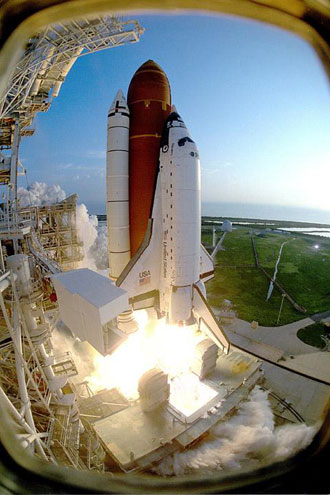
Space Shuttle Discovery (source: NASA)

ORIGINALLY POSTED 10/28/2010
UPDATE 2/24/2011

The Space Shuttle Discovery and its crew launched into  orbit on February 24th, 2011.  The mission was originally scheduled for late 2010. According to NASA, the official mission rockets the shuttle toward the International Space Station (ISS) to deliver a module and critical spare parts. The mission will also make geocaching history, again.

NASA Astronaut and geocacher Michael Barratt (source: NASA)

Astronaut Michael Reed Barratt is the flight-surgeon on the mission.  Barratt is also a geocacher.

According to geocacher, cosmonaut and video game developer Richard Garriott (Lord British), Barratt will spend part of his free-time in the extreme environment of the International Space Station going geocaching.

Garriott tells Geocaching.com, “The mission takes the NASA orbiter to the International Space Station and the highest geocache in existence. In the two years that bug has waited on-board the ISS, it has sure made some distance!”

Garriott contributed $30 million to the Russian Space program for a seat aboard a Soyuz rocket bound for the space station. While on the space station he hid the geocache  “International Space Station” (GC1BE91) and placed a Travel Bug inside it.

Richard Garriott

The ISS and the Travel Bug placed onboard travel at 17,500 miles an hour. So far the Trackable has moved more than 350 million miles since Garriott placed it in October of 2008.

Garriott met Barratt during preparation for his trip to the ISS. According to Garriott, “I know Mike from my training time in Star City [Russia] as he was training there too. In fact, he was one of the very first Astronauts /Cosmonauts I met in Russia.”

Garriott says Barratt already had one chance to grab the Travel Bug but missed it: “He has already flown once between the time I left the bug and this flight. He even saw the bug, but he was not a geocacher at the time, and so my hidden in plain sight worked!”

Travel Bug aboard the ISS

Barratt has a rare second chance to grab the Travel Bug.  And Garriott says that Barratt is going to take it: “Now that he is a geocacher, he recognized the item immediately! I have spoken with him about his upcoming flight and intentions to recover the well traveled bug.”

Garriott hopes the Travel Bug takes a final trip to his doorstep, “I do indeed hope that the bug finds its way back to me, that would be a real thrill.” Although he hopes that it experiences some more extreme conditions first: “I think Mike may have it visit the NASA undersea lab before it finishes its exotic journey to the heights and depths humanity can take it.”

Watch the Lost & Found video below showcasing Garriott placing the ISS geocache.  The video also details Garriott hiding the lowest geocache in the world.  He placed the geocache “Rainbow Hydrothermal Vents” (GCG822) in 2002. It sits 2300 meters below the surface of the ocean.
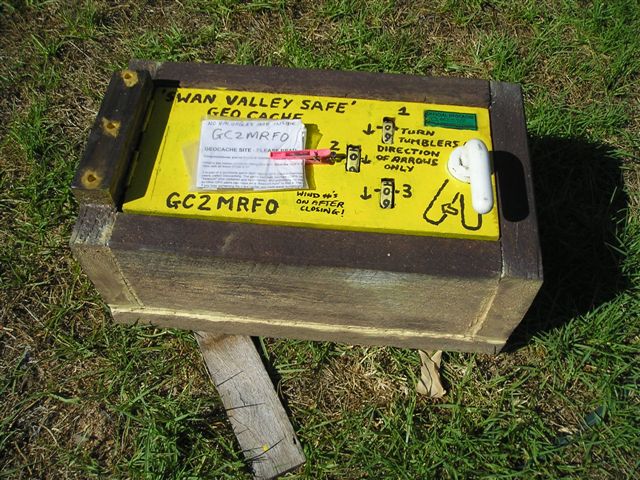
“Swan Valley Safe” GC2MRF0 GEOCACHE OF THE WEEK – February 21, 2011

The safe from "Swan Valley Safe"

Australian geocacher Astrohiker felt inspired to make a cache that would leave those who found it saying, “Wow, that’s something else.” His inspiration was sparked by a Multi-Cache that he found. The cache had a padlock that could only be opened after discovering the combination through clues.

Astrohiker decided his Multi-Cache would also have a lock, but he took the concept a few steps further. He came up with “Swan Valley Safe” (GC2MRF0).

There is a combination to unlock the cache. But the cache box is a hand-made safe designed and constructed by Astrohiker [picture on left].

He says, “Cachers have to go to three topical places in the Swan Valley, Perth, Western Australia to get the numbers [for the combination]. One is a Cenotaph commemorating the two world wars.” Directions on where to go and what to find are located on the cache page.

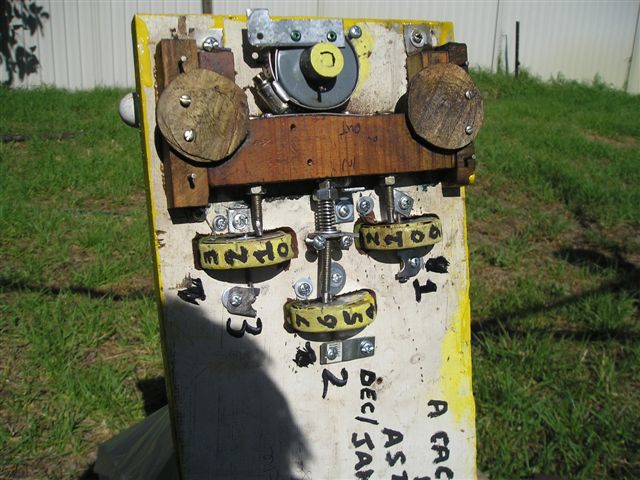
Once you find all the clues, Astrohiker says,”You turn the tumblers. If you have the correct numbers lined up when you turn the handle, the 3 steel pins enter the holes of the tumblers allowing the handle to turn further allowing the latch to open.”

The inner workings of the safe

He says his cache also educates: “People get to see important places in the Swan Valley, have a short hike & can see a mechanical cache in the form of a three digit combination working safe. Oh and don`t forget the views of the city from the cache site.”

But the cache almost didn’t survive its first 24 hours: “It was amazing that I placed the cache at 9am and at 9pm that night a bush fire came through nearly destroying the cache. It was good planning that I placed the cache in rocks on a rocky area where the fire got close to but did not burn the cache. Hundreds of acres were burnt in the nearby National Park but no houses.”

“Swan Valley Safe” was just hidden on the 5th of February. It’s been logged only three times, and already has three Geocaching.com Favorite Points. One geocacher wrote, “Wow, what an ingenious well made cache. I passed a couple of kangaroos resting under a burnt out bush on the way up.”

Astrohiker

Astrohiker says he’s not finished with creative caches. He says, “The next one is going to be a winch (already made) and will fit up a hollowed out log courtesy of local white ants.”

Continue your exploration of some of the most engaging geocaches from around the world. Explore all the Geocaches of the Week on our blog or view the Bookmark List on Geocaching.com.

Geocaching Travel Bug Puzzle

The treasure hunting adventure of geocaching and exploration are rarely solo experiences. We want to share these moments of discovery with the world.

Think of the great explorers. Ferdinand Magellan’s expedition around the world began with more than 200 men. Columbus had three ships full of fellow explorers. So it’s no stretch that modern day geocaching explorers want others to join the adventure.

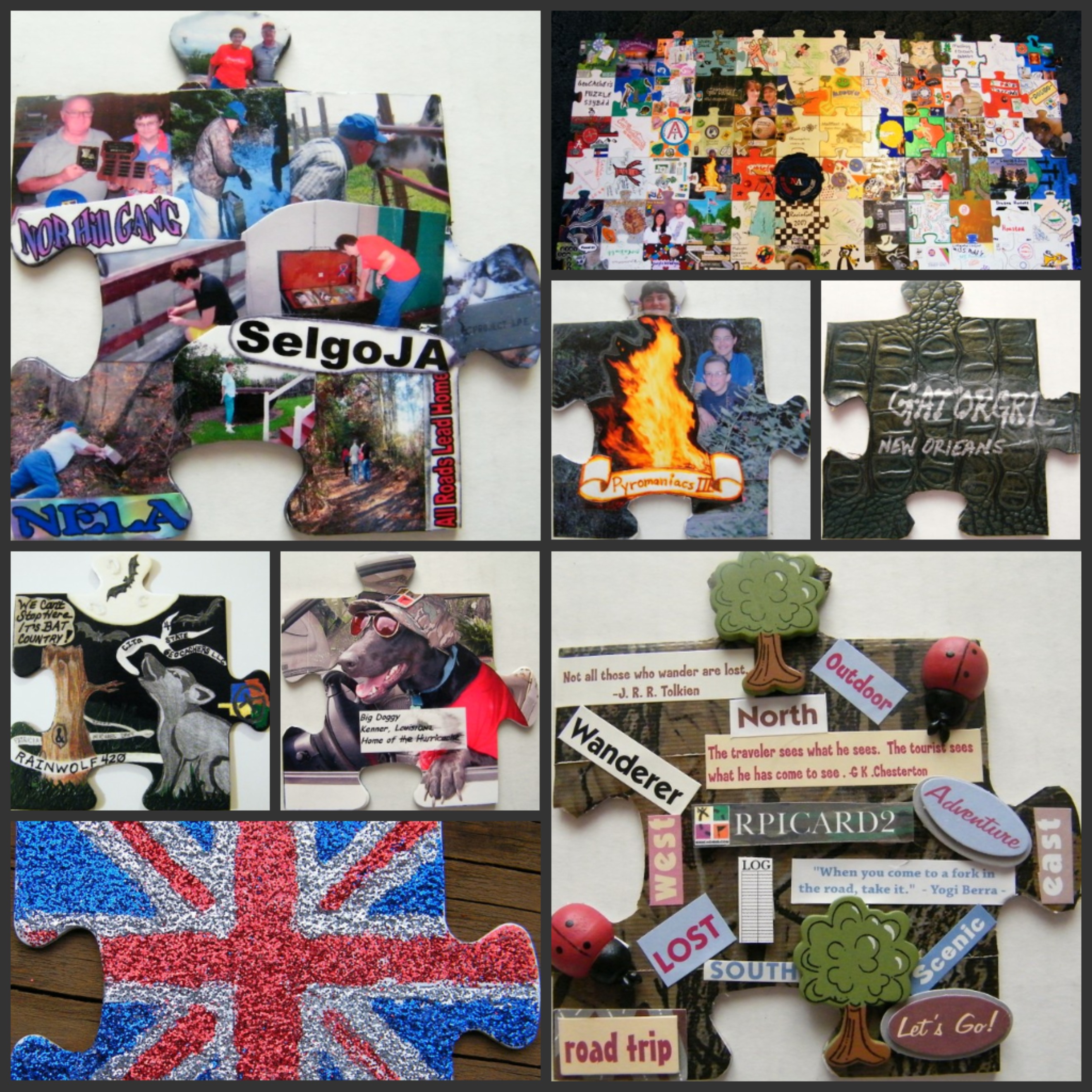
Let me introduce you to Brenda Shirey, aka Sequoia_2. The Louisiana resident started geocaching in 2005. She wanted to share the adventure and camaraderie of geocaching. Her idea? It’s a Trackable geocaching puzzle (TB1CNE2 “Geocacher’s Puzzle”). The puzzle consists of custom-made puzzle pieces from geocachers around the globe. Pieces have arrived from Japan, the U.K. and throughout North America.

Brenda says, “The puzzle idea came along after I was buying school supplies at a teacher supply store.  They had these large blank puzzles you could buy called ‘Community Puzzle.’  I really didn’t know what I was going to do with them.  One day I sat there doodling around and started decorating one with my geocaching name and some stickers.”

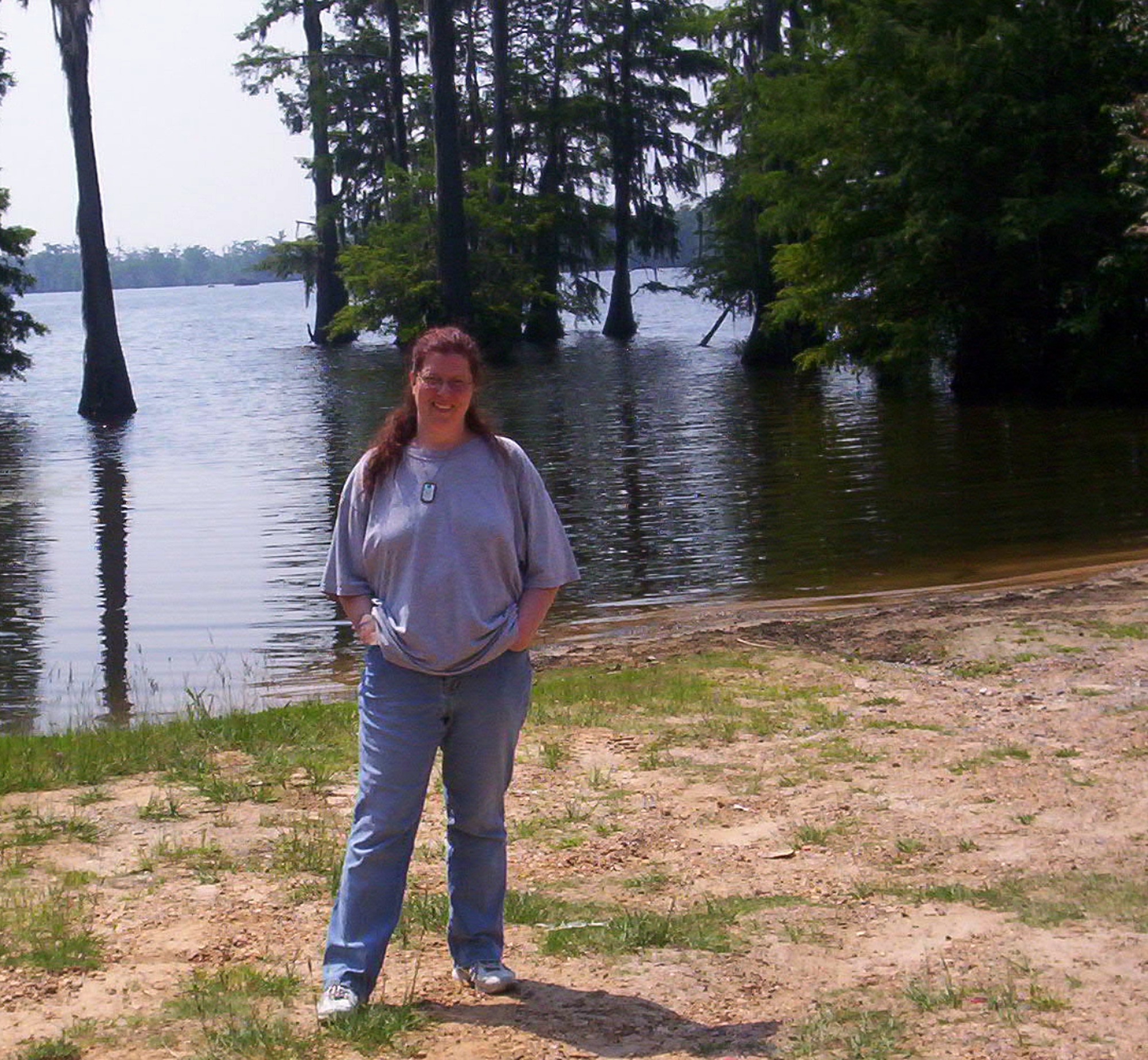
Brenda Shirey aka Sequoia_2

Soon Brenda says, “I showed it to someone and they liked it and said they wanted to do one.  Thinking this would make a good Travel Bug, I assigned a number to it from one of my Travel Bugs I had and started giving out puzzle pieces to people who were interested.” That was in March of 2007.

The idea spread quickly beyond her local geocaching community: “The puzzle goes to events as a Travel Bug where I set it up and people can discover it.  I will also bring blank pieces with me with my mailing address on the back for those interested in making one. Everyone who sees the puzzle really likes it and enjoys looking at all the pieces.  When I first started, most of my pieces were from local cachers, but as the puzzle traveled to events, other cachers took notice. ”

Brenda says, “My first piece from out of the USA came from Japan!  I now have pieces from all over the world.  They range from the very simple to some who have put a lot of work into them.  Some cachers will tell me they can’t make one, they are not artistic.  You don’t have to be artistic, as long as your geocaching name is in the design, it can be anything at all!”

And Brenda says that anyone can make their own puzzle: “I had someone express interest in starting one themselves and I told them to expect to spend a lot of time and money on it.  Puzzle pieces, envelopes and postage add up after a while and it can be expensive, but it is worth it to me just to see it grow larger and to see how people decorate their piece.  Someday, my ultimate goal is to get it to about 500 – 1000 pieces and then donate it to Groundspeak to go in their office, maybe even mounted on the wall piece by piece.  Now that would be some awesome wall art!”

Yes, it would. Thank you Brenda!

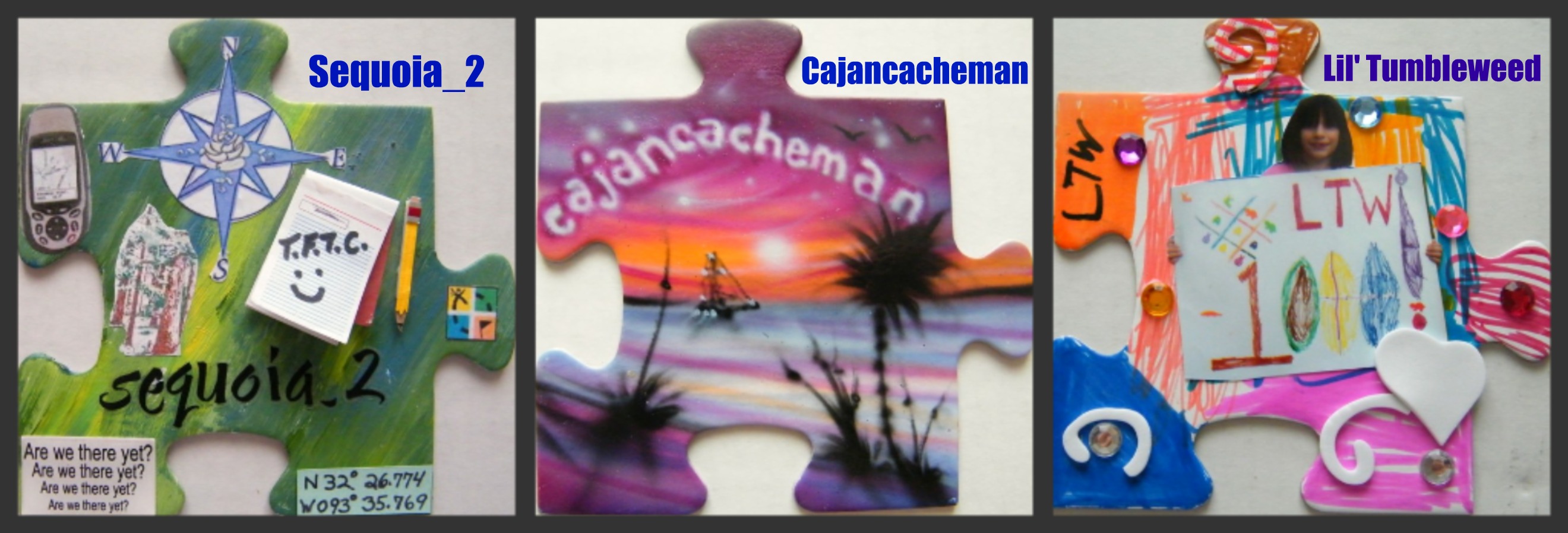
Pieces made by Brenda, her husband and their daughter

“Lego – einer ist zuviel” GC13Y2Y GEOCACHE OF THE WEEK February 14, 2011

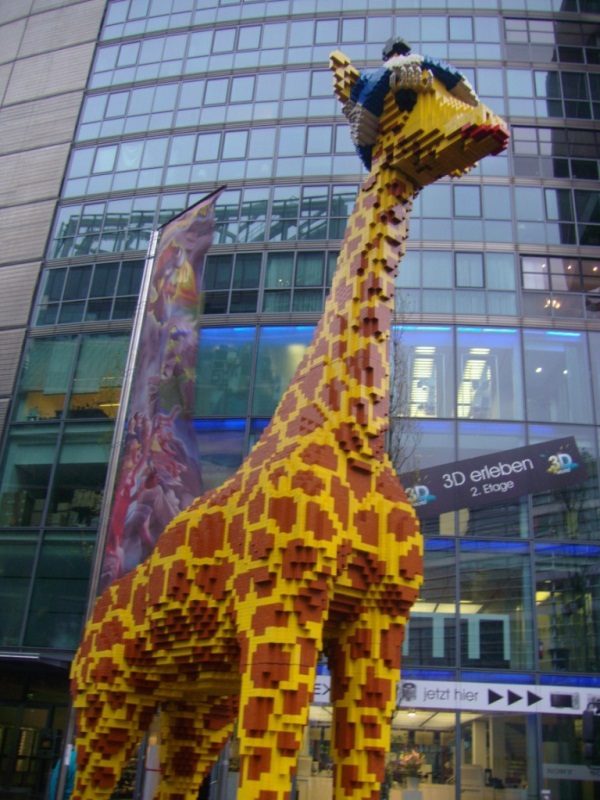
"Lego - einer ist zuviel" GC13Y2Y

“But something’s rotten in the giraffe from Denmark … ” that’s how the cache description for the German geocache with the most Favorite Points ends.

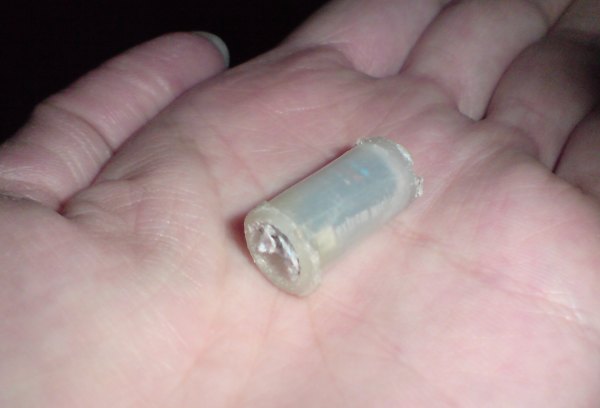
“Lego – einer ist zuviel” (Lego – one too many) GC13Y2Y is a difficulty 2.5, terrain one micro cache. The cache is hidden at the entrance to the Legoland Discovery Center in the heart of Berlin.

The geocache was placed by riechkolben & geometer42 in June of 2007. More than 2800 geocachers have since logged a “Found it” for the micro.

But it’s not an easy cache find. Almost 250 geocachers logged a DNF (Did Not Find) so far. The hunt requires a level of stealth. The bustling Berlin sidewalk is often crowded with muggles.

“Lego – einer ist zuviel” has earned 350 Favorite points. The cache holds the lead as the the most popular geocache in Germany by just two points. There are four geocaches with 300 or more Favorite Points in Germany.  Geocaching Favorites is a new feature on Geocaching.com.

The mico cache from "Lego - einer ist zuviel

Continue your exploration of some of the most engaging geocaches from around the world. Explore all the Geocaches of the Week on our blog or view the Bookmark List on Geocaching.com.

A Video Two Years in the Making – Finishing “Cache Across America”

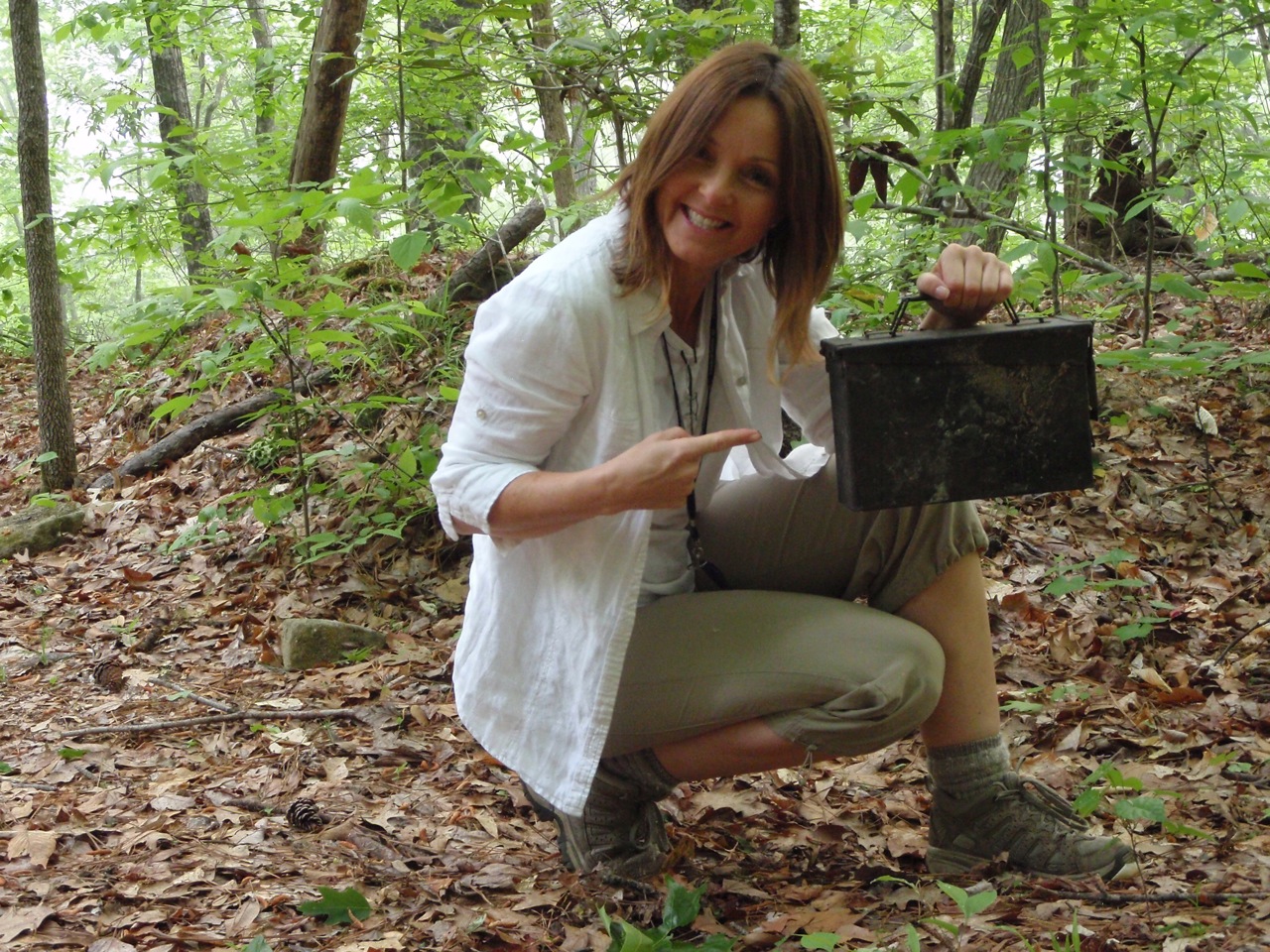
Lorrie LeBlanc “Lorriebird” is one of six Geocaching.com members that can claim a smiley on the Cache Across America – Series Final (GC12E08).  According to the cache page, “This is a series of caches that will take you on a coast to coast tour of the entire United States. One cache in this series is hidden in each of the 50 United States. These caches each contain a numeric clue that that will lead you to this final cache located somewhere in our nation’s capitol upon completion of the series.”

It’s a daunting series that Lorrie, an airline pilot, started in 2008. She says, “While traveling anywhere in the world is a great thing, I just believe that the United States has so much to offer that most folks will never see!  I have a ‘bucket list’ of places I wish to visit, but my list started with visiting all 50 states.”

Lorrie discovered geocaching after reading a newspaper article about the treasure-hunting adventure. “I tried to get my younger brother interested in geocaching…  I ended up being the one addicted.” Her discovery came only two years before beginning the Cache Across America series. “I started caching on July 9, 2006…the last day that I ever touched my golf clubs (which are still gathering dust in the garage to this day…).”

On the cache page for the final cache in the series Lorrie writes, “Oh sure, the many trips were amazing. The thousands and thousands of miles of driving seemed endless at times. Some of the sights I saw were breathtaking (and so were my VISA bills ).” But she says something was more important than all of that, “Cache Across America (CAA) was really all about people.” Read her Geocaching.com log to find out about the people who cheered Lorrie on to complete the challenge.

But she has advice for you too, if you’re considering attempting a major geocaching adventure. She says, “Technology is your BFF!  I wouldn’t do it without a ‘paperless capable’ GPS.  Spend lots of time beforehand planning routes and downloading Pocket Queries to save in your files before long trips in case your plans change. I carried an aircard so I could access the internet anywhere on my laptop and that became a real help many times on the road.  And if you are going after a specific cache research it beforehand and make sure it is not disabled before you drive thousands of miles!  Take lots of pictures and jot down some notes…you will happy later that you did.”

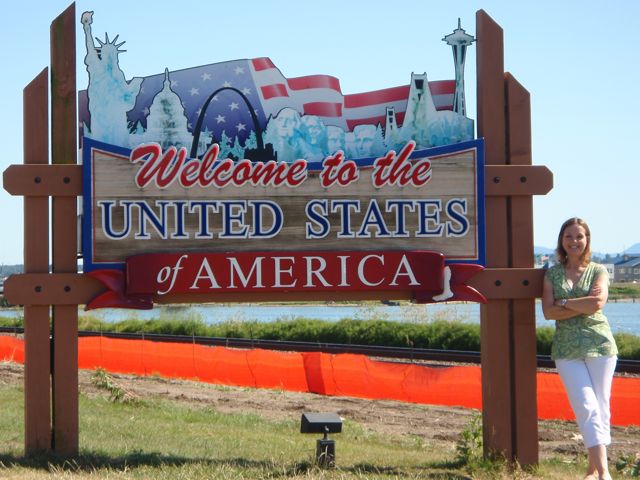
Lorrie not only completed the challenge and made new friends, but she also put her conquest in a video. She says, “Actually there is no ‘video’ in my video! It is just the collection of still photos that I had in my files from my Cache Across America journey.  I was recently asked by the organizers of Florida’s annual Cacheapalooza event to give a presentation about Cache Across America, and this video is what I made for that presentation.  I am happy now that I spent so much time taking pictures, especially of all the state boundary signs.  Those were the toughest and many times I had to exit a highway and circle back around to get another shot at a missed one.  I found my first CAA cache in October 2008, and finished the CAA final in June 2010.”

Watch the “video” and wonder… could you complete a geocaching series like this?