Click on the image to see the geocaching team's official site
Nine geocachers invested months of planning and preparing for a single day this weekend. The group based in the Netherlands included Team Mac Bean Stash, The Heuv, Ellino, Mr. Loggy, Demostar, The Axe Factor, and Fine-Line. They all launched on their mission on October 9, 2011. (That day can also be read as 9/10/11 – if written day/month/year.) Their goal was simple and extraordinarily complex.
Every geocacher enjoys the game their own way. Some enjoy spending months on one puzzle cache or hiking for days to find a dozen caches in the wilderness. This group wanted to challenge their wits, endurance and planning abilities to claim a world record in the geocaching community. The geocachers researched the most countries any group logged within 24 hours. Geocaching.com does not keep nor endorse official records.
Latitude 47 posted this article in August about a group of three geocachers who logged geocaches in ten countries in 24 hours. A reaction came back that a group of geocachers from Sweden accomplished 14 countries in 24 hours.
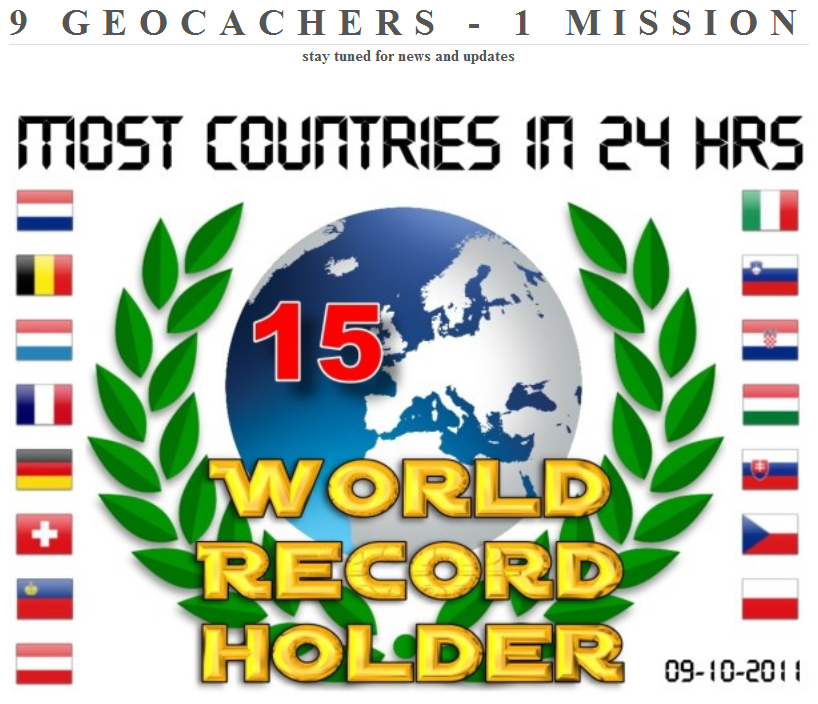
The geocaching group from the Netherlands set out to break the record. They say on their official website that they beat 14 countries in 24 hours. The group says they geocached in 15 countries in 24 hours. They countries, in no particular order include, the Netherlands, Belgium, Germany, Luxembourg, France, Switzerland, Liechtenstein, Austria, Italy, Slovenia, Croatia, Hungary, Slovakia, the Czech Republic and Poland in 24 hours.
They also promise more details will be available soon. After a cache run like that, there must be time to re-coup. Check back for updates in the story as they occur.
Reading is one thing. Seeing and doing and hearing is another. Enter geocaching vloggers and geocaching video series. As globalization advances, so does technology and the interconnectedness of social media. Vlogging, or “video blogging” has become an increasingly popular medium for sharing and connecting people all over the world.
Geocaching vlogs, as well as YouTube based TV series, have proven to be influential and highly popular amongst the geocaching community. For example, if you search for ‘geocaching’ on Youtube.com, you discover7,000geocaching channel results, including the Geocaching.com channel GoGeocaching.Many geocachers use geocaching vlogs and TV series to show and tell and allow people to both see and experience the hobby.
Zaid Adham is one of the many people flooding the global bandwidth with geocaching videos. He is a Canadian director and producer. Zaid’s most recent creation is a geocaching TV series based in the Middle East. The series, titled ‘Treasure Hunters’, is being broadcast on satellite TV and posted to hisvlog.
Zaid, Middle Eastern Vlogger
Zaid decided to make the TV series because he says he, “… loved the idea that an adventure such as this can be so full of excitement and exploration on so many levels.” Zaid explains that, “the point of creating the show was to raise awareness of the sport in a region where outdoor activities are greatly cherished in the months when the weather allows them.” For example, in Saudi Arabia, temperatures can rise above 49 degrees Celsius (120 degrees Fahrenheit) in the months of June through August.
Zaid says that the Middle East is home to some of the most challenging and extreme caches. His series focuses both on geocaching and the region itself. He says, “the show not only covers the hide and its find, but the significance of the area it’s been placed in. This makes it both adventurous and educational!” Zaid’s passion to share geocaching with the world is evident in his excited proclamation in his videos: “Guess what?! You don’t have to just watch this! You can do this too!” Tune in to Treasure Hunters in order to take part in many captivating Middle Eastern geocaching adventures!
Alex, German Vlogger
alexschweigert is another prominent international geocaching vlogger. His German vlog, Geocaching Nordfriesland, is successful amongst German geocachers because, as Alex states, “It just makes [people] enjoy that outdoor hobby combined with weblog/videos.” Alex’s vlog has been around for more than ten years and covers an assortment of geocaching related posts including geocaching advice and videos highlighting unique geocaching experiences. Alex uses his intense curiosity and big personality to attract viewers to the adventure that is geocaching. Alex states, “There are so many beautiful things in life that are worth discovering.”
Both Zaid and Alex showcase geocaching in their local language. They are among a substantial number of vloggers who talk about geocaching in languages other than English.
Make sure to check back next week for a blog on English language vloggers, including one vlogger who has over 40,000 hits on his site – and they just started producing geocaching videos this year.
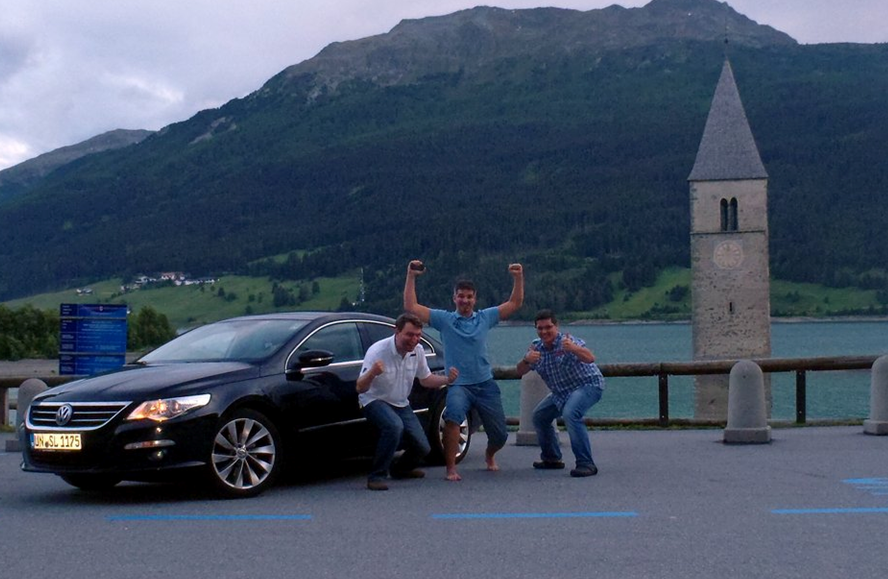
Norman Roth (Norman.R), Dominik Weiss (Zweisamkite) Max Welteken (myGe0cache)
Planning is what Max Welteken (myGe0cache) does for a living. He’s a delivery manager at a software development company in Europe. Max also gets bored doing things in what he calls a “normal or easy way.”
An idea that was neither boring nor easy struck Max recently. He wanted to log geocaches in ten countries in less and 24 hours.
Max says, “I saw the 10/24 attempt as a big project (which it was) where a lot of planning in advance was required. I spent almost a full week on fine planning the optimal route through all the 10 different countries.”
But Max knew the adventure needed co-conspirators. Max contacted two geocaching buddies, Norman Roth (Norman.R) and Dominik Weiss (Zweisamkite).
Once the team was set, Max finished his planning. He says, “I contacted all owners before we started to find out if there were any problems with the caches that might delay us on the trip. In the very beginning, we didn’t even know for sure if our goal was feasible at all, but after some iterations of planning with the Groundspeak beta map we came to the conclusion, that it´s possible to do the drive in approx. 16 hrs. PLUS the time we would need to find the caches.”
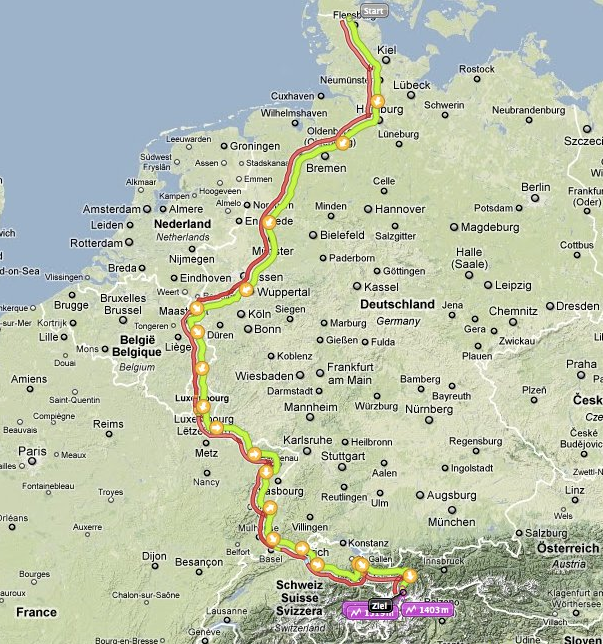
Max's route to find geocaches in 10 countries in less than 24 hours
But Max wanted to ensure the cache run didn’t sacrifice beautiful scenery for the sake of speed. The group even planned to take three vacation days to ensure the optimal time to beat traffic on their epic journey.
Max says, “What was important for us from the beginning was that we didn’t want to spend all this time and money only to see some “drive by” caches on the highways but nice and even scenic places. That made planning even more complex because we reviewed every single cache before we built it into our travel-route.”
Contacting the cache owners paid off. Some cache owners met the team along the way. Cache ownerBuck_DK actually helped launch the caching adventure a few hours before the caching run began. “The friendly owners of the first cache in Denmark invited us to meet them some hours before midnight. We had dinner.”
The team of three geocachers ended up logging more than 25 caches in ten countries (Denmark, Germany, Netherlands, Belgium, Luxemburg, France, Switzerland, Liechtenstein, Austria and Italy). However the trip did not take them 24 hours. They finished the cache run in just 21 hours. Max writes, “Looking back everything worked out perfect, during the almost 30hrs drive nonstop we only had 30min of traffic jam in the city center of Zürich.”
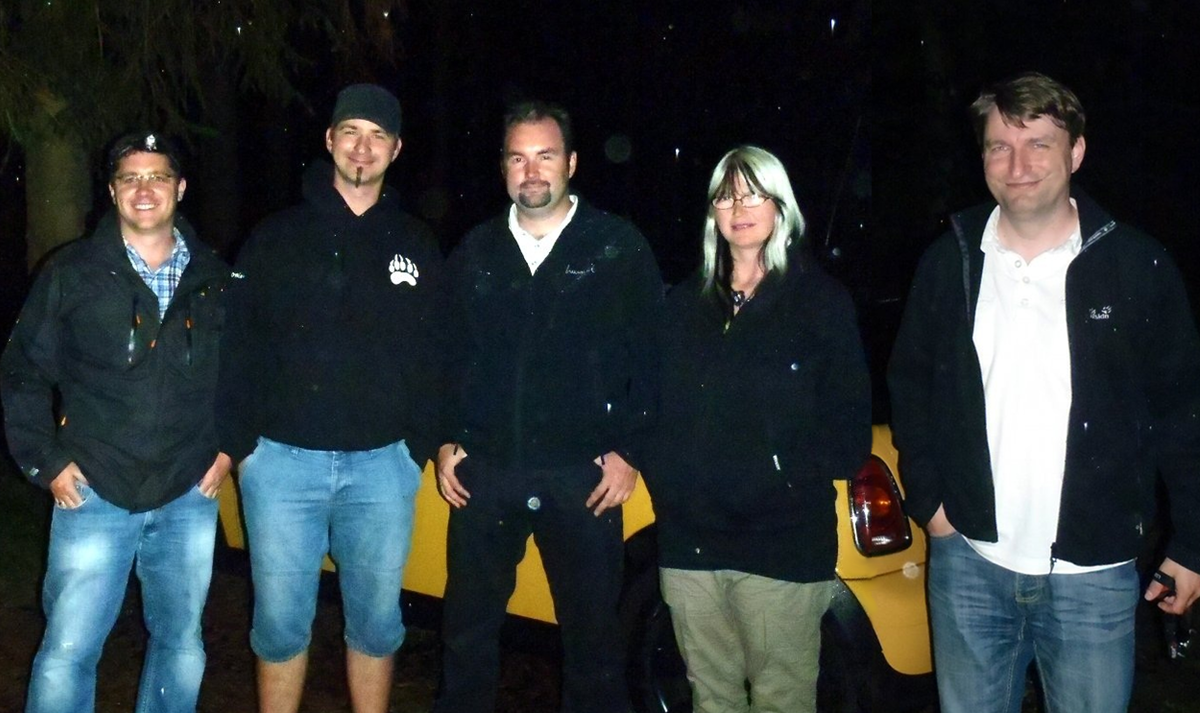
Max (MyGe0cache) - Dominik (Zweisamkite) - Benny (Buck_DK) and owner of GC2F78F - Benny´s wife Liselottea (Liselottea) - Norman (Norman.R)
Max has four pieces advice for those considering challenging themselves. He says:
1) You’ll need, “Some crazy minds (like myself 😉 to even consider doing something like this in the first place”
2) “Plan everything once, twice and once again! Print out everything even if you take notebooks/phones/GPS with you.”
3) “Go with at least with three people on a trip like this, as you will have to drive NON-Stop for more than a day. You will have to be able to sleep in the car no matter how uncomfortable it is.”
4) “Take good friends with you, not just anybody you know. After some hours the enthusiasm changes into a bad mood when everyone is exhausted and tired. During these hours you need to be a team of friends that restores the motivation again so everyone is partying once you reach the final cache.”
Beau Backus, or GeoBeau, is a geocacher who works in the satellite industry. He joined Geocaching.com representatives on a tour of the Boeing satellite manufacturing plant near Los Angeles, California. He says we are witnessing GPS evolve at a rapid pace: “We are really seeing a good change in the way GPS is evolving. It has gone from being strictly for military systems to where we are today; it is moving into a part of our social structure.”
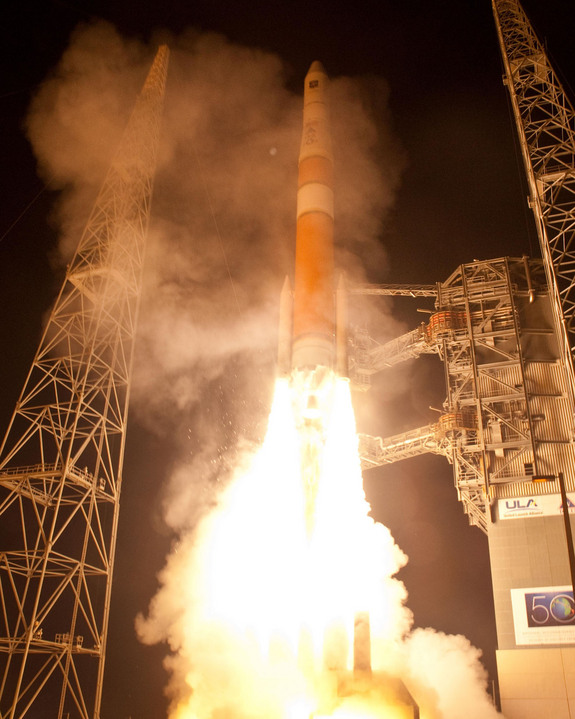
On July 14, 2011, the U.S. launched its most recent GPS satellite in order to improve GPS accuracy all over the world. Whether we are aware of it or not, we have free access to billion dollar satellites on a daily basis, and it’s getting better. The U.S. government is in the process of replacing the current GPS constellation of satellites.
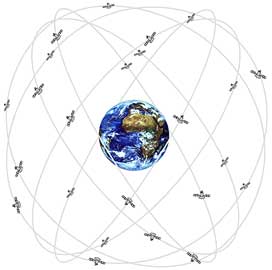
GPS Satellite Orbits
GPS satellite 2F-2 replaces a 20-year-old GPS satellite that has long surpassed its intended lifespan. This new and improved satellite features improved accuracy, enhanced internal atomic clocks, better anti-jam resistance, a signal for commercial aviation, a longer lifespan and reprogrammable on-board processors to evolve with future needs. The addition of this satellite will boost signal reception to users in difficult terrains and accuracy worldwide.
“The average geocacher has come to rely on GPS satellites always being there, and the signal always being there,” says GeoBeau.
Following the first launch of Sputnik in 1957, many satellites have been launched from countries around the world. They now orbit earth in a very particular pattern. More than 30 of those satellites are GPS satellites. Growth in the number of satellites has enabled the Global Positioning System (GPS) to become increasingly accurate.
After touring the Boeing facility in California, GeoBeau could not help but to notice the “enthusiasm that the engineers had toward geocaching and geocaching in the future.” The benefits of increased accuracy include more detailed navigation systems and 3D geo-spatial positioning, thus improving our favorite hobby of geocaching.
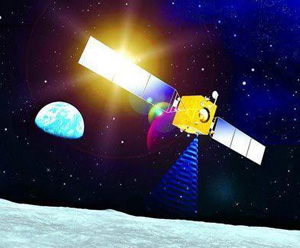
Beidou-2, China's GPS Satellite
China, Russia and the European Union have and will be launching GPS satellite systems into orbit in the near future. In April, China launched its annual satellite, the Beidou-2, and is expected to have its own fully functional GPS constellation by 2020. Russia recently launched the Glonass-K M36 in hopes of improving its consumer GPS technology. The European Union’s GPS satellite constellation, Galileo, is not expected to be ready to launch until 2014 or 2015.
The launching of new satellites means that we all have access to an increasingly accurate billion dollar commercial utility GPS upgrade for free.
Beau says that GPS hobbies like geocaching actually enable us to break down social and political barriers. “Geocaching is now a global interactive hobby that allows us to more closely interact with our brethren throughout the world.”
Hear more from GeoBeau on the importance of the GPS industry. Check out this video.
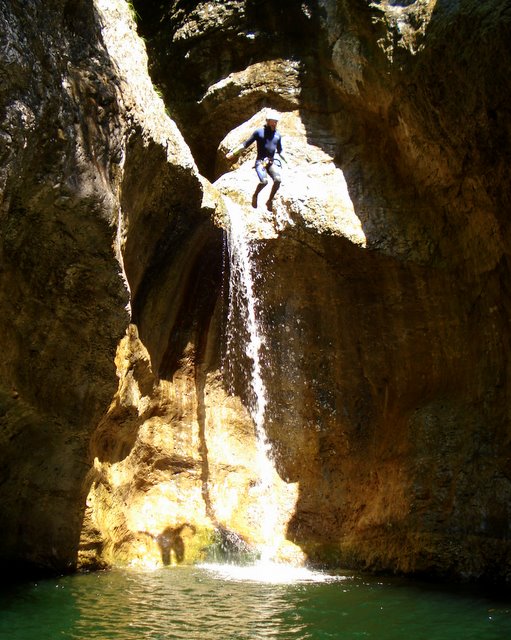
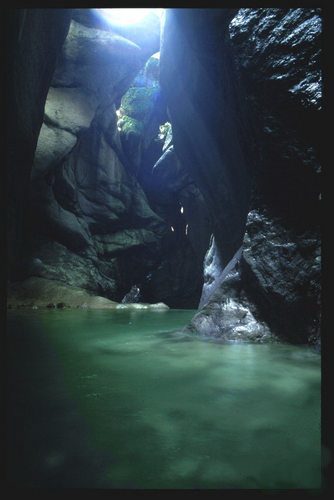
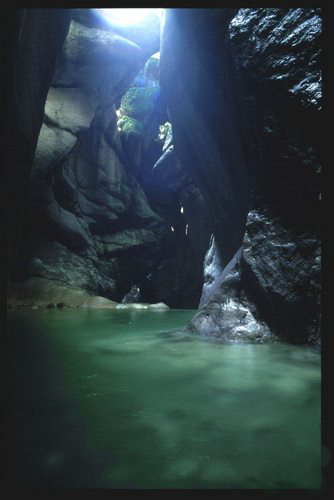
Not far from Salzburg, Austria a daring adventure waits among the steep cliffs that shoulder the Almbach River. Strubklamm (GC14D8W) is a difficulty five, terrain five geocache placed by Baumrinde & sternfänger in 2007.
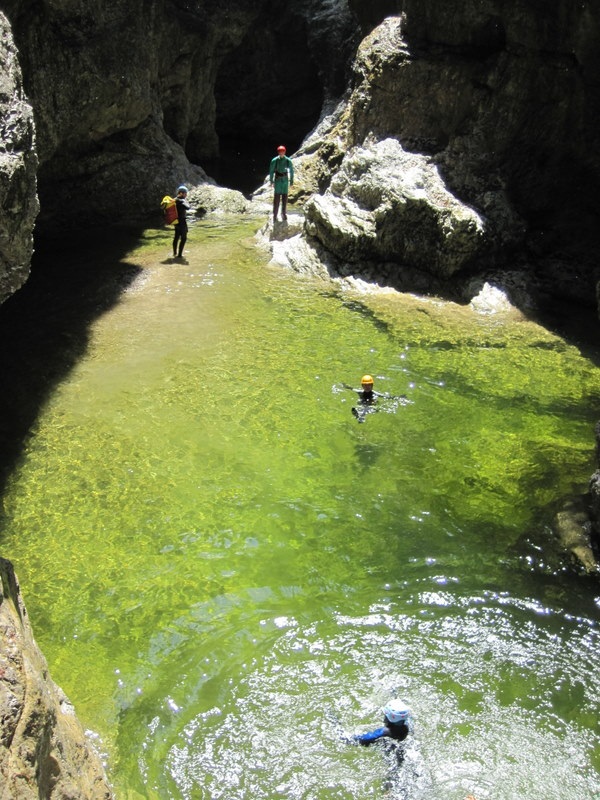
The cache owners ask geocachers to understand the risks, find the cache in groups and bring the proper equipment. The list of equipment includes a wetsuit, helmet and climbing gear.
Strubklamm GC14D8W
The cache container is located down a steep gorge. There’s more than just a cache to be found at this location. Cachers will navigate to the gorge, then climb up the canyon walls to jump off of perches (again and again) into a deep, refreshing pool of water. Some who logged a smiley on the cache say they jumped from as high as 13 meters (42 feet) into the water below.
Strubklamm GC14D8W
Continue your exploration of some of the most engaging geocaches from around the world. Explore all the Geocaches of the Week on our blog or view the Bookmark List on Geocaching.com