One geocache type offers two “Aha” moments. It’s a Puzzle Cache. Cachers say you earn the first “Aha” when you solve the puzzle, and the second when you find the geocache. Watch this video to discover what makes Puzzle Caching a creative way to log a smiley.
Geocaching.com talks with a Puzzle Caching master ePeterso2. This Florida, USA geocacher designed a series of Puzzle Caches to teach geocachers how to solve almost any Puzzle Cache. His easy-to-understand geocache series has been duplicated in several regions as Puzzle Caches become more popular. Have you ever earned a smiley on a Puzzle Cache?
Subscribe to the Official Geocaching.com YouTube channel for the latest tips and tricks in geocaching. Watch the more than 50 videos produced by Geocaching.com on our video page.
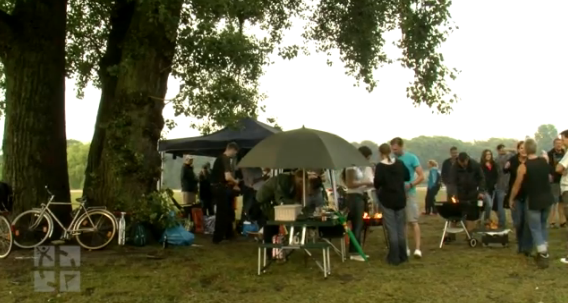
A little rain cannot stop geocachers from reach their goal. Even a little urban flooding won’t cancel a geocaching event. Watch this Geocaching.com video for a snapshot at the geocaching Event Cache.
Geocaching Event Cache
Nicht einmal sintflutartige Regenfälle konnten dieses Grill-Event stoppen. Sieh Dir das Video an um einen Eindruck des Geocaching Events zu bekommen. Klicke “Gefällt mir“ wenn Du ebenfalls ein Geocaching Event im Regen besucht hast.
Subscribe to the Official Geocaching.com YouTube channel for the latest tips and tricks in geocaching. Watch the more than 50 videos produced by Geocaching.com on our video page.
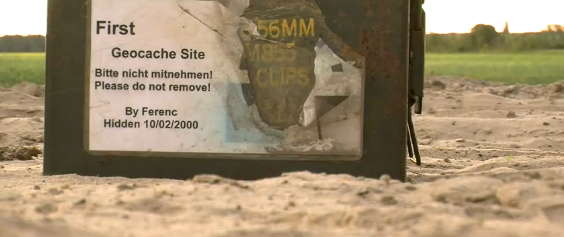
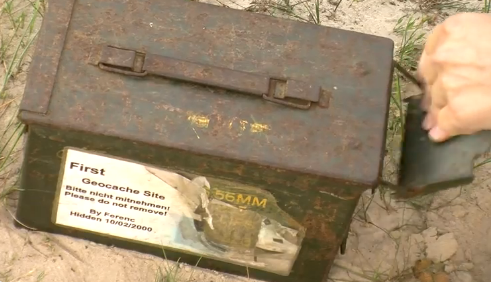
Watch this video to see the story behind the first geocache in Germany. It started a craze that’s led to a quarter million active geocaches. Back on October 2, 2000 the owner of a brand new GPS device decided to try an experiment. He hid a geocache. Ferenc loaded the coordinates and a description onto Geocaching.com. He wondered if anyone might have heard of this new GPS-powered treasure-hunt. Days and weeks passes. Ferenc says he lost interest in geocaching. Years passed, and eventually he wondered if anyone had ever found his geocache or if geocaching ever caught on in Germany. One look at the cache page answered both questions. Watch, “GC77 Germany’s First Geocache” to discover a geocache that’s been logged nearly 4000 times.
First German Geocache
The video discusses how the geocache was initially buried. Geocaches are not allowed to be buried. This historical geocache is no longer buried and complies with the guidelines
Subscribe to the Official Geocaching.com YouTube channel for the latest tips and tricks in geocaching. Watch the more than 100 videos produced by Geocaching.com on our video page.
Schau Dir dieses Video an um die Geschichte des ersten Geocaches in Deutschland kennenzulernen. Der Geocache GC77 half den Boom auszulösen, der zu bisher einer viertel Million Geocaches in Deutschland führte.
Damals, am 2. Oktober 2000, machte der Besitzer eines brandneuen GPS-Gerätes ein Experiment. Er versteckte einen Geocache. Ferenc veröffentlichte die Koordinate bei Geocaching.com. Er fragte sich, ob schon jemand von dieser neuen GPS-unterstützten Schatzsuche gehört hat. Tage und Wochen vergingen. Ferenc sagt, daß er das Interesse an Geocaching verloren hat. Jahre vergingen und irgendwann fragte er sich, ob jemand seinen Geocache gefunden hat und ob sich Geocaching in Deutschland etablieren konnte. Ein Blick auf die Cacheseite beantworte beide Fragen. Schau Dir “GC77, Deutschlands erster Geocache” an und entdecke einen Geocache, der fast 4000 mal geloggt wurde.
First German Geocache
Das Video erörtert, daß der Geocache ursprünglich vergraben war. Geocaches dürfen nicht vergraben sein. Dieser historische Geocache ist nicht mehr vergraben und entspricht den Guidelines.
Abonniere den offiziellen Geocaching.com YouTube-Kanal, um die neusten Geocaching-Tips- und Tricks zu sehen. Schau Dir über 100 Videos von Geocaching.com auf unserer Video-Seite an.
The subject of sustainable geocaching goes under the microscope during the German geocaching event “Gecko 2012.” The Geocaching “Konferenz” (Gecko) offers three days of workshops, lectures, and events on the topic of keeping and expanding, “sustainable geocaching in harmony with the environment, nature, and in harmony with our fellow human beings.” It’s a powerful undertaking in Germany, which has the highest geocache saturation of any country in the world.
Gecko 2012: Sustainable Geocaching
Jan aka Czerkus is part of the organizational team for Gecko-2012. Jan says a majority of geocachers play in harmony with nature. “Geocachers often say that the world is their playing field. If you use nature for your hobby, it should be self-evident to protect your playing field. This is the central slogan of the conference.”
This is one of the first conferences of its kind. Jan says, “All workshops, activities and discussions are focused on environmental education and building bridges between geocachers and their critics. As well, we’ll give geocachers who are environmentally aware a platform to develop networks. At the moment we are learning a lot, because there is no experience or event like this that we can lean on [and learn from].”
The events at the conference don’t just teach people about respecting nature, they embrace the outdoors and geocaching. Some of the sessions of the conference include courses on “T5 tree climbing,” “Observing and protecting animals,” and trips to nearby EarthCaches. Jan says there’s more, “There will be workshops about planning Cache In Trash Out (CITO) Events, discussions with hunters, forest rangers, and environmental activists and nature-guides will lead the geocachers in the woods to show them their play field.”
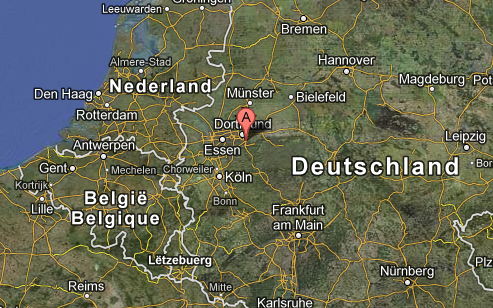
Location of "Gecko 2012"
Jan says geocachers have a great responsibility to the environment because geocaching is a highly visible activity, “Geocaching is very transparent and leaves geocachers’ marks in the World Wide Web. Everybody can see what we do, where, and how often.”
Along with seeing geocaching, Jan also hopes the greater community sees geocachers’ environmental efforts like Gecko 2012. He says, “We have a very special responsibility” to care for the environment. It’s even more fitting then, that after Gecko 2012, a giant Cache In Trash out (CITO) is planned. Gecko 2012 begins on June 8.
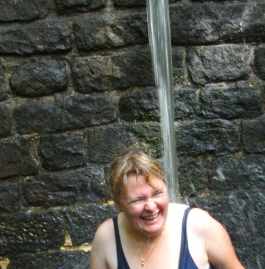
Watch the latest Geocaching.com Presents video: Walddusche (GCKA1T). See what makes this German Mystery Cache one of the most watched geocaches in the world. minz hid the difficulty three, terrain 1.5 geocache in 2004. The search for the cache leads adventurers deep into the woods of western Germany. Geocachers walk past the oldest healing water fountain still in existence in Germany, where cold water rushes down the mountain into a centuries-old shower. Finding the Walddusche cache isn’t difficult. What might be difficult is deciding whether or not to take a voluntary shower in the fountain. Watch the video to see if the geocachers on this caching trip took the plunge into its icy waters.
Photo from Walddusche log
The next Geocaching.com Presents video is scheduled to post on September 8th. The video will preview series of geocaching videos from the Czech Republic, including a trip deep into the tunnels beneath the city of Prague.
Sehe das neueste Geocaching.com Presents Video: Walddusche (GCKA1T). Erfahre was macht den deutschen Geheimnis Cache einen der meist gesehenen Geocaches in der Welt. minz versteckte die Schwierigkeit drei, Terrain 1-5 Geocache im Jahr 2004. Die Suche nach dem Cache führt die Abenteuerer tief in den Wäldern des westlichen Deutschlands. Geocacher gehen an den ältesten heilenden Brunnen vorbei, der noch in Deutschland existiert. Kaltes Wasser strömt den Berg hinunter in eine Jahrhunderte alte Dusche. Den Walddusche Cache zu finden, ist nicht schwer. Was schwierig zu entscheiden sein könnte ist, ob man sich freiwillig unter den Brunnen duscht. Sehe dir das Video an um herauszufinden, ob die Geocacher auf dieser Caching Reise den Sprung ins eiskalte Wasser wagen.